AI breakthroughs in robotics won’t change your life any time soon
The story is a collaboration between MIT Technology Review and Aventine , a non-profit research foundation that creates and supports content about how technology and science are changing the way we live.
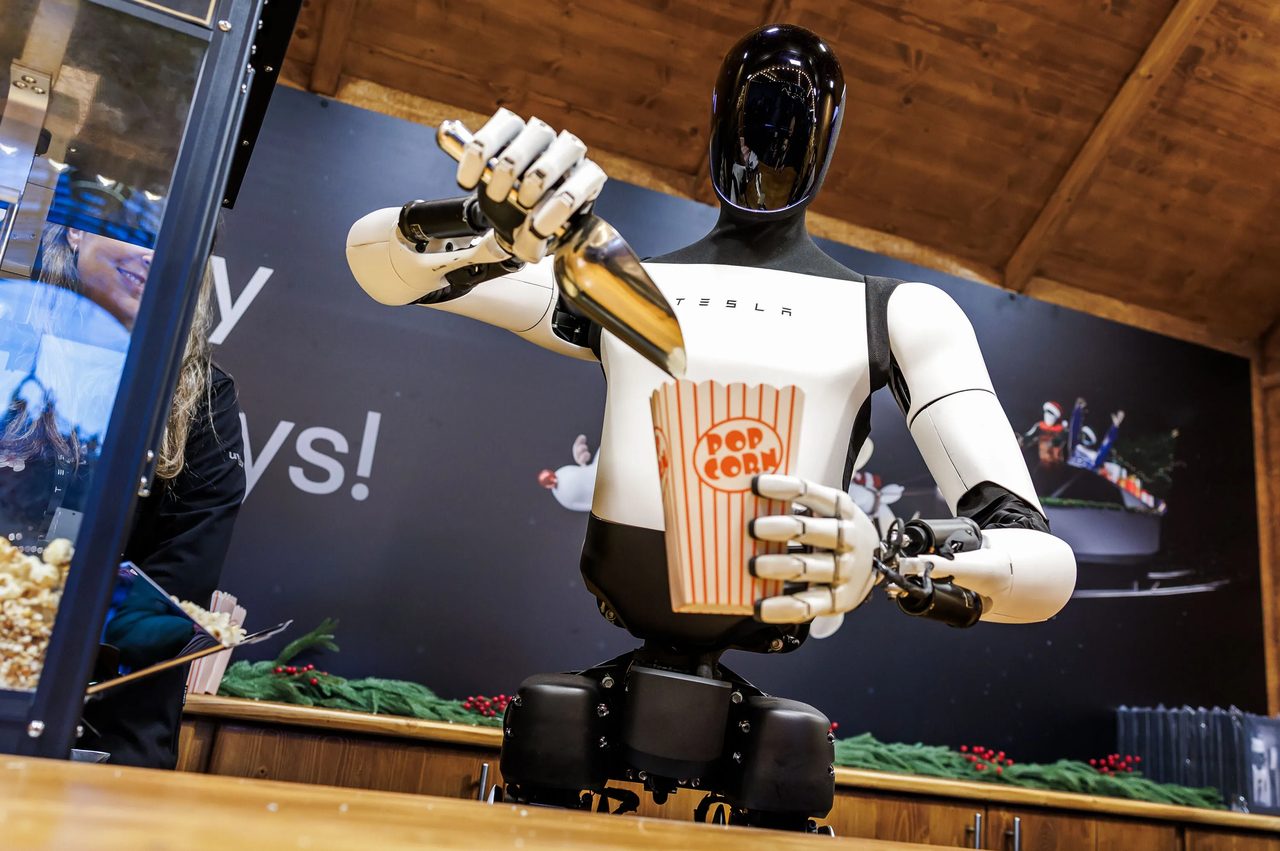
A robot shaped like a human—white with a black head and torso—has been popping up on video feeds. Perhaps you’ve seen it dance or pass popcorn, put trash in a bin, vacuum, or press the button of a microwave. Or maybe you’ve watched it fall backward while handing out water bottles or struggle to iron a shirt.
This would be Tesla’s Optimus , an AI-powered humanoid robot that Elon Musk, the company’s CEO, believes will be “not just Tesla’s biggest product ever, but probably the biggest product ever ,” headed to work on factory floors and, later, in our homes. Eventually it “will have human and then superhuman dexterity,” he told shareholders in July. Optimus robots could automate almost all human labor—from hauling sheet metal to folding laundry—for as little as $20,000 each, Musk argues. Speaking at the World Economic Forum’s annual meeting in Davos, Switzerland, in January, he predicted they could be on sale to the public by the end of 2027.
Musk is not alone in his evangelism. Marc Andreessen, cofounder and general partner of the Silicon Valley venture capital firm Andreessen Horowitz, has said that robotics could become the “biggest industry in the history of the planet.” In January, Jensen Huang, CEO of Nvidia, said that humanoid robots would match human-level ability this year . According to Morgan Stanley, the number of robots that “resemble and act like humans” is likely to reach nearly 1 billion by 2050, creating a market worth over $5 trillion .
Elon Musk predicts that Tesla’s Optimus humanoid could be one the world’s best-selling products. For now, it’s most often seen handing out food and drinks at Tesla events. SIPA VIA AP IMAGES
Such proclamations are in large part fueled by the idea that the same AI advances behind tools like OpenAI’s ChatGPT and Anthropic’s Claude will enable a new generation of robots to imitate human movement the way chatbots imitate human language. But many robotics researchers are skeptical, arguing that such assumptions minimize the challenges of using an intelligence built on language and images to master the infinite variability of the physical world. “None of those companies [building humanoid robots]—absolutely none of them—has any idea how to make those robots smart enough to be useful,” Yann LeCun, often referred to as one of the godfathers of AI, said at another event during the January Davos conference.
Researchers also point out that the tendency to conflate humanoid robots made to resemble people with so-called generalist machines able to learn and perform multiple tasks is misleading. ”It’s very easy to make a robot that looks like a person,” explains Jonathan Hurst, cofounder and chief robot officer of Agility Robotics and professor of robotics at Oregon State University. “It is dramatically more difficult to make a machine that moves or behaves dynamically or physically like a person.”
These tensions—over whether all-purpose humanoid robots are just around the corner or nowhere in sight, and whether current forms of AI are all that’s needed to perfect them—are playing out in robotics labs across the country, where the hype over timelines is obscuring painstaking but meaningful progress.
A decade or so ago, a series of breakthroughs led to a generative AI revolution that turned the long-imagined possibility of artificial intelligence into reality. Roboticists—though they disagree on exactly when this will happen—believe that an equally transformative revolution is possible in robotics, one that will endow machines with physical intuition and fluidity that has long been out of reach. As progress in robotics inches forward, the question is whether the same methods and tools that fueled advances in AI are enough to get there, or if an entirely new path is required.
Robots meet advanced AI
To see one of the smartest robot brains working today, it’s worth looking at what Google DeepMind can do with a piece of equipment called ALOHA 2, short for “A Low-cost Open-source Hardware System for Bimanual Teleoperation.”
Roboticists have long clashed over whether a humanlike form is necessary for generalist robots, with proponents arguing that it will help them slot into the world as it exists and detractors saying it’s not worth the trouble. ALOHA 2 reflects this second way of thinking. Not much to look at, it’s just a pair of arms, some grippers, and a couple of cameras. But despite its seeming simplicity, it is a workhorse for researchers at Google DeepMind, who use it to test their most advanced AI for robotics system, Gemini Robotics, in their various labs.
When controlled by Gemini Robotics, ALOHA 2 becomes more of a generalist robot, in the sense that it can perform any number of tasks based on examples it’s been trained on. Ask it to pack a lunchbox and, as evidenced by a video of this exercise , it can use two pincer grippers to delicately place a piece of white bread into a Ziploc bag, close it, place a bunch of grapes in a Tupperware container, secure the lid, and then carefully move the items into a lunchbox before zipping it up.
It’s not a great lunch. But the fact that the robot can put it together represents an objective step forward from what was possible even, say, three years ago.
This is in large part due to AI and its impact on what are known as robot policies, which controls how a general-purpose robot will need to assess and understand its surroundings, plan how to move within them, and then perform its task correctly.
The ALOHA 2 robot isn’t much more than two mechanical arms on a bench top, but it serves as a testbed for cutting-edge AI robotics models. These animations are based on human teleoperation of the robot arms, data that is used to train Google DeepMind’s models. (Video: Google DeepMind / Stanford…
Les actualités sont collectées automatiquement depuis des flux publics robotique & IA.
Articles liés
Anthropic launches free AI security scans for open-source projects
Anthropic's offering to help open-source projects track down security vulnerabilities with a new service called OSS Scanner. It says open-source projects that opt-in will get "thorough, periodic security scans by our strongest models at no cost." That could mean open-source projects get alerted abou
Inside Elon Musk’s Midterm Spending Spree
This week on “Uncanny Valley,” we discuss where Elon Musk’s PAC is spending millions, the latest ideology Trump claims is dangerous, and the backlash against the designer behind Muse’s logo.
Pretend you’re sitting at Elizabeth Holmes’ desk on this weirdly detailed website
With over a thousand emails, slides, texts, and documents from the United States v. Elizabeth Holmes trial, Extend engineer Bo Lau created a website that simulates what it might have been like to rifle through the Theranos founder's desk.
California is trying to shut down robot vs. human cage matches
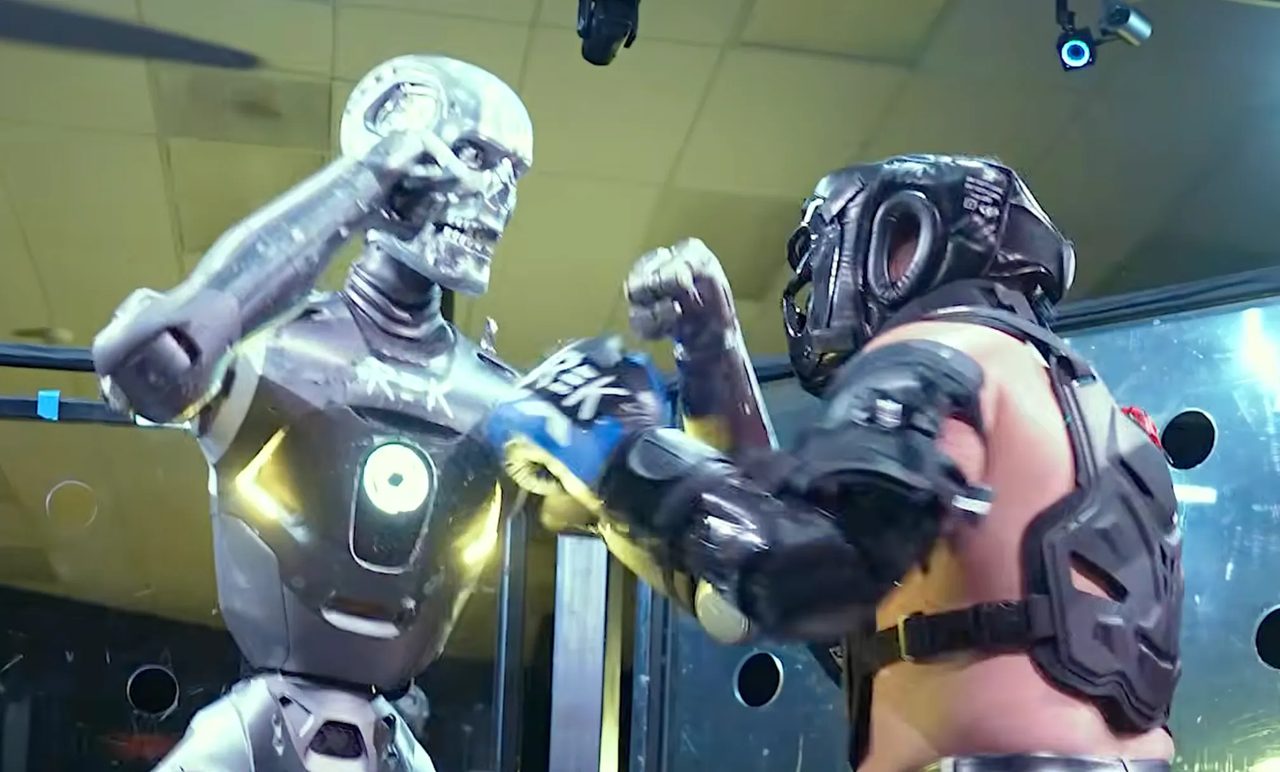
The California State Athletic Commission sent a cease-and-desist letter to a startup that hosted a match between a human and a robot last month, as reported by The New York Times. The fight, which took place on September 18th, pitted a human, Frankie LaPenna, against a humanoid robot owned by a tech
Fired OpenAI safety researchers dispute misconduct claims, warn of chilling effect
Three fired OpenAI safety researchers dispute allegations of mishandling sensitive information, warning in an open letter that their dismissals are creating a chilling effect on the company’s AI safety culture.
She Designed Meta’s New AI Logo. Then Came the Hate
Jessica Hische knew working for Meta might upset some people. But she didn’t anticipate just how angry they would get.