Are Drone Ports the Next Annoying Tech Neighbor?
Rick and Marcia LeCompte loved to watch the Cooper’s hawks that frequented a sweet-gum tree in their yard in Baton Rouge, La. But this October, the hawks were gone. Marcia LeCompte is convinced the birds were scared away by the same flying robots that have been vexing the couple since early September. The noise had them spending less time outside in their garden, and even inside their home, they couldn’t escape the near-constant buzzing. Angry and feeling harassed, the LeComptes began to think about moving.
The problem: delivery drones.
Amazon’s MK30 delivery drones are large and must fly near the ground when making deliveries. Annabel Lee-Ellis/Press Association/AP Images
Last August, Amazon Prime Air began flying its MK30 drones from a distribution center 3.2 kilometers (2 miles) from the LeComptes’ home. People in the neighborhood first noticed just a few of the drones, flying high (U.S. regulations authorize drones to fly at up to 120 meters (400 feet )). But a couple of weeks later, they felt as if drones were everywhere, and often flying much lower.
The high-pitched whine of rotors was what bothered them the most, says Blake Fugler, who lives in the same neighborhood. It sounded as if a neighbor was constantly using a weed whacker for hours every day, he says. Acoustic research has found that the noise of drone rotors is more annoying than that of cars, airplanes, and other familiar background sounds. Once flights became frequent, the noise made people miserable. “Outside the house on a Saturday between 9 and 10 a.m., I counted a drone every 48 seconds,” says Fugler’s partner, Cristina Boone.
Delivery Drone Concerns
Neighbors had concerns about drones buzzing over playgrounds, schools, and services at the local cemetery; a drone that made a forced landing on the median of a busy highway; and the fact that drones are equipped with cameras. Then word spread about Amazon’s plans as reported in the FAA’s Environmental Assessment for the facility : “Operations would occur between 6 a.m. and 10:30 p.m., with 100 of the 1,000 daily delivery operations (10%) occurring during the period from 6 a.m. to 7 a.m. and 10 p.m. to 10:30 p.m.”
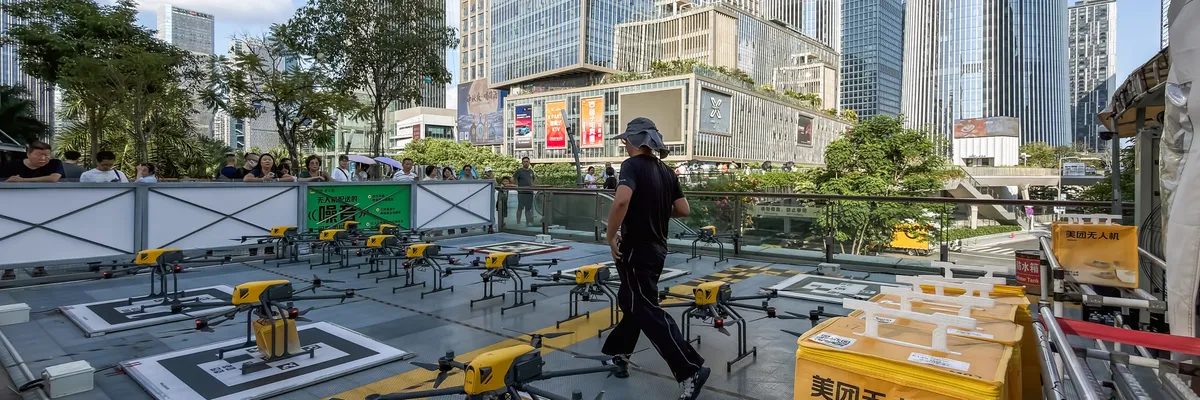
As they quickly expand their operations around the world, delivery-drone companies—including Alphabet’s Wing Aviation , Amazon Prime Air , Doordash Air , JD Logistics , Manna Aero , Matternet , Meituan , Zipline , and more, say their flying robots are quiet , safe , and unobtrusive . Massive expansion is planned for the near future. In Asia, for example, Meituan launched its latest “low-altitude delivery network’’ in September in Shanghai , while JD continues to expand drone service in rural China . In the U.S., Zipline and Uber have announced a partnership with the goal of 1 million drone deliveries a day by the end of 2029. Wing aims to have 270 U.S. drone hubs operating by the end of 2027 . And Amazon Prime Air, which currently delivers in about 85 municipalities in the U.S., says it plans to serve 500 by the end of 2026.
A Wing “nest” of delivery drones in a parking lot. Wing
Yet as the companies aggressively scale up, “the public outreach piece has probably been more of an afterthought than it should have been,” says David Ison , a specialist in Emerging Aviation Technologies and Land Use Compatibility at the Washington State Department of Transportation, who has worked on the state’s drone-hub land-use guidelines. “I think what companies assumed is everybody would be cheering that they could get things delivered by drone in half an hour.”
Companies tout drone delivery as a way to do good. Zipline has delivered blood plasma and vaccines in Africa . Material that Wing provided at public meetings in the Dallas Fort Worth area says its deliveries there have saved more than 1,000 tonnes of carbon that would have been emitted by delivery trucks. For businesses, drone delivery is supposed to offer faster service and reduce costs, although whether drones are actually less costly is a complex question that depends on a variety of interconnected factors .
The commercial and philanthropic use cases make for an unusual sales pitch, notes Ison. “It’s a lot easier argument to make when you’re saying you’re delivering blood to an accident site than when you’re delivering a fidget toy.” But instead of being impressed, people troubled by drones say they feel they’re being pushed around by a distant corporation. “It’s the same way data centers strong-arm communities,” says Boone.
Newly arrived drone launch sites have triggered similar fears from China to France to Australia to within many communities in the United States, including suburban Detroit ; Richardson, Texas ; Glendale, Ariz .; East Cobb, Ga .; Maplewood, Mo .; and Westborough, Mass . The response has sometimes been enough to shut down local drone operations completely.
An early Wing trial in 2018 in suburban Canberra, Australia, shut down a few months later, after activists formed an opposition group and rallied support in Parliament . In response, the company “fundamentally reshaped [its] engineering priorities, flight operations, and community-engagement strategy,” says Jessie Poole-Strang, Wing’s communications lead. It redesigned its drones to reduce noise, changed flight-path algorithms, and now makes efforts to familiarize people with its robots before a facility opens.
Communities Take Action
Still, legal and political campaigns against drones continue to arise. On 28 September, 15 U.S. states and Harris County, Texas, sued the FAA to stop it from easing its environmental assessment rules for drone sites, which are key to local government control. In April, the Cobb County Board of Commissioners in Georgia denied a zoning request for a Wing drone facility there.
In response to the Cobb County complaints, a Wing spokesperson said the company was hearing “positive feedback” from people in Cobb County. Similarly, Amazon representatives have said most feedback from customers about drone…
Les actualités sont collectées automatiquement depuis des flux publics robotique & IA.
Articles liés
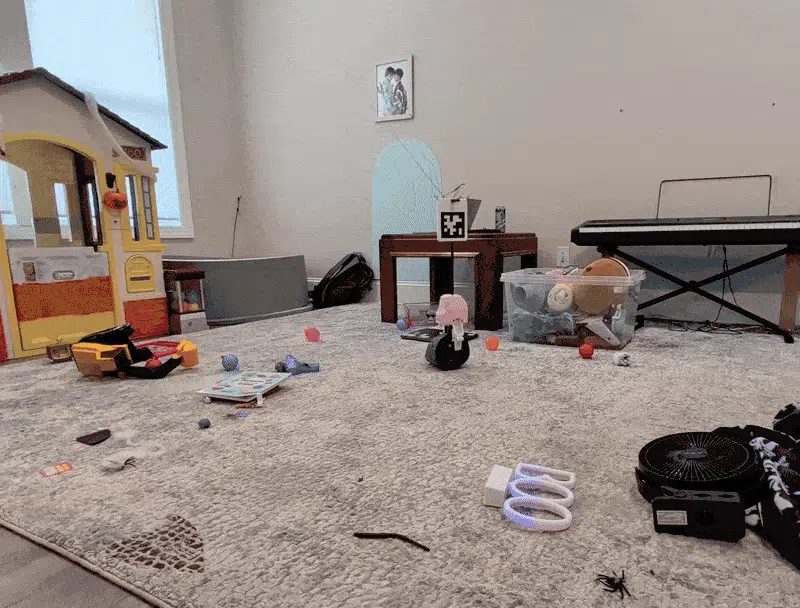
Video Friday: Room-Scale Cable-Driven Home Robot Tidies Up
Video Friday is your weekly selection of awesome robotics videos, collected by your friends at IEEE Spectrum robotics. We also post a weekly calendar of upcoming robotics events for the next few months. Please send us your events for inclusion. CoRL 2026 : 9–12 November 2026, AUSTIN, TEXAS Humanoids

AI Text Watermarking May Not Be Able to Meet the E.U.’s New Rules
The European Union now requires AI-generated text to be watermarked so that it can be identified as such. But tests on OpenAI’s new textGrain watermark, released in October and developed to comply with the new E.U. law , show that these watermarks often do not survive additional editing of the text

Robots in society, business and culture: October 2026
The biohybrid robot pushes off from the ground as soon as it is stimulated by an electrical impulse. Credit: Nature Communications (2026). By Emmet Cole In our monthly series, we showcase a selection of robotics stories from society, business, research and culture, as we track the field’s ongoing jo

How a Kenyan Startup Is Rethinking AI for Small Businesses
The first time Mutembei Kariuki thought about how AI models could work in Kenya, his home country, was in 2019. He was attending a conference at the University of Tokyo on the future of AI, and kept hearing about how this technology was going to transform the world. “But nobody mentioned Africa at a
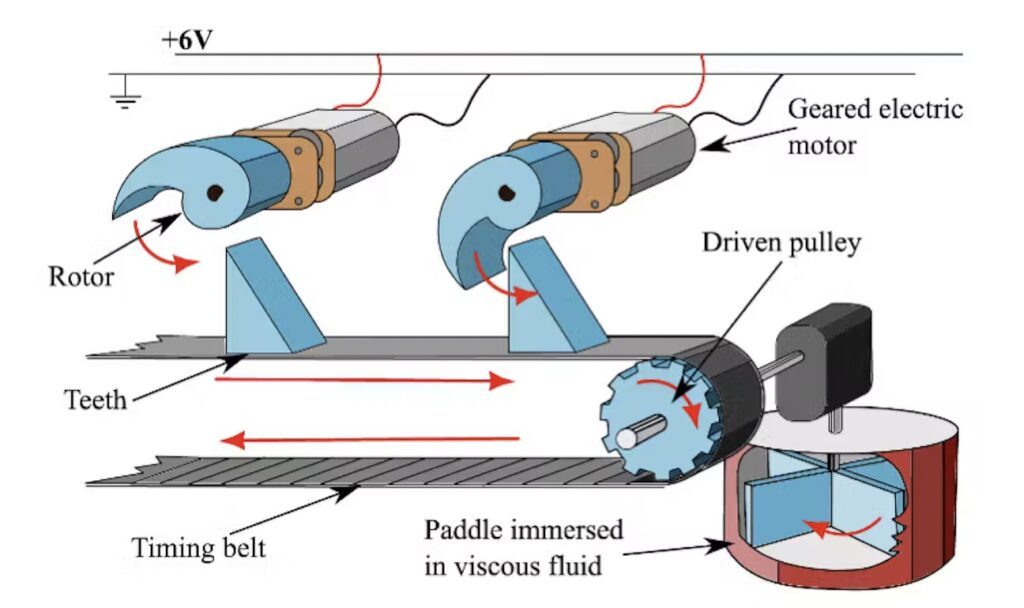
Muscle coordination can be mimicked by electric motors – it could lead to improved robots
Coordination appears to emerge spontaneously from muscle fibres.

Guarding the Gates of Knowledge
A recent scroll through social media got me thinking about trust. About half my feed was filled with AI slop that astute users would call out as being machine-generated, often to the embarrassment of the rube who unknowingly spread it and sometimes to the delight of the poster who shared it delibera