AWS launches open-source Physical AI Toolchain for robotics
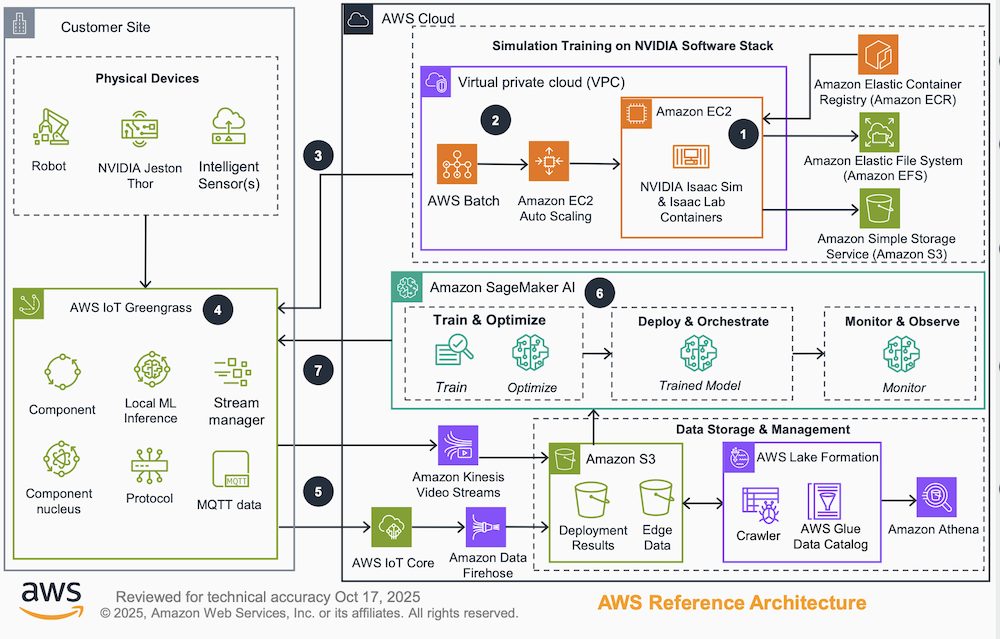
Amazon Web Services (AWS) today launched an open-source Physical AI Toolchain designed to help roboticists move from collecting data to training, simulating, validating and deploying AI models on their robots.
The toolchain brings together AWS services and NVIDIA’s Physical AI software stack into a single development workflow. The goal is to address one of the biggest challenges facing companies developing AI-powered robots: connecting the many pieces required to turn a trained model into a system that can reliably operate in the real world.
“We’re trying to make this easy button, if you will, so that people can actually focus on the problem that they’re trying to solve rather than having to worry about all of the infrastructure,” Sri Elaprolu, director of Frontier AI Science and Engineering at AWS, told The Robot Report .
The Physical AI Toolchain is not a direct replacement for RoboMaker, a cloud-based robotics simulation platform that was shut down in 2025 . Elaprolu described RoboMaker as one of the components of AWS’s robotics stack, while the new toolchain brings together a broader set of development technologies.
From data to deployment
The toolchain combines five pieces of the AI development process: synthetic data generation, model training, simulation and validation, edge deployment, and continuous improvement. A robotics company could collect demonstrations of a robot performing a task, generate additional training scenarios synthetically, train or fine-tune a model, and test that model in simulation before deploying it to a physical robot.
AWS uses Amazon SageMaker for model training and AWS IoT Greengrass for distributing models to edge devices. NVIDIA’s contributions include Isaac Sim, Isaac Lab, Isaac GR00T and Cosmos. Companies can use the components individually or combine them into an end-to-end workflow.
“The amount of data that you need to train these models is significant, and there’s not a lot of data that’s available, unlike LLMs where there’s a ton of data on the internet,” Elaprolu said. “So how do you generate that data? How do you generate synthetic data that is representative of the real world? That’s one of the things that we’re trying to solve.”
Synthetic data can help companies generate additional scenarios, while simulation lets developers test models before deploying them to physical hardware. The toolchain supports a feedback loop in which data collected by robots in the field is returned to the cloud and used to improve models.
“As you start scaling out these robotic deployments, the learnings that get captured locally need to be flown back into the cloud,” Elaprolu said. “So you continually iterate the brain.”
Register now and help us celebrate 20 years of RoboBusiness!
Lessons from Amazon’s robots
Elaprolu said the toolchain includes lessons from Amazon’s own robotics operations, which now include more than 1 million robots . But Amazon’s controlled fulfillment centers don’t represent every environment where Physical AI will operate.
Elaprolu pointed to Japanese robotics company Telexistence, which is deploying humanoids in convenience stores . More than 300 have been deployed, he said, with more expected. Unlike a controlled factory, a convenience store introduces more variables and requires robots to respond quickly to changing conditions.
“The fault tolerance levels tend to be much lower, but at the same time, the response rates have to be much higher,” Elaprolu said.
AWS is keeping the toolchain hardware-neutral. Rather than prescribing a particular robot, it provides infrastructure for training and deploying models across different machines.
“There’s going to be a wide range of hardware designs and components that are being built and will be built in the future,” Elaprolu said. “The toolchain is intentionally staying neutral to that final step.”
Vulcan is Amazon’s first robot with a sense of touch, using sensors to pick and stow items at a fulfillment center. | Credit: Amazon
Tactile sensing and construction
Elaprolu also pointed to tactile sensing as an example of the specialized capabilities Physical AI may require. AWS has worked with RLWRLD, a South Korean company developing tactile capabilities for humanoid hands. Elaprolu said existing models weren’t sufficiently capable for certain five-finger dexterity tasks, leading AWS and the company to develop a specialized model.
Amazon’s Vulcan robot provides another example. The system uses tactile sensing to help manipulate and stow items in Amazon’s fulfillment centers. The Robot Report recently named Amazon’s Vulcan Robot the 2026 Robot of the Year .
The Toolchain isn’t a tactile-sensing platform, but its support for different data sources, model training, simulation and edge deployment could allow developers to incorporate specialized sensing into their systems.
AWS also sees applications beyond warehouses and factories. Elaprolu pointed to Bedrock Robotics, which has developed hardware and AI models for autonomous construction robots . The models are trained in the cloud on AWS and then used to operate equipment in real construction zones.
An open-source approach
The Physical AI Toolchain is open source, allowing startups and larger companies to use and modify it.
Elaprolu said the individual AWS and NVIDIA components have already been used by customers, including companies participating in AWS’s Physical AI Fellowship with MassRobotics and NVIDIA. The new offering packages those components into a more cohesive workflow.
“It’s the packaging them up and making that seamless for a company that’s going to take forward,” he said.
The post AWS launches open-source Physical AI Toolchain for robotics appeared first on The Robot Report .
Les actualités sont collectées automatiquement depuis des flux publics robotique & IA.
Articles liés
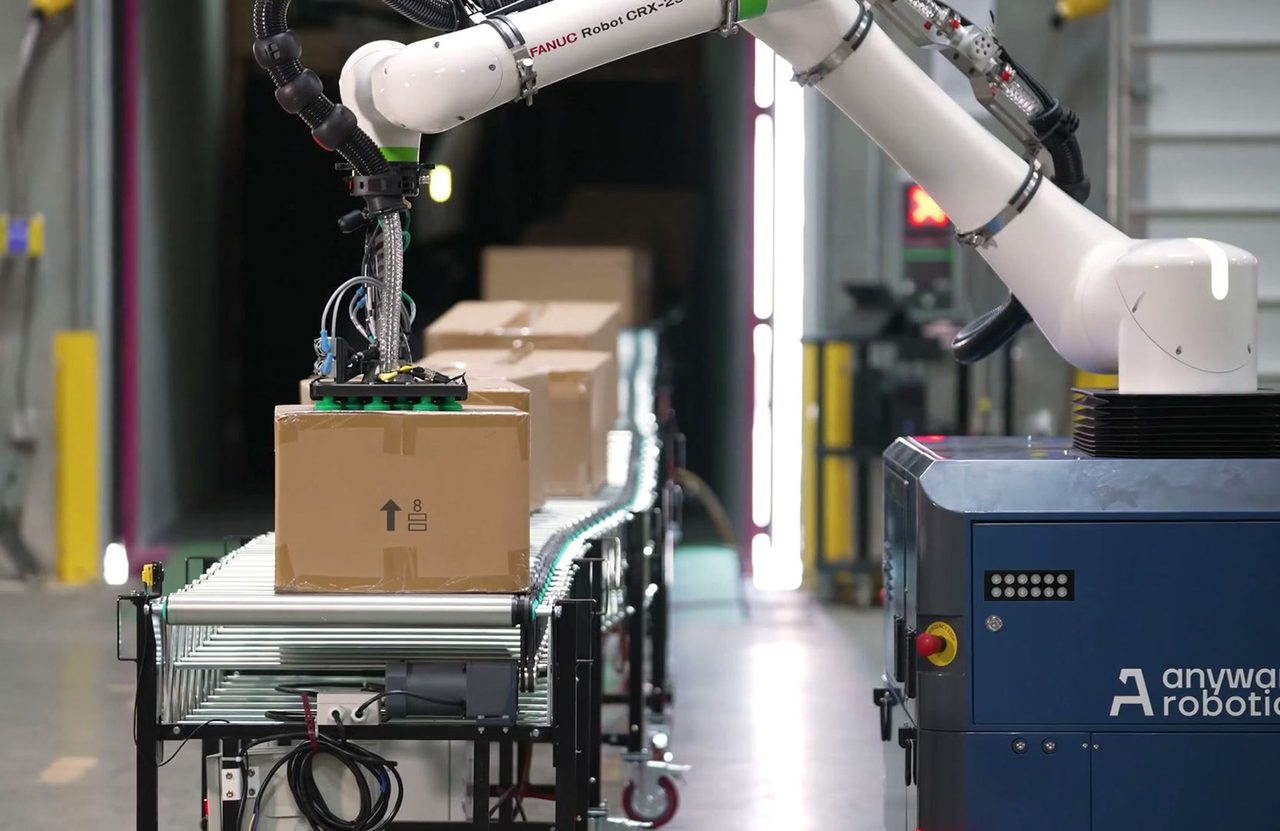
SafeWorld emerges from stealth to build, deploy robot safety simulation technologies
SafeWorld’s platform provides testing and simulation software to help enterprises evaluate and deploy robots safely and responsibly. The post SafeWorld emerges from stealth to build, deploy robot safety simulation technologies appeared first on The Robot Report .
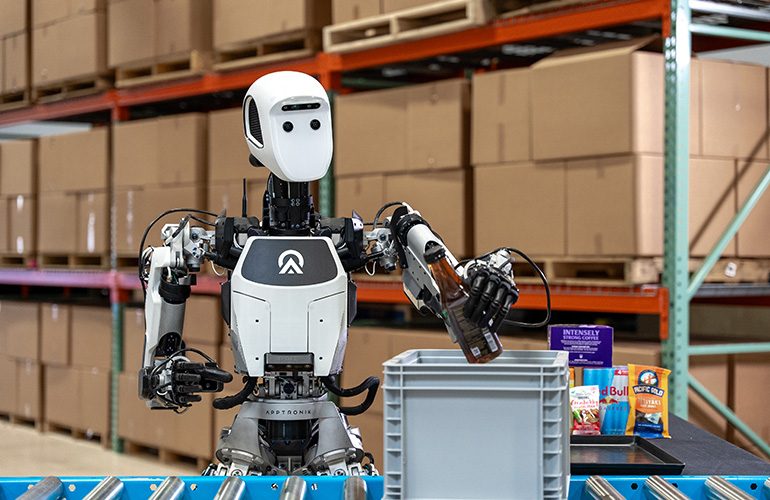
Jabil discusses the pace of humanoid robot development and production
Jabil, which is working with robot developers such as Apptronik, provides a design perspective on humanoid progress. The post Jabil discusses the pace of humanoid robot development and production appeared first on The Robot Report .
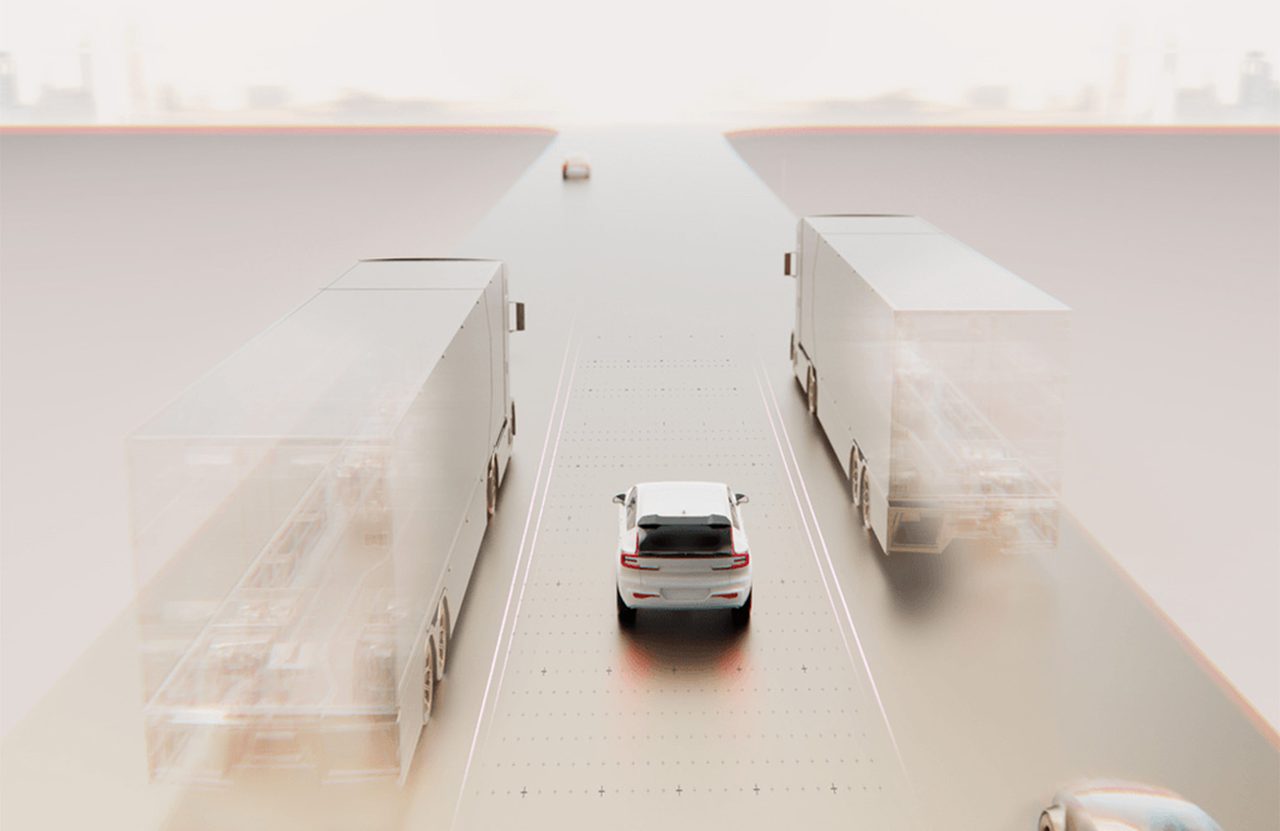
Helm.ai reaches $70M in signed commercial contracts for its foundation models
Helm.ai trained its foundation models using its unsupervised 'deep teaching' methodology to master the structure of the physical world itself. The post Helm.ai reaches $70M in signed commercial contracts for its foundation models appeared first on The Robot Report .
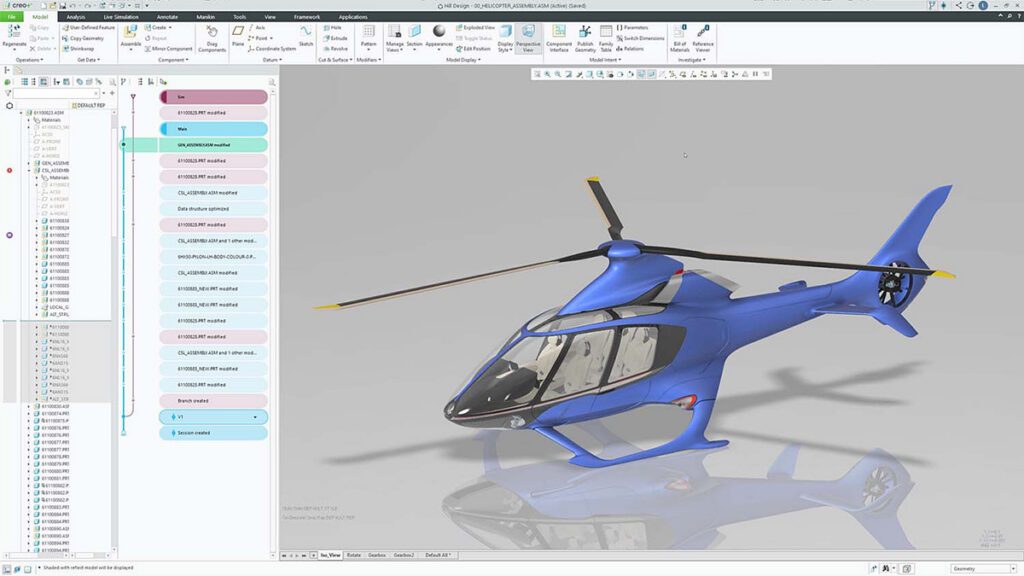
PTC acquisition positions Schneider Electric to challenge Siemens
The Schneider Electric acquisition of PTC gives it a 'digital thread' from design through operations, but it needs to integrate data and software, says Interact Analysis. The post PTC acquisition positions Schneider Electric to challenge Siemens appeared first on The Robot Report .
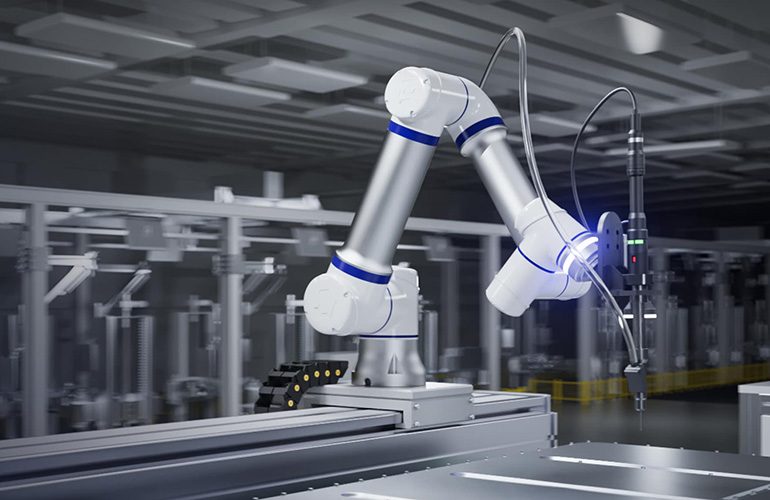
Teradyne Robotics, Elite Robots settle cobot dispute
Teradyne Robotics and Elite Robots have settled their software dispute, ending the legal case without disclosing the terms of the agreement. The post Teradyne Robotics, Elite Robots settle cobot dispute appeared first on The Robot Report .
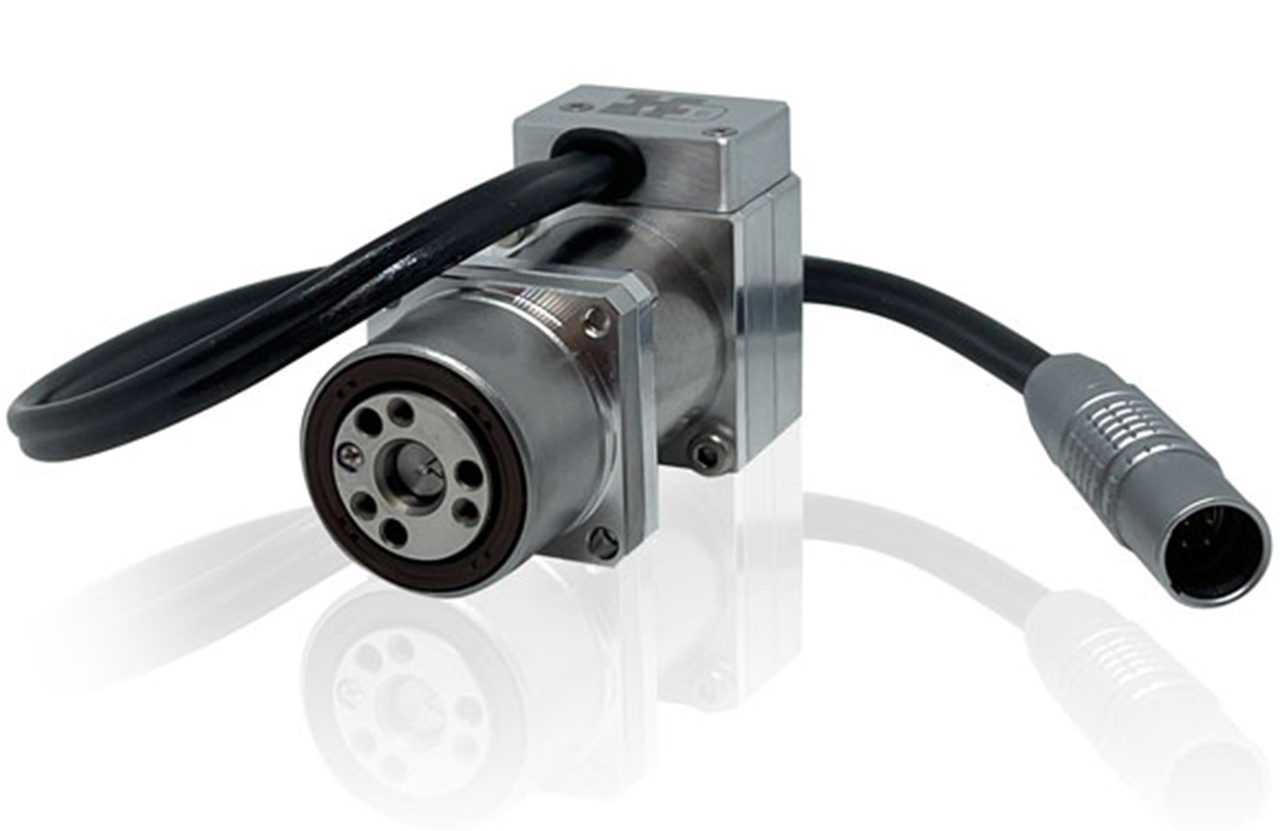
Harmonic Drive to share how integrated actuators can reduce engineering at RoboBusiness
Attendees will learn how integrated actuators can reduce engineering effort by simplifying system integration. The post Harmonic Drive to share how integrated actuators can reduce engineering at RoboBusiness appeared first on The Robot Report .