Bill Gates says to prepare for 20 years of ‘tumultuous’ AI disruption
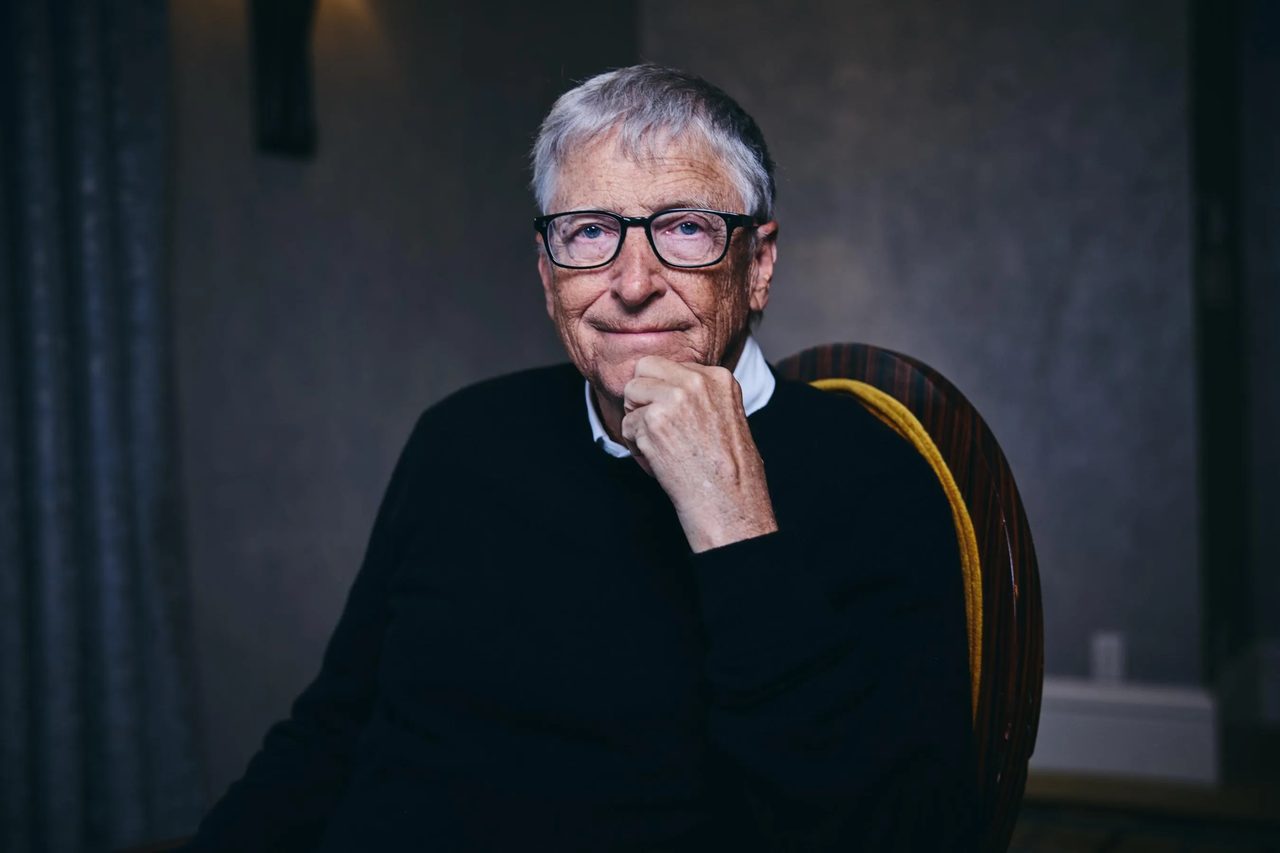
Today, I’m talking to Bill Gates, cofounder and former CEO of Microsoft and chairman of the Gates Foundation.
You may have noticed Bill in the news more lately — he’s been on something of a tour for the past few months, ever since publishing an essay in late August titled “The turbulent AI era is here. The choices we make now are critical.”
In his piece, Gates ratcheted up his rhetoric around AI safety, writing that “even under the best circumstances, the transition to this new AI era will be one of the most turbulent times in human history.”
In interviews since , Gates has called AI “the most dangerous thing that humans have ever gone near,” and that AI “makes nuclear weapons look like nothing.” It is clear he does not think the current policy response from the White House, or the lack of coordinated efforts from the AI industry itself, is sufficient to combat this threat.
Verge subscribers, don’t forget you get exclusive access to ad-free Decoder wherever you get your podcasts. Head here . Not a subscriber? You can sign up here .
So I wanted to know: Is Bill Gates an AI doomer? I also had a series of questions downstream from what he’s been arguing about AI. How can we ever hope to control AI, and align it to humanity, if we can’t even agree on what it is and whether it’s conscious ? How would you even technically construct a solution to alignment that could be enforced, not just for closed-source models but open-source ones, too?
Bill gave us a big chunk of his time to dig into these issues with him, and the resulting conversation is a really illuminating one. He thinks we need to prepare for roughly two decades of AI disruption, and he says this period could be so painful it might split society in two — between people comfortable living near the technological frontier, and those who reject it.
We also talked about the labor considerations, the nihilism of younger generations toward technological progress, and what should make us hopeful about the future. This is a deep one.
Okay: Bill Gates, the cofounder and former CEO of Microsoft. Here we go.
This interview has been lightly edited for length and clarity.
Bill Gates, you are the co-founder and former CEO of Microsoft. You’re also the chairman of the Gates Foundation. Welcome to Decoder .
Thank you.
It’s good to talk to you again. You and I have spoken many times over the years. I would say that the circumstances of this conversation feel very different. Previously, when you and I would talk, you were always very hopeful about technology and what it could bring.
You had a Netflix series a few years ago. You talked to The Verge , and I want to just read you this quote. You said, “I believe AI is a beneficial thing, we just need to shape it in the right way.” I would say you still agree with that, you just think the time to shape it is now.
Yeah, I agree with that. I’d say the response broadly hasn’t been adequate to the speed that the challenge is arising. I’m very concerned that the bad stuff will not be minimized and that a lot of good stuff could come fairly slowly if we don’t manage it the right way.
I’m very concerned that the bad stuff will not be minimized and that a lot of good stuff could come fairly slowly if we don’t manage it the right way
I want to have this conversation with you in three parts. I want to understand how you feel about AI as a technology today and why it’s advancing so quickly. I’m very curious about the technology, and the technical solutions to potentially control it. There are policy solutions as well, but it seems like we have to build an awful lot of technology.
I’m also very curious to talk about who might impose those solutions and controls, because that seems very much up for debate right now as well. So let’s just start at the start. What has made you feel the urgency that AI is arriving at a speed that means we’re not ready to control it?
The progress over the last year has been really quite amazing, starting with the ability to write code and find cyber flaws, the ability to reason in biology, the ability to form relationships with kids or other people, the ability to disrupt the job market. The incredible power that exists today means that every one of those things will happen and society needs to be ready.
Do you see that happening as a technology as a whole or in the products that are instantiated by the companies that are making AI today?
What I mean is that AI is a broad set of models that exist in the world, some open source, some proprietary. Then there are the companies that make these products and there are the leaders of those companies that make these products.
At every level, there’s a different relationship you or I might have to AI. Are you seeing these risks and these capabilities broadly in the field, or in the particular companies led by the particular people?
The risk isn’t one model versus another model. Certainly, the near-term danger of models where you can remove all the safeguards is very high and quite different from models where you monitor to make sure that cyberattackers and bioterrorists are not able to exploit the capability of the model to do gigantic harm.
The big near-term risk really comes from models without safeguards. On a longer timeframe, the control issue relates to any state-of-the-art model, but it’s always easier when you can make sure safeguards are maintained.
The reason I’m asking that question that way is maybe you don’t trust Sam Altman today, but you trust Dario Amodei. Or maybe you don’t trust either one of those and you trust Satya Nadella at Microsoft, and that is a market dynamic where maybe we’re all going to pick the safest model or the safest company, and you think that is diffuse.
You think eventually the technology will just get to a place where it’s harmful or can cause these harms because it exists?
For somebody doing a cyberattack with the model, it’s not about choosing a model. It doesn’t matter what model…
Les actualités sont collectées automatiquement depuis des flux publics robotique & IA.
Articles liés
OpenAI, Anthropic, and Nvidia had record lobbying quarters
It was a busy summer for AI lobbyists. Anthropic, OpenAI, and Nvidia each had their highest-spending lobbying quarter between July and September, federal disclosures show. Nvidia spent the most of the group at $2.2 million, followed by Anthropic's $2.1 million and OpenAI's $1.5 million. Compared to
1Password lets AI agents use your passwords without seeing them
1Password is introducing a new feature that allows AI agents to sign into your accounts without actually seeing or handling your passwords. The aptly named 1Password for Agents doesn't give bots free reign to access all of your connected accounts - you'll still need to grant approval for sign-in req
Hackers got a four-day head start on epic PHP2Shell vulnerability
Hackers were already probing the bug before defenders were told it existed.
Eiliko maker says it’s hiring an ‘independent security firm’ after Verge report on its insecure robots
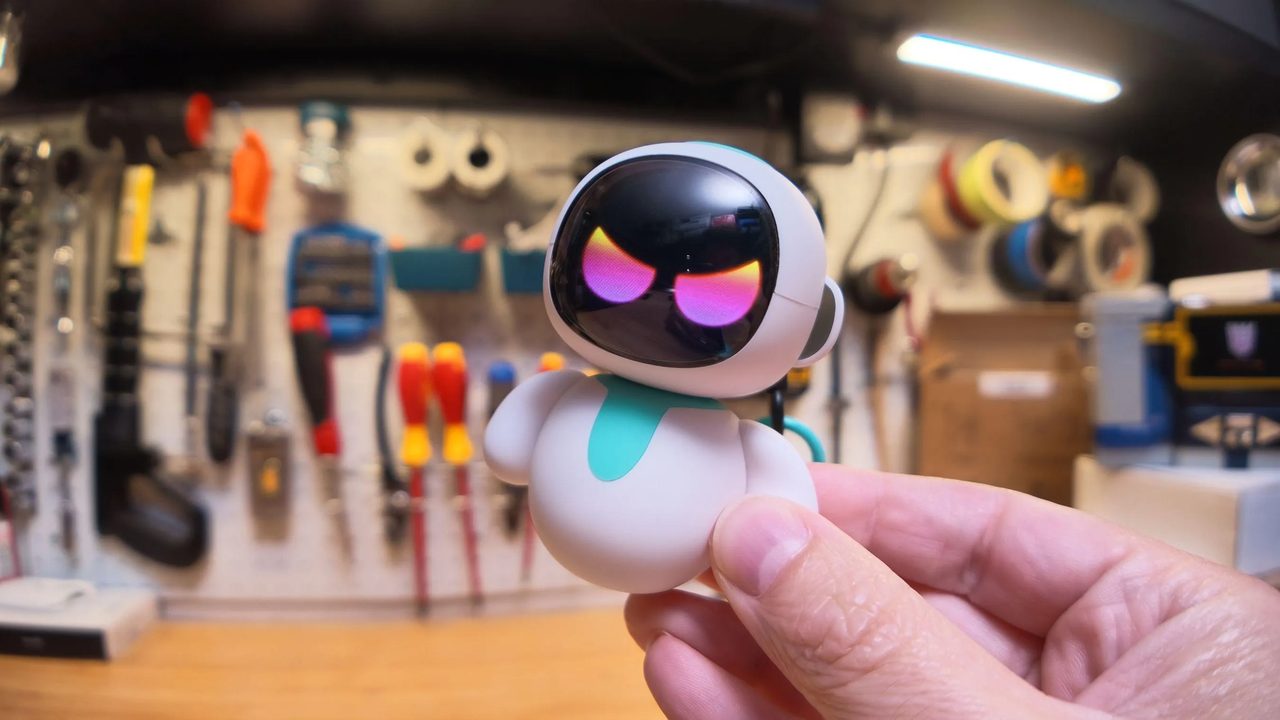
Eiliko, a cute robot charm you can hang on your bag with built-in AI conversations, turned out to be a security nightmare. It told owners that "your secrets are safe with me," but hackers could easily read complete transcripts of everything we told the toy, and that was just the beginning. The Verge
PHP: The three little letters wreaking havoc across the web
Two vulnerabilities found in the programming language PHP put enormous swaths of the internet in danger. By some accounts, up to 70 percent of websites use PHP in some capacity. It powers Wikipedia, WordPress, Drupal, and a host of other popular sites and platforms, including DeviantArt and 4Chan, w
AI agents are ready to shop. Some retailers are wary
Using an AI agent to shop for you is a strange experience. Tech companies have marketed them as personal assistants - the democratizing of labor that ordinarily would only be available to the rich and powerful. In practice, at least for buying things, it's more like sending an anxious and apologetic