FCC should focus on robot security, not country of origin
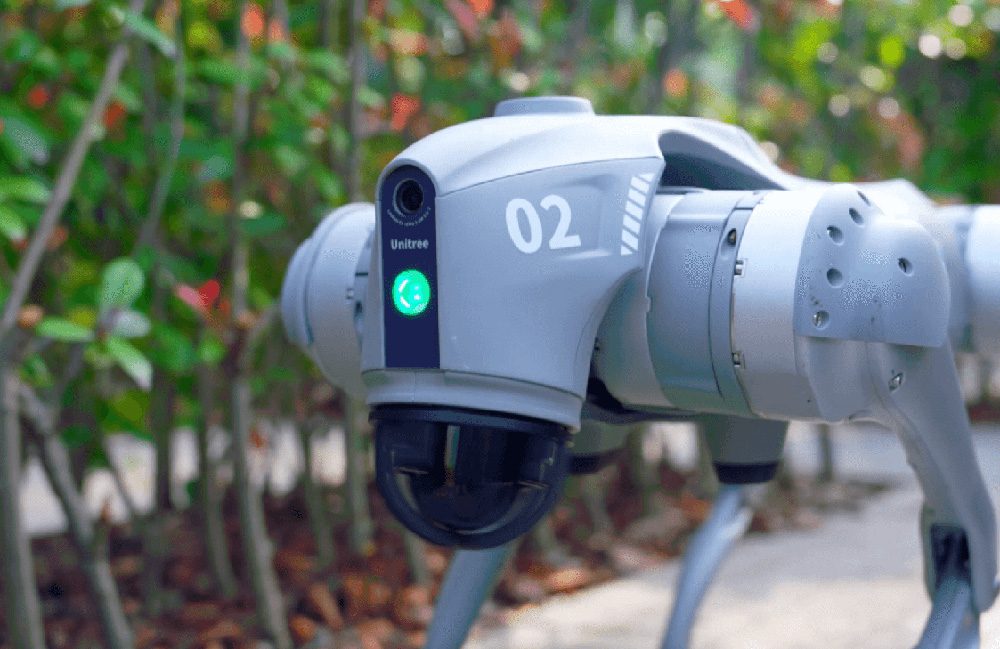
The Go2 quadruped robot from Unitree, a prominent Chinese robot developer. | Source: Unitree
The FCC is right to treat connected robots as a security issue . Its recent action restricting foreign-produced advanced robotic devices reflects a real risk. These machines carry cameras and sensors, transmit data, take remote software updates, and make their own decisions inside factories, warehouses, stores, and airports.
But where a robot was assembled tells you little about who controls it once it’s deployed. A robot built entirely in the United States, with unsigned updates and open remote access, is a bigger risk than one built overseas with secure software. The real security boundary is the code, the data, and whoever can change them, not the chassis.
The FCC has already recognized this. Its definition of a covered device relies on software: firmware and AI or machine-learning model weights that control navigation, perception, data collection, and remote command and control. The agency has identified the layer that matters. The next step is to turn that critical layer into the standard.
Brain Corp builds autonomy software, so of course I think software deserves scrutiny. But that’s also why I know where the risk lives. Our technology runs more than 50,000 robots on six continents and has logged more than 25 million hours of autonomous operation. At that scale, the failures that matter are rarely in the hardware. They’re in how software gets updated, who can reach the machine, and what happens when it meets a situation nobody anticipated.
Regulate control, not just origin
Software provenance alone can’t mean where the code was written. Robots run on open-source libraries, globally trained models, and international engineering teams. What should matter is provenance of control, demonstrated rather than declared. Any robot deployed in a sensitive or public setting, wherever its parts came from, should be able to show:
Who can push code to it, and that every update is signed and verified before it runs.
That unauthorized code can’t execute.
Where its data goes, where it’s processed, and who can access it.
How remote access is granted, logged, and revoked.
How quickly a newly discovered vulnerability can be patched across the entire fleet.
An independent safety layer that the AI cannot override.
Independent audits and certifications that back up all of the above.
Submit your innovation now!
AI can be probabilistic. Physical safety can’t be.
The safety layer deserves emphasis, because AI is changing what robots can do faster than policy is changing how we judge them. When a chatbot gets something wrong, the result is a bad answer. When a robot gets something wrong, it could generate unsafe behavior in a crowded aisle or beside a worker.
AI models will make robots far more capable, but they shouldn’t be the final authority over physical behavior. Robots need deterministic constraints beneath the intelligence layer. If a model proposes an unsafe action, an independent mechanism must stop it, and sensor data should check the model’s reading of the world rather than defer to it.
The more sophisticated the models become, the more this separation matters, and the more it belongs in any serious security standard.
The next step
The industry doesn’t need to wait for regulators to adopt these standards. Developers can publish how their systems meet them today, and enterprise buyers can require them in procurement. But voluntary practice is no substitute for a clear rule.
The FCC has already recognized that a robot is defined by its software. The next step is to regulate it that way: not just where the parts were made, but who controls the code.
About the Author
David Pinn assumed the role of CEO at Brain Corp in 2022, where he has held various executive positions since joining in 2017, including chief strategy officer and chief financial officer. During his tenure, Pinn was instrumental in leading Brain Corp’s transformation from a robotics hardware company to a software as a service (SaaS) provider. He played a pivotal role in securing over $100 million in funding from prominent investors such as the SoftBank Vision Fund, Qualcomm Ventures, Hercules Capital, ClearBridge Investments, and Satwik Ventures.
Prior to joining Brain Corp, Pinn served as head of finance for Antenna79, a technology startup backed by L Catterton, the world’s largest consumer-focused private equity group, where he facilitated the raising of $94.9 million in private equity funding. Before his tenure at Antenna79, Pinn co-founded Snaptracs, Qualcomm’s consumer electronics subsidiary. Under his leadership, Snaptracs was successfully sold, leading to a merger with Whistle and a $117 million acquisition by Mars.
Pinn holds a Bachelor of Science degree in Electrical Engineering from the University of Texas at Austin and a Master’s in Business Administration from the University of California, Berkeley, Haas School of Business.
The post FCC should focus on robot security, not country of origin appeared first on The Robot Report .
Les actualités sont collectées automatiquement depuis des flux publics robotique & IA.
Articles liés

How Vention is cutting factory programming from weeks to minutes
Etienne Lacroix explains why AI deployment—not just better models—will define the future of industrial automation. The post How Vention is cutting factory programming from weeks to minutes appeared first on The Robot Report .
Robotics Summit 2027 opens call for speakers
The Robotics Summit & Expo returns to Boston June 2-3, 2027 with deepened coverage, an expanded expo floor, and more. The post Robotics Summit 2027 opens call for speakers appeared first on The Robot Report .

商汤开源生图新模型!8B参数拍大片、做设计,还会自我纠错
智东西 作者 | 江宇 编辑 | 漠影 现在,想让AI生成一张漂亮的照片,已经不是什么难事。但要让它拍出电影里的氛围感,光靠高清画质和滤镜恐怕还不够。 就拿《爱乐之城》来说,这部斩获奥斯卡最佳摄影奖、英国电影学院奖最佳摄影奖的电影,堪称电影色彩与摄影构图的“教科书”。为了拍出男女主角在洛杉矶山坡上共舞的场景,剧组专门选在日落前后的短暂时段开机,连续两个晚上拍摄,最终留下了电影中那段近六分钟的长镜头。 摄影指导莱纳斯·桑德格伦(Linus Sandgren)还通过偏绿色的顶部补光与后期调色,让黄昏呈现出更浓郁的紫红色。女主角的一袭黄色长裙、远处的洛杉矶城市景观,也在精心设计的构图中融为一体。 ▲
SoftBank acquires Marc Raibert’s Robotics and AI Institute
SoftBank has completed its acquisition of the Robotics and AI Institute from Hyundai Motor Group, expanding its robotics portfolio as the research organization looks to fill 24 open positions in Massachusetts and Switzerland. The post SoftBank acquires Marc Raibert’s Robotics and AI Institute appear

小米Q3财报出炉:AI研发占比超30%,卢伟冰吐槽内存涨价压力大
智东西 作者 | 杨京丽 编辑 | 云鹏 智东西11月24日报道,今天,小米集团发布2026年第三季度财报。 第三季度,小米营收为 1072.40亿元 ,同比 下降5.2% ;净利润 38.76亿 ,同比 下降68.42% ;经调整净利润为 48.84亿元 ,同比下降56.8%;毛利为 216.15亿元 ,同比下降 16.7% ,毛利率为 20.2% 。小米单季度研发开支为 92亿元 ,同比增长2%;前三季度研发开支达到 274亿元 ,同比增长 16.5% 。 ▲小米营收、净利润、研发开支情况(智东西制图) 截至9月30日,小米拥有 52509名全职员工 ,较去年同期 减少3722人 ,其中研
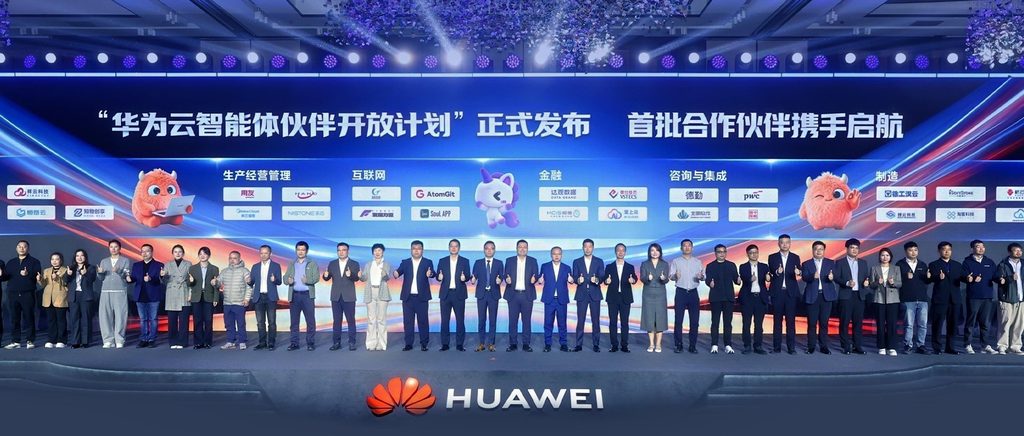
刚刚,华为云开放AgentArts智能体平台,康晓宇:我们不抢流量入口
智东西 作者 | 李水青 编辑 | 云鹏 智东西11月24日报道,今日,在华为云智能体伙伴开放计划发布会暨智果生态大会上, 华为云 联合中软国际、软通动力、德勤、乐石科技、AtomGit、北明软件、致远互联等 首批30多家 伙伴发布 智能体伙伴开放计划 。该计划开放 智果AgentArts智能体平台 ,以及 果办OfficeAce、码道CodeArts 等智能体平台化产品及开发工具。 当前,智能体在企业规模化落地仍面临 业务融合难落地、生产运行难评估、执行风险难掌控 等挑战,伙伴基于开源工具构建存在 失控风险、高维护成本以及自研智能体难以竞争用户流量 等难题。智能体要走向规模化落地,需依靠企业