Gentherm designs ThermAffyx to protect, move patients during robotic surgeries
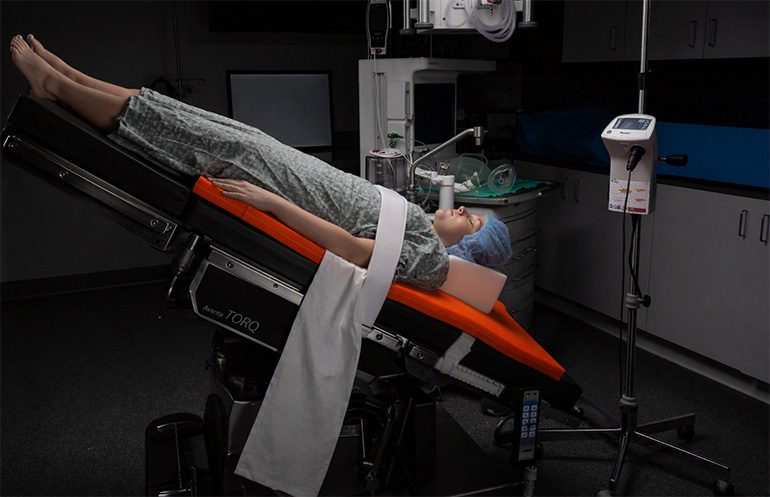
ThermAffyx both securely positions and warms patients during robot-assisted surgeries. Source: Gentherm
Many healthcare advances come from within that industry, but innovations from other industries can also find a role. Gentherm Medical has designed its ThermAffyx Patient Safety System based on thermal management experience from the automotive industry.
The system both securely positions a patient and provides patient warming for robot-assisted surgery . Gentherm Inc. said ThermAffyx does both while minimizing the amount of space required and without the need for forced-air equipment.
The Novi, Mich.-based company launched the system at the Association of periOperative Registered Nurses (AORN) Global Surgical Conference this year. Gentherm noted that numerous medical professionals told it that “almost all of their robotics patients are hypothermic.”
Adam Hauke, global director for product strategy and innovation at Gentherm, replied to the following questions from The Robot Report .
Gentherm addresses Trendelenburg challenge
What is the challenge that ThermAffyx addresses, and how are patient positioning and hypothermia handled conventionally?
Hauke: The ThermAffyx Patient Safety System combines active patient warming and secure positioning into a single solution, helping address two critical perioperative challenges: maintaining normothermia and reducing patient movement during surgery.
The current standard of care consists of forced-air warming solutions and a securement pad. Historically, warming and positioning have been addressed independently because, in many surgical procedures, they do not significantly interfere with one another. However, that’s not the case in most robotic-assisted surgeries.
These procedures frequently require patients to remain in Trendelenburg positioning, where the body is tilted head-down to provide surgical access to the pelvis and lower abdomen. Patients may remain in these positions for extended periods while robotic systems are docked and utilized.
This positioning introduces several challenges, including increased pressure and shear forces that can contribute to pressure injuries, the potential for nerve-related complications if positioning is not optimized, and the risk of patient movement or shifting during lengthy procedures. Underbody securement pads are designed to address these positioning challenges.
At the same time, maintaining normothermia becomes more challenging because robotic equipment occupies the physical space that traditional over-body warming solutions must be deployed in. In these situations, clinicians often rely on under-body warming approaches, but they are difficult or impossible to use in robotics because they would interfere with the underbody securement pads used for safely positioning the patient.
Suddenly, warming and positioning are no longer separate considerations. They are competing for the same real estate.
How much do patients move around during surgical procedures?
Hauke: In the routine course of things in the operating room, “patient movement” is not tracked. “Patient movement,” if it is recorded it is done so as “light anesthesia.” It is usually referring to if the patient’s anesthetic wears off prematurely and they move a hand or leg type thing.
No one is measuring anything on the OR table related to patient movement, as everything is under the sterile drape at that point. The only way the surgical team knows if a patient moves, is if there is tension on the robotic instruments typically.
Any unintended patient movement during robot-assisted surgeries can vary greatly based on a number of factors. There are multiple contributing individual factors such as patient weight, height, and body proportions, as well as procedure-based factors such as the patient position, the steepness the OR table is tilted to and whether or not other positioning solutions are used such as stirrups.
If there is a shift related to Trendelenburg, it’s usually noticed by anesthesia as difficult respirations or a drop in capnography. An actual measurable shift in a patient on the OR table doesn’t occur very often and is not currently a recorded stat.
Submit your innovation now!
Is there a weight or size range for the system?
Hauke: The ThermAffyx System is intended for adult patients and has been tested on individuals up to 297 lb. [134.7 kg]. The Pad is designed so that a patient can be positioned anywhere within the heating zone to receive active warming.
The Pad’s safety sensors do not require direct patient contact to function. As always, clinicians should follow their facility’s protocols and guidelines for safe patient positioning.
Does Gentherm’s system require more power than existing setups?
Hauke: No, ThermAffyx runs on standard hospital electrical outlets.
Is there any danger of thermal or electromagnetic interference with certain surgical instruments?
Hauke: We have mitigated the risks of compatibility with other devices as far as possible. The system has been designed and verified to comply with all applicable industry standards and FDA guidance — including compatibility with electrocautery, diathermy, defibrillation equipment, RFID devices, wireless power transfer devices, and 5G cellular networks. Therefore, the risk of thermal or EM interference is low.
However, there is always residual risk of issues occurring. We do not control the design and use of external devices that may be used in combination with ThermAffyx, and thus cannot guarantee other devices have been designed to meet the same standards or that devices are being used per the manufacturer’s labeling.
ThermAffyx moves toward the market
How is the system progressing toward commercialization?
Hauke: Commercialization is well under way. Our teams are in active trials across the country with strong adoption in both new accounts and our legacy Gentherm accounts.
How difficult was it to get U.S. Food and Drug Administration clearance?…
Les actualités sont collectées automatiquement depuis des flux publics robotique & IA.
Articles liés
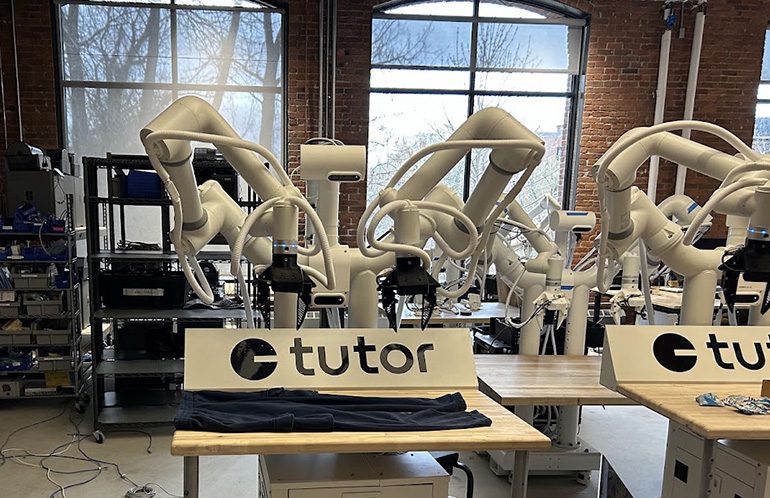
Tutor Intelligence raises Series B to scale model training, robot deployments
Tutor Intelligence has raised funding to further develop its picking robots, networked intelligence, and commercial deployments. The post Tutor Intelligence raises Series B to scale model training, robot deployments appeared first on The Robot Report .
Top 10 robotics developments of October 2026
Last month, we celebrated the 20th anniversary of RoboBusiness, whic is being rebranded to Robotics Summit & Expo West. The post Top 10 robotics developments of October 2026 appeared first on The Robot Report .

What AgTech founders get wrong about ROI
Connie Bowen, the founding general partner of Farmhand Ventures, discusses the importance of return on investment for AgTech developers. The post What AgTech founders get wrong about ROI appeared first on The Robot Report .

116亿元国产算力大单!大华股份拿下26.3亿
智东西 作者 | 李水青 编辑 | 云鹏 智东西11月2日消息,刚刚,智能物联龙头企业 大华股份 发布公告,确认旗下子公司浙江华启智慧科技有限公司(简称: 华启智慧 )中标中国移动超节点设备集中采购项目,中标金额约为 26.3亿元。 ▲大华股份公告 9月29日,中国移动发布“2026年至2027年新一代人工智能超节点设备集中采购项目”招标公告,计划采购AI超节点合计 20480卡 ,及配套Roce交换机448台、存储82套。 ▲招标公告部分截图 10月28日,招标人对标的项目的中标候选人情况进行公示, 华鲲振宇、宝德计算机、华启智慧、百信信息、神州鲲泰 五家公司进入中标候选人名单,拟中标份额分

美团发1.6万亿参数新模型,通用Agent测试超Opus-5,国产芯特别优化
智东西 作者 | 杨京丽 编辑 | 李水青 智东西11月2日报道,今日,美团LongCat团队发布面向 长程智能体任务 的原生多模态模型 LongCat-2.5 。 该模型总参数量为 1.6万亿 ,每个Token激活约 480亿参数 ,在LongCat-2.0的基础上,重点强化 原生视觉理解与智能体编程能力 。 在美团公布的自动化任务基准AutomationBench、通用Agent任务基准LongCatClawBench等几项基准测评中,LongCat-2.5均 领先Claude-Opus-5、GPT-5.6-Sol等模型 ;在终端操作基准Terminal Bench v4.0上,LongC
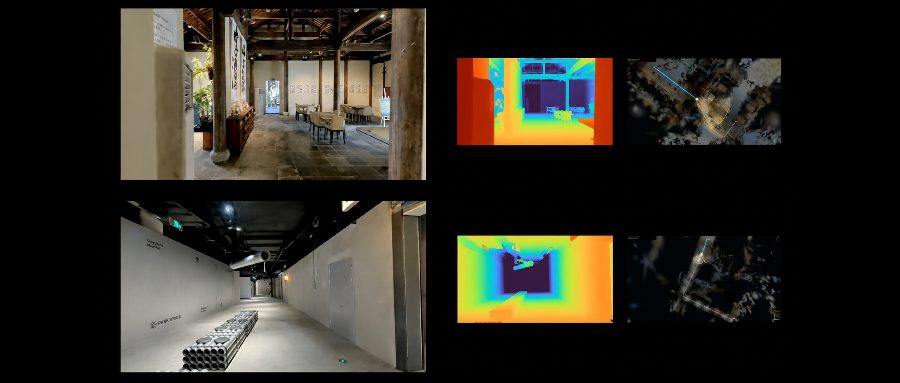
成本压至 1/10!告别人海采数,具身数据Token工厂要如何跑通?
智东西 作者 | 王涵 编辑 | 漠影 过去几年,AI的两次规模化发展,都离不开 充足的数据供给 。 大语言模型可以直接利用互联网上积累多年的网页和代码数据,通过持续训练提升模型能力;自动驾驶企业则可以依靠量产车辆的影子模式(Shadow Mode),从真实道路中持续收集行驶数据和人工接管记录。以特斯拉为例,其通过全球数百万辆量产车,将数据采集融入日常驾驶过程,不需要额外组织大规模人工采集。 但到了具身智能领域,这样的数据供给条件并不存在。 过去两年,行业主要依靠真机遥操作和第一视角(EGO)可穿戴设备采集数据,累计获得的真机有效数据和EGO数据也 只有数百万小时 。对于已经投入大量资金的机器