How ADI is helping robotics startups scale
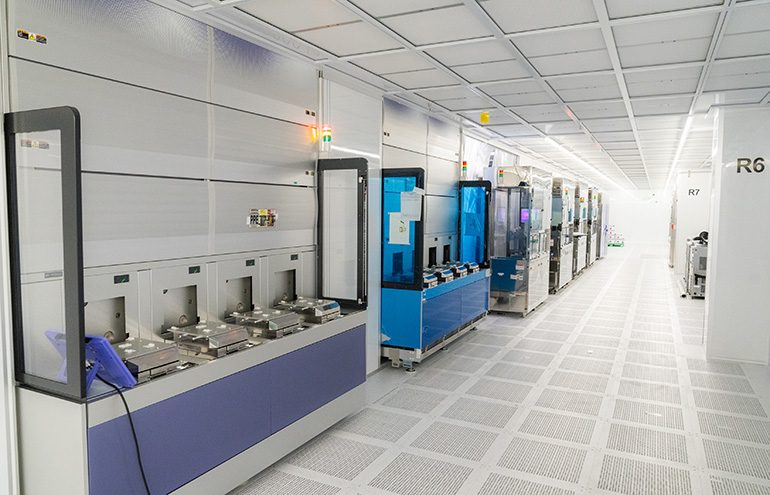
The ADI cleanroom in Beaverton, Ore.
Sponsored by Analog Devices Inc.
Robotics companies are developing new capabilities at a rapid pace, from autonomous mobile robots to humanoid systems. However, keeping up with technological advances is one part of the challenge. The most critical thing is to turn a successful prototype into a commercially viable product that can be manufactured and deployed at scale.
“The biggest challenge I see robotics startups facing today is the speed at which the industry moves,” says Cameron Villone, Senior Product Technology Manager at Analog Devices Inc. (ADI).
In most cases, a startup excels in adopting next-generation technologies in sensing, motion control, and AI, but commercialization requires additional expertise in electronics, system integration, validation, and manufacturing. These demands can often stretch the resources of smaller engineering teams.
ADI is developing its Emerging Tech Hub within the Analog Garage to help robotics startups and established companies overcome these challenges. The Emerging Tech Hub is intended to give companies access to ADI engineers, prototyping and testing resources, and manufacturing and sourcing expertise as they prepare their designs for production.
The challenges of scaling robotics innovation
ADI was recently highlighted in The Race to Make AI Physical whitepaper explaining how physical AI brings together sensing, signal conversion, perception, reasoning, control, computing, and validation. These functions must work together for a robot to perform reliably. Even when a robot makes the right decision, executing that decision depends on accurate sensor data, timely control signals, and sufficient power to drive its actuators.
These engineering requirements continue to change as the product progresses from prototype to production. For example, a prototype needs to demonstrate whether technology can work, but commercialization requires the complete system to perform consistently under different operating conditions.
ADI describes this through four stages: Idea, Prototype, Validate, and Scale. The initial stages focus on developing and demonstrating the concept, while validation involves testing the integrated system, identifying potential problems, and optimizing the design before production. Scaling introduces additional manufacturing and supply chain requirements.
Robotics companies need to secure components, coordinate production, and maintain consistent quality as volumes increase. “ADI’s expansive experience in sensor development and semiconductor manufacturing allows for knowledge-driven support when these robotic developers move from idea to production,” says Villone.
These changing demands for a robotics startup are the gaps ADI’s Emerging Tech Hub is intended to address.
The Emerging Tech Hub brings expertise and resources
The Emerging Tech Hub is a robotics-focused initiative being developed to bring startups and established robotics companies closer to ADI’s technical teams, including engineers implementing newly released or still-in-development technologies.
Villone describes the approach as “co-development,” where when a company approaches the Emerging Tech Hub, the first step is to establish their current capabilities, what they are trying to achieve, and how to algin align these goals with the Emerging Tech Hub’s mission. From there, the two sides can determine what kind of collaboration is appropriate.
The engineering support from ADI will depend on the robotics company’s stage and needs. For example, a mature robotics developer might need a particular semiconductor component, while another may be trying to solve a different engineering problem, prompting the Emerging Tech Hub to find specialists within ADI. An early-stage startup might need broader guidance to clarify its architecture and identify what further development requires.
The Emerging Tech Hub brings three areas of support together. The technical expertise ranges from robotics, control, edge AI, power, and system integration. Development resources include laboratories, prototyping tools, reference designs, testing and validation capabilities, and hands-on engineering support. For companies preparing to increase production, it also provides sourcing guidance and industry connections.
Villone said ADI has recruited robotics experts from across the industry to be better equipped to handle fast paced robotic development. He cited ADI’s GMSL technology as one example of expertise that can help robotics developers address camera connectivity and integration. This support extends beyond simply component selection to decisions about how technologies fit within the wider robotic system.
The Emerging Tech Hub is still being prepared for wider external participation, with applications expected to open by the end of 2026.
Bridging startup agility and corporate resources
Startups need flexibility to test ideas quickly and retain control of their technology. But working with a large technology company can introduce a tension between speed and structure.
Villone acknowledged that some startups are reluctant to work with larger corporations because they worry about what such a relationship could mean for their business. However, he sees an opportunity when the intentions are clear.
ADI’s interest is in enabling robotics applications using its semiconductors, while startups can benefit from expertise and resources that would be difficult to develop independently. The partnership works best when both sides understand what they want to accomplish.
This is the same model ADI is proposing for its Emerging Tech Hub. The company describes the relationship as collaborative, with flexible, startup-friendly engagement , with the and startups retaining their intellectual property. These principles allow companies to seek technical support without surrendering ownership of their innovations.
The same questions will be explored at…
Les actualités sont collectées automatiquement depuis des flux publics robotique & IA.
Articles liés
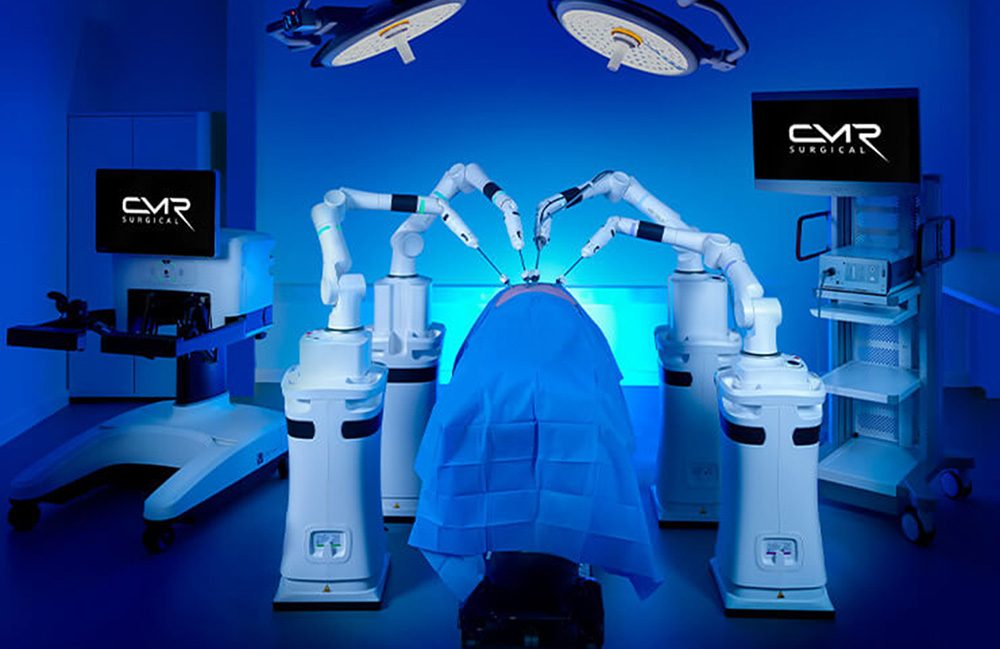
Stryker invests $400M into CMR Surgical
Stryker plans to serve as the exclusive sales agent in the U.S. for the Versius robotics portfolio from CMR Surgical. The post Stryker invests $400M into CMR Surgical appeared first on The Robot Report .

Anthropic三季度收入1124亿,还盈利了
智东西 编译 | 杨京丽 编辑 | 李水青 智东西10月15日消息,据The Information援引知情人士消息,当地时间10月14日,Anthropic在旧金山举行的潜在IPO(首次公开募股)投资者会议上披露,该公司第三季度营收达到 168亿美元(约合人民币1123.92亿元) ,环比增长约 45% ,超过2025年全年营收的 3.6倍 。 会上,Anthropic披露,其第三季度已实现调整后 盈利 ,经营性现金流为正。今年前三季度累计调整后营业利润率达到 11% ,这一指标剔除了股权激励等重大成本。此次投资者会议是Anthropic筹备IPO过程的一部分。据The Informatio

OpenRouter周榜全球第二,这个国产模型终于开源了
智东西10月15日报道,刚刚, 一款刚登上OpenRouter Token全球使用量周榜第二的大模型,开源了! 阶跃星辰正式开放 Step 5 Preview 的模型权重,BF16、FP8两个版本同步上线HuggingFace和ModelScope。 Hugging Face:https://huggingface.co/stepfun-ai/Step-5-Preview ModelScope:https://modelscope.cn/models/stepfun-ai/Step-5-Preview Step 5 Preview采用稀疏MoE架构, 总参数量600B、激活参数仅27B ,支持

万字深度解密:华为麒麟2026韬定律大量技术细节首披露
智东西 作者 | 云鹏 编辑 | 李水青 智东西10月15日报道,近日,华为在上海练秋湖畔举办了一场为期两天的深度技术沟通会,从 影像、屏幕、可靠、定位、声音5大方向9大技术 品牌,到 麒麟9050系列背后韬定律、逻辑折叠、混合键合 等海量技术细节,华为首次详细对外解读。 主讲人分别为第一天的 华为终端BG CTO李小龙, 以及第二天的 华为半导体业务无线终端芯片产品管理部部长徐松余。 值得一提的是,这也是 时隔6年,华为再次对外详细解读麒麟芯片, 其重要意义不言而喻。 两天的沟通会信息量极大,可以说干货多到爆: ·内含 300多个零部件 的影像“巨炮” Z10模块相机 如何突破光学硬件的物理
剑指博通,这家国产互连芯片公司藏不住了
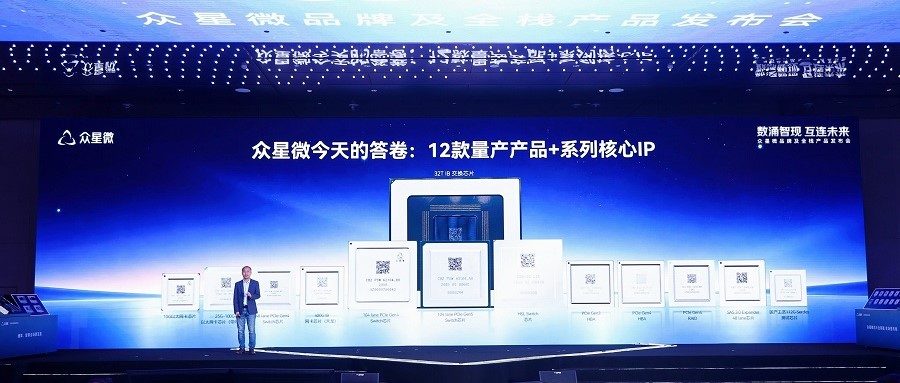
智东西 作者 | 陈骏达 编辑 | 漠影 AI算力的竞争,不只发生在芯片内部,也发生在芯片与芯片之间。 一颗芯片的峰值算力再高,也不意味着数百颗、数千颗芯片组成的集群就能发挥出相应的性能。数据能否高速传输,计算、存储与网络能否高效协同,都会影响整套系统的实际表现。 随着AI集群规模愈发庞大,互连已不再只是连接硬件的配套环节,而是决定算力能否充分释放的重要一环。面临这一挑战,国产互连厂商究竟应该如何破局? 今天,在国产互连芯片赛道深耕6年、相对低调的 无锡厂商众星微 ,在品牌及全栈产品发布会上 首次集中展示其全场景高性能互连芯片平台 。该平台围绕通用计算互连与智能计算互连展开布局,覆盖存储、网络
Agility chooses Nyobolt for ultra-fast charging for Digit 5 humanoid
Nyobolt is providing power technology for Digit 5 that enables Agility's humanoid to work up to 20 hours a day. The post Agility chooses Nyobolt for ultra-fast charging for Digit 5 humanoid appeared first on The Robot Report .