Humyn Labs raises $47M to collect real-world data for robotics
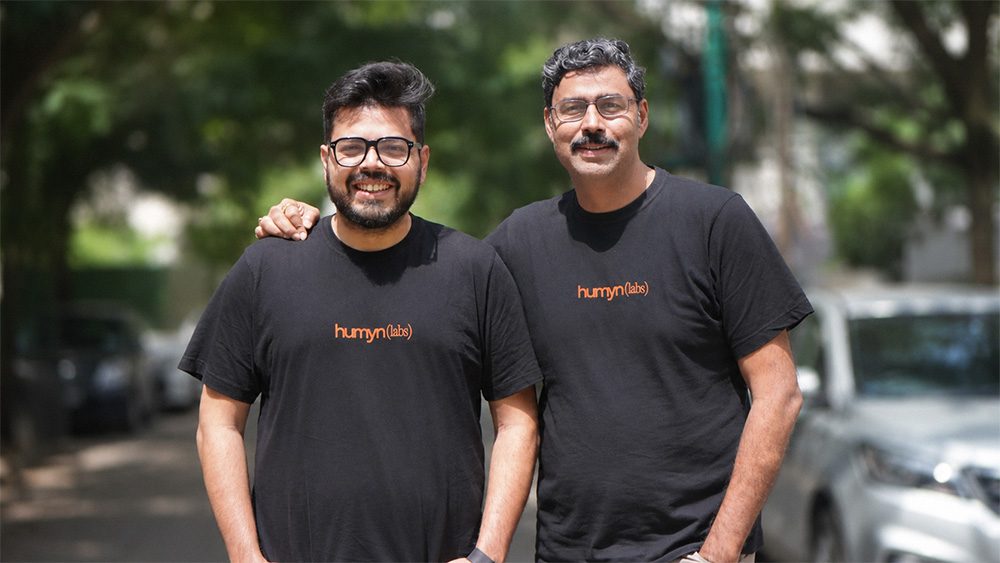
Humyn Labs’ co-founders, from left to right, Ishank Gupta and Manish Agarwal. | Source: Humyn Labs
Humyn Labs, a physical AI research and deployment company, today announced it raised $47 million in Series A funding. The company said it has also surpassed $50 million in annualized revenue within six months of operations.
Humyn Labs works with frontier AI labs, robotics companies and world-model developers. It uses its own data capture and enrichment operations across over 20 countries to help robots better prepare for deployments in the real world.
“A lot of robotics development is bottlenecked in terms of what’s happening in the real world. A bunch of the robotics development that we were seeing and a bunch of the partners that we were talking to were working on essentially simulated environments,” Ishank Gupta, the co-founder of Humyn Labs, told The Robot Report . “The biggest gap was how do you take what’s happening in the lab into the real world?”
The funding round includes $26 million in equity led by Accel. It included participation from Prosus Ventures, BeeGlobal, Finserv Intelligence through Bajaj Finance, Bajaj Alts AI Opportunities Fund, Dallas Venture Capital, Lighthouse Canton, Jump Trading LLC and marquee angel investor Anita Pramoda, former CFO of Epic. The $21 million venture debt round was led by Lighthouse Canton with participation from Trifecta Capital.
Humyn Labs gathers data across four modalities
Right now, Humyn Labs gathers data across vision, sound, touch, and motion. “The idea is to not just be a data partner, but also a deployment partner to our customers,” Gupta said. The company gathers data using its proprietary capture devices.
These devices record how people perform specific jobs to a specific labs’ requirements. Meanwhile, Humyn Labs’ end-to-end data engine converts these into labelled, training-ready datasets with verified provenance across these four modalities.
“We want to be an extension of the lab’s research team. We work backwards from what the researchers need, and then build out bespoke large-scale collection programs and enrichment programs,” Gupta said. “We currently operate and partner with on-ground collection partners across 20 countries. Our biggest area of operations are LATAM, southeast Asia, south Asia, and east Asia.”
For audio data, Gupta said the company focuses on gathering data across different languages rather than across different industries. Vision, touch, and motion data, however, typically go hand in hand and are more industry specific.
Humyn Labs’ data can be applied to a range of industries. The company divides the industries it works in into three overarching categories: residential, commercial, and industrial.
“The distinction between commercial and industrial is anything manufacturing or anything factory sits in industrial. Anything outside that sits in commercial. Warehousing , retail, hospitality, all of that will sit in commercial,” Gupta said.
A chart showing how Humyn Labs’ data engine works. | Source: Humyn Labs
Working across different robot embodiments
Humyn Labs’ isn’t interested in deciding how end-users should automate tasks, so its data can be useful across a range of robot embodiments.
“We work across embodiments, because the focus is on understanding how certain tasks can be done. Robot arms are amazing for any task that requires manipulation but doesn’t require navigation. Those are amazing in industrial environments or in an assembly line setup or any other setup where a person has a stationary task where they don’t need to move,” Gupta said.
This is especially important in industrial environments. Meanwhile, in commercial environments, you see more tasks that require manipulation and navigation.
“If you are working in a hotel, for example, or in a warehouse, you have to do manipulation but also move around,” Gupta said. Home environments, he continued, include a mix of these kinds of tasks.
“Different labs have different thought processes on embodiments. There are some labs that are working on building a brain, which could be embodiment agnostic. Most of your frontier labs sit in that bucket, and then there are embodiment-specific robotics companies. So, we work across a spectrum,” Gupta said.
Submit your innovation now!
What are Humyn Labs’ plans for the funding?
The funding will support three areas: deployment readiness infrastructure in Brazil, Korea and India; the company’s capture hardware and enrichment engine; and on-the-ground presence in San Francisco, London and Seoul. The team hopes to make it so robotics labs can spend more time focusing on important work.
“When the stakes are so high, and the models are evolving so fast, why would a lab waste time ensuring that certain hardware reaches a site in Venezuela, and then that operators are collecting that data,” Manish Agarwal, the co-founder of Humyn Labs, said. “I would rather have high impact work happening with the best of the research scientists so that I can compete.”
Additionally, the company hopes to accelerate deployment readiness. Agarwal said right now, the robotics industry is in a place where its still figuring out how long the average deployment cycle might be.
“We see that as an opportunity rather than a challenge. For deployment readiness, the biggest gap is this whole real-sim-real flywheel, and with every percentage improvement, we will really need that flywheel to work faster and deeper,” Agarwal said. To make this happen, the industry needs the right data, and the right data partner, he said.
The post Humyn Labs raises $47M to collect real-world data for robotics appeared first on The Robot Report .
Les actualités sont collectées automatiquement depuis des flux publics robotique & IA.
Articles liés
Robotics Summit 2027 opens call for speakers
The Robotics Summit & Expo returns to Boston June 2-3, 2027 with deepened coverage, an expanded expo floor, and more. The post Robotics Summit 2027 opens call for speakers appeared first on The Robot Report .

商汤开源生图新模型!8B参数拍大片、做设计,还会自我纠错
智东西 作者 | 江宇 编辑 | 漠影 现在,想让AI生成一张漂亮的照片,已经不是什么难事。但要让它拍出电影里的氛围感,光靠高清画质和滤镜恐怕还不够。 就拿《爱乐之城》来说,这部斩获奥斯卡最佳摄影奖、英国电影学院奖最佳摄影奖的电影,堪称电影色彩与摄影构图的“教科书”。为了拍出男女主角在洛杉矶山坡上共舞的场景,剧组专门选在日落前后的短暂时段开机,连续两个晚上拍摄,最终留下了电影中那段近六分钟的长镜头。 摄影指导莱纳斯·桑德格伦(Linus Sandgren)还通过偏绿色的顶部补光与后期调色,让黄昏呈现出更浓郁的紫红色。女主角的一袭黄色长裙、远处的洛杉矶城市景观,也在精心设计的构图中融为一体。 ▲
SoftBank acquires Marc Raibert’s Robotics and AI Institute
SoftBank has completed its acquisition of the Robotics and AI Institute from Hyundai Motor Group, expanding its robotics portfolio as the research organization looks to fill 24 open positions in Massachusetts and Switzerland. The post SoftBank acquires Marc Raibert’s Robotics and AI Institute appear

小米Q3财报出炉:AI研发占比超30%,卢伟冰吐槽内存涨价压力大
智东西 作者 | 杨京丽 编辑 | 云鹏 智东西11月24日报道,今天,小米集团发布2026年第三季度财报。 第三季度,小米营收为 1072.40亿元 ,同比 下降5.2% ;净利润 38.76亿 ,同比 下降68.42% ;经调整净利润为 48.84亿元 ,同比下降56.8%;毛利为 216.15亿元 ,同比下降 16.7% ,毛利率为 20.2% 。小米单季度研发开支为 92亿元 ,同比增长2%;前三季度研发开支达到 274亿元 ,同比增长 16.5% 。 ▲小米营收、净利润、研发开支情况(智东西制图) 截至9月30日,小米拥有 52509名全职员工 ,较去年同期 减少3722人 ,其中研

刚刚,华为云开放AgentArts智能体平台,康晓宇:我们不抢流量入口
智东西 作者 | 李水青 编辑 | 云鹏 智东西11月24日报道,今日,在华为云智能体伙伴开放计划发布会暨智果生态大会上, 华为云 联合中软国际、软通动力、德勤、乐石科技、AtomGit、北明软件、致远互联等 首批30多家 伙伴发布 智能体伙伴开放计划 。该计划开放 智果AgentArts智能体平台 ,以及 果办OfficeAce、码道CodeArts 等智能体平台化产品及开发工具。 当前,智能体在企业规模化落地仍面临 业务融合难落地、生产运行难评估、执行风险难掌控 等挑战,伙伴基于开源工具构建存在 失控风险、高维护成本以及自研智能体难以竞争用户流量 等难题。智能体要走向规模化落地,需依靠企业

余承东宣布不涨价!端出华为史上最强大折叠,把一切都折叠了
智东西 作者 | 云鹏 编辑 | 心缘 智东西11月24日上海现场报道,刚刚,华为正式发布了 自家史上最薄大折叠Mate X8系列手机、最轻薄旗舰手机Mate90 Air、首款鸿蒙小折叠电脑MateBook Fold S 和 华为史上最薄智能手表WATCH Air。 Mate X8 展开后4.2毫米,比iPhone Duo的5.2毫米更薄, 麒麟9050 Pro“韬定律” 芯片加持下 整机性能提升31%, 可以搭配华为“大炮”Z10模块相机强化长焦拍照,在屏幕方面用上了 “磁控”黑科技,折痕深度明显降低。 MateBook Fold S的重量仅有 639克,与一瓶矿泉水相当, 载了华为 旗舰“