Robotics enters its post-Jensen Huang era
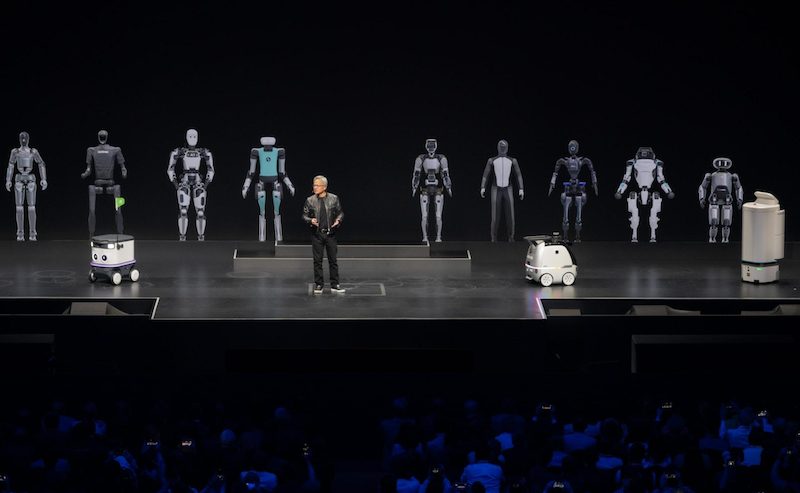
Jensen Huang keynote at CES 2025. | Credit: NVIDIA
Days before Christmas in 2023, Serve Robotics was on the verge of bankruptcy. A major investor pulled out of a committed funding round, leaving the developer of sidewalk delivery robots unable to make payroll and just days away from running out of cash.
With few options remaining, Serve Robotics co-founder and CEO Ali Kashani reached out to NVIDIA co-founder Jensen Huang. “We spoke at 6 a.m. the next day, and later that day I was having dinner with his executive team to find a way to bridge the company,” recalled Kashani. “Within days, they led a financing round that brought us back to life.”
Four months later, Serve Robotics was ringing the bell at Nasdaq to celebrate its public listing.
“I have heard similar stories from many other founders, as well as current and former NVIDIA employees, whose lives Jensen’s actions have changed,” Kashani said.
Over the past several years, few people outside the robotics industry have done more than Huang to elevate its profile.
Clad in his signature black leather jacket, Huang routinely dedicated portions of his marathon keynotes to robotics. He showcased humanoids on stage, introduced development tools, highlighted startups, championed open models and research, and made the case that robots would transform the world.
He also put NVIDIA’s money behind that vision.
Now, one of robotics’ most influential advocates is gone. NVIDIA’s board accepted Huang’s resignation on Nov. 12 , and CFO Colette Kress is serving as interim CEO while the company searches for a permanent successor.
A large stage for robotics
For an industry that spent decades fighting for mainstream recognition, Huang provided something few robotics executives could: one of the biggest stages in technology.
“Jensen was fantastic in painting the vision,” said Yaro Tenzer, co-founder and CEO of RightHand Robotics.
Tenzer said Huang helped expand investors’ imaginations about what robotics could become.
NVIDIA said during its third-quarter earnings call that its physical AI revenue nearly tripled year over year and is on track to exceed $25 billion in fiscal 2027. While that represents a sizable and rapidly growing business, it still accounts for only about 6% of NVIDIA’s projected annual revenue of more than $400 billion. And physical AI encompasses more than robotics.
The attention Huang afforded robotics was disproportionate to its short-term commercial contribution.
“NVIDIA introduced its Isaac robotics platform back in 2017, and Jensen kept robotics in his keynotes and in the company’s long-term story year after year,” said Deepak Jayaraj, vice president of hardware engineering and manufacturing at agricultural robotics developer Four Growers. “I think that steady attention made it easier for founders to make the case to investors.”
Unlike Tesla CEO Elon Musk, whose robotics advocacy is largely centered on his own company’s products, Huang promoted an ecosystem of developers, many of whom compete directly with one another.
NVIDIA stood to benefit financially regardless of which robotics companies succeeded. But that business model also positioned Huang to become an advocate for the broader industry.
Providing infrastructure
Perhaps NVIDIA’s lasting contribution to robotics will be the development infrastructure it built under Huang. Its portfolio spans much of the robotics development stack, from GPUs and CUDA for AI training to Omniverse and Isaac Sim for simulation, Isaac Lab for robot learning, GR00T and Cosmos foundation models, Isaac ROS software, and Jetson embedded computing.
Jan Zizka, co-founder and CEO of warehouse robotics developer Brightpick and co-founder of machine vision specialist Photoneo, experienced NVIDIA’s impact firsthand. Zizka said Photoneo participated in an early-access program for NVIDIA’s Jetson TX1 computing platform.
“He was almost pushing the market to make it happen,” Zizka said, pointing to Huang’s willingness to invest in emerging markets before demand fully materialized.
NVIDIA’s investments in open research and software helped lower barriers to entry for developers. Zizka noted that its efforts in embedded computing also encouraged competitors, including AMD and Qualcomm, to pursue robotics opportunities.
Under Huang, NVIDIA became one of robotics’ most prominent strategic investors, backing companies including Figure AI, NEURA Robotics, Skild AI, Wayve, Waabi, and Serve Robotics. Beyond capital, an investment from NVIDIA provided an endorsement that could help startups attract additional investors, employees, and customers.
“Jensen’s style will be hard to copy,” said Jayaraj. “I’d judge whomever it is by which robotics programs they keep funding.”
“NVIDIA has a business reason to stay in, since many robot companies train and simulate on its compute long before they ship at scale,” he added. “The keynote time and the early bets on young teams are the parts that could fade.”
Losing an advocate inside NVIDIA
Huang’s enthusiasm for robotics was perhaps just as valuable inside NVIDIA as it was outside the company. Its robotics teams had an advocate at the highest level of the organization. Having earned considerable credibility with investors through previous long-term bets, Huang enjoyed a latitude his successor might not.
NVIDIA’s next CEO will also inherit growing competition in its core data center business and potentially greater political and regulatory scrutiny following the Democrats’ strong performance in the midterm elections.
Robert Little, co-founder and former CEO of ATI Industrial Automation, is particularly concerned about how opposition to data center construction could affect NVIDIA’s ability to fund its longer-term investments.
“Robotics is being propped up from the money that’s being created in the data centers for NVIDIA that affords NVIDIA to have a team of people developing product for robotics,” Little said.
If growth in that business slows, NVIDIA’s…
Les actualités sont collectées automatiquement depuis des flux publics robotique & IA.
Articles liés
Robotics Summit 2027 opens call for speakers
The Robotics Summit & Expo returns to Boston June 2-3, 2027 with deepened coverage, an expanded expo floor, and more. The post Robotics Summit 2027 opens call for speakers appeared first on The Robot Report .

商汤开源生图新模型!8B参数拍大片、做设计,还会自我纠错
智东西 作者 | 江宇 编辑 | 漠影 现在,想让AI生成一张漂亮的照片,已经不是什么难事。但要让它拍出电影里的氛围感,光靠高清画质和滤镜恐怕还不够。 就拿《爱乐之城》来说,这部斩获奥斯卡最佳摄影奖、英国电影学院奖最佳摄影奖的电影,堪称电影色彩与摄影构图的“教科书”。为了拍出男女主角在洛杉矶山坡上共舞的场景,剧组专门选在日落前后的短暂时段开机,连续两个晚上拍摄,最终留下了电影中那段近六分钟的长镜头。 摄影指导莱纳斯·桑德格伦(Linus Sandgren)还通过偏绿色的顶部补光与后期调色,让黄昏呈现出更浓郁的紫红色。女主角的一袭黄色长裙、远处的洛杉矶城市景观,也在精心设计的构图中融为一体。 ▲
SoftBank acquires Marc Raibert’s Robotics and AI Institute
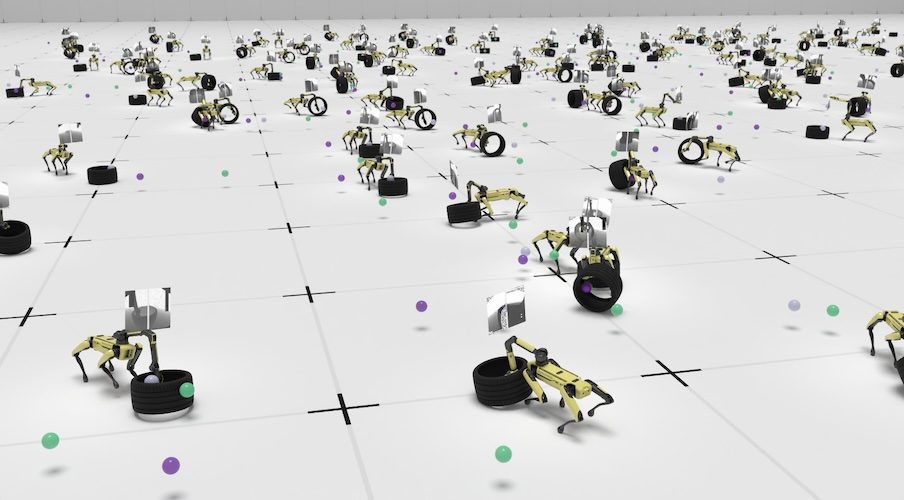
SoftBank has completed its acquisition of the Robotics and AI Institute from Hyundai Motor Group, expanding its robotics portfolio as the research organization looks to fill 24 open positions in Massachusetts and Switzerland. The post SoftBank acquires Marc Raibert’s Robotics and AI Institute appear
小米Q3财报出炉:AI研发占比超30%,卢伟冰吐槽内存涨价压力大
智东西 作者 | 杨京丽 编辑 | 云鹏 智东西11月24日报道,今天,小米集团发布2026年第三季度财报。 第三季度,小米营收为 1072.40亿元 ,同比 下降5.2% ;净利润 38.76亿 ,同比 下降68.42% ;经调整净利润为 48.84亿元 ,同比下降56.8%;毛利为 216.15亿元 ,同比下降 16.7% ,毛利率为 20.2% 。小米单季度研发开支为 92亿元 ,同比增长2%;前三季度研发开支达到 274亿元 ,同比增长 16.5% 。 ▲小米营收、净利润、研发开支情况(智东西制图) 截至9月30日,小米拥有 52509名全职员工 ,较去年同期 减少3722人 ,其中研
刚刚,华为云开放AgentArts智能体平台,康晓宇:我们不抢流量入口
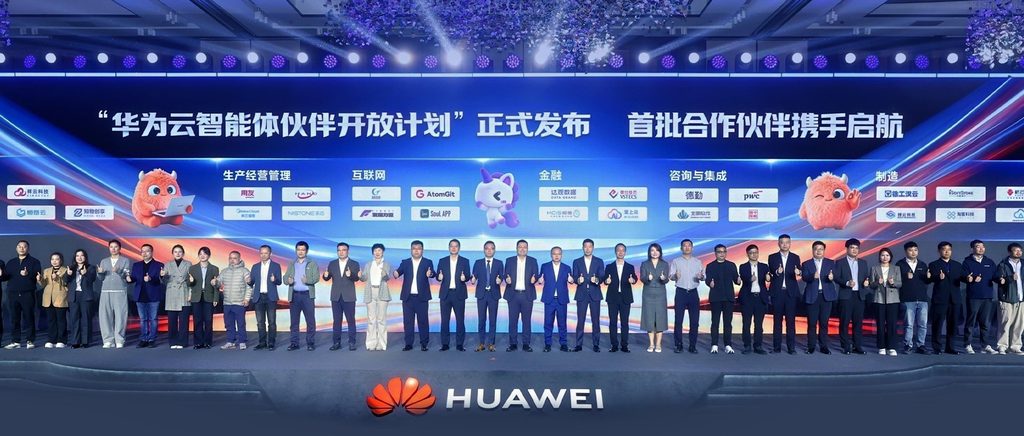
智东西 作者 | 李水青 编辑 | 云鹏 智东西11月24日报道,今日,在华为云智能体伙伴开放计划发布会暨智果生态大会上, 华为云 联合中软国际、软通动力、德勤、乐石科技、AtomGit、北明软件、致远互联等 首批30多家 伙伴发布 智能体伙伴开放计划 。该计划开放 智果AgentArts智能体平台 ,以及 果办OfficeAce、码道CodeArts 等智能体平台化产品及开发工具。 当前,智能体在企业规模化落地仍面临 业务融合难落地、生产运行难评估、执行风险难掌控 等挑战,伙伴基于开源工具构建存在 失控风险、高维护成本以及自研智能体难以竞争用户流量 等难题。智能体要走向规模化落地,需依靠企业
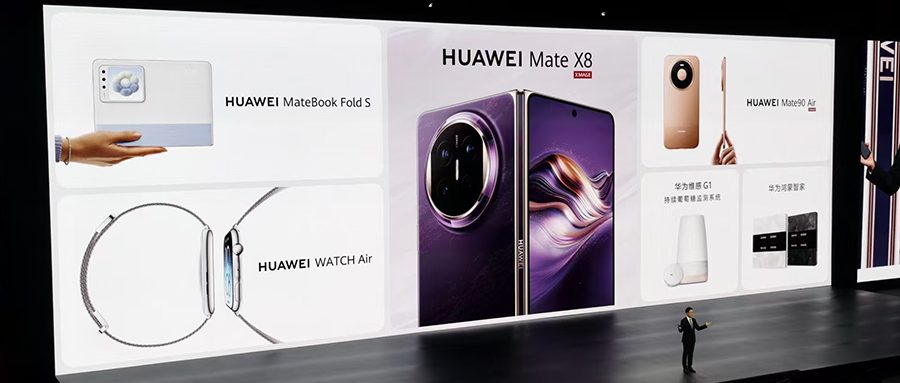
余承东宣布不涨价!端出华为史上最强大折叠,把一切都折叠了
智东西 作者 | 云鹏 编辑 | 心缘 智东西11月24日上海现场报道,刚刚,华为正式发布了 自家史上最薄大折叠Mate X8系列手机、最轻薄旗舰手机Mate90 Air、首款鸿蒙小折叠电脑MateBook Fold S 和 华为史上最薄智能手表WATCH Air。 Mate X8 展开后4.2毫米,比iPhone Duo的5.2毫米更薄, 麒麟9050 Pro“韬定律” 芯片加持下 整机性能提升31%, 可以搭配华为“大炮”Z10模块相机强化长焦拍照,在屏幕方面用上了 “磁控”黑科技,折痕深度明显降低。 MateBook Fold S的重量仅有 639克,与一瓶矿泉水相当, 载了华为 旗舰“