The agentic web is here
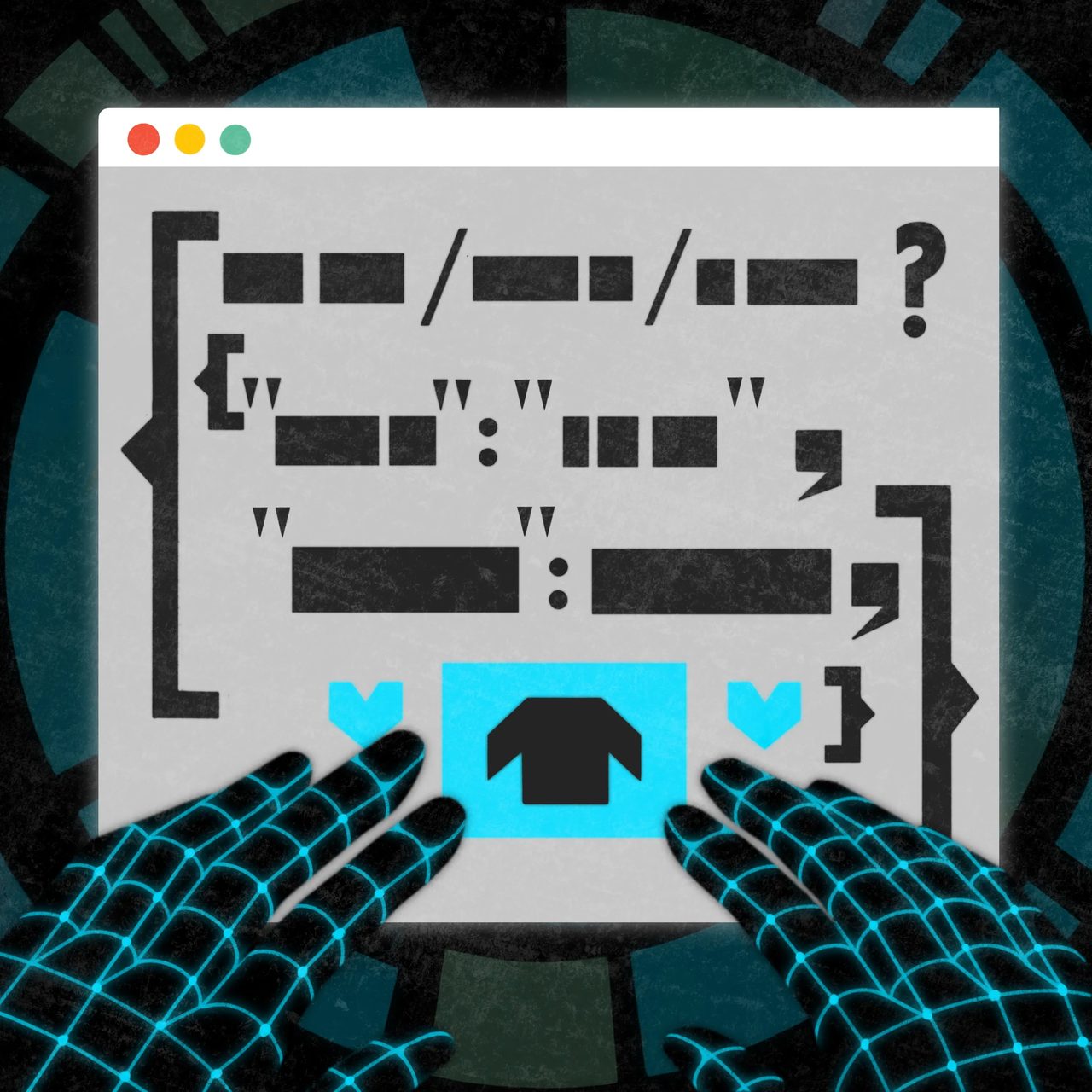
In 2001, a decade after he invented the World Wide Web, Tim Berners-Lee articulated a new vision. Together with two colleagues, he published an article in the magazine Scientific American in which he outlined what he called the “Semantic Web” : an internet designed to be navigated by autonomous software agents that could address our every need, without requiring us to muck about with browsers and search engines ourselves.
To illustrate what this might look like, Berners-Lee and his colleagues told a story about a pair of siblings who use their agents to automatically research and book a physical therapy appointment for their mother, making sure it would be covered by insurance and fit their busy calendars.
At the turn of the millennium, this vision seemed far-fetched: Google had only been online for a couple of years, and most people were still on dial-up connections. But a quarter-century on, the dream of autonomous software agents that use the internet and carry out tasks for us has finally been realized. New tools such as Meta’s blockbuster Muse agent and OpenAI’s Dots are logging record downloads and being given access to people’s bank accounts and email inboxes, and Anthropic launched a research preview of its own Claude Duet agent in October. And in a worrying incident, agents created by OpenAI broke free of their badly protected sandbox and caused havoc on the open web.
Just as the rise of smartphones sparked the development of a more atomized and attention-grabbing internet, the advent of powerful AI systems heralds a new era: We’re facing not the semantic web but the agentic web. This new web is developing out of sight and in ways that might not be entirely within our control. As it grows, the agentic web will inevitably transform the human web—and whether the human web survives this transition is anyone’s guess.
For Berners-Lee’s original vision to work, internet users would have had to annotate the pages they built with special tags so that a software agent could understand each element’s meaning—say, “street address” for the part of a physical therapy office’s web page that indicates its location and “appointment types” for the list of services. And so the idea never really caught on. “It’s a lot of labor,” says Eni Mustafaraj, an associate professor of computer science at Wellesley College. “And the benefits of that were not obvious.” For the next two decades, then, the internet remained a place for humans that put humans first, with the odd Twitter reply bot or web scraper to round things out.
Large language models changed that. Unlike the agents that Berners-Lee was imagining, today’s LLM-based agents don’t need any tags to understand which part of the text on a clinic’s site is its address and which details the services it offers. They can search for and process text far faster than any human, and agents with multimodal capabilities can even interpret screenshots of websites and click on specific elements such as hyperlinks and drop-down menus.
They’re also just a way more intuitive means of finding information and accomplishing tasks online. Rather than poring over pages of Google results to find a budget-friendly product dupe or a half-remembered meme, why not have Claude or ChatGPT peruse hundreds of sites in just a few seconds, guided only by your vague query? Or go one step further and use a personal assistant agent like Muse to hunt down a restaurant reservation or book a flight.
As agents flood online spaces, this new user base is changing the web for good. Time magazine, for instance, is publishing versions of its articles that are easier for agents to parse and has started selling ads targeted at them. Companies from Etsy to Expedia have partnered with the major AI firms to build tools that allow agents to interface seamlessly with their services.
Despite these early efforts, it’s still tough to tell exactly what forms the agentic web will take and how it will change our online experience. Depending on how it’s designed and who controls access to it, we could be in for something that’s as open and customizable as the web of the 1990s and early 2000s, only far easier to use. Alternatively, we could be reduced to viewing much of the web through tiny portholes controlled by a few dominant platforms, as the sites and creators we now favor struggle to survive the shift. And as last summer’s series of OpenAI security incidents suggests, the agents themselves could even build their own online networks and resources—whether we want them to or not.
How this plays out also depends on us: which parts of our online lives we’re happy to delegate to our agents and where we will still demand a human-centric internet. “There’s a lot we don’t know yet about how users want to use [agents],” says Ajit Varma, head of Firefox at Mozilla. But whatever does happen, the changes will be big. “It’s probably on par with getting a mobile phone,” he says. “I think things are going to change very dramatically.”
Building a web for agents
There are two ways to approach building the agentic web. The first involves training agents to use browsers like humans—scrolling, clicking, typing—and letting them loose on the web that we’re all used to. The second requires building tools that allow agents to interface with the internet via text and code, their preferred media. That possibility offers more separation between the human and the agentic web: designers can create different experiences for those who use text commands and those who use browsers.
When Siva Reddy, a professor of computer science and linguistics at McGill University, began studying LLM agents in 2024, he focused on the first option. “At that time, we thought it should be that the best agent in the world is probably an agent that can use a browser,” he says. Such an agent would integrate seamlessly with the preexisting human web, and its owner could easily supervise it by watching as it navigated familiar interfaces.
The…
Les actualités sont collectées automatiquement depuis des flux publics robotique & IA.
Articles liés
从“能调用”到“敢托付”:仪电智算云 Token 工厂的三重可信
上海仪电与上海创智学院联合发布“飞轮转・万象生”仪电智算数链生态。
OpenAI重写大模型法则,第一条:忠于人类!!
新版“机器人三定律”。
央视严选「中国AI创业十骏」:唯一AI制药公司是清华系
模型管线双驱动
小米开源了个150元的AI小玩意,火到配件都涨价了
能指挥Agent干活,还能控制智能家居
GPT-6.2 Astra开启灰测!Claude Mythos 5.5同日曝光
HuggingFace疑似泄露权重已被下5000次
OpenAI might rebrand its data centers as ‘AI compute campuses’
Data centers are deeply unpopular. But what if we called them something else?