Unusual robotic animals can prove their utility
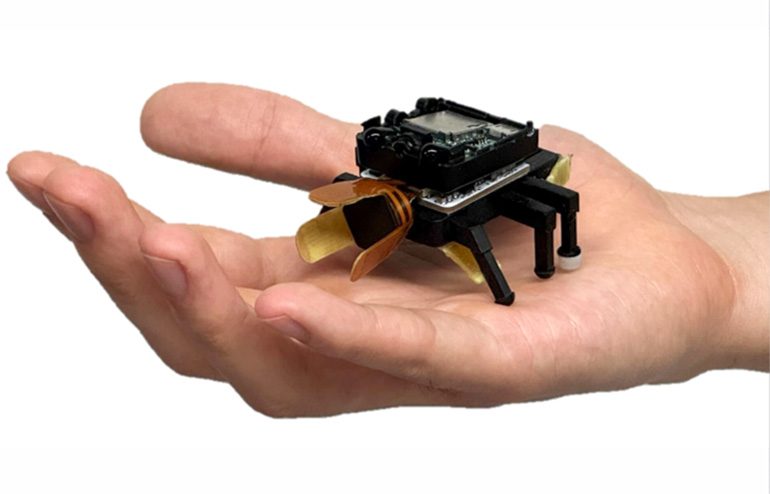
Korean researchers have developed a beetle-like soft robot. Source: KAIST
When we hear the word “robot,” we still conjure up images of mechanical figures from old science fiction films. However, reality has long since evolved: We’re surrounded by smart vacuum cleaners, voice assistants, and even four-legged machines that mimic dogs. But what are these robotic animals?
They’re not just battery-powered toys. They’re complex electronic devices, infused with elements of artificial intelligence, that replicate the appearance and behavior of real or imaginary creatures.
These devices contain sensors , speakers, motors , and processor modules that analyze external signals. They’re controlled via mobile apps. Digital pets can make distinctive sounds, respond to signs of affection, answer to their names, and display a range of emotions—from delight to fear, from satisfaction to fatigue.
Manufacturers employ a variety of engineering approaches when creating these devices. Let’s look at some interesting examples.
Microrobot beetle and its relatives
A microrobot beetle might seem like a fun little gadget. But leading research centers such as the Korea Advanced Institute of Science and Technology ( KAIST ) are working on developing similar insects (see image above).
So why are robot ants, robot beetles, and robot bees being created? The answer lies in solving practical and even humanitarian problems.
Cyborg cockroaches: Rescuers from under the ruins
In the spring of 2022, a tragedy occurred in the city of Changsha, China—a six-story building collapsed. Dozens of people were trapped under the rubble. Many remained missing for nearly six days.
Rescue efforts were hampered by piles of rubble and collapsed floors. Ultimately, 53 people died, and only 10 were rescued. In such operations, every minute is precious. Rescuers use thermal imaging cameras and comb through the rubble, but this takes precious time.
But what if cockroaches come to the rescue ? These insects are fast and can penetrate even the tiniest cracks, allowing them to quickly survey the disaster area. But how can they be made to search for people? A team at Nanyang Technological University ( NTU ) in Singapore said it has found a solution by transforming a Madagascar cockroach into a cyborg.
A miniature backpack containing a microcomputer is attached to the insect’s back. It contains sensors that detect dangerous gas concentrations, as well as an infrared camera with a thermal imager, allowing it to detect bodies under the rubble. To prevent the insects from scattering randomly, but rather to remain confined to a specific area, the scientists have developed a remote control system.
Electrodes and a microchip are attached to the cockroach’s body. An electrical impulse to the right side causes the insect to move to the left, and vice versa. When both electrodes are activated, the cockroach accelerates and runs straight.
This cyborg can operate for long periods in rubble: the microcomputer is powered by solar panels. One individual can survey an area of up to 100 sq. m (1,076.3 sq. ft.). The operator controls the movement and monitors the signals from the sensors.
However, there’s a catch: to fully survey a large building, about 500 of these cockroaches are required, meaning 500 operators. And although the cyborg will indicate the location of the victim, it won’t be able to extract them—that’s a task for humans.
Robot ants: Strength in miniature
Stanford University engineers created mechanical ants capable of moving loads 2,000 times their own mass. For a human, this is the equivalent of moving a 150-ton whale.
Just four of these tiny animals can transport an adult, and a whole group can lift a concrete slab or rebar. This phenomenal lifting capacity was achieved thanks to a gecko-inspired paw design that provides a secure grip on any surface.
A special coating of microscopic rubber hairs creates a bio-stimulated adhesive effect: When the rope is taut, the robot adheres and releases when it is loosened.
However, this high performance requires a lot of energy. The battery can run out at critical moments, so in industrial settings, these ants are connected to a cable and used as towing vehicles.
Snake-like robot: Underwater repairman
Animal robots are capable of not only eliminating the consequences of disasters but also preventing them. Norwegian developers have created a 5 m (16.4 ft.) robotic snake for servicing underwater oil pipelines. It inspects pipelines, transmits images to a dispatcher, and, if a defect is detected, repairs it.
Equipped with manipulators at both ends, the snake can replace valves and clean deposits from pipes. These devices can operate at depths of up to 500 m (1,640.4 ft.) for up to six months, recharging at special stations.
Robot crab: Underground explorer
University of California, Berkeley , engineers developed a robotic crab for underground exploration. Using fabric scoops on its claws, it burrows into the ground, collects samples, and analyzes the soil. Equipped with sensors and a manipulator, it can determine the suitability of a site.
These robotic animals could be used in construction or agriculture , detecting pollution. In the future, such crabs are even planned for use on the Moon. Scientists are currently working on improving the design so that the robot can dig deeper.
More recently, open-source crab platforms are helping developers innovate locomotion.
Robot falcons: Airfield guardians
Mechanical falcons, developed at the University of Groningen in the Netherlands, are already in service in Canada and Germany. They frighten real birds away from runways, preventing collisions that could lead to plane crashes.
Unlike acoustic cannons, which birds quickly become accustomed to, robotic predators exploit natural fear—they not only mimic predators but also pursue live birds, demonstrating dominance.
Robot bee: Space scout
A miniature robotic bee, the size of a pinhead, was…
Les actualités sont collectées automatiquement depuis des flux publics robotique & IA.
Articles liés

智能体年均增长超一倍,百度智能云给智能体配了套新底座
智东西 作者 | 杨京丽 编辑 | 李水青 智能体的规模正在快速扩张。IDC预测,到2030年,全球活跃Agent数量将达到 22.16亿个 ,年复合增长率达到 139% ,年均增长超1倍。 各类智能体也在密集涌现,热度一路走高。从编程、办公到个人助手,从消费端到企业端,智能体正快速进入各个场景,成为今年AI落地的重点方向。 与热度同步攀升的,是Token(词元)的消耗量。国家数据局披露,到今年3月,我国日均Token调用量已超过 140万亿 ,较2024年初增长 1000多倍 ;中国信通院的监测则显示,到今年6月,这一数字已达 500万亿 。如此庞大的调用量说明, 智能体已经走出概念演示,开
AI如何赋能企业研发?快手团队提出“臭鼬工厂”模式
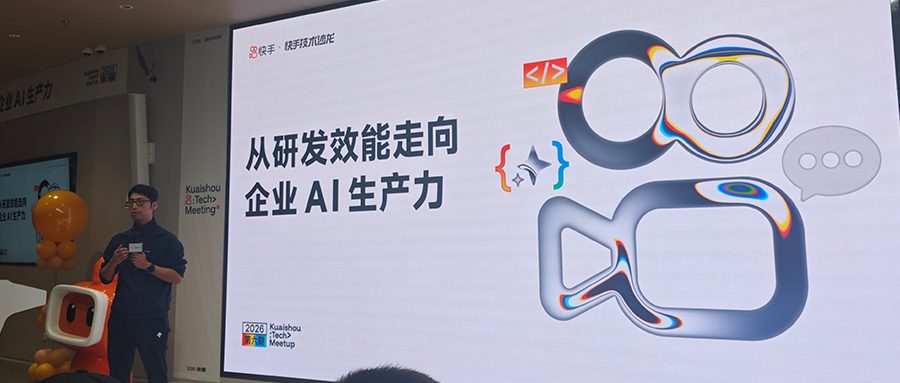
智东西 作者 | 毕伟豪 编辑|李水青 智东西10月31日报道,今天,快手在技术沙龙上结合企业级AI生产力平台iWork的实践,分享了 AI如何从辅助编程逐步走向团队协作与组织级提效 ,并沉淀为企业生产力基础设施。 快手企业智能体建设负责人、企业AI生产力专家沈浪复盘了快手过去两年AI生产力建设的四个阶段: 从AI赋能工程师、全体员工,到AI赋能团队和组织 。他特别提出,个人提效并不等于团队提效,企业需要将个人经验沉淀为可复用的数字员工、工作流和Skill,进一步推动团队能力共享与组织级Agent协作。 《软件工程3.0》作者、同济大学特聘教授朱少民则从工程方法论出发, 分享了企业级智能体落地

0.8B!小米开源新模型,让超级小爱识屏主动办事
智东西 作者 | 李水青 编辑 | 心缘 智东西10月31日报道,昨日晚间, 小米 发布并开源轻量级全能 文档理解模型Xiaomi-OCR-0 ,仅 0.8B (8亿)参数,将 文档解析、关键信息抽取 与 视觉问答 三类能力融于一体,并在多项权威基准中取得领先成绩。 很多人遇到过这样的小麻烦:取餐码被消息淹没、海报时间地点还要手动敲进日历、账单金额和商户信息仍需逐项摘录……这指向了一类新需求: 手机能否不只“看见”屏幕内容,还能“看懂”信息,并在需要时顺手完成下一步? Xiaomi-OCR-0正是为此而生。它体量小巧,兼顾文字、版面、位置与语义理解,能解决复杂表格、论文、票据的结构化解析难题。

198亿到账!AI视频最大单笔融资诞生
智东西 作者 | 李水青 编辑 | 心缘 智东西10月31日消息,10月30日,快手在港交所发布公告,宣布旗下视频生成业务 北京可灵 增资协议项下的所有条件均已达成,所有投资者均已按照增资协议足额缴纳增资款,股份购买已交割完成。 交割完成后,全体投资者已缴纳的出资总额约为人民币 198.0184亿元(约合29.0533亿美元) 。 ▲快手在港交所发布公告 此前7月2日,快手曾在港交所发布公告,可灵AI将完成一笔不超过204.47亿元的融资,当时已确定的融资共190.48亿元,阿里、腾讯、百度等大厂,以及北京信息产业发展投资基金、北京市人工智能产业投资基金、长三角数智文化产业私募投资基金等多家国

Claude官宣取消5小时限额!ChatGPT负责人:最好宣布28天重置期
智东西 编译 | 李水青 编辑 | 心缘 智东西10月31日报道,今日,Anthropic宣布订阅套餐政策调整:将Max套餐从Max 5x更名为Max,将 Max 20x更名为Ultra 。Max套餐价格仍为每月100美元,Ultra套餐价格仍为每月200美元。 同时,Anthropic将 取消已验证Ultra账户的5小时使用时长限制 ,此优惠从今天起适用于大多数现有订阅用户。新账户在验证完成前仍保留临时使用时长限制,限制解除后将收到电子邮件通知。 ▲Anthropic在社交平台X发布公告 对不少开发者而言,这相当于解除了一道令人“头疼”的限制。此前即便购买Anthropic最高档套餐,依然设

国行苹果智能倒计时4天开测!阿里官宣,千问全面接入
智东西 作者 | 李水青 编辑 | 心缘 智东西10月31日消息,刚刚,阿里巴巴宣布与苹果达成合作,将 千问(Qwen)集成至苹果智能(Apple Intelligence) ,中国用户可以在 Siri、写作工具及视觉智能 中,直接调用千问的文本与图像理解、内容生成等能力。 这些功能将于 11月4日 起随最新的iOS开发者Beta版开放测试,并将于 12月 iOS 27.3正式发布时面向中国用户推出。 ▲阿里巴巴官方公众号发布公告 此前7月15日,中国国家互联网信息办公室发布公告,苹果旗下模型苹果智能已通过生成式AI服务备案。而后苹果智能引入阿里千问的消息不断传出。 10月15日 , 库克 在