Video Friday: Drone Squeezes Itself to Fit Through Tight Spaces
Video Friday is your weekly selection of awesome robotics videos, collected by your friends at IEEE Spectrum robotics. We also post a weekly calendar of upcoming robotics events for the next few months. Please send us your events for inclusion.
Humanoids 2026 : 6–9 December 2026, SANTA CLARA, CA
Enjoy today’s videos!
Drones navigating cluttered spaces often encounter openings narrower than their bodies. We present a design method that jointly optimizes a quadrotor’s geometry and how its two side arms bend on contact. The resulting prototype folds from 31.3 centimeters to 14.1 cm wide on contact and flies through a 15-cm opening.
[ Paper ] via [ Autonomous Robots Lab ]
Thanks, Kostas!
TeCoBots are soft, snakelike robots that can work alone and can also grab onto each other to form chains, loops, and branches, building a new body for each task. A single robot can inch like a worm, roll across gravel and grass, climb inside a pipe, and lift a 2.5-liter water bottle. The claw it uses to grab objects is the same one it uses to grab another robot, so linking up needs no extra docking hardware. Linked together, the robots do things that none can do alone.
[ TeCoBots ]
Thanks, Mahmud!
AHEADance is a humanoid robot that makes up its dance as the music plays. It listens to the song as it streams in, takes a guess at what the next half second of music will sound like, and then moves to match the style of whatever is playing. When the music stops, it stands still and waits, and when the music comes back, so does the dancing. Curious what it would do with your favorite song? Play it through the live demo on our project page and watch the robot have a go.
[ AHEADance ]
Thanks, Chengxu!
I am...not at all sure how I feel about this.
[ Arc Lab ]
Most affordable dexterous hands use tendons, and anyone who has worked with them knows the pain of re-tensioning and replacing them. I wanted to see whether rigid linkages could get you humanlike dexterity without that maintenance, and so far the answer looks like yes. Each finger has three actuated degrees of freedom, the hand can grasp and manipulate a wide range of objects, and the whole thing is 3D-printed for less than US $650 in parts.
[ PHD‑Hand ]
Thanks, Neel!
I’m not sure that this is an entirely faithful representation of the capabilities of this robot goose , but it’s so cute that we’ll let it slide. For now.
[ Robot Works ]
You’ve seen data-collection gloves. You’ve seen teleoperation gloves. But this is different. What if the glove itself IS the robot hand?
[ TriMI ]
Can we treat a flapping wing like a rotary wing? In our latest IEEE [Robotics and Automation Letters] work, we developed CROBAT, a fully actuated quad-thopter with wing-thrust vectoring, enabling independent position and attitude control. The robot demonstrates full-pose flapping flight and tilted perching, showing a pathway toward flapping-wing robots that go beyond navigation toward physical interaction.
[ Paper ]
One robot can work. Two robots can team up. Meet CoMind—Be My Eye, the first framework for proactive, task-aware context sharing in multirobot collaboration. Robots share selected task context with each other, proactively and in real time. Shared vision is no longer science fiction.
[ Astribot ]
Today Spot is working with people and for people to make our jobs and our communities safer, more reliable, and more intelligent. See what tomorrow brings.
Ugh, ouch! Atlas, don’t DO that.
[ Boston Dynamics ]
Fraunhofer IPA has been doing humanoid robot research since before humanoid robots were cool.
[ Fraunhofer IPA ]
LIMO ULTRA is AgileX Robotics’ newest embodied AI robot-development platform for robotics education, research, and hands-on development.
[ AgileX ]
In 2022, an AI drone beat world-champion pilots in head-to-head races—with no human at the controls. This is the story behind that breakthrough. This 25-minute documentary takes you behind the scenes of SWIFT, the autonomous racing drone developed by the Robotics and Perception Group at the University of Zurich. Meet the researchers and champion pilots, follow the preparations, and watch human skill face artificial intelligence on the racetrack.
[ University of Zurich Robotics and Perception Group ]
This Carnegie Mellon University Robotics Institute seminar is from Ben Burchfiel, cofounder and CTO of Walden Robotics : “Learning in Production: Building Physical AI at Walden Robotics.”
Walden Robotics is a full-stack company building both the hardware and physical AI for general-purpose manufacturing robots. Walden was founded in January 2026 and deployed its first robot into production manufacturing two months later. It’s still there, and the fleet has been learning on the job ever since. Our core conviction is that the best physical AI will be built via a continuous cycle of deployment and learning grounded in real work. I’ll share lessons from the frontier of end-to-end learning in production manufacturing and why we believe physical AI has reached an inflection point.
[ CMU RI ]
Les actualités sont collectées automatiquement depuis des flux publics robotique & IA.
Articles liés
Why Does Voice AI Still Struggle With Kenyans’ Speech?
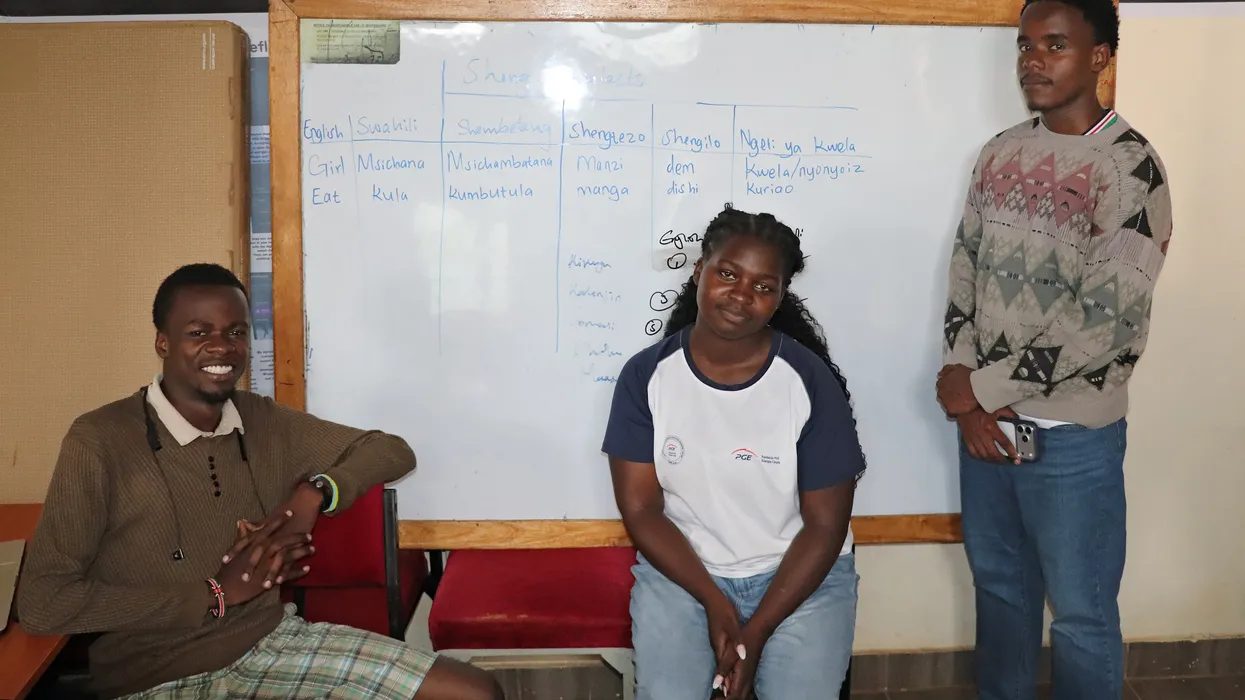
When people read prepared text aloud, AI can transcribe Swahili with remarkably few errors, and Swahili speech recognition looks close to solved. A March 2026 preprint by a team including a Harvard University researcher reports a 3.24 percent word-error rate on recordings from Mozilla’s Common Voice

Human Stories Behind the Robot: from bold ideas to real-world impact
What happens when a research idea seems too ambitious, too unfamiliar or simply too early for the world to understand? In this episode of The Human Stories Behind the Robots, Professor Sabine Hauert OBE shares her journey from experimenting with flying robot swarms to developing technologies that co
Robot Talk Episode 171 – Programming robot behaviour, with Sebastian Castro
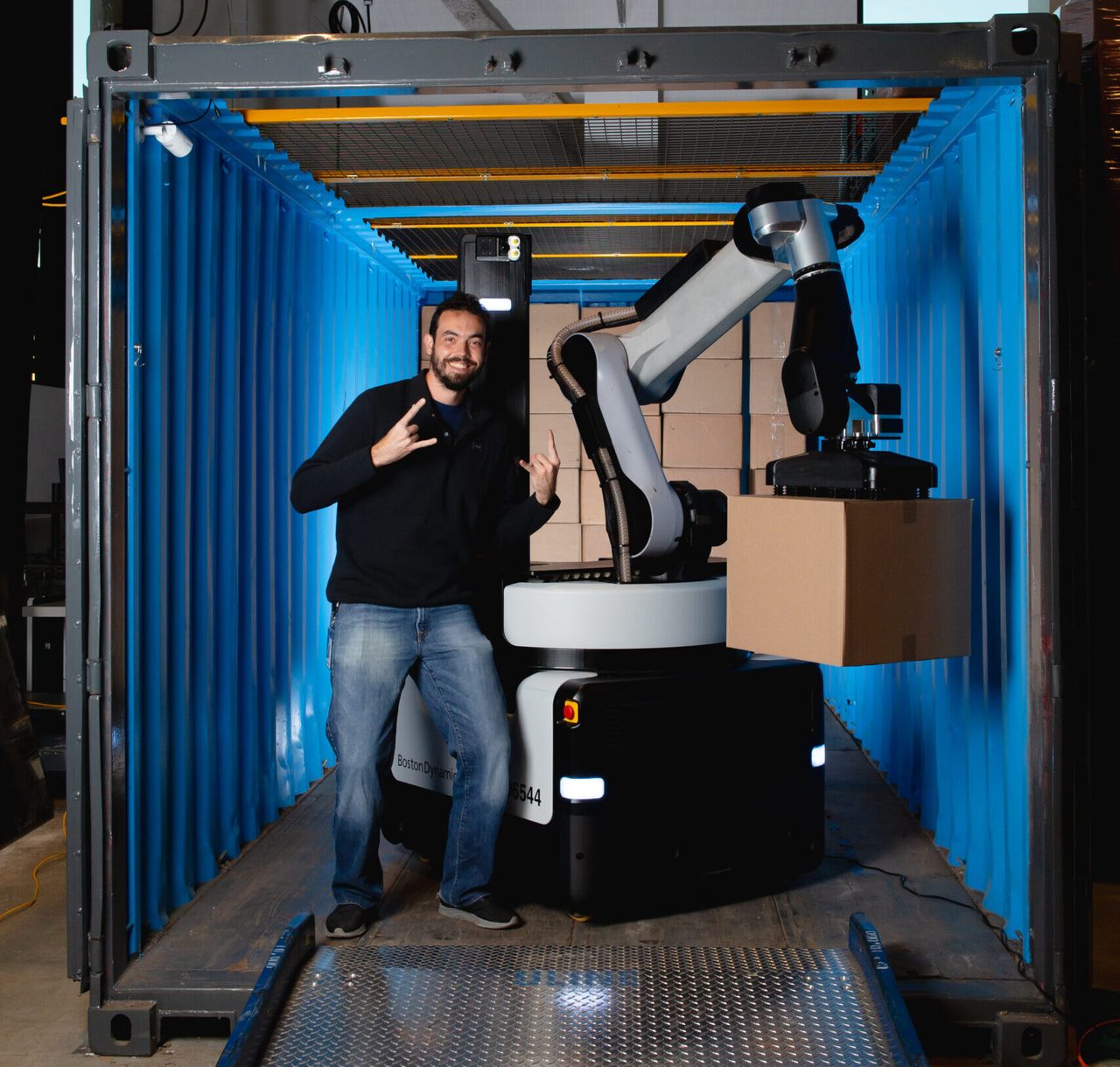
Claire chatted to Sebastian Castro about developing open-source software for robot task planning and behaviour. Sebastian Castro is an independent roboticist specializing in robotic manipulation. He is currently contracting with the Dexterous Robotics Group at NASA’s Johnson Space Center. Sebastian

Meet Shepherd, the Meta-Agent Keeping Rogue AI in Check
AI agents are running amok on the internet, armed with commands to accomplish certain tasks but often acting in undesirable or unexpected ways. These rogue incidents run the gamut from deleting an entire email inbox to hacking websites and even launching cyberattacks . Much like human workers need m

Why a Computer Scientist Thinks Superintelligence Won’t Happen
Many people were caught off guard this past summer when employees of one of the world’s leading AI companies began casually debating whether their products would lead to human extinction. It started when Anthropic researcher Jacob Coxon announced his resignation, warning that his employer and OpenAI
Soft exosuit makes it easier to stand up
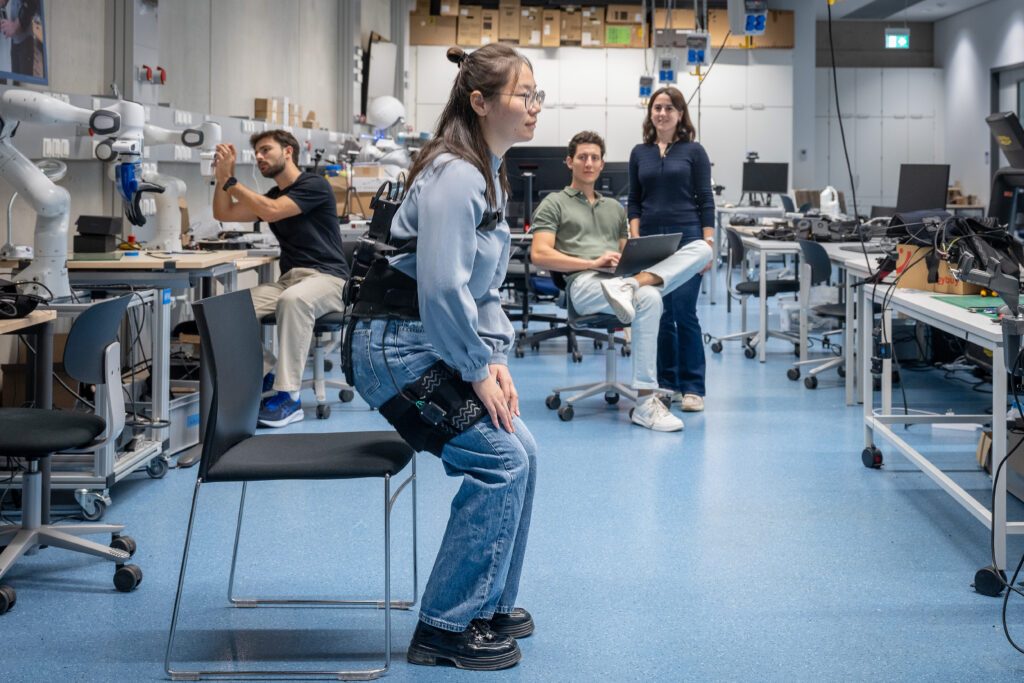
Exoskeletons developed at Professor Lorenzo Masia’s lab help elderly people and those with medical conditions move more easily. They also assist industrial workers in performing heavy tasks. Photo: Andreas Heddergott / TUM. Getting up from a chair can be difficult for older people, often due to decl