Why Engineers Should Brave Capitol Hill
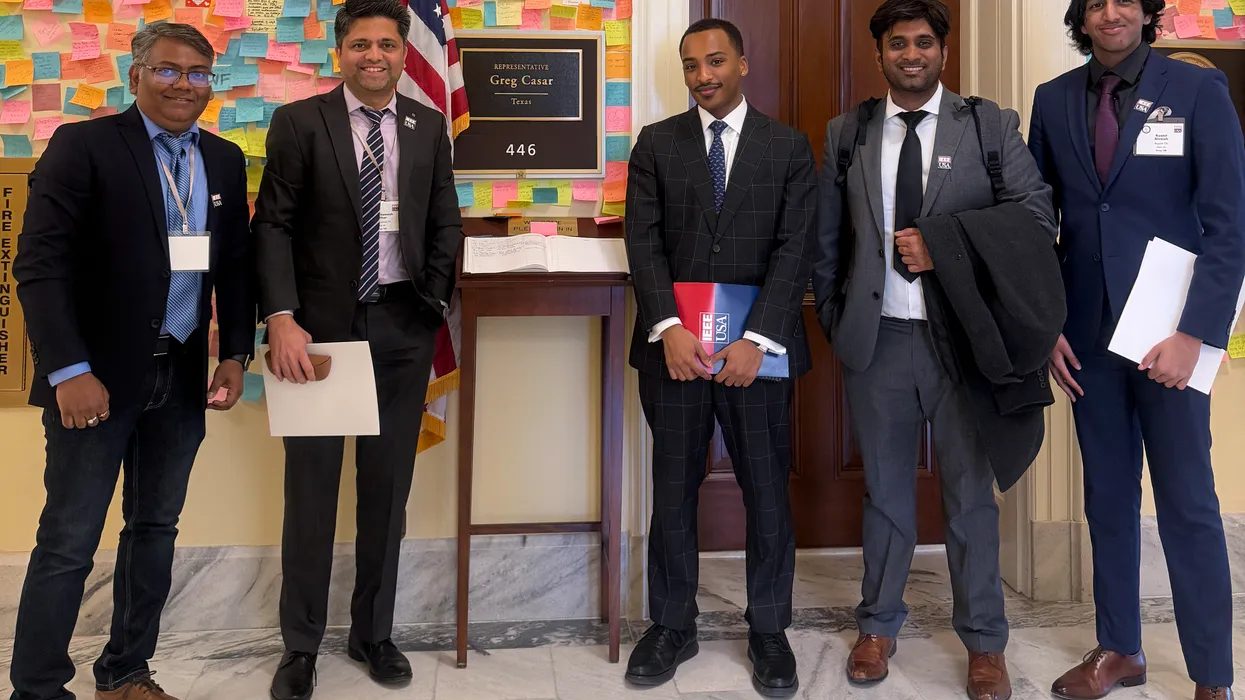
When San Antonio–based software engineer Nikhil Jathar first went to Washington, D.C., to advocate for federal support for technology education and research funding, he was in awe of the opportunity. It was spring of 2025, not long after Jathar settled in the United States from India, when he got an invitation to join the annual Congressional Visits Day organized by IEEE-USA .
“My first reaction was, ‘Wow, I get to visit Congress,’ ” says Jathar, CTO of AvanSaber , a business software company he cofounded in 2014. At the time, he did not have a specific lobbying position on behalf of the company. But he was intrigued by the invitation—which goes out to all U.S. IEEE members—and as he read more about congressional visits, his motivation deepened. He realized: “I need to try this. I want to see where it goes.”
What’s Your Ask?
Congressional staffers expect clarity from advocates. Be clear on what you plan to ask for when you arrive. Here are some common options:
Cosponsor (or oppose) an existing bill or amendment.
Preserve, remove, or modify legislative text in a bill under consideration.
Add language to an appropriations bill or committee report.
Ask a federal agency a specific oversight question.
Request a briefing, hearing, Government Accountability Office review, or stakeholder roundtable.
Encourage an agency to clarify a technical rule.
Congressional staffers say they welcome the knowledge and perspective that engineers like Jathar and other visitors from beyond Washington, D.C., provide. It’s also important for those visitors to be clear on what they are advocating for. One staffer for the House Committee on Science, Space, and Technology , who agreed to speak anonymously due to the office’s media policy, says, “Ideas for new policies come from multiple places. It could begin at the [legislator] or staff level, an ask from a constituent, or needs from industry. It’s up to us to figure out what would do the most good,” the staffer said. “For instance, if you leave it to the lobbyists, they’re understandably going to do what’s in their clients’ interests.”
For engineers in the United States, speaking with elected representatives is an effective way to shape key policies, but it takes some preparation and the right approach, as Jathar learned over the course of two visits.
Mapping Your Way Into Washington
Congress’s job is to act on behalf of the people, and it has rules for how people can lobby it. It distinguishes between broader advocacy—conversations between constituents and U.S. representatives—and professional lobbying, which involves paid professionals and is governed by the Lobbying Disclosure Act. Many professional groups like IEEE also organize congressional visits for their members. Those visits can be subject to lobbying rules, so the organizers told Jathar that: “You are representing the organization, not your own views.” He would need to stick to the talking points IEEE-USA had prepared for all its participants, regardless of their specialty, to promote across several congressional offices.
On Jathar’s first visit, those organizational talking points included advocating for funding smart grids, authorizing Department of Energy research , and investing in STEM education . That represents one of the trade-offs of access in Washington. IEEE-USA’s priorities didn’t all overlap directly with Jathar’s work, but they were broad enablers of science and technology and, he says, “STEM education funding is close to my heart.”
Anyone can approach their representatives in Washington with their personal priorities, Jathar notes, but given how pressed for time congressional staff are, they are more likely to prioritize a meeting that represents the views of as many of their constituents as possible. “I could have gone outside the IEEE structure,” Jathar says, but congressional staff “are more likely to listen if you are part of a much bigger organization.”
For Jathar’s first congressional visit , organizers assigned him to call on the offices of several representatives from both political parties based on where he lives: Representatives Greg Casar (D-Texas), Lloyd Doggett (D-Texas), and Barry Moore (R-Ala.). “Meeting a staffer or a senior member from their office is good. They tend to relate to these issues more than a representative, because a representative has 10 different high-level things they have to worry about whereas the staffer can be more focused on the policy details,” Jathar says.
A typical visit like this may last anywhere from 15 minutes to an hour , so Jathar kept his talking points simple and short. “First and foremost you’re gonna get a very small window,” he says, “Make sure you’ve got everything ready to present in bullet points and not a lot of jargon. You can always bring that out later if they ask more questions.” Simple visual aids, in the form of one-page handouts, may be helpful for communicating numeric or technical information, too.
“If you leave it to the lobbyists, they’re understandably going to do what’s in their clients’ interests.” –Staffer for the House Committee on Science, Space, and Technology
The House Science Committee staffer agrees: “I prefer meetings where people know what they want and know what we’re doing in Congress.” In addition to having a clear request, the staffer says engineers and other advocates should keep track of where Congress is in its cycle: Is it appropriations season, and when is the next budget being set? How far along is a given piece of legislation in the process, and what is realistic to change at that point?
During Jathar’s 2025 visit to one Capitol Hill office, he learned firsthand the importance of preparation. For one of the three representatives he visited, staff politely pointed out that the legislator they worked for was not on the committee with jurisdiction over the IEEE-USA talking point they were discussing. “They explained that there are only certain things [the legislator] can do on that…
Les actualités sont collectées automatiquement depuis des flux publics robotique & IA.
Articles liés

OpenAI, Anthropic, and Nvidia had record lobbying quarters
It was a busy summer for AI lobbyists. Anthropic, OpenAI, and Nvidia each had their highest-spending lobbying quarter between July and September, federal disclosures show. Nvidia spent the most of the group at $2.2 million, followed by Anthropic's $2.1 million and OpenAI's $1.5 million. Compared to

1Password lets AI agents use your passwords without seeing them
1Password is introducing a new feature that allows AI agents to sign into your accounts without actually seeing or handling your passwords. The aptly named 1Password for Agents doesn't give bots free reign to access all of your connected accounts - you'll still need to grant approval for sign-in req
Hackers got a four-day head start on epic PHP2Shell vulnerability
Hackers were already probing the bug before defenders were told it existed.
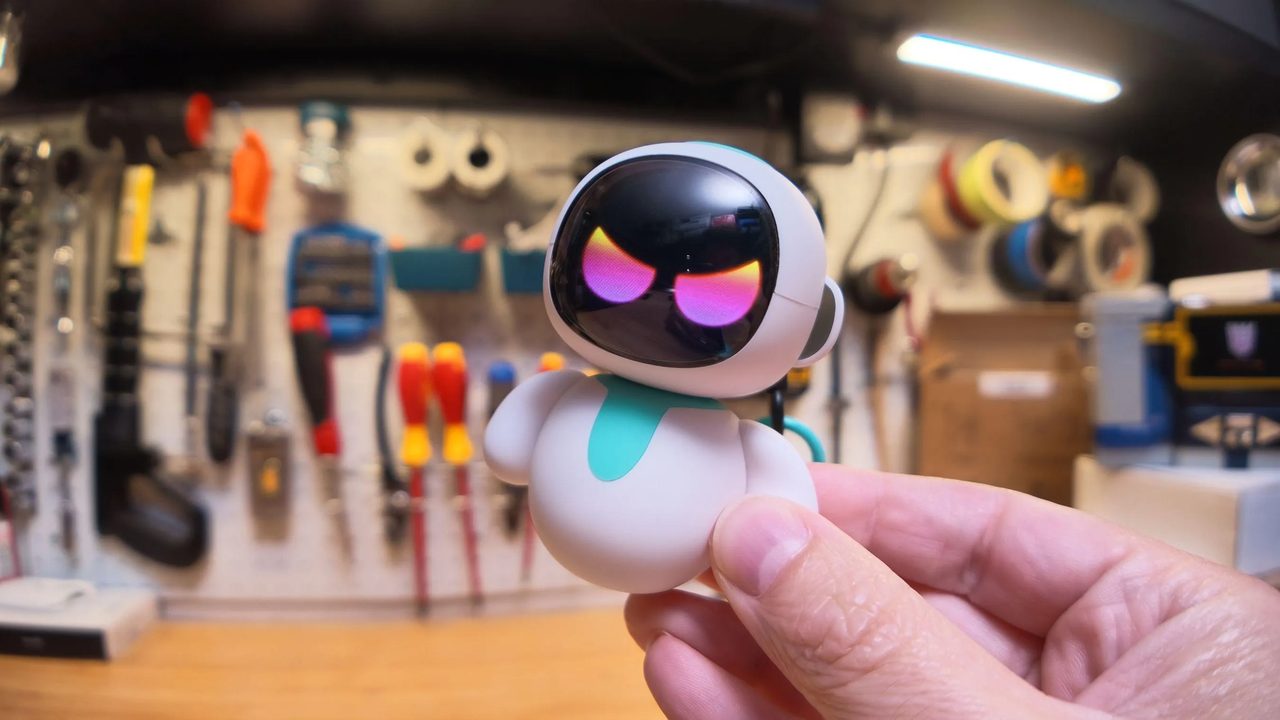
Eiliko maker says it’s hiring an ‘independent security firm’ after Verge report on its insecure robots
Eiliko, a cute robot charm you can hang on your bag with built-in AI conversations, turned out to be a security nightmare. It told owners that "your secrets are safe with me," but hackers could easily read complete transcripts of everything we told the toy, and that was just the beginning. The Verge
PHP: The three little letters wreaking havoc across the web
Two vulnerabilities found in the programming language PHP put enormous swaths of the internet in danger. By some accounts, up to 70 percent of websites use PHP in some capacity. It powers Wikipedia, WordPress, Drupal, and a host of other popular sites and platforms, including DeviantArt and 4Chan, w

AI agents are ready to shop. Some retailers are wary
Using an AI agent to shop for you is a strange experience. Tech companies have marketed them as personal assistants - the democratizing of labor that ordinarily would only be available to the rich and powerful. In practice, at least for buying things, it's more like sending an anxious and apologetic