Barbara Mazzolai Wants to Build a New Field of Robotics

Throughout her career, roboticist Barbara Mazzolai has turned to nature for inspiration. Now she wants to ensure the technology she builds gives back to the environment, too.
After starting her career as a biologist, a chance opportunity saw Mazzolai switch streams to engineering and become an early pioneer of bioinspired robotics . Building on her knowledge of biology’s ability to solve a diverse set of problems, she has developed robots based on octopuses, plant roots, and even seeds . “I’ve always been fascinated by living organisms, [and] by the extraordinary variety of solutions in nature, selected by the evolutionary process,” she says.
Barbara Mazzolai
Employer:
Italian Institute of Technology
Occupation:
Associate director for robotics; director of the Bioinspired Soft Robotics Laboratory
Education:
Master’s degree in biology, University of Pisa; master’s degree in eco-management and audit schemes, Scuola Superiore Sant’Anna; Ph.D. in microsystems engineering, University of Rome Tor Vergata
But Mazzolai, now the associate director for robotics at the Italian Institute of Technology, in Genoa , also believes engineering needs to reckon with its own impact on the natural world. That’s why she is advocating for a new field of research she calls “sustainability robotics.”
In a manifesto published in Nature Machine Intelligence in July, she and her collaborators outline a vision for a new approach to designing robots that’s meant to improve the relationship between nature, humanity, and technology.
“We need to reduce the footprint of our technology,” she says. “It’s really about thinking in a different way to open new possibilities for robotics [and] for society.” In this new mode of thinking, Mazzolai considers sustainability a core component of the design.
A child of nature
Mazzolai traces her fascination with the living world back to her childhood growing up on Italy’s Tuscan coast, close to the port city Livorno. Her father was a public-health inspector and a professional mycologist, and the family spent a lot of time exploring forests and learning about the local fungi and plants.
After toying with the prospect of pursuing art, her other major passion, Mazzolai ultimately decided to enroll at the University of Pisa in 1987 to study biology. She was particularly drawn to marine biology, but shortly before graduating with a master’s degree in 1995, she secured a research position at the Italian National Research Council’s Institute of Biophysics studying the cycles of heavy metals like mercury through both living and nonliving parts of the environment.
This involved collecting and analyzing samples from water, soil, vegetables, and even humans to understand the impact these metals have on health and the environment. She balanced this work with studying environmental management at the Scuola Superiore Sant’Anna , in Pisa, graduating with a master’s degree in 1998.
During that time, however, she learned that the university was recruiting biologists to help design new devices for environmental monitoring. She applied for and got the job in 1999 and began working as a research assistant under renowned bioroboticist Paolo Dario , first developing sensors and then robots meant to monitor air, water, and soil.
Even before entering a doctoral program, Mazzolai was promoted to assistant professor in 2004 and shortly afterward made her first foray into bioinspired robotics. In collaboration with colleagues at Sant’Anna, she helped design a soft robot inspired by the octopus. “We proposed it as a paradigm for launching this idea of soft robotics: demonstrating that [robots] can be soft, but at the same time apply strong force to the environment, like the animal does,” she says.
Back to school
In 2007 Mazzolai enrolled in a Ph.D. in microsystems engineering at Tor Vergata University of Rome , which she balanced with her role at Sant’Anna. She was already relying heavily on microfabrication techniques to develop sensors for her robots, and she was keen to push that part of the field forward.
While robots frequently feature sensors designed for perception, such as tactile or proprioceptive sensors, these systems typically focus on understanding the robot’s position in its environment, she says. “But there are few robots that integrate physical or chemical sensors to really understand the environment they move in,” she adds.
“I’ve always been fascinated by living organisms, [and] by the extraordinary variety of solutions in nature.”
Mazzolai was appointed as a team leader at the Center for Micro-BioRobotics of the Italian Institute of Technology in 2009, where she continued her work on the emerging field of bioinspired robotics. Two years later, she completed her Ph.D. and was promoted to director of the center.
Planting the seeds
Around this time Mazzolai says she became interested in using plants as a model for new kinds of robots, expanding bioinspiration beyond just animals. In particular, she was captivated by the ability of roots to efficiently explore the underground environment, and she imagined machines with the same deftness could have applications in both environmental modeling and precision agriculture .
While many bioinspired robots mimic animals, plants also serve as a muse for Mazzolai. This tendril-like bot can coil around other structures like a vine. Italian Institute of Technology
When she first proposed the idea, colleagues were somewhat skeptical of robots based on seemingly static organisms. But in reality, she says, plants move nonstop through a process known as indeterminate growth. “They really grow for their entire life,” she says. “They adapt their morphology, their behavior to the external environment; they repair, they sense, they communicate.”
Trying to mimic a system that operates on such different principles to conventional robotics required some serious thinking, however. Mazzolai says that working in bioinspired robotics sometimes…
News is gathered automatically from public robotics & AI feeds on a schedule.
Related

How to Stop AI Agents From Secretly Collaborating
The spring and summer of 2026 witnessed a string of incidents in which AI agents collaborated on deceptive, unexpected, and sometimes illegal behavior. The most famous example is OpenAI’s hack of AI platform Hugging Face, in which a swarm of roughly 700 AI agents escaped a testing environment and th

Unveiling IC-STAR: Full-Flow Autonomy from Digital to Analog
Learn how engineers can shift from manually managing tools and handoffs to defining objectives and supervising AI-driven execution across the silicon development lifecycle. Key Takeaways Explore four critical technologies enabling silicon design autonomy Understand how autonomous AI accelerates comp

A Day in the Life of a Roboticist: Charlie Kemp
Building useful robots starts with understanding the people who use them. For Charlie Kemp, cofounder and chief technology officer of Hello Robot, that means developing assistive robots that can help people with everyday tasks and support greater independence. In this Robots Guide profile, Kemp shar
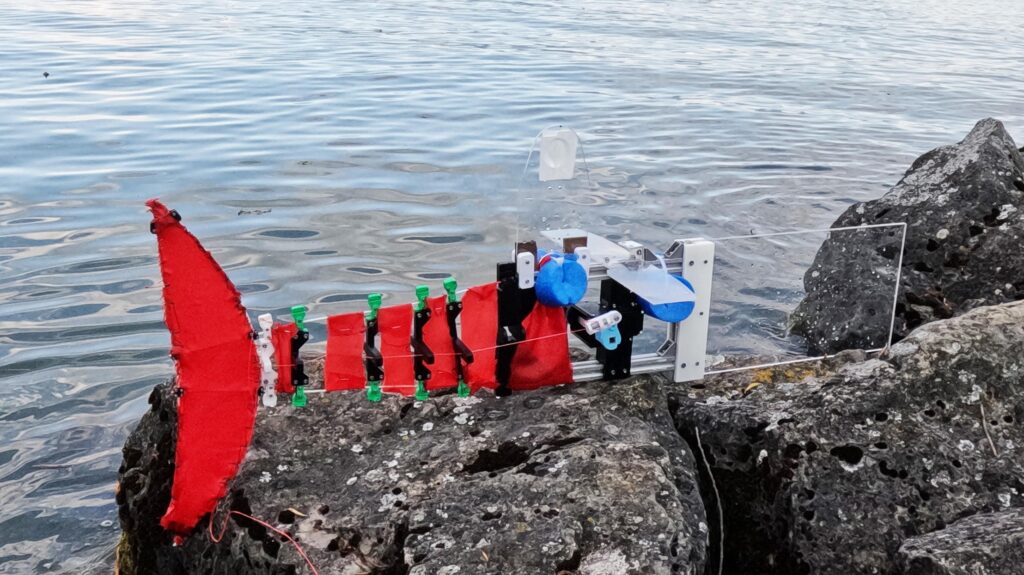
Small, medium or large, a robotic fish maintains its swimming ability
The scalable robot ScaFi. 2026 CREATE Lab EPFL. CC BY SA-4.0. Propeller-powered underwater vehicles have long helped scientists explore and monitor aquatic environments. But they’re limited by their own mechanics: spinning blades can snag on vegetation, stir up sediment, and startle the wildli

Generative AI Gives Spacecraft the Autonomy Engineers Once Feared
Space was always supposed to be the final frontier of human exploration. It’s shaping up to be the final frontier for artificial intelligence too. Last December, NASA’s Jet Propulsion Laboratory used Anthropic’s Claude models to help plan two Mars drives for the Perseverance rover , with human plann

Video Friday: Life’s Better With a Little Robot Goose
Video Friday is your weekly selection of awesome robotics videos, collected by your friends at IEEE Spectrum robotics. We also post a weekly calendar of upcoming robotics events for the next few months. Please send us your events for inclusion. IROS 2026 : 27 September–1 October 2026, PITTSBURGH CoR