Video Friday: Humanoid Robot Takes On Monkey Bars

Video Friday is your weekly selection of awesome robotics videos, collected by your friends at IEEE Spectrum robotics. We also post a weekly calendar of upcoming robotics events for the next few months. Please send us your events for inclusion.
Humanoids Summit Seoul : 22–23 September 2026, SEOUL
IROS 2026 : 27 September–1 October 2026, PITTSBURGH
CoRL 2026 : 9–12 November 2026, AUSTIN
Enjoy today’s videos!
Traversing sparse 3D structures requires humanoid robots to perceive thin, overhanging geometry while executing agile, accurate whole-body motions. We study this problem through monkey-bar traversal, where the robot must jump to the structure, traverse it through sparse bar interactions, and land safely.
The list of obstacles that you can traverse to escape a robot is getting shorter.
[ ETH Zurich Robotic Systems Lab ]
YES GIVE ROBOTS TWO HEADS I LOVE IT!
[ General Robotics Lab ]
9/11 was the first documented use of robots for urban search and rescue and helped create the field of disaster robotics. Personnel began assembling on the afternoon of September 11 and worked the pile from late on September 11 through October 2, when the last available robot failed. The robots found no survivors, but they located remains and helped search for routes through the rubble toward basements and stairwells where trapped firefighters might have gone.
[ CRASAR ]
Unitree majorly fully open-sources the UnifoLM-WLA-1.0 embodied foundation model, achieving new SOTA results across multiple benchmarks among open-source models worldwide. A single model coordinates desktop and whole-body mobile manipulation, supporting cross-task and cross-end-effector generalization, driven by one model, whole-body coordination.
[ Unitree ]
Compliance is very important in physical interaction. In this work, we show how a multi-lined aerial robot uses its centroid and joint motion to achieve hybrid impedance—admittance control in contact-rich aerial manipulation tasks such as surface sliding. This work will be presented in IEEE IROS 2026.
[ DRAGON Lab ]
Thanks, Moju!
Remind me not to get too close to this.
[ RaiLab Kaist ]
Welcome to this edition of Things That Really Seem Like They Should Not Fly.
[ Texas A&M University Advanced Vertical Flight Lab ]
Achieving agile and generalized legged locomotion across terrains requires tight integration of perception and control, especially under occlusions and sparse footholds. Existing methods have demonstrated agility on parkour courses but often rely on end-to-end sensorimotor models with limited generalization and interpretability. By contrast, methods targeting generalized locomotion typically exhibit limited agility and struggle with visual occlusions. We introduce a unified reinforcement learning (RL) framework for agile and generalized locomotion that incorporates a novel attention-based map encoder in the control policy.
[ ETH Zurich Robotic Systems Lab ]
Finally, the killer app for humanoid robots! But we probably shouldn’t call it that.
[ Unitree ]
I suspect that this demo avoids many of the things that are actually difficult about doing dishes. Not just the water and the slippery soapiness, but also identifying when a dish is dirty as well as when it is actually clean.
[ Flexiv ]
Sure, I guess I might want a robot to deliver a burrito to me while I’m hiking to the top of a mountain in the rain...?
[ DEEP Robotics ]
AI has transformed the digital world. It writes our code, generates our images, reasons in our language. But the physical world—the plants that make our power, our fuel, our steel, and chemicals—it has barely touched. ANYbotics CEO and co-founder Péter Fankhauser on the bet behind the company: Why legged robots turned out to be the way into the world’s most demanding industrial plants, what it took to certify one for explosive atmospheres after experts called it impossible, and where autonomous industrial work goes next.
[ ANYbotics ]
News is gathered automatically from public robotics & AI feeds on a schedule.
Related

How to Stop AI Agents From Secretly Collaborating
The spring and summer of 2026 witnessed a string of incidents in which AI agents collaborated on deceptive, unexpected, and sometimes illegal behavior. The most famous example is OpenAI’s hack of AI platform Hugging Face, in which a swarm of roughly 700 AI agents escaped a testing environment and th

Unveiling IC-STAR: Full-Flow Autonomy from Digital to Analog
Learn how engineers can shift from manually managing tools and handoffs to defining objectives and supervising AI-driven execution across the silicon development lifecycle. Key Takeaways Explore four critical technologies enabling silicon design autonomy Understand how autonomous AI accelerates comp

A Day in the Life of a Roboticist: Charlie Kemp
Building useful robots starts with understanding the people who use them. For Charlie Kemp, cofounder and chief technology officer of Hello Robot, that means developing assistive robots that can help people with everyday tasks and support greater independence. In this Robots Guide profile, Kemp shar
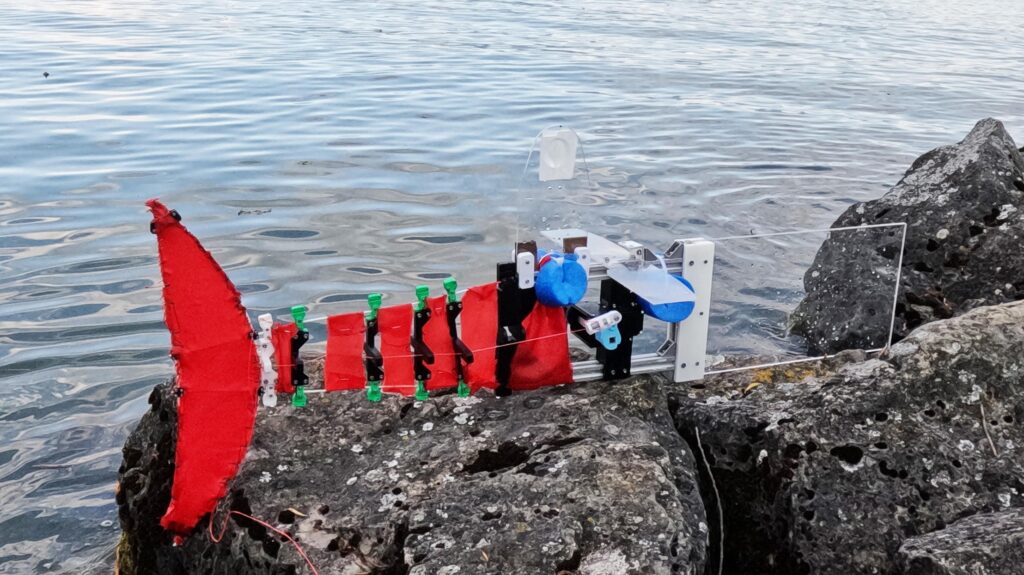
Small, medium or large, a robotic fish maintains its swimming ability
The scalable robot ScaFi. 2026 CREATE Lab EPFL. CC BY SA-4.0. Propeller-powered underwater vehicles have long helped scientists explore and monitor aquatic environments. But they’re limited by their own mechanics: spinning blades can snag on vegetation, stir up sediment, and startle the wildli

Generative AI Gives Spacecraft the Autonomy Engineers Once Feared
Space was always supposed to be the final frontier of human exploration. It’s shaping up to be the final frontier for artificial intelligence too. Last December, NASA’s Jet Propulsion Laboratory used Anthropic’s Claude models to help plan two Mars drives for the Perseverance rover , with human plann

Video Friday: Life’s Better With a Little Robot Goose
Video Friday is your weekly selection of awesome robotics videos, collected by your friends at IEEE Spectrum robotics. We also post a weekly calendar of upcoming robotics events for the next few months. Please send us your events for inclusion. IROS 2026 : 27 September–1 October 2026, PITTSBURGH CoR