Protecting Dynamic Industrial Robot Cable Carriers

This article is brought to you by Tsubaki KabelSchlepp .
In modern automated manufacturing, six-axis articulated robots perform high-speed, multidirectional maneuvers under demanding operational cycles. However, as robot arms swivel, rotate, and extend, the electrical cables, fiber optics, and pneumatic hoses supplying them endure severe mechanical stress. Torsional twist, rapid acceleration, and repeated contact with machine structures often lead to premature conductor fatigue, insulation breakdown, and costly unplanned production halts.
To overcome these multi-axis motion challenges, the Tsubaki KabelSchlepp Robotrax System provides a specialized three-dimensional cable carrier engineered specifically for complex robotic motion.
Managing High Tensile Forces With Central Steel Technology
Conventional cable carriers often transfer operational movement stress directly onto internal electrical lines and hoses. The Robotrax system changes this dynamic through a central steel cable that runs through the core of every chain link.
The Robotrax system’s central steel cable absorbs the primary tensile loads and preserves conductor integrity, dramatically extending cable service life.
When robot arms undergo rapid directional shifts and accelerations up to 10 g, this internal steel cable absorbs the primary tensile loads. By isolating electrical and fluid lines from pulling forces, the design preserves conductor integrity and dramatically extends cable service life. Mechanics can easily calibrate and adjust system tension using an integrated clamping piece, ensuring consistent mechanical support throughout long operational cycles.
Spherical Link Design and Modular Cable Routing
The foundation of the Robotrax system lies in its open, single-piece plastic links featuring spherical snap-on connections on both sides. This geometry allows the carrier to flex smoothly across three axes, providing radial rotation of up to ±450 degrees per meter depending on the model size.
To optimize internal organization, carrier links contain up to three distinct chambers. This physical separation prevents signal interference and mechanical abrasion between heavy power lines, sensitive data channels, and fluid hoses. For standard models (R040 through R100), technicians can press cables directly into the carrier without tools, drastically reducing installation and maintenance time. Larger configurations, such as the R140X, incorporate swiveling crossbars with snap locks alongside vertical and horizontal dividers for customized interior partitioning.
ROBOTRAX System
Steel cable for transferring extremely high tensile forces
Tension piece for locking the chain links
Type with toolless opening swivel crossbars and divider module available
Open design
– Fast cable laying as the cables are simply pressed in
– Easy checking of all cables
Special plastic for long service life
Protective covers or heat shields made from different materials are available for different environmental conditions
Quick-release bracket for fixing and continuation
Strain relief with LineFix clamps
Protection against hard impacts, excessive abrasion and premature wear as well as limitation of the bending radius through protector
Active Retraction and Impact Protection
Large robot work envelopes and high-speed motion trajectories can cause loose cable carrier loops to swing and strike the robot body. To eliminate these destructive collisions, Tsubaki KabelSchlepp integrates the Pull Back Unit (PBU).
The PBU serves as an active retraction mechanism that maintains optimal tension on the cable carrier throughout the entire motion cycle. By preventing excess slack and eliminating interfering contours, the PBU minimizes collision risks across complex movement paths. The unit requires zero maintenance on its retraction element and offers standard mounting configurations for leading industrial robot platforms, including KUKA, ABB, and FANUC.
Tsubaki KabelSchlepp’s Pull Back Unit maintains optimal tension on the cable carrier and minimizes collision risks across complex movement paths.
Additionally, external protectors can be retrofitted onto individual chain links. These durable impact shields limit the minimum bending radius to prevent over-flexing while shielding the chain body from severe external abrasion. If wear occurs, technicians simply replace the modular protector rather than the entire cable carrier assembly.
Built for Demanding Industrial Environments
From automotive welding cells to high-speed machining centers, Robotrax systems adapt to severe working conditions through tailored protective accessories:
Heat Shields: Aluminum-coated textile fiber covers protect against radiated heat, hot weld spatter, and flying sparks.
Protective Covers: Coated polyester sleeves shield sensitive lines against aggressive cutting fluids, hydraulic oils, paint overspray, and abrasive dust.
LineFix Strain Relief: Multi-layer clamping devices anchor cables securely at both ends to prevent axial displacement during intense motion.
By combining central load absorption, multi-axis flexibility, and active retraction control, the Robotrax system offers plant engineers and system integrators a reliable path toward maximizing robot uptime and reducing total operational costs.
News is gathered automatically from public robotics & AI feeds on a schedule.
Related

How to Stop AI Agents From Secretly Collaborating
The spring and summer of 2026 witnessed a string of incidents in which AI agents collaborated on deceptive, unexpected, and sometimes illegal behavior. The most famous example is OpenAI’s hack of AI platform Hugging Face, in which a swarm of roughly 700 AI agents escaped a testing environment and th

Unveiling IC-STAR: Full-Flow Autonomy from Digital to Analog
Learn how engineers can shift from manually managing tools and handoffs to defining objectives and supervising AI-driven execution across the silicon development lifecycle. Key Takeaways Explore four critical technologies enabling silicon design autonomy Understand how autonomous AI accelerates comp

A Day in the Life of a Roboticist: Charlie Kemp
Building useful robots starts with understanding the people who use them. For Charlie Kemp, cofounder and chief technology officer of Hello Robot, that means developing assistive robots that can help people with everyday tasks and support greater independence. In this Robots Guide profile, Kemp shar
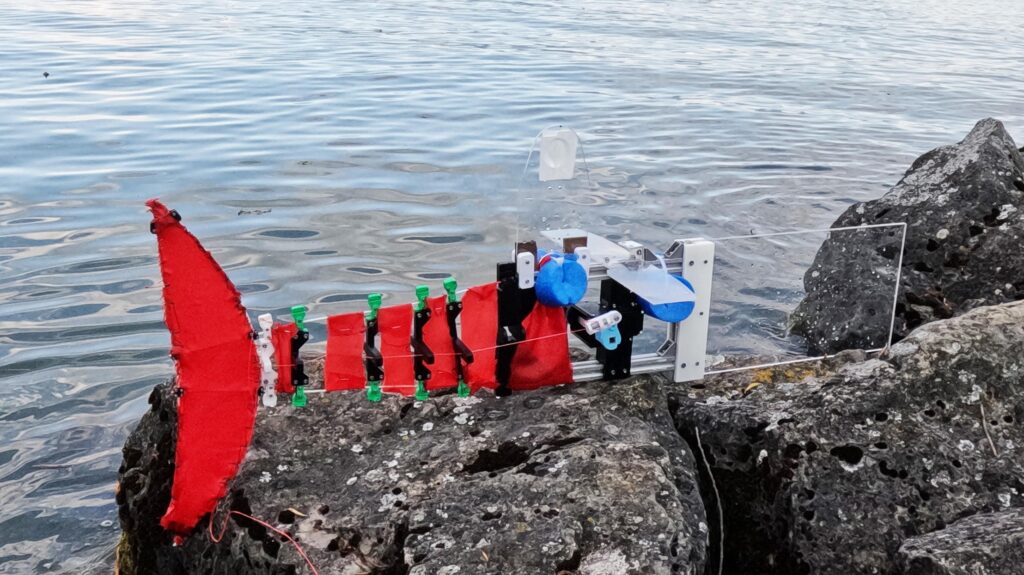
Small, medium or large, a robotic fish maintains its swimming ability
The scalable robot ScaFi. 2026 CREATE Lab EPFL. CC BY SA-4.0. Propeller-powered underwater vehicles have long helped scientists explore and monitor aquatic environments. But they’re limited by their own mechanics: spinning blades can snag on vegetation, stir up sediment, and startle the wildli

Generative AI Gives Spacecraft the Autonomy Engineers Once Feared
Space was always supposed to be the final frontier of human exploration. It’s shaping up to be the final frontier for artificial intelligence too. Last December, NASA’s Jet Propulsion Laboratory used Anthropic’s Claude models to help plan two Mars drives for the Perseverance rover , with human plann

Video Friday: Life’s Better With a Little Robot Goose
Video Friday is your weekly selection of awesome robotics videos, collected by your friends at IEEE Spectrum robotics. We also post a weekly calendar of upcoming robotics events for the next few months. Please send us your events for inclusion. IROS 2026 : 27 September–1 October 2026, PITTSBURGH CoR