Optical Tech Would Update a Robot’s AI on the Fly

Atop a lab bench, Cornell Tech postdoctoral researcher Yifan He positions the lens of an optical receiver almost a meter away from an LED emitting a beam of red light. The computer monitor attached to the receiver takes a beat to refresh, then displays an array of squares that resemble a QR code.
When you hold your phone camera up to a QR code, light strikes the image sensor as only a first step to revealing the data hidden behind the black-and-white matrix. The receiver here is doing something different: directly altering its own memory using the photocurrents produced by the beamed array of light. And unlike the data behind a QR code, which might point to a simple web address, this optical code could convey the parameters of an AI model .
The new receiver design, presented last month at the IEEE/JSAP Symposium on VLSI Technology & Circuits in Honolulu, seeks to reduce the burden of increasing memory demands on AI systems. Shining data down onto processors could lower the energy typically required for data centers, self-driving cars, and even “edge” applications like AI-powered robots, researchers say.
“People are designing all sorts of different AI chips,” says Jae-sun Seo , an associate professor of electrical and computer engineering at Cornell Tech, in New York City. These processors don’t often have room for all the parameters that make up AI models, so the additional data is stored in dynamic RAM ( DRAM ). The electrical connections commonly used to move the data between the DRAM and the processor create cost and efficiency concerns when systems scale up. “That’s one of the major bottlenecks.”
Optical links move data at high bandwidth with less energy loss than metal wires, but today’s optical receivers undercut that advantage by relying on power-hungry analog circuits to convert light to electronic bits. The group’s new tech would instead receive rapid flashes of digital QR-code-like matrices so that chips can tweak model parameters without those analog circuits, enabling fully digital optical communication that would consume less energy.
“This is a really important problem,” says Dennis Sylvester , an IEEE Fellow who chairs the University of Michigan ’s electrical and computer engineering department and was not involved in the work. “It’s got massive commercial implications. This solution is a clever way of dealing with it.”
Jae-sun Seo [left] and Yifan He have developed a receiver that can edit memory in response to QR-code-like arrays of light. Alex Music
How Light “Flips” Memory to Power AI
Processors have a bit of built-in static RAM ( SRAM ), but not enough to allow an AI model to run independently. While SRAM is the faster of the two memory options, DRAM can store more data in the same footprint.
In the new system, the DRAM sits with the transmitter, and the receiver is part of the processor’s SRAM. The transmitter beams the data to the array of SRAM cells, which in this case are modified to contain photodiodes. Light hitting each photodiode creates a current to flip binary values in the SRAM.
Creating a link between the light and receiver requires calibration, because you can’t expect them to be perfectly aligned or perpendicular to each other. So the chip references a data frame that has information about the expected position of each pixel of data and uses that frame to ensure it can receive the real data, He says. “Ideally the best way is to have direct, point-to-point space between the transmitter and the receiver,” Seo adds, “but even if it’s slightly tilted, we have this calibration circuit.”
For applications in real-world settings, the researchers say they will need to build an optical transmitter that can alter the light matrix millions of times per second, transferring gigabits per second. The transmitter that I saw in He and Seo’s lab is only a proof of concept, emitting a static 14-by-14-bit matrix through a metal mask over the light. The researchers say they are working with optics research groups to build a transmitter that is capable of rapidly changing the matrix.
The Future of Light-Based Memory Links
Michigan’s Sylvester says that the tech in its current form is likely far from commercialization because the individual photosensitive bit cells are larger than SRAM bit cells in conventional chips. Those larger cells mean the chip can fit less memory, a trade-off that he says could cancel out the added efficiency of the light-based approach.
Seo says that it’s part of the group’s ongoing efforts to shrink the bit cells, which can be achieved by optimizing the size of transistors and circuits and leveraging CMOS scaling.
Seo and He are looking at uses for the tech in robotics and other edge applications. One example is in AI-robot-powered warehouses and factories, which could use optical data transmission to save time and energy when updating the AI models in each robot. Additionally, microrobots , which are inherently memory-constrained due to their size, could one day benefit from the tech, though it would require a more size-conscious design.
“Edge AI is a big growth area, and in three, four, five years, you’re going to hear as much about that as you are with data centers, probably, as the intelligence migrates more and more into these devices that we have,” Sylvester says.
News is gathered automatically from public robotics & AI feeds on a schedule.
Related

How to Stop AI Agents From Secretly Collaborating
The spring and summer of 2026 witnessed a string of incidents in which AI agents collaborated on deceptive, unexpected, and sometimes illegal behavior. The most famous example is OpenAI’s hack of AI platform Hugging Face, in which a swarm of roughly 700 AI agents escaped a testing environment and th

Unveiling IC-STAR: Full-Flow Autonomy from Digital to Analog
Learn how engineers can shift from manually managing tools and handoffs to defining objectives and supervising AI-driven execution across the silicon development lifecycle. Key Takeaways Explore four critical technologies enabling silicon design autonomy Understand how autonomous AI accelerates comp

A Day in the Life of a Roboticist: Charlie Kemp
Building useful robots starts with understanding the people who use them. For Charlie Kemp, cofounder and chief technology officer of Hello Robot, that means developing assistive robots that can help people with everyday tasks and support greater independence. In this Robots Guide profile, Kemp shar
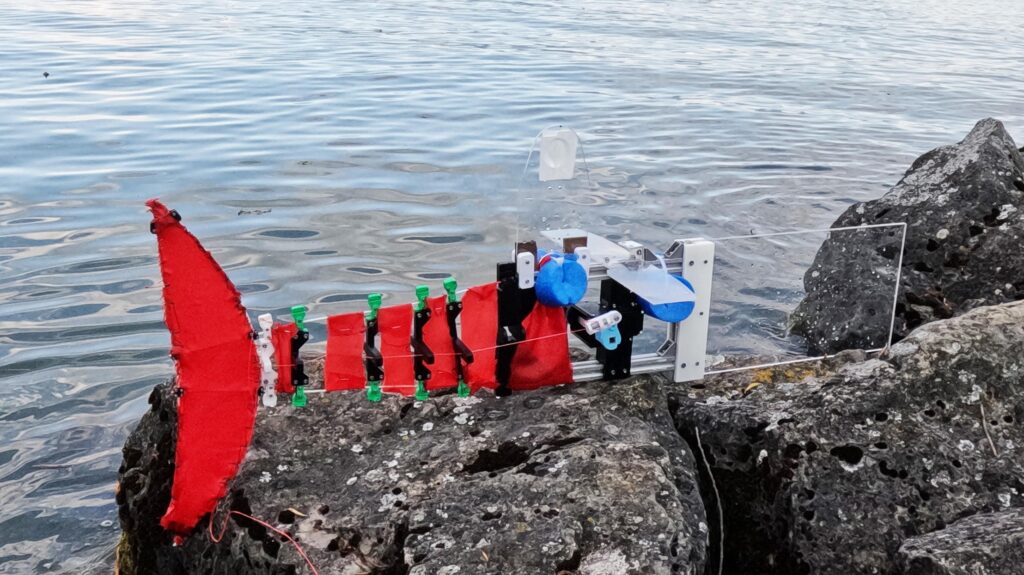
Small, medium or large, a robotic fish maintains its swimming ability
The scalable robot ScaFi. 2026 CREATE Lab EPFL. CC BY SA-4.0. Propeller-powered underwater vehicles have long helped scientists explore and monitor aquatic environments. But they’re limited by their own mechanics: spinning blades can snag on vegetation, stir up sediment, and startle the wildli

Generative AI Gives Spacecraft the Autonomy Engineers Once Feared
Space was always supposed to be the final frontier of human exploration. It’s shaping up to be the final frontier for artificial intelligence too. Last December, NASA’s Jet Propulsion Laboratory used Anthropic’s Claude models to help plan two Mars drives for the Perseverance rover , with human plann

Video Friday: Life’s Better With a Little Robot Goose
Video Friday is your weekly selection of awesome robotics videos, collected by your friends at IEEE Spectrum robotics. We also post a weekly calendar of upcoming robotics events for the next few months. Please send us your events for inclusion. IROS 2026 : 27 September–1 October 2026, PITTSBURGH CoR