Video Friday: Your Robot Surgeon Will See You Now

Video Friday is your weekly selection of awesome robotics videos, collected by your friends at IEEE Spectrum robotics. We also post a weekly calendar of upcoming robotics events for the next few months. Please send us your events for inclusion.
Summer School on Multi-Robot Systems : 29 July–4 August 2026, PRAGUE
Actuate 2026 : 18–19 August 2026, SAN FRANCISCO
IROS 2026 : 27 September–1 October 2026, PITTSBURGH
Humanoids Summit Seoul : 22–23 September 2026, SEOUL
Enjoy today’s videos!
In this work, we present a systematic evaluation of contemporary humanoid technology for laparoscopic surgical tasks. We develop a humanoid-based laparoscopic teleoperation framework using general-purpose instruments and assess its capabilities through benchtop characterization, dry-lab user studies spanning diverse surgical experience levels, and in vivo porcine studies. Across these evaluations, we quantify technical feasibility, task performance, and clinical readiness relative to established surgical platforms. Together, our study provides an evidence-based assessment of the current capabilities and limitations of humanoids for surgical applications, highlighting both their promise and the key technical challenges that must be addressed before clinical deployment.
[ UC San Diego ]
Thanks, Ioana!
Today, we preview ACT-2, the first robotics model to achieve reliability by unifying broad generalization with high performance.
Sunday also has this 3-hour video (!) of Memo folding laundry in “never seen environments.” Let’s just not ask, because we almost certainly don’t want to know.
[ Sunday Robotics ]
Spot is not the first quadruped to try its legs at last few meters package delivery , but the challenge is not really those last few meters—it’s going to be not driving the human coworker nuts, is my guess.
[ Boston Dynamics ]
Quadrupedal locomotion in complex environments requires multiple motor skills, stable gait transitions, and perceptive control over a broad range of speeds. APT-RL (Action Pretrained Transformer-based Reinforcement Learning) is a unified framework for high-speed, multiskill locomotion. A single policy selects and transitions between gaits and motor skills using only onboard perception and computation. In real-world experiments, KAIST HOUND traversed stairs, hurdles, stepping-stones, gaps, and fallen branches. It reached an instantaneous peak speed of 4.25 meters per second while traversing a 60-centimeter step and 6 m/s during a drop-down transition on a three-step staircase.
[ KAIST DRCD Lab ]
We will have much more on this next week.
[ Walden Robotics ]
Today, we introduce Lumo-2, our next-generation latent world-action model for generalist embodied robot learning.
[ Astribot ]
Following Atlas’s first-of-its-kind live performance at the FIFA World Cup 2026, we caught up with Seth Davis, senior program manager, to learn how this demonstration came together and what it takes to succeed in the field (and on the pitch ).
[ Boston Dynamics ]
No teleoperation. No cuts. Long take. One of the world’s few complete demonstrations of long-horizon mobile manipulation, bringing fully autonomous humanoid robots another step closer to us.
[ LimX ]
Thanks, Jinyan!
Impressive. But get a job.
[ MagicLab ]
We saw some footage of this last week , but here’s a much better video.
Wing-propelled diving birds flap their wings to move through air and water, yet the wing morphology and kinematics that enable this behavior remain poorly understood because of the difficulty of collecting in situ data. The impact of flapping frequency, wing size, and stiffness on locomotion in—and transition between—the two media are still unknown. We compared data from diving birds against experiments using a flapping-wing robot capable of flying, swimming, plunge diving, and exiting the water. We show that frequency adaptation, flexible wings, and powerful actuation enable seamless transitions without folding wings or legs, that large wings enhance flight without substantially reducing underwater efficiency, and that tail-body distance and egress angle affect water exit. These results clarify how birds (and robots) balance multifluid locomotion constraints.
[ EPFL LIS ]
News is gathered automatically from public robotics & AI feeds on a schedule.
Related

How to Stop AI Agents From Secretly Collaborating
The spring and summer of 2026 witnessed a string of incidents in which AI agents collaborated on deceptive, unexpected, and sometimes illegal behavior. The most famous example is OpenAI’s hack of AI platform Hugging Face, in which a swarm of roughly 700 AI agents escaped a testing environment and th

Unveiling IC-STAR: Full-Flow Autonomy from Digital to Analog
Learn how engineers can shift from manually managing tools and handoffs to defining objectives and supervising AI-driven execution across the silicon development lifecycle. Key Takeaways Explore four critical technologies enabling silicon design autonomy Understand how autonomous AI accelerates comp

A Day in the Life of a Roboticist: Charlie Kemp
Building useful robots starts with understanding the people who use them. For Charlie Kemp, cofounder and chief technology officer of Hello Robot, that means developing assistive robots that can help people with everyday tasks and support greater independence. In this Robots Guide profile, Kemp shar
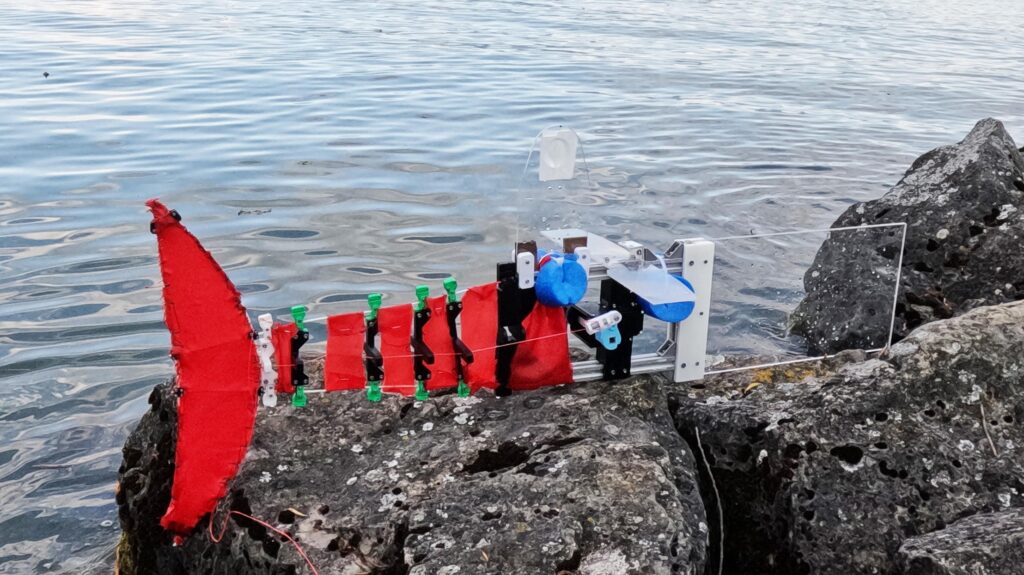
Small, medium or large, a robotic fish maintains its swimming ability
The scalable robot ScaFi. 2026 CREATE Lab EPFL. CC BY SA-4.0. Propeller-powered underwater vehicles have long helped scientists explore and monitor aquatic environments. But they’re limited by their own mechanics: spinning blades can snag on vegetation, stir up sediment, and startle the wildli

Generative AI Gives Spacecraft the Autonomy Engineers Once Feared
Space was always supposed to be the final frontier of human exploration. It’s shaping up to be the final frontier for artificial intelligence too. Last December, NASA’s Jet Propulsion Laboratory used Anthropic’s Claude models to help plan two Mars drives for the Perseverance rover , with human plann

Video Friday: Life’s Better With a Little Robot Goose
Video Friday is your weekly selection of awesome robotics videos, collected by your friends at IEEE Spectrum robotics. We also post a weekly calendar of upcoming robotics events for the next few months. Please send us your events for inclusion. IROS 2026 : 27 September–1 October 2026, PITTSBURGH CoR