AI Solves a Major Unsolved Math Problem. Not Everyone Is Happy
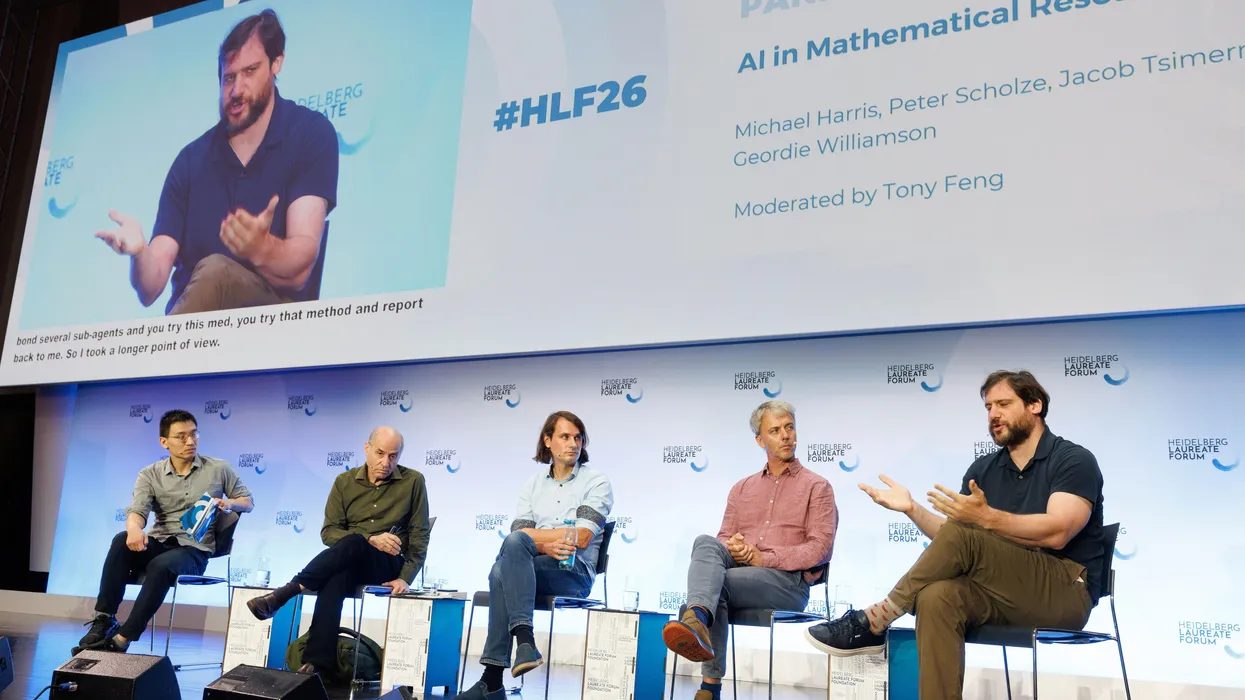
On 13 September, leading luminaries and up-and-coming talents in mathematics and computer science congregated at the annual Heidelberg Laureate Forum in Germany for a week of discussion, networking, and—naturally—wurst.
Having attended several of these events in the past, the mathematicians normally focus their chatter on which famed researchers are present, or what interesting problems they have been working on. But instead, every snippet of conversation caught in passing or any debate accidentally overheard was about how AI companies such as OpenAI, Anthropic, and Google are steamrollering their way through mathematics.
And there is good reason for these fervent discussions. Mathematics is the perfect testing ground for AI, involving step-by-step logical reasoning and answers that are automatically and objectively verifiable . This has led tech giants to develop their AI mathematical capabilities at a terrifying rate this year, leading to both new solutions to previously unsolved problems and a reckoning within the community as to what it means to do math in the age of AI.
Tech Giants Target the Millennium Problems
In short order, AI has gone from struggling with everyday research-level problems to solving a whole raft of teasers posed by prolific Hungarian mathematician Paul Erdős , then verifying the proof of Fermat’s Last Theorem, and—most recently and famously—OpenAI announcing it had solved the Navier-Stokes existence and smoothness problem . As attendee and young researcher Ailsa Robertson , of the University of Amsterdam, put it: “AI and LLMs set the math community on fire over summer.”
Of the seven extremely difficult Millennium Prize Problems posed in the year 2000 by the Clay Mathematics Institute, only one, the Poincaré conjecture , has been solved by humans so far. OpenAI’s claim to have solved a second, the Navier-Stokes existence and smoothness problem, if verified, represents a watershed moment for automated reasoning.
Fields Medalist Jacob Tsimerman , of the University of Toronto, was keen to recognize this achievement during a press conference at the forum: “We’ve seen rapid increases in capabilities, even faster than many people, including myself, expected,” he said. “Is AI doing something new? I don’t know the details, but…solving Navier-Stokes feels pretty definitive.”
Since this announcement, rumors have swirled about which of the remaining Millennium Problems will be next. One candidate is the Riemann hypothesis . In August, Anthropic quietly employed an unreleased version of Claude to tackle this problem, making important progress on a related problem but not on its main mission . And OpenAI is reportedly focusing on solving the Hodge conjecture . With these tech giants applying the full might of their most advanced unreleased models, many mathematicians see it as inevitable that at least some of these problems will be solved soon.
The tech giants are likely focusing on the Millennium Problems as a way of verifying the capabilities of their advanced AI systems, with the added bonus that solving these famous unsolved problems shows potential users and investors how powerful their technology is. “They’re really just solving these difficult mathematical problems as benchmarks, as some kind of PR stunt,” opined Fields Medalist Peter Scholze , of the University of Bonn, in Germany, during a panel discussion at the event about AI in mathematical research.
Why OpenAI’s Navier-Stokes Solution Became a Controversy
Alongside Scholze and Tsimerman at the panel discussion were thought-leading mathematicians Michael Harris of Columbia University, in New York City, and Geordie Williamson , of the University of Sydney. For them, these and many more problems researchers are now facing stem from the way in which tech giants fail to adhere to the norms and values deeply instilled in the mathematics community. And this was perfectly exemplified by OpenAI’s Navier-Stokes announcement.
“I think that OpenAI behaved extremely poorly, and that we should acknowledge that in the community,” said Williamson. Harris had a front-row seat to this alleged poor behavior. He received what mathematician Tristan Buckmaster , of New York University—who was making significant progress with Anthropic staffer Levent Alpöge on Navier-Stokes— claimed was correspondence between him and OpenAI that appeared coercive, censorious, and even threatening.
“I trusted Tristan’s account of this interaction…and I guess I did my part in promoting his narrative,” Harris said. “But…on social media and traditional media, most reports are consistent with my takeaway; that is, they depict OpenAI as bullying and disrupting disciplinary norms.” OpenAI did not respond to requests for comment prior to publication.
Beyond OpenAI’s sportsmanship (or lack thereof), Williamson is concerned about what AI’s march across mathematics this summer does to the field, both for working mathematicians and for the knowledge that can become useful to the broader society.
“What we want as a mathematical community is understanding, but we measure this against unsolved problems, and the problem is that these two measurements are very, very quickly becoming uncorrelated,” he explained, referring to how AI solutions might give an answer but usually don’t develop new methodology that is understandable or useful. “So now…we suddenly must reevaluate things like how we assess people, who gets jobs, how do we educate people, etc. This is going to be a big challenge.”
Academia Under Pressure
While the tech giants tear up the rule book in their battle for supremacy, it is ordinary human mathematicians that are bearing the consequences. Unbridled access to powerful AI technologies is affecting how mathematicians work across the world.
Young mathematician Mita Ramabulana , of the University of Cape Town, is a case in point. He said that two of the 10 advances in mathematics that OpenAI announced in August overlapped with his own work…
News is gathered automatically from public robotics & AI feeds on a schedule.
Related
Anthropic launches free AI security scans for open-source projects
Anthropic's offering to help open-source projects track down security vulnerabilities with a new service called OSS Scanner. It says open-source projects that opt-in will get "thorough, periodic security scans by our strongest models at no cost." That could mean open-source projects get alerted abou
Inside Elon Musk’s Midterm Spending Spree
This week on “Uncanny Valley,” we discuss where Elon Musk’s PAC is spending millions, the latest ideology Trump claims is dangerous, and the backlash against the designer behind Muse’s logo.
Pretend you’re sitting at Elizabeth Holmes’ desk on this weirdly detailed website
With over a thousand emails, slides, texts, and documents from the United States v. Elizabeth Holmes trial, Extend engineer Bo Lau created a website that simulates what it might have been like to rifle through the Theranos founder's desk.
California is trying to shut down robot vs. human cage matches
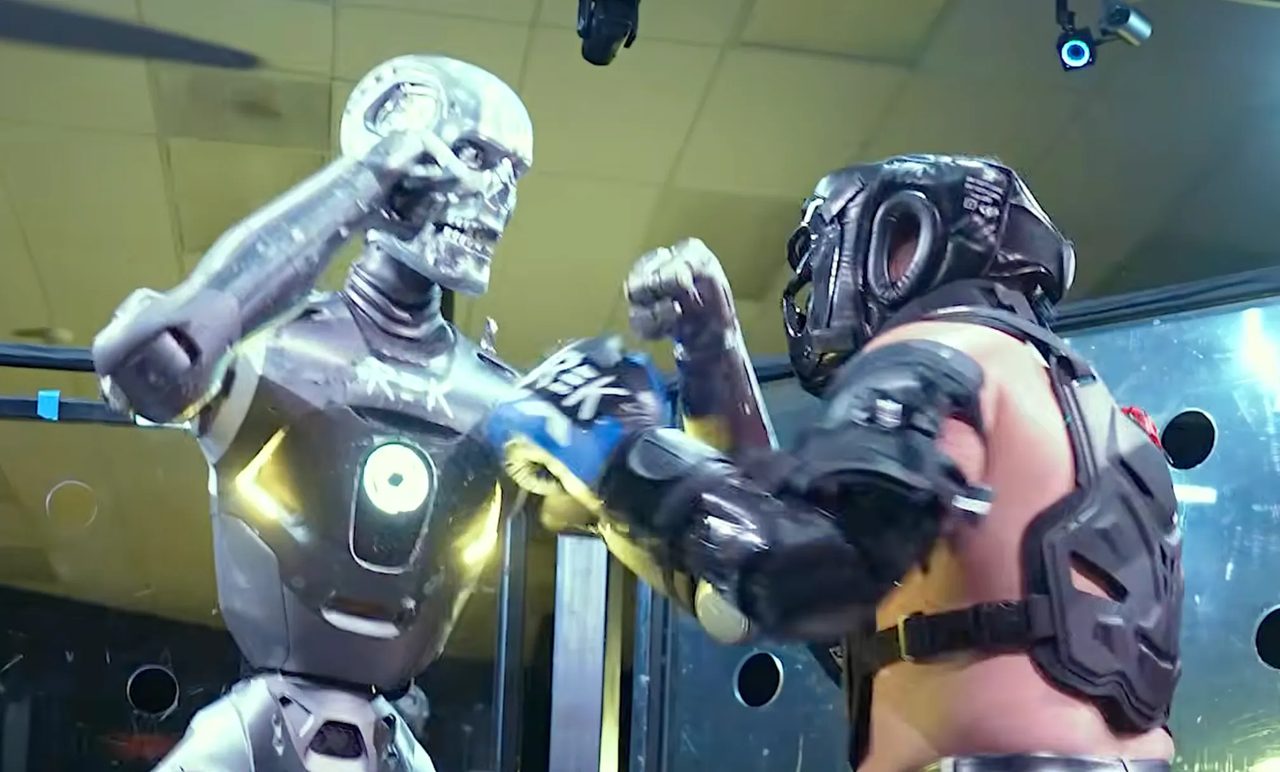
The California State Athletic Commission sent a cease-and-desist letter to a startup that hosted a match between a human and a robot last month, as reported by The New York Times. The fight, which took place on September 18th, pitted a human, Frankie LaPenna, against a humanoid robot owned by a tech
Fired OpenAI safety researchers dispute misconduct claims, warn of chilling effect
Three fired OpenAI safety researchers dispute allegations of mishandling sensitive information, warning in an open letter that their dismissals are creating a chilling effect on the company’s AI safety culture.
She Designed Meta’s New AI Logo. Then Came the Hate
Jessica Hische knew working for Meta might upset some people. But she didn’t anticipate just how angry they would get.