Ben Waters on the latest wireless charging strategies
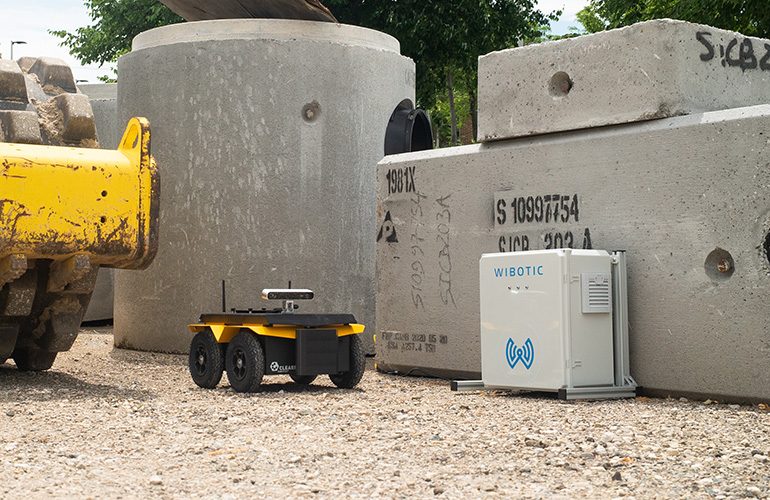
Wireless chargers are being deployed in a number of indoor and outdoor applications for charging the mobile robots. | Credit: WiBotic
As robot fleets scale, charging becomes an operational challenge. Understanding how to optimize charging for fleets of mobile robots is key to getting the best performance from the fleet throughout the day.
Ben Waters, CEO of WiBotic
With growing deployments, charging is becoming more than a question of how long a battery lasts or how quickly it can recharge. Charging strategy can affect fleet uptime, facility infrastructure, maintenance requirements, and even the size of the batteries that robot manufacturers need to carry.
Ben Waters, CEO of WiBotic , recently joined The Robot Report Podcast to discuss how those considerations are changing as robot fleets scale.
He also discussed opportunity charging, the tradeoffs around fast charging, WiBotic’s move toward higher-power systems, and how charging data could help operators identify power problems.
This is an excerpt from the podcast interview. Listen to the full audio anywhere you get your podcasts or online in the show notes .
WiBotic expands beyond its traditional robotics markets
What has changed recently at WiBotic, and how is the market maturing?
Waters: Overall, WiBotic has diversified into a few different markets, but all the while, robotics has really been growing, as we all know, over the last last one to two years for sure.
That was a big motivator for us to pursue getting into some adjacent markets. Take, for example, floor care , medical carts, space , and defense applications, all of which are markets that really use the same product as our longstanding robotics customers from a wireless charging, autonomous charging perspective.
Flash-forward a year of focusing on that and putting all the internal operational, sales, and engineering teams in place to support different markets. Here we are a year and a half later, and robotics is booming everywhere you look, right? I mean, all of our legacy customers in robotics have had significant volume growth this year.
We are seeing huge growth in automotive AMR adoption. We are seeing growth in outdoor robotic inspection for energy substations, and a lot of outdoor applications are growing. And then there’s the wild card of humanoids .
Wireless charging is a really interesting dynamic in humanoids as far as what it can enable and how it can improve uptime and eliminate some of these Achilles’ heels issues that humanoids have around downtime.
Opportunity charging changes the equation for large robot fleets
As fleets of mobile robots grow, where does charging start creating operational friction?
Waters: The big trend as charging relates to operational impact is what we’ve probably talked about before with Gene [Demaitre]. WiBotic has always looked at as a great opportunity for wireless charging. But, you know, it takes a while for fleets to get big enough for it to truly make sense. And I think we’re finally at that place. And what I’m referring to is opportunity charging.
So it’s the concept of “Don’t just put the chargers on the sides of the factories.” And then when the battery on the robot gets to 20%, that robot might be on the far side of the factory. Now it’s got to drive 10 minutes while watching out for everything else and while being ignored by the fleet management for doing a task, even though it’s in an area where a task needs to get done, right? Because it has to go charge.
That strategy, which is arguably easier to implement at a small scale, because you can truly just say, “If any one of these robots’ batteries hits 20%, stop and go drive to the charging station.” That’s fairly easy to implement. That gets really complicated, and that leads to a lot of unwanted downtime when the fleets start to get bigger. Even like fleets of 20 to 40, this becomes a bottleneck.
We need to implement opportunity charging. And it doesn’t make sense to do opportunity charging with anything but wireless. Because if you did it with contacts, your robots would be hitting the contacts so many more times. And even if you had the world’s most strongest contact, it still would require maintenance at some point, times all of the chargers in your fleet.
If the robot does a task and it’s got 10 seconds to sit there, well, a charging station should be positioned right where that robot naturally is going to sit.
You could look at that as well. It’s only charging for 10 seconds, but if you do that often enough, it’s adding substantial energy back into the batteries across the fleet and allowing these things to run 24/7.
You can completely eliminate that. Just allow the robots to stay in the loops where they’re operating when you employ opportunity charging. So that’s really the trend that we’ve been seeing and the demand we’ve been getting, and the main reason why companies are looking for wireless power.
Submit your innovation now!
Charging should be part of the robot design process
How should companies think about charging during system design instead of treating it as an accessory at the end?
Waters: If I boil it down to three things, I think companies should be thinking about power infrastructure. I’ll come back to a few details on these. Where are your electrical outlets, and how many of them do you have, and are they rated for enough power to handle all the chargers you want to deploy? So think about that up front. That bites people. We’ve seen a lot when you think about that too late.
I think people are really questioning. How big of a battery do I need? Do I need a battery that supports an eight-hour runtime? Do I need a battery that supports super fast charging? In the world of batteries, most of these types of things trade off with each other.
They might be overdesigning it. They might be adding way too much battery cost for what they really need, especially if they’re thinking about charging strategies.
We still hear a lot of…
News is gathered automatically from public robotics & AI feeds on a schedule.
Related

Robot integration brings high-precision production to midmarket manufacturers
Properly integrated industrial and collaborative robots can help midmarket manufacturers, according to a columnist. The post Robot integration brings high-precision production to midmarket manufacturers appeared first on The Robot Report .

刚刚,OpenAI被曝又拿730亿,估值超8.3万亿
智东西 编译 | 毕伟豪 编辑|云鹏 智东西11月7日消息,刚刚,据彭博社报道, OpenAI已完成新一轮融资的首批资金交割 ,金额约为 110亿美元(约合人民币734.4亿元) ,公司估值达到 1.25万亿美元(约合人民币8.35万亿元) 。 据知情人士透露,截至当地时间周五,相关融资款项已经汇入OpenAI账户。 本轮融资总额最高可能达到200亿美元(约合人民币1335.3亿元) ,剩余部分预计将在未来几周内完成,截至目前,OpenAI尚未公布本轮融资的最终金额。 参与首批资金交割的投资方包括 Coatue Management和普信集团(T. Rowe Price) 。本轮其他投资方还包

How Point One turned GPS accuracy into a robotics platform
Aaron Nathan explains how precise location technology like GPS is enabling robots to navigate, coordinate, and scale across real environments. The post How Point One turned GPS accuracy into a robotics platform appeared first on The Robot Report .
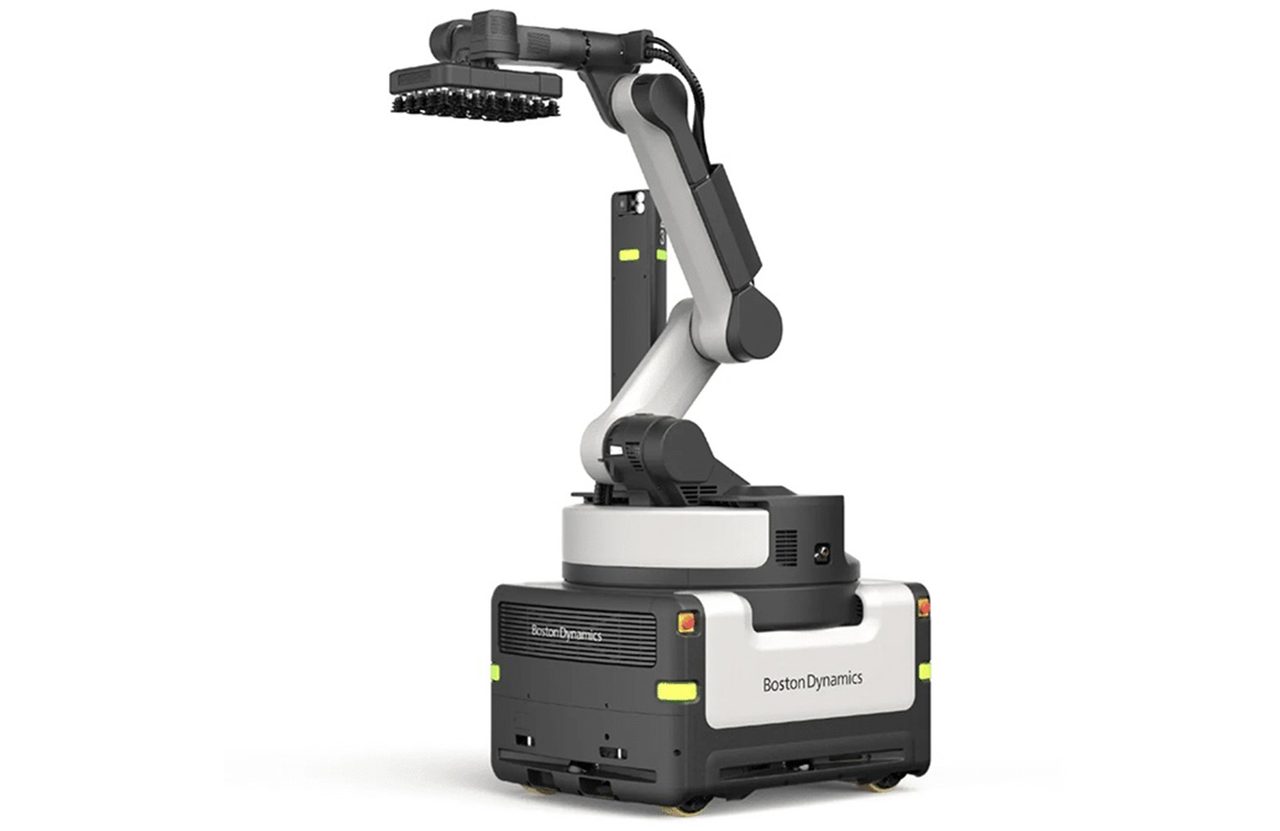
Boston Dynamics built Stretch Gen 2 for reliable, consistent performance
Brian Donnelly, the VP and GM of logistics robotics at Boston Dynamics, said the new version of Stretch has been in the works for two and a half years. The post Boston Dynamics built Stretch Gen 2 for reliable, consistent performance appeared first on The Robot Report .
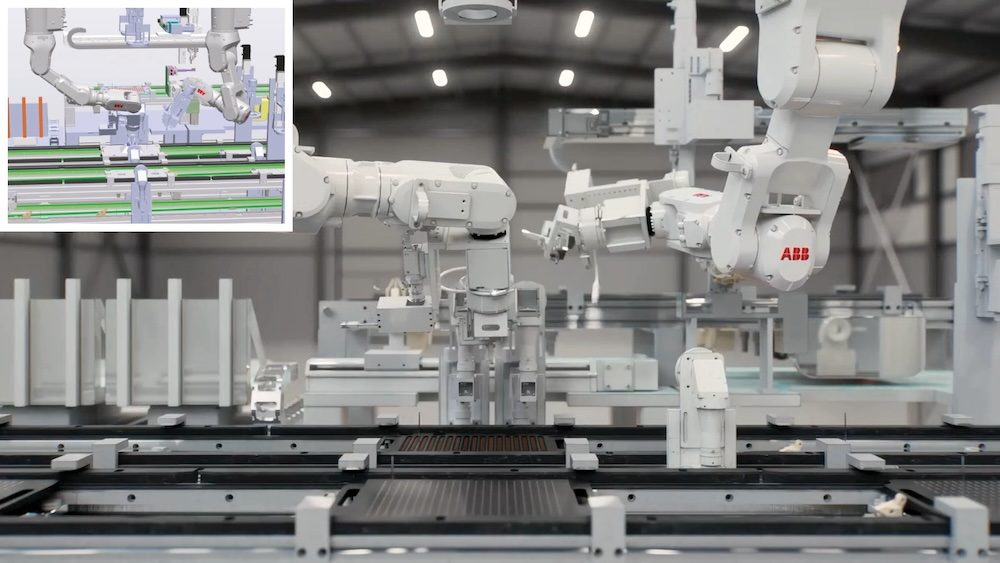
Industry experts discuss China blocking SoftBank acquisition of ABB Robotics
China's prohibition of SoftBank's purchase of ABB Robotics reflects wider concerns about data and AI, say experts. The post Industry experts discuss China blocking SoftBank acquisition of ABB Robotics appeared first on The Robot Report .

前OpenAI CTO推新模型,让用户自己训AI!创企估值被曝冲刺2600亿
智东西 作者 | 孙小雯 编辑 | 程茜 智东西11月6日消息,今日,前OpenAI首席技术官米拉·穆拉蒂创办的美国AI创企Thinking Machines Lab发布 通用多模态模型Inkling 2 Small ,并将于 下周 开放权重 。该模型重点改善定制训练表现,支持开发者用自己的数据进一步训练,也支持自行调用工具对其他模型进行微调。 ▲Thinking Machines官方公告(图源:X) 该模型在第三方评测机构Artificial Analysis(AA)的智能指数中获得31分,前代Inkling-Small为13分。按当前榜单,新模型开放权重后,将在该指数中位列 中国以外开放权