Closing the reality gap: Why real-time execution has become the new competitive advantage
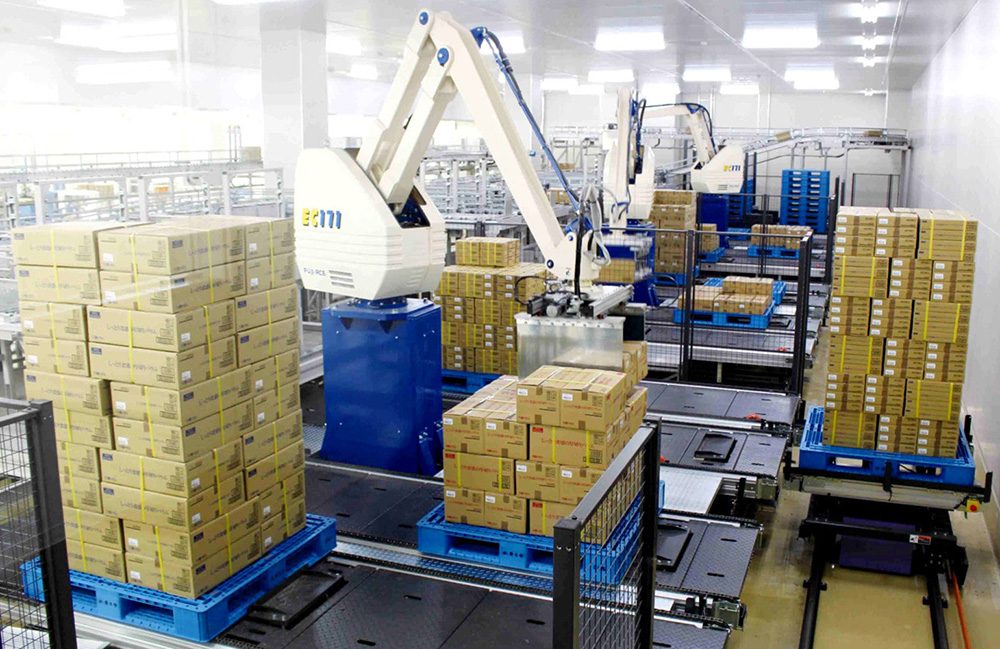
Daifuku helped to automate Kagetsudo Co.’s product storage system and production lines. | Source: Daifuku
Organizations across the supply chain continue to invest heavily in automation. Yet for many warehouse and distribution leaders, the expected gains in productivity, throughput, and agility remain elusive.
The issue is rarely a lack of technology. More often, it is a lack of synchronization.
As fulfillment networks become increasingly complex, a new challenge has emerged: the growing gap between what digital systems believe is happening and what is actually occurring on the warehouse floor. This disconnect, which can be described as the “reality gap,” is becoming one of the most significant barriers to operational performance.
Closing that gap is quickly becoming a defining capability for high-performing operations.
The new operational challenge: When digital and physical reality diverge
Modern warehouses generate enormous volumes of data. Inventory transactions, equipment status updates, labor activities, transportation events, and order flows are all captured and processed by various systems.
Yet data alone does not guarantee operational awareness.
In many facilities, information arrives too late, remains trapped in silos, or lacks the context needed to support timely decisions. As a result, operational leaders are often responding to events that have already occurred rather than actively managing conditions as they unfold.
The consequences are familiar:
Inventory records that do not accurately reflect physical reality
Congestion that develops before being detected
Bottlenecks that spread through interconnected processes
Labor and equipment deployed based on outdated conditions
Delays that compound across the fulfillment network
The reality gap is not simply a technology problem. It is an execution problem.
Why automation alone is no longer enough
For decades, the primary objective of warehouse automation was straightforward: reduce manual handling and improve efficiency within individual processes.
That approach delivered significant gains.
Today, however, automation environments are substantially more sophisticated. Facilities often operate multiple automated subsystems simultaneously, each capable of performing its intended function effectively. The challenge is ensuring those systems collectively support broader operational objectives.
A warehouse may have advanced automation, sophisticated software , and highly optimized processes. Yet if these elements are not continuously aligned around current operating conditions, inefficiencies remain.
This is why leading organizations are shifting their focus from automation itself to orchestration.
Automation enables movement. Orchestration enables performance. The distinction is becoming increasingly important as supply chains face greater volatility, labor constraints, and demands for faster fulfillment.
The rise of real-time execution
Closing the reality gap requires organizations to move beyond periodic visibility and toward real-time execution. Real-time execution is the ability to continuously sense operational conditions, evaluate changing circumstances, and coordinate responses across people, processes, and technology.
Rather than relying on static plans, organizations can dynamically adapt to what is actually occurring in the facility at any given moment.
This capability rests on several foundational principles:
Continuous awareness of operational conditions
Immediate detection of exceptions and disruptions
Dynamic allocation of work and resources
Rapid adaptation to changing demand and workloads
Coordinated decision-making across interconnected systems
The objective is not simply faster data collection. The objective is faster, better decisions. In increasingly complex fulfillment environments, decision speed is becoming as important as processing speed.
From connected operations to intelligent operations
Many organizations have spent the past decade focused on connectivity, integrating systems, collecting data, and creating visibility.
The next stage of operational maturity is intelligence.
The most effective operations are not necessarily those with the largest volume of data. They are the ones that can translate operational signals into action before small issues become significant disruptions.
This shift is changing how leaders think about operational performance.
Success is no longer measured solely by automation density or equipment utilization. Increasingly, it is measured by how effectively an organization can detect change, make decisions, and execute those decisions in real time. In other words, competitive advantage is migrating from assets to agility.
The strategic benefits of closing the reality gap
Organizations that successfully close the reality gap typically see benefits that extend well beyond efficiency gains.
They become more resilient when disruptions occur. They improve consistency and service quality because decisions are based on current conditions rather than historical assumptions. They create better utilization of resources by balancing workloads more effectively. They reduce operational friction that often leads to excessive labor demands, equipment bottlenecks, and inventory discrepancies.
Most importantly, they build operations capable of adapting continuously rather than reacting after the fact.
In an environment where customer expectations, labor availability, and market conditions are constantly changing, adaptability has become one of the most valuable operational capabilities an organization can develop.
Register now and help us celebrate 20 years of RoboBusiness!
Looking ahead
The future of warehouse performance will not be defined solely by the adoption of automation technologies. It will be defined by how effectively organizations connect planning with execution and digital intelligence with physical operations.
As facilities become more…
News is gathered automatically from public robotics & AI feeds on a schedule.
Related

5699元起!一加16发布:全局165Hz、9000mAh电池、2亿像素主摄全来了
智东西 作者 | 杨京丽 编辑 | 李水青 智东西10月12日西安报道,刚刚,一加发布最新旗舰手机一加16。一加16搭载 第六代骁龙8超级至尊版 ,支持最高原生 185帧游戏体验 ,配备 9000mAh电池、第四代东方屏及2亿像素主摄 。 同时,一加16还配备自研 电竞网络芯片G3、超级显示芯片P4和灵犀触控芯片T3 ,搭配新一代 “冰河散热系统” 。充电方面,一加16支持 100W有线快充和50W无线快充 。 一加中国区总裁李杰在发布会上透露,2025年一加手机销量同比增长44%,增速位列行业第一,今年截至发布会前,一加手机销量 同比增长18% ,是目前手机行业 唯一保持两位数增长的品牌 。
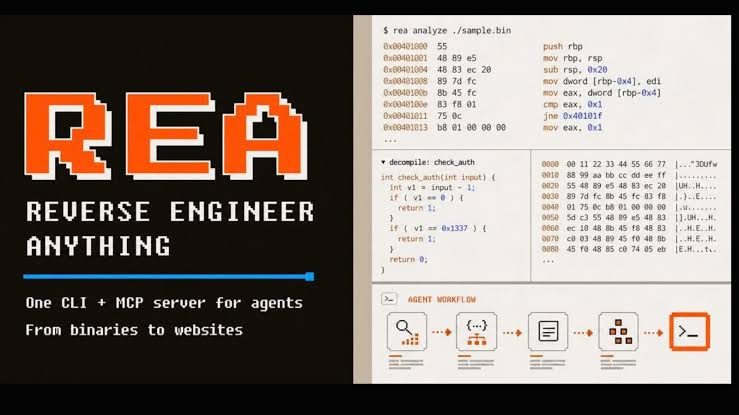
一周 10 万星,AI「逆向一切」,但大家不要过于兴奋
头图图片来源:REA 头图来源:CyberSecurityNews 「在应用里看到一个想加入自己产品的功能?让智能体去帮你调查它。」 这是 REA 项目主页第一屏的话。后半句更直接:即使没有源代码,智能体也可以检查应用、解释功能怎么工作、展示证据,「并为你的项目实现类似功能」。 REA 全名 Reverse Engineer Anything,即「逆向一切」。 上周它在 AI 开发者圈刷了屏:10 月 6 日还不到 1 万星,到 10 月 12 日已经超过 11 万 。 6 天涨了 10 万星,平均每天约 1.7 万|图片来源:Star History 真正让普通人看到这件事的,是游戏。10

10亿!上海大模型创企拿下新融资
智东西 作者 | 江宇 编辑 | 李水青 智东西10月12日报道,今日, 上海大模型公司模思智能 (MOSI)宣布完成 超10亿元 Pre-A轮融资,由华控基金领投,主要投资方包括国开科创、上海科创基金、新微资本、徐汇资本、追光硬科技创投、临港策源基金等,元禾控股、上海国投旗下上海科创集团、星连资本等老股东持续投资。多维资本担任本轮及长期独家财务顾问。 这是模思智能今年第二次官宣融资。 今年3月,模思智能完成数亿元天使轮融资 ,由IDG资本领投,元禾控股、上海国投旗下上海科创及上海未来产业基金、奇绩创坛、智谱系基金星连资本及某头部产业投资方联合投资。 据官方披露,本轮融资资金将主要用于 全模态

每秒狂喷近500个token!智谱GLM-5.3高速版悄悄亮相
智东西 作者 | 陈骏达 编辑 | 李水清 智东西10月12日报道,近日,智谱在其AI编程工具ZCode中,悄然开启了高速旗舰模型GLM-5.3 HighSpeed的测试。 X平台上的AI编程博主Leo爆料,他已经灰度到了这款模型,其输出速度竟然可以超过490 tokens/s。 每秒490个token是什么概念?目前,大模型API评测平台AI Ping的数据显示, DeepSeek V4.1 Flash官方API的输出速度为121.34 tokens/s ,而智谱官方的 GLM-5.3 API速度为70.84 tokens/s 。也就是说,GLM-5.3 HighSpeed达到了数倍于当前国

累计43亿!国内最大AI Infra融资诞生,无问芯穹C轮拿下23亿
智东西 作者 | 李水青 编辑 | 漠影 智东西10月12日获悉,国内领先的AI原生基础设施企业 无问芯穹 近日已完成 C轮融资 ,融资额 23亿元 ,累计融资额达 43亿元 ,单轮融资额与累计融资额均创国内AI Infra(人工智能基础设施) 行业新高。 据外媒报道,公司正在 筹备IPO。 从2023年成立至今,这家脱胎于清华大学电子工程系的创业公司,已经走到资本市场聚光灯下。背后既有 国资机构 ,也有 产业投资方、市场化财务投资机构 等对AI基础设施赛道的押注。 放眼海外,AI基础设施公司的估值也在快速攀升。 Fireworks AI 最新估值达到175亿美元, Baseten 达到130

尊界:11 月起陆续升级踏板;iPhone 折叠屏国内预约超 200 万;6 个月,超千万 Claude 账户被封杀|极客早知道
陶哲轩提出「数学 2.0」:AI 解题之外,还要帮助人理解证明 10 月 11 日,数学家陶哲轩公开了在加州理工学院的演讲《数学 2.0》。他认为,AI 正在降低部分数学问题的求解成本,使数学研究逐渐从「证明稀缺」走向「证明富足」。但目前多数前沿问题仍未解决,不能只凭公开传播的成功案例判断 AI 的整体能力。 陶哲轩指出,得到正确证明,并不意味着研究者理解了证明为何成立,或掌握了可用于其他问题的新方法。他主张用 AI 寻找更易理解的证明、整理分散的研究成果,并对大量数学问题开展系统分析。例如,等式理论项目通过人类与自动化工具协作,对超过 2200 万个命题作出了判定。 对于 AI 解题能力的评