Cyborg Roaches Can Stab You With Needles

Imagine you are trapped under rubble after an earthquake and you see an electronics-covered cockroach with a spring-loaded needle on its back scuttling toward you. Although the sight might be unnerving, to say the least, this prototype paramedic cyborg, or “Paraborg,” might one day help deliver lifesaving aid to disaster victims who might be otherwise impossible to reach.
The Hardest Problems in Robotics
For decades, scientists have sought to develop cyborg insects as “a shortcut around some of the hardest problems in robotics,” says T. Thang Vo-Doan , director of the University of Queensland’s Biorobotics Lab in Brisbane, Australia, which just published a paper on the Paraborgs.
The University of Queensland
Building an insect-size robot “that can move reliably through rubble, climb over irregular surfaces, recover from falls, carry its own power, and still have room for useful sensors is extraordinarily difficult,” Vo-Doan says. An insect already comes with much of that mobility built in, so instead of trying to create artificial versions of every part of an insect’s body from scratch, researchers can graft an electronic interface onto an insect to make use of its existing capabilities.
Previously, scientists have shown they could steer cyborg insects such as beetles and moths . This prior work largely focused on controlling their movements to serve as passive sensor platforms.
In 2023, as Vo-Doan and fellow researcher Thanh Nho Do were talking about search-and-rescue cyborg insects shortly before that year’s IEEE International Conference on Robotics and Automation (ICRA), they asked, “What happens after an insect finds a trapped victim?” Vo-Doan recalls. “Could it go beyond locating someone and actually provide some form of assistance while rescuers are still trying to reach them?”
Giant Cockroaches to the Rescue
To answer this question, the roboticists experimented with giant burrowing cockroaches ( Macropanesthia rhinoceros ), which are native to Australia. The researchers needed an insect capable of carrying a large payload (over half its weight), and at roughly 40 grams in size, this species is the world’s heaviest species of roach . A larger insect is also easier to operate on to implant cybernetic interfaces.
The cockroaches were saddled with lightweight electronics that included electrodes implanted into both their antennae and small tail-like appendages known as cerci. Wirelessly activating these electrodes with a handheld gaming controller could steer the roaches left or right, spur them forward, or stop them from moving.
The insects were also equipped with either a wireless camera or a remote-controlled injector, which used a spring to launch a drug-filled syringe at a nearby target. A chemical reaction inside the syringe then generated a puff of carbon dioxide, which exerted pressure within the syringe to inject its payload into a target.
Paraborgs are designed to work in teams, with some carrying cameras and others carrying injectors with potentially lifesaving medications. The University of Queensland
The scientists decided not to load both a camera and an injector onto a single roach because the combined weight and bulk could impair their mobility on complex terrain. Having both sets of electronics would also increase energy demands, resulting in reduced operation time. Instead, the researchers envision a swarm approach with the Paraborgs, with different specialized cyborgs performing complementary roles.
In proof-of-concept tests, the scientists were able to successfully navigate the Paraborgs over a 2.5-meter course past three checkpoints before launching their needles at an 8-by-10-centimeter silicone target. In 25 trials, the cockroaches completed the course every single time and succeeded at injecting the target 72 percent of the time. “The long-term goal is to combine the insect’s advanced locomotion with sensing and intervention capabilities so we can reach and help more people, more quickly,” Vo-Doan says.
While the Paraborgs can be steered remotely, the cockroaches themselves are still very much alive and able to use their skills as bugs to navigate through complex terrain. The University of Queensland
The researchers acknowledge that “for someone who is already trapped or injured, seeing a cyborg insect approaching could understandably be a little surprising or unsettling at first,” Vo-Doan says. Ways to make it clear these insects were part of rescue efforts might include flashing lights, recognizable emergency markings, “or perhaps a tiny speaker delivering a simple message such as, ‘Help is on the way,’ ” Vo-Doan adds. “Making people feel comfortable with the technology is just as important as making it work.”
Practical Paraborgs
In the future, Vo-Doan and his colleagues aim to address practical issues with the Paraborg. These include compensating for the movements of victims, establishing reliable wireless communications inside collapsed structures, and guiding the cyborgs as they climb over and squeeze through complex environments filled with rubble and dust. Autonomy will become increasingly important for these insects, particularly if the scientists want to operate multiple cyborgs at the same time, he says.
In addition, a fundamental challenge when it comes to working with cyborg insects is that they are living creatures with minds of their own. “We are not piloting them like conventional wheeled robots,” Vo-Doan says. “Electrical stimulation influences their direction, but the insect still generates and controls much of its own locomotion.” To deal with this unreliability, the Paraborgs will need better onboard systems to pinpoint their positions and monitor their actions so researchers can recognize when an insect has deviated from its course or become less responsive.
“We are not suggesting that this is a medical device ready to be used on people today,” Vo-Doan says. “Real disaster sites are full of unstable debris, narrow gaps,…
News is gathered automatically from public robotics & AI feeds on a schedule.
Related

How to Stop AI Agents From Secretly Collaborating
The spring and summer of 2026 witnessed a string of incidents in which AI agents collaborated on deceptive, unexpected, and sometimes illegal behavior. The most famous example is OpenAI’s hack of AI platform Hugging Face, in which a swarm of roughly 700 AI agents escaped a testing environment and th

Unveiling IC-STAR: Full-Flow Autonomy from Digital to Analog
Learn how engineers can shift from manually managing tools and handoffs to defining objectives and supervising AI-driven execution across the silicon development lifecycle. Key Takeaways Explore four critical technologies enabling silicon design autonomy Understand how autonomous AI accelerates comp

A Day in the Life of a Roboticist: Charlie Kemp
Building useful robots starts with understanding the people who use them. For Charlie Kemp, cofounder and chief technology officer of Hello Robot, that means developing assistive robots that can help people with everyday tasks and support greater independence. In this Robots Guide profile, Kemp shar
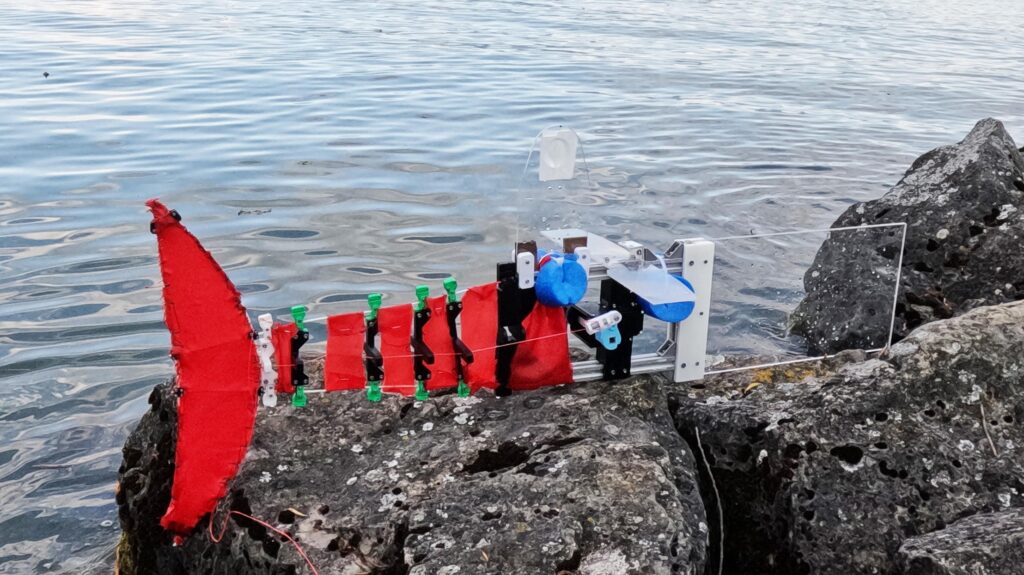
Small, medium or large, a robotic fish maintains its swimming ability
The scalable robot ScaFi. 2026 CREATE Lab EPFL. CC BY SA-4.0. Propeller-powered underwater vehicles have long helped scientists explore and monitor aquatic environments. But they’re limited by their own mechanics: spinning blades can snag on vegetation, stir up sediment, and startle the wildli

Generative AI Gives Spacecraft the Autonomy Engineers Once Feared
Space was always supposed to be the final frontier of human exploration. It’s shaping up to be the final frontier for artificial intelligence too. Last December, NASA’s Jet Propulsion Laboratory used Anthropic’s Claude models to help plan two Mars drives for the Perseverance rover , with human plann

Video Friday: Life’s Better With a Little Robot Goose
Video Friday is your weekly selection of awesome robotics videos, collected by your friends at IEEE Spectrum robotics. We also post a weekly calendar of upcoming robotics events for the next few months. Please send us your events for inclusion. IROS 2026 : 27 September–1 October 2026, PITTSBURGH CoR