Digit 5 May Be the First Humanoid Robot Worker That’s Truly Safe

Despite the recent deluge of videos of humanoid robots doing backflips and kung fu, the actual pace of progress towards humanoids that can do economically viable jobs at scale has at times seemed a bit plodding. There are some good reasons for this : A humanoid robot needs to be powerful enough to do useful work, safe enough for humans to walk past, and have enough battery life to limit how much of the day it’s hooked to a charger. But all three of those necessary features actively work against each other.
With its new Digit 5 robot, announced today, Agility Robotics may have found the sweet spot. Digit 5 is a humanoid worker that can lift 23 kilograms up 2.1 meters, can work in close proximity to people without relying on physical barriers, and can operate for more than 20 hours a day. This combination of power, safety, and battery life has resulted in a 1.8-meter tall, 129-kg robot that prioritizes functionality over style and pretty much everything else, but this is exactly what it’s going to take to get humanoids a job.
Humanoid robot companies have been reluctant to talk about safety, because there are no easy answers to “What happens if your fundamentally unstable bipedal robot falls over onto me/my pet/my baby?” And there are still no easy answers, but Agility does have an answer that allows Digit to be verifiably safe. That answer is to make sure that it’s physically impossible for Digit to fall over on anyone, ever, by “autonomously avoiding, stopping, or assuming a seated position,” according to today’s press release. In other words, as a person approaches Digit, Digit will put down whatever it’s carrying and then if necessary make sure that it’s stably seated on the ground before that person gets near. It may not be elegant, but it works, which is more than can be said for any other commercial humanoid that I’m aware of.
The other big change is Digit’s legs. Somewhat famously, Agility Robotics first introduced Cassie and then a whole series of Digit robots featuring bird-like ‘backwards’ legs. In his 2019 article for IEEE Spectrum , Agility co-founder Jonathan Hurst explained that this leg configuration was the result of a careful analysis of the physics of animal locomotion, rather than for the leg to look like any sort of animal in particular. The unfortunate reality for those of us who were fans of Cassie is that bird legs are optimal for dynamic motion, while human legs are better for squats and lifts, which will make sense to anyone who has seen an ostrich trying to lift a heavy box up off the floor and also anyone who has tried to outrun a cassowary.
How much will Digit 5 cost?
We also know a couple of things about Digit 5 that weren’t included in today’s announcement, thanks to Agility’s June SEC filing in advance of their plan to go public by the end of 2026 . For example, at launch, Digit 5’s BOM (bill of materials) cost is likely to be somewhere between US $150,000 and $200,000. This is just the cost of the parts that make up a Digit robot, not what it costs for Agility to actually build one. Based on real production data, Agility is anticipating that with some near-term optimizing and at a volume of 10,000 units per year, that cost should drop to under US $50,000 per robot.
In this rendering, Digit 5 robots work in a factory with humans nearby, no safety barriers needed. When a human approaches, the robot puts down what it’s carrying and squats down so it can’t fall on anybody. Agility
Arguably less important than the per-robot cost is how Agility (and its customers) will profit from Digit 5. In the filing, Agility estimates (using “rounded estimates” which are “purely illustrative”) that Digit 5 robots will be offered to customers as a service at something like $8,500 per month. Based on 20 hours per day of work, and assuming that the total cost of a human worker to their employer is $30.50 per hour, Digit 5 as a service could save employers $100,000 per year, per robot.
It’s important to note that all of these numbers are just estimates, and that all kinds of things (many of them not under Agility’s control) could cause them to change. They’re most useful as an illustration of Agility’s broad approach to making Digit 5 profitable. It’s also important to note the assumption here with such a direct comparison is that Digit 5 will be a more or less effortless drop-in replacement for human labor, which is not something that I’m entirely sure has ever happened with any robot, anywhere.
Where does Digit 5 go from here? Today’s press release says that “as of May 2026, Agility had more than $300 million in multi-year customer orders for Digit 5, with a sales pipeline of prospective customers across manufacturing, warehousing, and logistics.” That works out to comfortably under 1,000 robots, one-tenth of the full capacity of Agility’s RoboFab factory in Oregon.
Between now and all those robots, however, lies an unpredictable entry into the stock market through what’s called a SPAC (special purpose acquisition company) merger . That’s expected to close within the next few months. Agility hopes to raise more than $620 million through the merger, and it will primarily spend the money to scale production of Digit 5 and get it to customers. Those in the European Union and United Kingdom should be able to buy the bots in 2027.
News is gathered automatically from public robotics & AI feeds on a schedule.
Related

How to Stop AI Agents From Secretly Collaborating
The spring and summer of 2026 witnessed a string of incidents in which AI agents collaborated on deceptive, unexpected, and sometimes illegal behavior. The most famous example is OpenAI’s hack of AI platform Hugging Face, in which a swarm of roughly 700 AI agents escaped a testing environment and th

Unveiling IC-STAR: Full-Flow Autonomy from Digital to Analog
Learn how engineers can shift from manually managing tools and handoffs to defining objectives and supervising AI-driven execution across the silicon development lifecycle. Key Takeaways Explore four critical technologies enabling silicon design autonomy Understand how autonomous AI accelerates comp

A Day in the Life of a Roboticist: Charlie Kemp
Building useful robots starts with understanding the people who use them. For Charlie Kemp, cofounder and chief technology officer of Hello Robot, that means developing assistive robots that can help people with everyday tasks and support greater independence. In this Robots Guide profile, Kemp shar
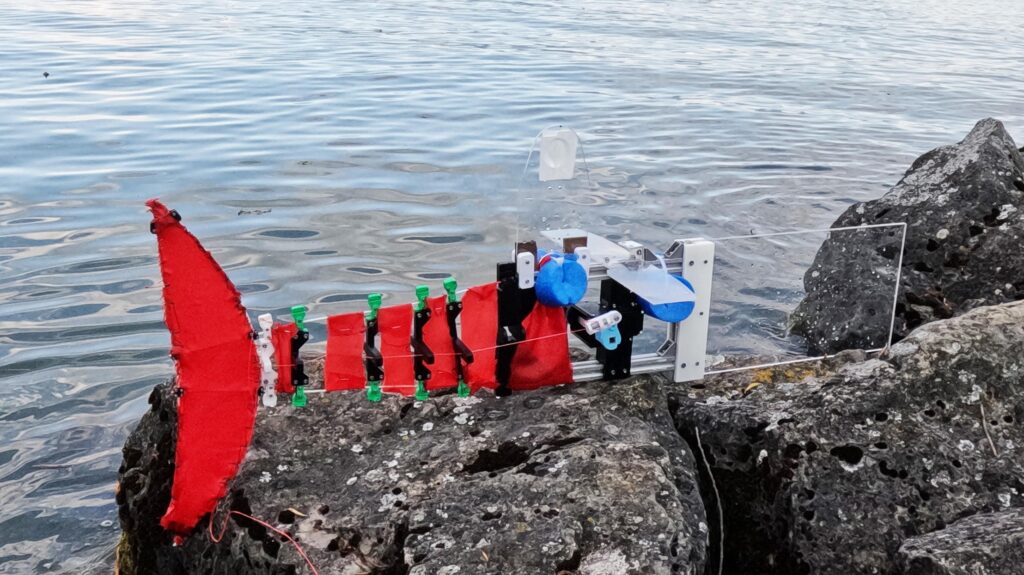
Small, medium or large, a robotic fish maintains its swimming ability
The scalable robot ScaFi. 2026 CREATE Lab EPFL. CC BY SA-4.0. Propeller-powered underwater vehicles have long helped scientists explore and monitor aquatic environments. But they’re limited by their own mechanics: spinning blades can snag on vegetation, stir up sediment, and startle the wildli

Generative AI Gives Spacecraft the Autonomy Engineers Once Feared
Space was always supposed to be the final frontier of human exploration. It’s shaping up to be the final frontier for artificial intelligence too. Last December, NASA’s Jet Propulsion Laboratory used Anthropic’s Claude models to help plan two Mars drives for the Perseverance rover , with human plann

Video Friday: Life’s Better With a Little Robot Goose
Video Friday is your weekly selection of awesome robotics videos, collected by your friends at IEEE Spectrum robotics. We also post a weekly calendar of upcoming robotics events for the next few months. Please send us your events for inclusion. IROS 2026 : 27 September–1 October 2026, PITTSBURGH CoR