FireDome builds autonomous ‘artillery’ for wildfire defense
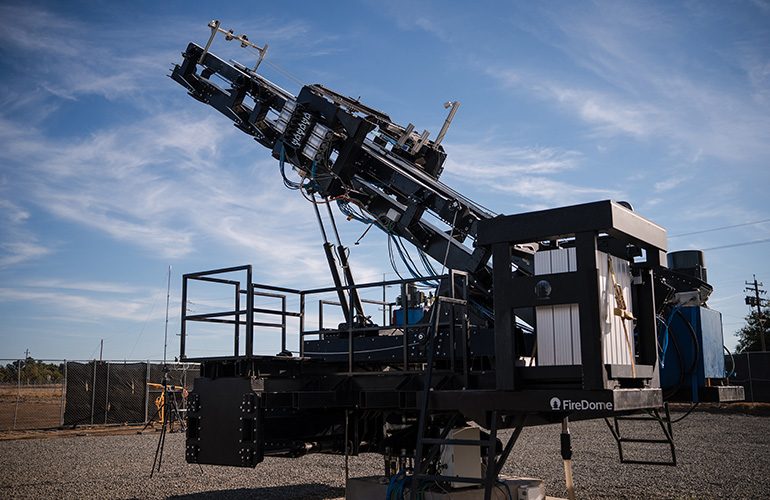
The FireDome launcher is fully autonomous, designed to launch projectiles containing water or fire retardant up to 1,000 ft. from the launcher. | Credit: FireDome
In wildfire country, minutes matter, but current fire technology still stops at detection. FireDome is trying to close that gap with an autonomous, ground-based launcher system designed to protect communities and critical infrastructure before firefighters arrive, laying down retardant firebreaks, coating vulnerable structures, and suppressing ember-driven spot fires before they cascade into neighborhood-scale losses.
I live in one of the most wildfire-prone parts of California. Fire prevention and response are constantly on the minds of me and every one of my neighbors. Wildfire season in the American West is no longer a season; it’s a year-round threat. For communities like mine in the wildland–urban interface (WUI), the risks are now financial as well as physical. If you can’t prove you’re fire safe, you may not even be able to get insurance.
California-based FireDome is a startup building an autonomous, ground-based fire suppression system that sits quietly on the edge of communities and critical infrastructure. It acts like an automated “artillery battery” when wildfire threatens.
I recently sat down with FireDome co-founder and CEO Gadi Benjamini to learn how the company started, what problem it’s actually solving, and how its launcher-based system works.
From climate tech uncertainty to wildfire autonomy
FireDome’s story starts far from California at a climate-tech conference in Israel in early 2024.
Benjamini had just come off a startup in the methane gas/climate mitigation space that ultimately shut down. He was in that familiar founder limbo: looking for the next problem that was big enough and technical enough to be worth years of his life.
At the conference, which happened to focus on the wildfire crisis, Benjamini met his future co-founder, Dr. Adi Naor Pomerantz, now FireDome’s chief technology officer. They realized that most wildfire innovation was stuck on detection, not action.
“Most of the technologies at that point were meant to detect fires when they’re early, and not to react to the fires,” Benjamini told The Robot Report . “You have detection, and then firefighters come to the scene. They come late, they have to spread out resources between different fronts, and that makes it much more difficult to succeed in firefighting.”
Benjamini and Pomerantz said they shared values that defined FireDome’s trajectory from Day 1:
Deep technology: something that pushes the envelope in robotics, sensing, and autonomy
Global impact: a problem whose importance will only grow over the coming decades
Initially, they imagined autonomous systems embedded directly in wildlands, providing end-to-end detection and suppression before fires ever approached communities. But they quickly ran into the hard realities of coverage and scale.
To be practical in the wildland itself, a system would need 1 to 1.5 mi. (1.6 to 2.4 km) of effective range. FireDome’s current launcher offers about 1,000 ft. (304.8 m) of radius, covering about 70 acres (28.3 hectares) around the device.
That realization pushed them toward a different starting point.
“We understood that there can’t be one solution to the wildfire problem. There’s no silver bullet,” Benjamini recalled. “Our vision for wildland systems is still alive, but we decided to focus first on protecting specific properties, communities, and critical infrastructure.”
Editor’s note: Field robotics is among the session track topics at RoboBusiness 2026, which will be on Oct. 20 and 21 in Santa Clara, Calif. Register now to attend .
Register now and help us celebrate 20 years of RoboBusiness!
The real wildfire problem: embers, resources, and insurance
For most people in fire-prone regions, the crisis is felt on two fronts:
Physical risk: homes, businesses, and infrastructure in the path of fast-moving fires
Financial risk: the ability to retain insurance coverage at all
In my own community in Northern California, we conduct annual controlled burns and vegetation management. As a result, our homeowners association (HOA) has achieved “ Firewise Community ” status and can still obtain affordable insurance. Neighbors just outside the boundary aren’t so fortunate—they’re facing non-renewals and skyrocketing premiums.
FireDome sits at the intersection of those pressures.
Detection is not the bottleneck
Wildfire technology has improved significantly on the detection side. We now have: camera networks such as ALERTCalifornia , operated by UC San Diego ; satellite-based fire detection; and sensor grids and public alert systems.
But as Benjamini points out, once a fire is detected, the response still depends heavily on human firefighters and aircraft:
Ground crews must fight the fire front, defend structures, and protect lives.
Aerial tankers and helicopters drop water or retardant from high altitudes, with significant loss of material to aerosolization and drift.
Resources are spread thin across multiple fronts, often arriving late to key properties.
Ember-driven destruction and the domino effect
Perhaps the most sobering part of our conversation was FireDome’s focus on embers as the real destroyer of communities.
Looking at recent California events, including the LA-area fires, Benjamini noted that 85% to 90% of structure losses in the WUI were caused not by a wall of flame hitting homes directly, but by wind-driven embers.
Embers can ignite roofs, decks, and siding. Once a single home catches fire, it becomes a massive ember generator. Pieces of burning structure are lofted into the neighborhood, triggering a domino effect.
“This is what we want to prevent,” said Benjamini. “We want to cut off this domino effect by covering structures ahead of time, so when an ember meets the fire retardant, it doesn’t become a spot fire.”
In that light, FireDome is not just…
News is gathered automatically from public robotics & AI feeds on a schedule.
Related
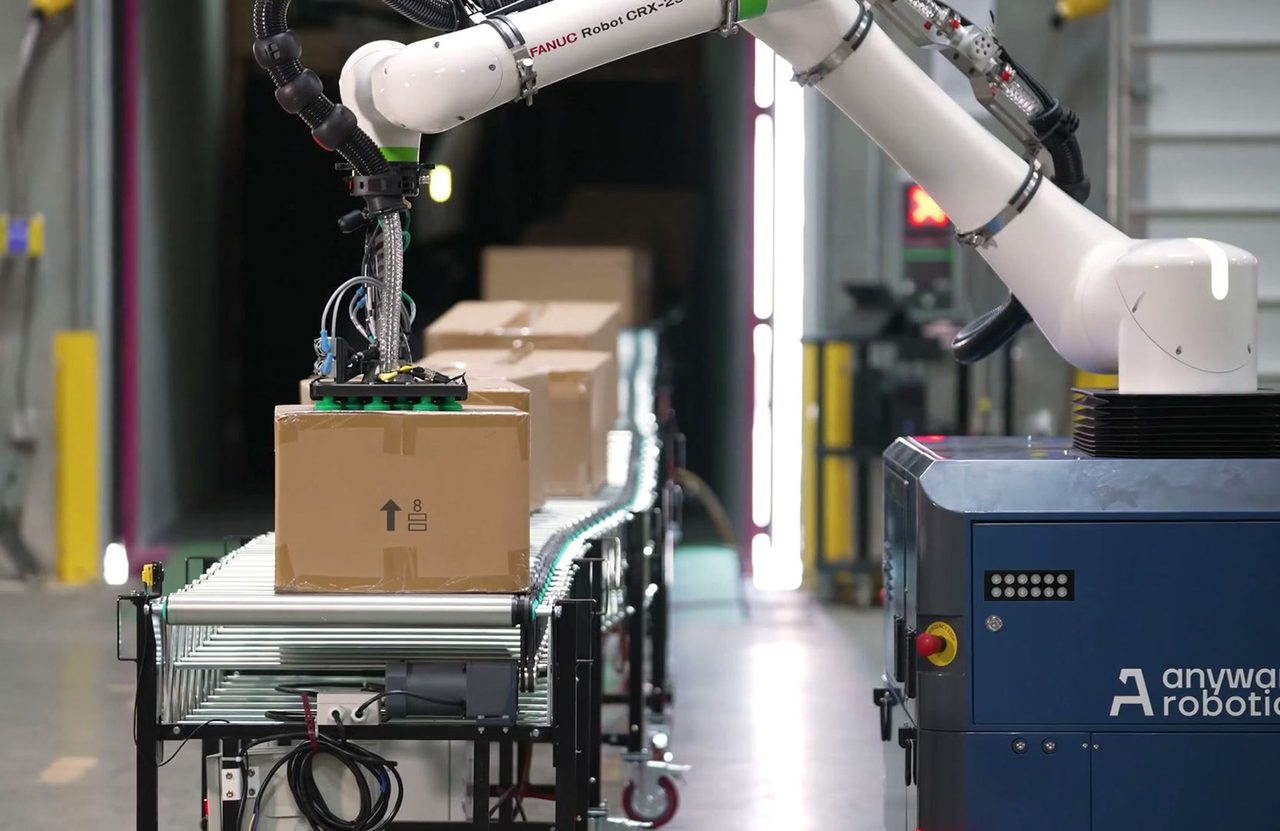
SafeWorld emerges from stealth to build, deploy robot safety simulation technologies
SafeWorld’s platform provides testing and simulation software to help enterprises evaluate and deploy robots safely and responsibly. The post SafeWorld emerges from stealth to build, deploy robot safety simulation technologies appeared first on The Robot Report .
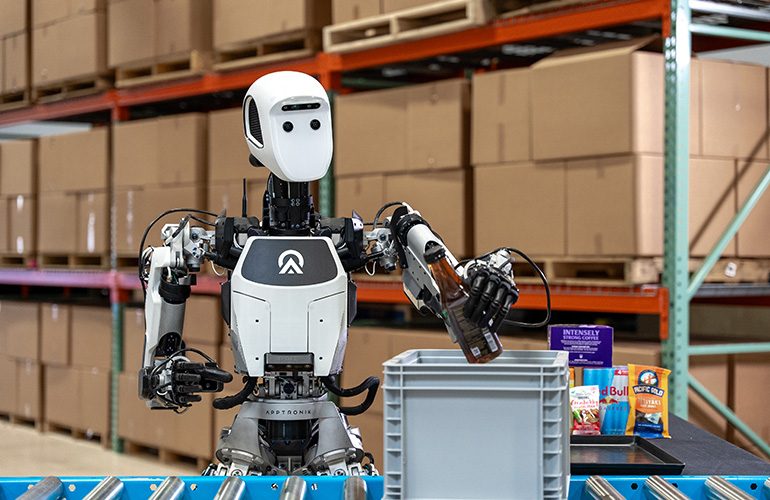
Jabil discusses the pace of humanoid robot development and production
Jabil, which is working with robot developers such as Apptronik, provides a design perspective on humanoid progress. The post Jabil discusses the pace of humanoid robot development and production appeared first on The Robot Report .
Helm.ai reaches $70M in signed commercial contracts for its foundation models
Helm.ai trained its foundation models using its unsupervised 'deep teaching' methodology to master the structure of the physical world itself. The post Helm.ai reaches $70M in signed commercial contracts for its foundation models appeared first on The Robot Report .
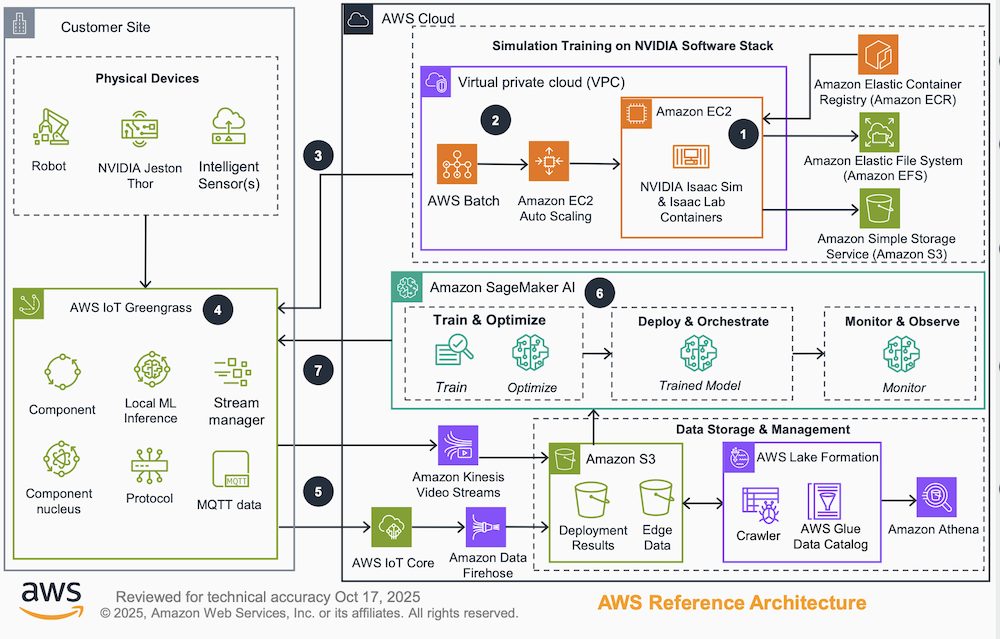
AWS launches open-source Physical AI Toolchain for robotics
The toolchain combines AWS and NVIDIA tools for synthetic data generation, model training, simulation and validation, edge deployment, and continuous improvement. The post AWS launches open-source Physical AI Toolchain for robotics appeared first on The Robot Report .
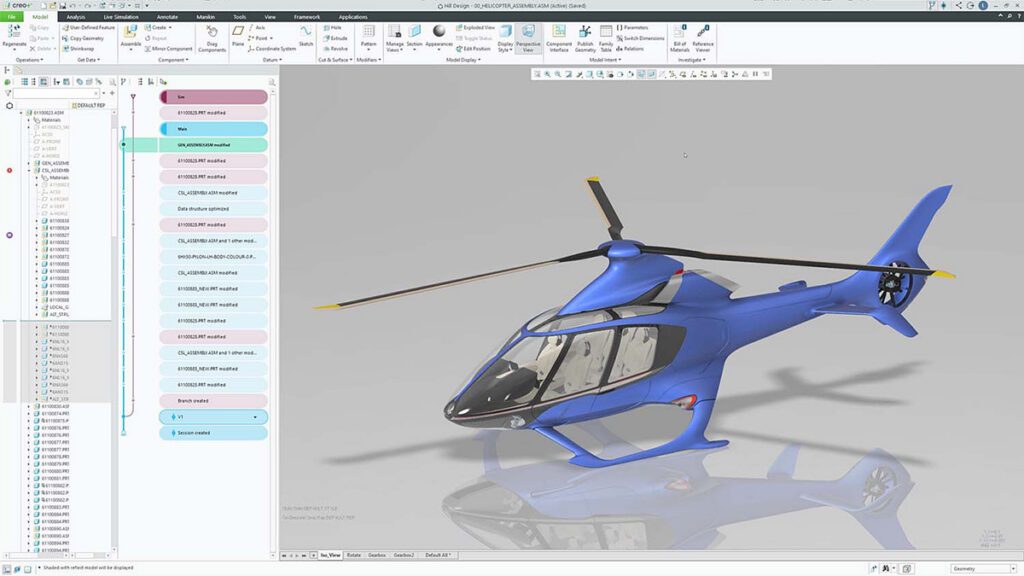
PTC acquisition positions Schneider Electric to challenge Siemens
The Schneider Electric acquisition of PTC gives it a 'digital thread' from design through operations, but it needs to integrate data and software, says Interact Analysis. The post PTC acquisition positions Schneider Electric to challenge Siemens appeared first on The Robot Report .
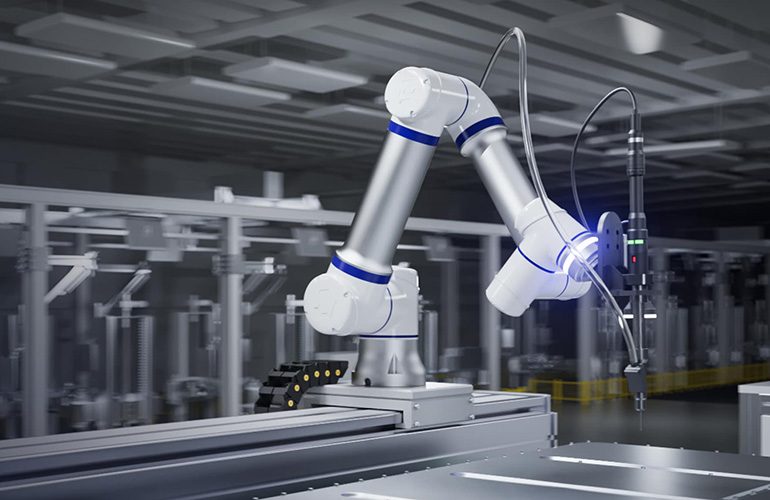
Teradyne Robotics, Elite Robots settle cobot dispute
Teradyne Robotics and Elite Robots have settled their software dispute, ending the legal case without disclosing the terms of the agreement. The post Teradyne Robotics, Elite Robots settle cobot dispute appeared first on The Robot Report .