Gecko Robotics works with NVIDIA to add AI agent security and control
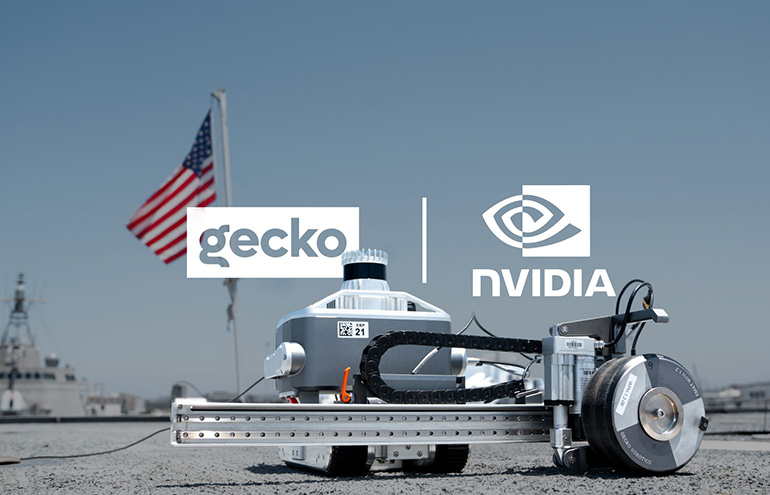
Gecko is using NVIDIA’s new agentic AI security layer in its inspection robots. Source: Gecko Robotics
NVIDIA Corp. today announced its Open Agent Safety Platform, which consists of the OpenShell open-source software and Sentry reference system design. They are intended to strengthen governance and control across hardware, compute, and software for robots that run AI agents. Among the more than 100 organizations working with NVIDIA’s technology is Gecko Robotics Inc.
After recent incidents including AI agents from OpenAI going around application-level controls to attack Hugging Face , AI and robotics developers have been working on traceability, accountability, and preventative measures.
“As we continue to discover the frontier of AI capabilities, we must accelerate discovery at the frontier of AI safety,” stated Jensen Huang, CEO of NVIDIA. “Safety and security require full-stack engineering. NVIDIA Open Agent Safety Platform brings together industry, researchers, and public-sector organizations to share best practices, align on resolution methods, and foster international cooperation.”
Editor’s note: Physical AI is among the session topic tracks at RoboBusiness 2026, which will be on Oct. 20 and 21 in Santa Clara, Calif. Register now to attend.
Register now and help us celebrate 20 years of RoboBusiness!
NVIDIA OpenShell and Sentry enforce policy
OpenShell provides a secure runtime boundary that traces all actions and enforces policy as AI agents run on NVIDIA Vera CPUs. It provides deterministic governance for agent execution, access, and where inference goes, according to NVIDIA.
As open-source software, OpenShell can be extended to work with third-party compute platforms, including those from Arm and Intel, added the Santa Clara, Calif.-based company .
NVIDIA Sentry adds an out-of-band watchdog that runs on BlueField-4 data-processing units (DPUs) to continuously monitor agent behavior. It monitors outcomes against policies, the company said . Sentry can quarantine agents that attempt to move outside their boundaries in milliseconds.
“For the agent economy to grow, we need a trusted foundation across silicon and software,” said Justin Boitano, vice president of enterprise AI at NVIDIA, during a press briefing. “We want to engage everybody to advance a new layer of agent security.”
“The independent trust domain is like how self-driving cars work,” he explained. “The primary system runs perception, and a safety island ensures that the overall system fails safely. The same principles apply to frontier AI systems.”
OpenShell can offload security onto silicon or DPUs as needed, and Sentry watches reasoning traces. A Policy Proover in NVIDIA Open Agent Safety Platform is deterministic and runs at a higher speed.
“If you write a policy that says an agent can’t read code from Github, an agent could spawn separate subagents to read it and then post that information, with fleets superseding global policies,” said Boitano. “The Policy Proover validates the master decision tree, looking at combined file and network access to find unintended exfiltration. It comes out of AWS’s S3 research to create verifiable policies.”
“We see long-term agent behavior to be a different problem than sandboxing,” he added. “OpenShell is projecting the intent of a policy into infrastructure.”
The NVIDIA Open Agent Safety Platform includes OpenShell and Sentry. Source: NVIDIA
Gecko gives AI agent control over robot motion
While recent security incidents have occurred entirely within software, Gecko Robotics said they revealed a potential problem with all AI agents, including robots. The company has used NVIDIA OpenShell to explore how enforceable boundaries can keep AI-powered robots operating within human-defined permissions. Gecko said its goal is to establish the safeguards needed to deploy greater autonomy responsibly.
“As Jensen says, safety is an engineering problem, not a legal one,” said Jake Loosararian, co-founder and CEO of Gecko Robotics. “The idea that losing control of AI is inevitable is a dangerous excuse for inaction. We have a responsibility to build safeguards that keep AI within the boundaries humans set.”
“What NVIDIA has built with their Open Agent Safety Platform, and Gecko is testing for robots, is confronting the risk before it reaches the physical world and helping ensure greater autonomy does not come at the expense of human control,” he added.
Gecko uses robots that can climb, crawl, fly and swim on critical infrastructure, including for Fortune 100 energy companies, as well as the U.S. Air Force and U.S. Navy. Its systems inspect everything from fuel tanks to nuclear submarines and aircraft carriers.
Ariel Weingarten , director of engineering at Gecko, told The Robot Report that its agents have access to the same system commands as its field operators, including:
Starting and stopping data collection
Robot motion controls and path planning
Raising and lowering payloads
They do not handle the data lifecycle, or uploading to Gecko’s governance cloud, he said.
While research continues on AI agent security, Pittsburgh-based Gecko is using NVIDIA OpenShell for secure runtime boundaries that developers can use to define what actions systems can take and what is not permitted.
Komodo robot includes enforcement layer
Gecko’s Komodo, a robot that has been deployed with the U.S. Navy, places an independent enforcement layer between the AI agent and the hardware. “The developer decides what Komodo should do; OpenShell ensures it stays within the rules,” said the company.
“Physical AI and robotics represent the next frontier of technology,” asserted Gecko Robotics. “Moving intelligence from software into machines also brings greater responsibility. Model-level safety alone…
News is gathered automatically from public robotics & AI feeds on a schedule.
Related

ForceN to give a crash course on force and torque sensing for humanoids at RoboBusiness
Attendees will learn about the many ways they can use force and torque sensors in humanoids and how to avoid breaking them while doing it. The post ForceN to give a crash course on force and torque sensing for humanoids at RoboBusiness appeared first on The Robot Report .
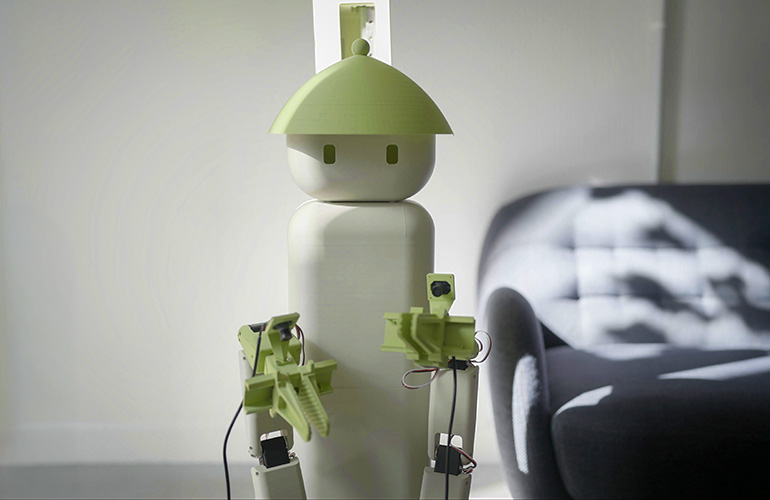
Meet Flourish One, the Raspberry Pi-powered humanoid built for busy parents
Flourish is releasing a $3,555 phone-trainable home robot, targeting busy parents with personalized, cloud-trained chore automation. The post Meet Flourish One, the Raspberry Pi-powered humanoid built for busy parents appeared first on The Robot Report .
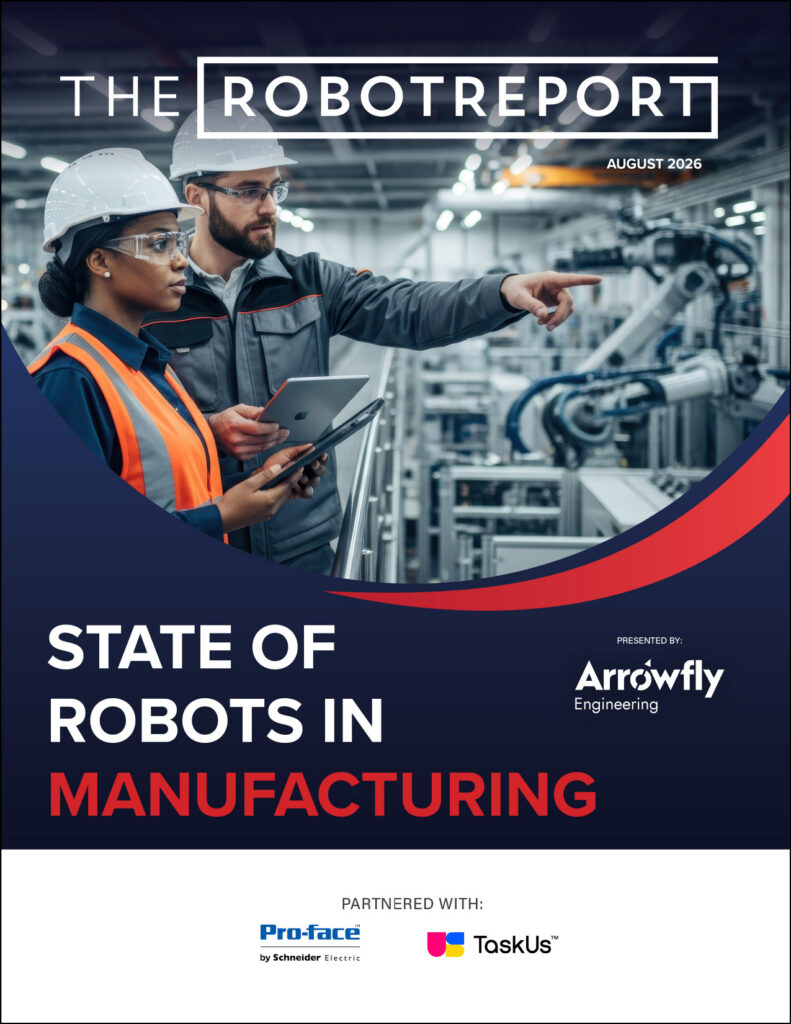
State of Robots in Manufacturing
The Robot Report looks at recent advances in automation for manufacturing, from improvements in technologies and use cases to the potential of humanoids and AI. The post State of Robots in Manufacturing appeared first on The Robot Report .
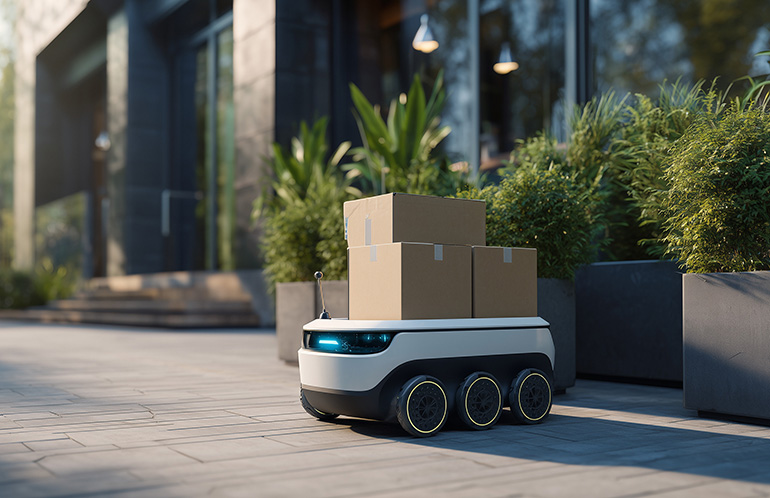
Robonomics on the threshold: Economic autonomy, smart cities, and crypto wallets for humanoids
Economics is both a robotics impetus and a constraint, as systems make deliveries on streets or do chores in households. The post Robonomics on the threshold: Economic autonomy, smart cities, and crypto wallets for humanoids appeared first on The Robot Report .
Raise Robotics to discuss scaling field robots at RoboBusiness
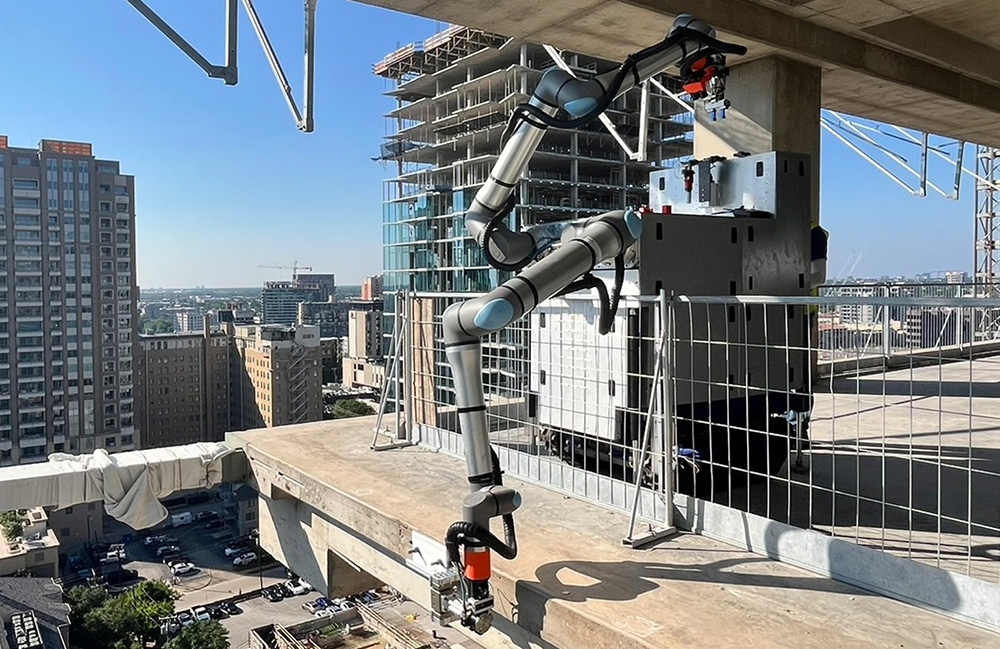
Raise Robotics said attendees will learn a decision rule for allocating engineering capacity and a vocabulary for two hidden failure modes. The post Raise Robotics to discuss scaling field robots at RoboBusiness appeared first on The Robot Report .
Asimov’s laws are not enough to keep robotics and AI safe
Asimov's fictional Three Laws of Robotics famously set safeguards, and tech observers today raise similar concerns about AI. The post Asimov’s laws are not enough to keep robotics and AI safe appeared first on The Robot Report .