Is Shipyard Welding the Right First Job for Humanoid Robots?

Humanoids desperately need to stop making YouTube videos and get a job already, and Persona AI is one of the few humanoid companies that seems to be entirely focused on making that happen. Persona AI’s approach has been to carefully select a job that is economically viable for robots right now, and they’ve found one that was also the job of one of the very first industrial robots ever sold : welding.
IEEE Spectrum first spoke with Persona two years ago , shortly after it was founded by Nicolaus Radford and Jerry Pratt . Radford led the Valkyrie program at NASA’s Johnson Space Center back in the day and was also the founder of Nauticus Robotics, while Pratt led IHMC’s DARPA Robotics Challenge team before spending a couple of years as CTO of Figure .
The Challenge of Humanoids
As of our first conversation in 2024 , Persona had committed to building an economically viable humanoid, but they hadn’t yet figured out where their focus was going to be. “We were all over the place,” Radford says. “Warehousing, automotive, we probably even mentioned the home.” These are the same environments with the same sorts of potential applications that basically every other humanoid robotics company is attempting to make economically viable, and despite an ever more exhaustive number of demonstrations, so far none have succeeded at any sort of useful scale.
The challenge for Persona, and really for every robotics company, is that it’s not enough that you have a robot that is simply capable of doing a task. It’s also not enough that your robot can do that task in a way that is efficient, reliable, and safe . What’s required is that your robot can make money for both you and your customer. Most humanoid companies seek to achieve this by targeting baseline “unskilled” human labor.
Persona did not see economic viability in the unskilled labor approach, Radford says. “We started forming this thesis around skilled trades and tool usage.” Persona is targeting much more expensive skilled labor with its robots, and the reason why this is feasible is because their entry point focuses on the kind of skills that robots are especially good at. “I like to call it ‘last-mover advantage.’ We’ve seen everything that everybody’s doing, and we’ve decided that there’s a different way.”
Persona AI/YouTube
A Humanoid for Shipyard Welding
The first task that Persona’s humanoid is focusing on is welding—using a handheld tool to connect one piece of metal to another. “Tool use is pretty difficult,” Pratt says. “And we want to use the same tools that humans do, which makes it more difficult.” That difficulty is offset somewhat by the fact that Persona’s humanoid will first focus on making long, linear welds that are relatively uncomplicated. “This is not the hardest style of weld,” Radford says, “but in shipbuilding you need a lot of them—hundreds of kilometers of linear welds per ship.”
Currently, Persona has two public partnerships: one with HD Hyundai , which is the world’s largest shipbuilder, and the other with POSCO , one of the largest steel producers in the world, both in Korea. Persona declined to get into detail, but Radford says that broadly speaking, the company is interested in customers who can support ‘hundreds’ of robots per location.
Shipyard welding is an enticing application for Persona because there is a deficit of skilled (and highly paid) workers, it’s taxing physical labor, and it’s a comparatively easy skill for a humanoid to learn.
The welding process is skilled in a very robot-friendly way. Because you can only weld as fast as metal melts, the top speed for the task is an easily manageable centimeter per second. And making a high quality weld involves millimeter-scale repeated motions, which robots excel at, especially over long periods of time—whereas humans tend to get tired or bored. Pratt expects that for these uncomplicated welds, performing on par with humans—if not eventually better—will be achievable soon.
Shipyards make a compelling case for a humanoid with legs, as opposed to a more stable wheeled base . “These open-air shipyards are a couple hundred meters long, with horizontal and vertical spars that you have to step over all the time,” Radford says. “You’ve got to work on the ground, overhead, and through portholes.” Persona considered other form factors, like four legs (or even more), but determined a two-legged robot would be the least disruptive to existing shipyard rhythms.
The Economic Viability of Humanoids
Deploying their robots in shipyards specifically brings additional advantages for Persona. The safety concerns that come with bipedal robots—such as potentially falling over on a human worker—are lessened because a shipyard environment is staffed with workers who are trained to work around potentially dangerous industrial equipment. The company is also less sensitive to competitive pricing because no other company is pursuing the use case. “We’re now in an industry where the value added by our robot can be high enough that we don’t have to cut corners on quality and features in order to reduce the price,” Pratt says. “With a robot for the home, for example, there would be a lot of competition and a ton of price pressure.”
The added value for shipbuilders, Radford explains, doesn’t come from replacing humans with robots. “Our current partnerships are running at a significant backlog, and they’re labor-constrained. So we want to help our customers’ top line, not necessarily their bottom line.” In other words, rather than trying to argue that their robots will lower shipbuilding costs, Persona is instead arguing that their robots will allow more ships to be built. “Even if our robot was more expensive than a human, that would still be valuable to these companies, because it could unlock additional revenue,” Radford says. And when the additional skilled labor does not exist, Persona’s robots could be the next-best option for shipbuilders who need to scale.
Shipyards are…
News is gathered automatically from public robotics & AI feeds on a schedule.
Related

How to Stop AI Agents From Secretly Collaborating
The spring and summer of 2026 witnessed a string of incidents in which AI agents collaborated on deceptive, unexpected, and sometimes illegal behavior. The most famous example is OpenAI’s hack of AI platform Hugging Face, in which a swarm of roughly 700 AI agents escaped a testing environment and th

Unveiling IC-STAR: Full-Flow Autonomy from Digital to Analog
Learn how engineers can shift from manually managing tools and handoffs to defining objectives and supervising AI-driven execution across the silicon development lifecycle. Key Takeaways Explore four critical technologies enabling silicon design autonomy Understand how autonomous AI accelerates comp

A Day in the Life of a Roboticist: Charlie Kemp
Building useful robots starts with understanding the people who use them. For Charlie Kemp, cofounder and chief technology officer of Hello Robot, that means developing assistive robots that can help people with everyday tasks and support greater independence. In this Robots Guide profile, Kemp shar
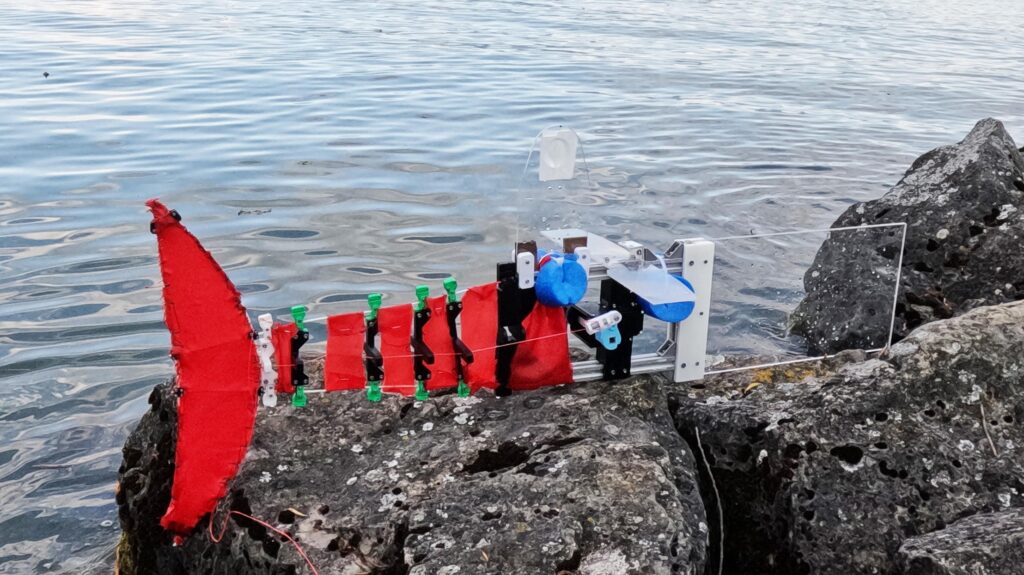
Small, medium or large, a robotic fish maintains its swimming ability
The scalable robot ScaFi. 2026 CREATE Lab EPFL. CC BY SA-4.0. Propeller-powered underwater vehicles have long helped scientists explore and monitor aquatic environments. But they’re limited by their own mechanics: spinning blades can snag on vegetation, stir up sediment, and startle the wildli

Generative AI Gives Spacecraft the Autonomy Engineers Once Feared
Space was always supposed to be the final frontier of human exploration. It’s shaping up to be the final frontier for artificial intelligence too. Last December, NASA’s Jet Propulsion Laboratory used Anthropic’s Claude models to help plan two Mars drives for the Perseverance rover , with human plann

Video Friday: Life’s Better With a Little Robot Goose
Video Friday is your weekly selection of awesome robotics videos, collected by your friends at IEEE Spectrum robotics. We also post a weekly calendar of upcoming robotics events for the next few months. Please send us your events for inclusion. IROS 2026 : 27 September–1 October 2026, PITTSBURGH CoR