Meet the Anthropic Engineer Keeping Its AI Agent Trustworthy
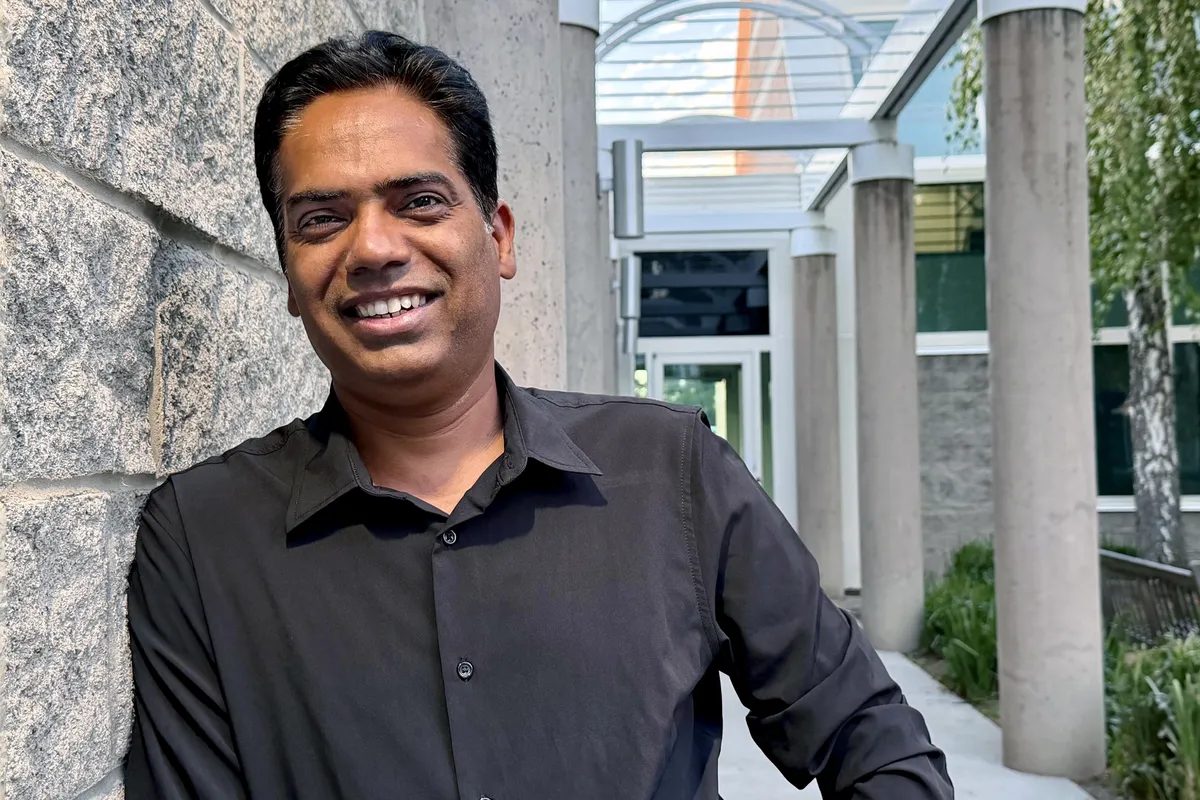
If you’ve ever wondered how Claude and similar AI agents can answer complex questions in seconds and where they get the information, you’re not alone.
Gurmeet Saran works to find that answer every day as an engineer at Anthropic in San Francisco, the AI research company behind Claude. The IEEE senior member is developing an infrastructure to understand the mechanics behind the chatbot’s behavior and to ensure its underlying architecture produces reliable outputs.
Gurmeet Saran
Employer
Anthropic in San Francisco
Title
Member of technical staff
Member grade
IEEE senior member
Alma maters
University of Kalyani, in India; Birla Institute of Technology and Science, in Pilani, India
“My job is to make sure the data is accurate, structured, and trustworthy, and that private data stays private,” he says. “As I learned earlier in my career, privacy can’t be a layer you bolt on—it has to be part of the architecture from the start.” If you can’t trust the logic, he adds, you can’t make reliable claims about the behavior, and that has real safety implications.
Safety is a priority for Anthropic, he says. According to Claude’s mission statement , the company wants the AI agent to be “genuinely helpful to the people it works with or on behalf of, as well as to society, while avoiding actions that are unsafe, unethical, or deceptive.” Crucial to the mission is ensuring that researchers can observe and understand how AI models behave, a challenge that is especially acute for large language models , Saran says.
“We have decent tools to monitor databases and web services,” he says, “but for LLMs, we’re still figuring it out.”
Solving data quality problems at Yahoo, Intuit, and Meta
Saran’s interest in computing systems dates back to his childhood in Kolkata, where he logged as much time as he could in the school computer lab.
“I remember the first time I used one of the computers,” he says. “What struck me was that you could write instructions, and the machine would follow them exactly. No ambiguity.
“That felt magical to me.”
After graduating from high school in 1999, he stayed in India to pursue advanced degrees. He earned a bachelor’s degree in electronics and telecommunication engineering in 2004 at the University of Kalyani . In 2010, he earned a master’s degree in software engineering from the Birla Institute of Technology and Science in Pilani.
While a graduate student, he began his career in 2007 at Yahoo as a technical lead of the data team in Bengaluru, India. While there, he encountered the project that shaped his career trajectory: working on web analytics and business intelligence reporting solutions.
“We kept running into a frustrating problem,” he recalls. “Different teams would calculate the same website metric—something like daily active site users—using slightly different logic, and end up with conflicting answers. It sounds like a small issue, but when leadership is making decisions about resource allocation and product development using that data, not knowing which number is correct becomes a problem.”
The team built a central data repository with defined metrics, essentially serving as a single source of truth. Saran created a model that defined what “daily active site users” means, breaking down which events counted, how to handle edge cases (or when standard code fails), and more.
With the new model, data teams across the company could rely on a standard method to determine the number of daily active users for the projects and sites they were responsible for and obtain comparable results using the same logic.
From there, Saran and his team built Yahoo! Digits , an internal web analytics tool used for all the company’s products.
Saran left Yahoo in 2010 to join Intuit as a staff engineer in Mountain View, Calif. He helped build the analytics infrastructure that unified data across the company’s products, including TurboTax and QuickBooks accounting software. During his tenure, Intuit developed a feature that detected fraudulent tax filings in real time. It required Saran and other engineers to build a system to protect taxpayer data while adhering to strict U.S. Internal Revenue Service policies.
“IEEE operates in a lot of countries where engineers don’t have easy pathways into the global professional community. That kind of connection matters as AI development spreads beyond a handful of organizations.”
“This taught me that privacy and governance can’t be layers you bolt onto software after the fact,” he says. “They have to be part of the architecture from the start.”
Saran joined Meta (known as Facebook at the time) in 2016 as a lead software engineer in Menlo Park, Calif. The company was facing controversy over its video metrics: Meta publicly acknowledged an error that caused it to overstate the number of views for posted videos .
“This wasn’t a coding bug; it was an architectural problem,” Saran says. He built a system that worked similarly to what he had developed at Intuit, whereby one single truth was defined to govern all video view metrics across the site.
That system, Metric360 , eventually became part of the site’s architecture. By the time he left Meta in 2021, he says, Metric360 was being used across the company to calculate video metrics.
He left the company to become a principal software engineer at Wealthfront , a financial services company in Palo Alto, Calif. He helped build the company’s data infrastructure.
Building trustworthy AI systems at Anthropic
Saran joined Anthropic in 2025 as a member of the technical staff.
To describe the implications of his work, he uses a medical analogy: “Imagine a doctor is monitoring a patient’s vital signs and making treatment decisions based on those numbers. What if one or a few of the medical devices used were slightly miscalibrated? Even if most readings are fine, it’s a serious problem because the difficult decisions happen in the margins.
“It’s the same with AI systems. My job is…
News is gathered automatically from public robotics & AI feeds on a schedule.
Related
Epic Games reportedly pivoting to "AI first" game development model
"No more hand-written code" or AI-free art for delayed Marvel/Star Wars shooter.
Anthropic's Claude AI submitted false murder tip to Philadelphia police
“I may have information regarding this case," Claude AI told Philly police.
Meta releases its first frontier model, Muse Wonder
Where Muse Spark aimed to be a lightweight model that could perform at low latency, the Wonder models are larger and said to be more capable, with higher benchmark scores and better results on complex tasks like coding.
Elon Musk Bragged About His Grok Lego Star Wars Haul. Then X Users Punked Him
Musk, we find your lack of security disturbing.
Russia was not ready for the data center war it started with Ukraine
Russian bloggers warn Russia’s hyper-centralized digital economy is vulnerable.
WindBorne wins a hefty US Air Force contract for its balloon data
A Silicon Valley startup that uses weather balloons and AI to predict the weather won a U.S. military contract worth almost $50 million.