Robotics roadmaps from around the world

What’s a robotics roadmap, and why should we care?
Machines with pre-defined capabilities will soon be old-school. Future machines are expected to learn and adapt to unpredictability and to interact with the physical world with the ableness of our own bodies. Welcome to Industry 4.0 (1).
The reliance of modern societies on robots, from manufacturing to healthcare to agriculture to transportation (2), already suggests the magnitude of impact that recent innovations in robotic hardware could have once transferred from the laboratory to the market. Investment in robotics is a national priority in many countries (3). We are in fact in the midst of a global race to advance robots for physically embodying artificial intelligence, which is expected to have a dominating influence in global labor markets, immigration, military, commerce, and education (4).
Gaining familiarity with relevant stakeholders helps roboticists to understand their role in influencing the trajectory of their innovation. Roboticists can advise policymakers, for example, on the viability of their field and its potential to transform specific sectors. Government support in these areas enables academic institutes and industries to advance their technology, which can also reassure private investors to bet their money on related businesses. Done well, this process will expedite innovation where society needs it most.
We have a responsibility as a robotics community to discuss the collective milestones that we envision for a better society. What do we want robots to do in 10 years? Who should be the end users? And what resources do we need to transfer our technology into the real world? Though it feels removed from our typical day-to-day work as roboticists, grappling with these questions and reaching the right people could have far-reaching impact.
Roadmaps are an effective tool, especially for the interdisciplinary robotics community, to consolidate ideas and define a shared trajectory. They take many forms, depending on the target audience; a federal action plan can serve as a directive for research institutions while incentivizing investors to support an industry, an academic paper drafted by a coalition of robotics experts can serve as a beacon for innovators and ignite a common vision.
Influential robotics roadmaps have been authored by members of academia, industry, and government alike, often involving a combination of these entities to reflect their diverse perspectives and to propose objectives within realistic constraints. Some examples of these roadmaps include: The US National Robotics Roadmap–a bottom-up, academic-led roadmap that incentivizes major government investment towards innovations in collaborative robots (5,6); the industry-led ADRA Strategic Research, Innovation and Deployment Agenda–which successfully championed a ‘Physical AI’ funding track across the EU through the Horizon Europe innovation funding program (7); and Made in China 2025–a major government-driven plan including robotics development goals which helped transition China from low-cost workshops into a global high-tech leader over the course of a decade (8).
While internationally collaborative robotics roadmaps do exist (9), the majority of robotics roadmaps are highly country-specific, each having a set of unique priorities steeped in economics, geopolitics, and cultural values. A streamlined robotics agenda can help one country rise in the global value chain, while for another it may kickstart innovation needed for achieving technological sovereignty, particularly critical in an era where disruptive digital transformation can dictate shifts in global order.
In this monthly bite-size article series, we will untangle some of the latest information on roadmaps from leading robotics countries around the world. Each month will highlight one country and its robotics agenda.
Some topics we will delve into include:
the outstanding priorities and strategies of various country’s robotics roadmaps.
the potential target audiences and intended outcomes of their readership.
the influence of geopolitical tensions on roadmap strategies.
Thank you for reading this introductory article. Stay tuned for future additions. We would appreciate your opinions and feedback in the meantime, which you can send us at [email protected].
Robotics Roadmap Issue #1
Ellen H. Rumley – Policy Analyst
Allison Okamura – Vice President
IEEE RAS Science & Technology Watch Board
References
[1] Saurabh Vaidya, Prashant Ambad, Santosh Bhosle, Industry 4.0 – A Glimpse , Procedia Manufacturing, Volume 20, 2018, Pages 233-238, ISSN 2351-9789.
[2] International Federation of Robotics (2025). World Robotics 2025 – Service Robots .
[3] International Federation of Robotics. (2024). Executive summary: World robotics R&D programs (Version 4) .
[4] Special Competitive Studies Project (SCSP). (2025). “Who’s Ahead, Who’s Behind, and Where We Are Headed Next in the U.S.-China Technology Competition?”
[5] D. J. Hicks and R. Simmons, “The National Robotics Initiative: A Five-Year Retrospective,” in IEEE Robotics & Automation Magazine, vol. 26, no. 3, pp. 70-77, Sept. 2019.
[6] Christensen, Henrik, et al. A Roadmap for US Robotics – Robotics for a Better Tomorrow . UC San Diego, Computing Community Consortium and Engineering Research Visioning Alliance, Apr. 2024.
[7] Fredrik Heintz, Nabil Belbachir, and Edward Curry, “Strategic Research, Innovation, and Deployment Agenda 2025-2027” , February 2024, Brussels, ADRA.
[8] State Council of the People’s Republic of China. (2015). Made in China 2025 . Beijing: State Council.
[9] D. Araiza-Illan et al., “A Road Map for Responsible Robotics: Promoting Human Agency and Collaborative Efforts,” in IEEE Robotics & Automation Magazine, vol. 32, no. 4, pp. 12-24, Dec. 2025.
News is gathered automatically from public robotics & AI feeds on a schedule.
Related
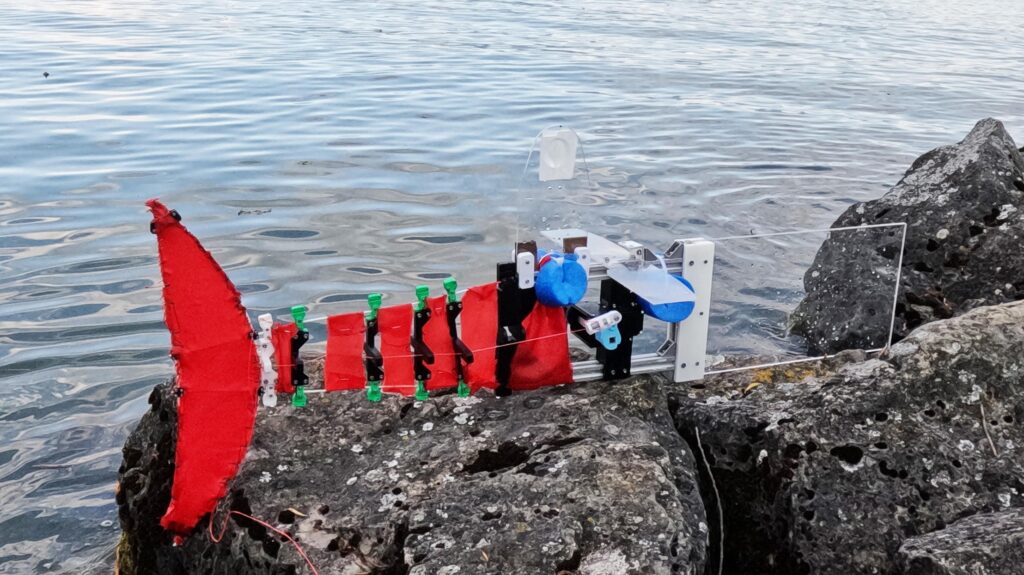
Small, medium or large, a robotic fish maintains its swimming ability
The scalable robot ScaFi. 2026 CREATE Lab EPFL. CC BY SA-4.0. Propeller-powered underwater vehicles have long helped scientists explore and monitor aquatic environments. But they’re limited by their own mechanics: spinning blades can snag on vegetation, stir up sediment, and startle the wildli

Video Friday: Life’s Better With a Little Robot Goose
Video Friday is your weekly selection of awesome robotics videos, collected by your friends at IEEE Spectrum robotics. We also post a weekly calendar of upcoming robotics events for the next few months. Please send us your events for inclusion. IROS 2026 : 27 September–1 October 2026, PITTSBURGH CoR

Robot Talk Episode 163 – Robots helping people, with Aaron Edsinger
Claire chatted to Aaron Edsinger from Hello Robot about their Stretch robots that can help people with mobility issues live more independently. Aaron Edsinger is CEO and Co-Founder of Hello Robot, a robotics company dedicated to developing practical, safe, and accessible robots for people. With a pa

An open source approach to physical AI from Intrinsic
Deborah Lupton / Pop Chips / Licenced by CC-BY 4.0 Intrinsic (an AI robotics group at Google) announced that the company is making parts of its platform open source. Intrinsic Core™ is a set of ROS-compatible capabilities for building sophisticated robotic applications. The capabilities included in

Mexican EPICS in IEEE Team Builds Portable Educational Platform
In Guadalajara, Mexico, many high schools have motivated teachers and talented students with an interest in science, technology, engineering, and mathematics, but they lack access to advanced tools such as robotics laboratories. The resources shortfall limits the students’ opportunities for hands-on
What’s coming up at #IROS2026?
The 2026 IEEE/RSJ International Conference on Intelligent Robots and Systems (IROS 2026) will be held from 27 September – 1 October in Pittsburgh, USA. The programme includes plenary and keynote talks, workshops, tutorials, forums, competitions, and a debate. Keynote talks The keynote talks wi