Robots in Society, Business and Culture: September 2026
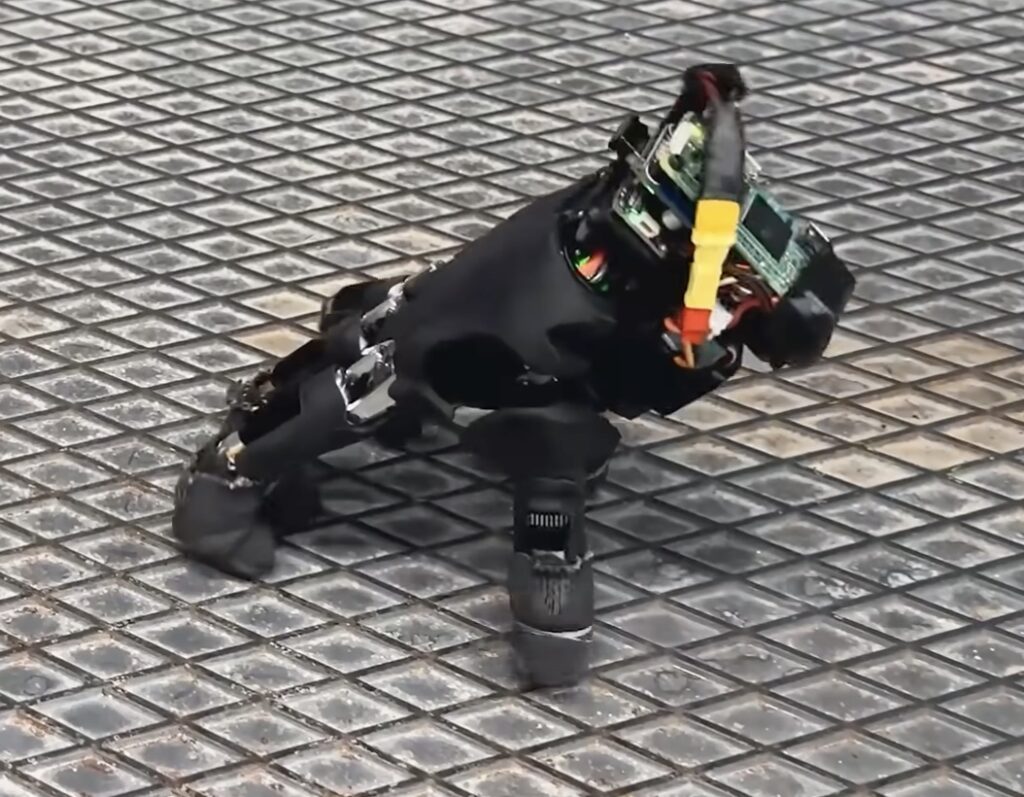
A walking robotic hand, from Fingers as Legs: Learning Self-Supported Locomotion and Manipulation with an Anthropomorphic Hand , Amirhossein Kazemipour, Hehui Zheng, Robert Katzschmann.
By Emmet Cole
In our monthly series, we showcase a selection of robotics stories from society, business, research and culture, as we track the field’s ongoing journey from specialized industrial machines to an increasingly visible social phenomenon.
Five million and counting
More than five million industrial robots are now operating in factories worldwide, according to the International Federation of Robotics’ newly released World Robotics 2026 report .
Factories installed more than 600,000 industrial robots during 2025, an increase of 11% on the previous year. The global operational stock grew by 9%.
China continued to pull away from the rest of the world. Its factories installed 354,000 robots, accounting for 59% of the global total. Chinese manufacturers supplied 55% of their domestic market.
The United States overtook Japan to become the world’s second-largest market, with almost 38,500 installations. India installed nearly 10,500 robots, an increase of 15%. Europe moved in the opposite direction: installations fell by 8% in Germany, 11% in Italy, 8% in France and 15% in Spain.
IFR forecasts that worldwide installations will reach 655,000 units in 2026 and 806,000 in 2029.
Separately, Toyota told investors that modernizing factories operated by the company, its group businesses and major suppliers could require around 400,000 robots . The estimate includes replacement machines, new industrial robots, automated logistics systems and possible future humanoid deployments. Toyota said the programme could cost ¥1 trillion, or approximately $6.4 billion, annually from 2028, although it has not made a firm spending commitment.
Elsewhere, Universal Robots used the IMTS trade show in Chicago to launch Gen 7 , a redesigned cobot platform built around greater computing power, tool-flange connectivity, sensor integration and support for AI-assisted applications.
The hands behind the robots
In Rajasthan, India, women are being paid to record household activities from cameras worn on their heads, according to an investigation by Decode . Their footage captures everyday tasks such as cooking, cleaning and folding clothes from the worker’s point of view.
The recordings can be divided into individual actions and used to teach robots how people manipulate objects in real homes. This kind of data is especially valuable because household environments contain clutter, variation and improvised behaviour that are difficult to reproduce in a robotics laboratory.
Decode estimates that between 20,000 and 30,000 people may be doing this work in India, although that figure is an extrapolation rather than an official count. The article also stops short of establishing which robot companies ultimately receive the featured workers’ recordings.
Lethal autonomous robots
International efforts to regulate autonomous weapons reached a significant point in September. Three years of discussions by the United Nations Group of Governmental Experts ended with growing support for formal negotiations on new international rules.
Human Rights Watch says 76 states now support negotiations on legally binding measures governing autonomous weapons systems. However, the group’s final report was weakened during negotiations. References to ethical concerns and to the design and development of the weapons were among the passages removed or reduced following objections from states including Russia and the United States.
The issue will now move to the Convention on Certain Conventional Weapons Review Conference in November, where states may decide whether to establish a negotiating mandate.
The Stop Killer Robots campaign argues that further discussion is no longer enough and that states should begin negotiating prohibitions and regulations.
Computer scientist Stuart Russell also entered the debate in a short UC Berkeley video . Russell called for a ban on small autonomous anti-personnel weapons, warning that machines capable of selecting and attacking people could become cheap, scalable weapons of mass destruction.
His intervention is more specific than a call to prohibit every military application of AI. It focuses on systems that can independently identify human targets and apply lethal force at scale.
Does the robot play fair?
A study published in the International Journal of Human–Computer Interaction examined whether perceptions of fairness can reduce conflict between people and security robots.
Xin Ye and Lionel Robert considered two forms of fairness. Distributive fairness concerns whether the robot’s decision or its consequences appear fair. Informational fairness concerns whether the robot provides an adequate explanation for that decision.
The researchers found that both can help reduce conflict and improve acceptance. The broader implication is that security robots may need to justify their actions as well as perform their assigned tasks effectively.
The results come from controlled human–robot interaction research, so they should not be treated as evidence from robots exercising authority in operational policing environments. Nevertheless, the study raises a question that will become more pressing as autonomous systems move into security roles: what does it mean for a machine’s exercise of authority to be regarded as legitimate?
Give us a hand
Finally, researchers at ETH Zurich have taught an anthropomorphic robotic hand to walk on its fingertips .
The self-contained hand uses reinforcement-learning policies to crawl, steer and recover after falling. It can also support its own weight while pressing successive keyboard commands, and it can push an object towards targets using overhead visual feedback.
The work is currently an eight-page arXiv preprint, and separate policies are used for different tasks. Even so,…
News is gathered automatically from public robotics & AI feeds on a schedule.
Related
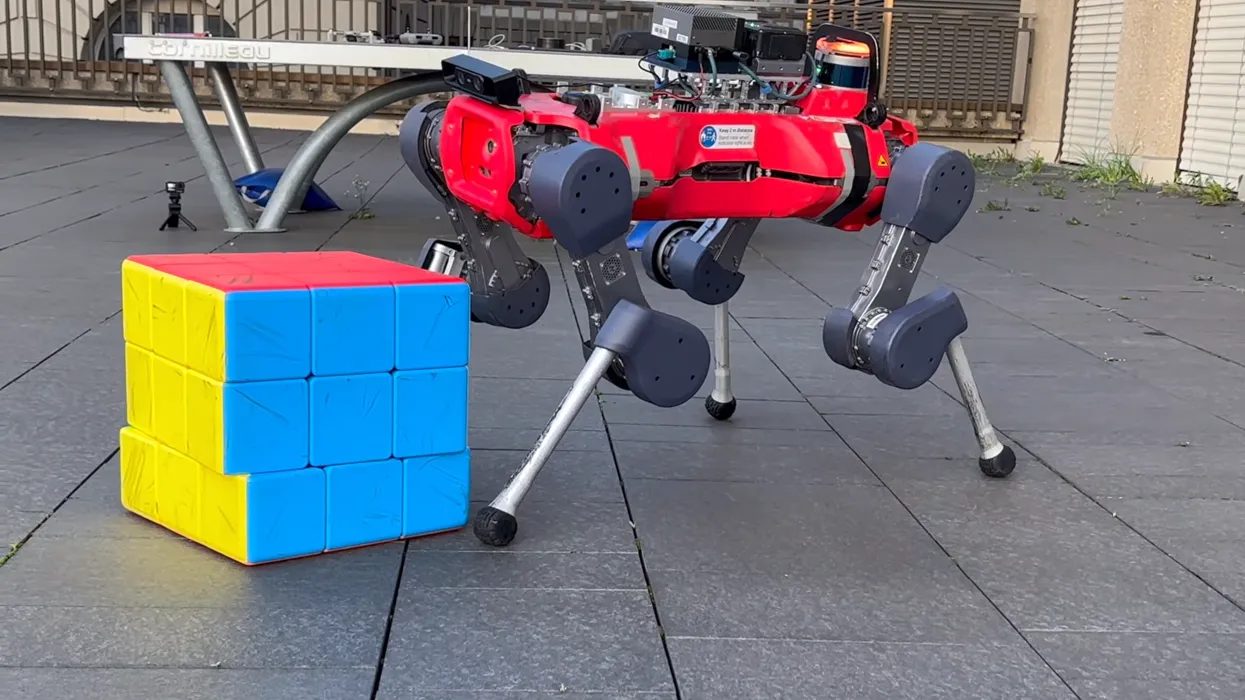
Video Friday: Quadruped Robot Solves Giant Rubik’s Cube by Itself
Video Friday is your weekly selection of awesome robotics videos, collected by your friends at IEEE Spectrum robotics. We also post a weekly calendar of upcoming robotics events for the next few months. Please send us your events for inclusion. CoRL 2026 : 9–12 November 2026, AUSTIN Humanoids 2026 :

Robot Talk Episode 167 – Automating construction, with Jan Petrš
Claire chatted to Jan Petrš from École Polytechnique Fédérale de Lausanne (EPFL) and Déploya Robotics about novel robot designs for construction and architecture. Jan Petrš is a roboticist, architect, and entrepreneur working at the intersection of robotics and construction. He is currently the co-f

ACM SIGAI Autonomous Agents Award 2027 open for nominations
Nominations are solicited for the 2027 ACM SIGAI Autonomous Agents Research Award. This award is made for excellence in research in the area of autonomous agents. It is intended to recognize researchers in autonomous agents whose current work is an important influence on the field. The award is an o
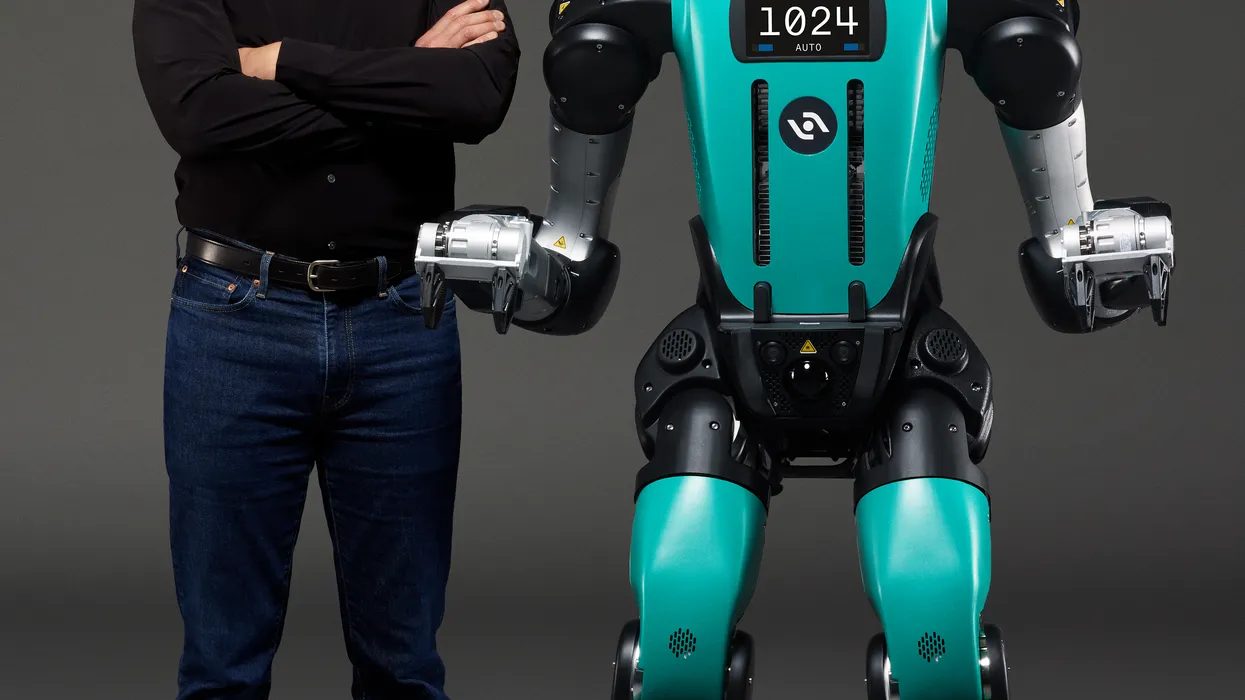
The Robot I Didn’t Expect to Build
Agility Robotics , the company I cofounded out of my robotics lab at Oregon State University in 2015, has just launched Digit 5 . It’s designed to be the first humanoid robot that can safely and economically do useful work at scale, allowing us to bring tens of thousands of humanoid workers into the

Powered by muscle cells, a paper-thin robot swims through watery maze
MIT engineers’ new aquabot offers a way to design small, efficient “biohybrid” robots.
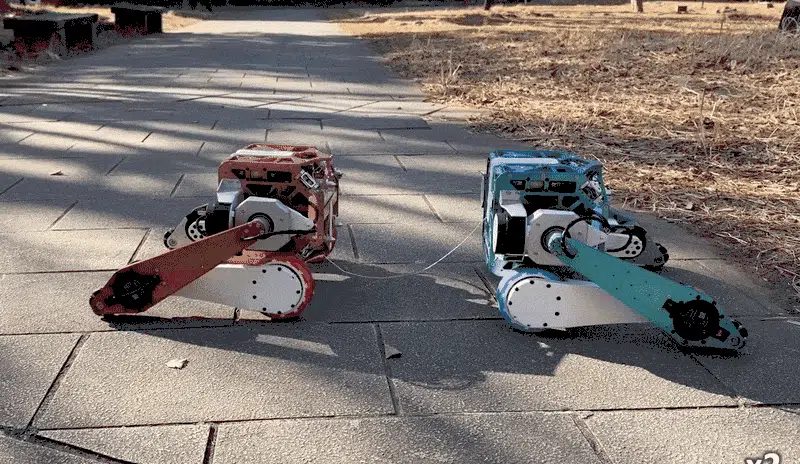
Video Friday: When Two Robots Become One
Video Friday is your weekly selection of awesome robotics videos, collected by your friends at IEEE Spectrum robotics. We also post a weekly calendar of upcoming robotics events for the next few months. Please send us your events for inclusion. CoRL 2026 : 9–12 November 2026, AUSTIN Humanoids 2026 :