The physical AI race will be won in the patent office

Lightbringer’s co-founders and board members, from left: CTO Markus Andreasson, CEO Dominic Davies, and CCO Ola Wassvik. Source: Lightbringer
Developments in AI, machine learning, and automation have given robots capabilities that would have seemed extraordinary a decade ago. As competition intensifies, the physical AI race is becoming less likely to be won by whoever builds the best robot, and more likely to be won by whoever owns the technology that determines its behavior.
This is a particularly complex intellectual property (IP) landscape because those innovations can span hardware, software , AI models, and calibration methods. The most valuable invention may not be the robot itself, but the technology that enables it to behave in a particular way.
I’ve spent 20 years as a patent attorney and filed more than 300 patents across industrial automation. The pattern is consistent: The startups that lose out are the ones that delay.
Robotics founders need to decide what to patent, what to keep secret, and how to protect their most important technologies before competitors do. Failure to do so could leave them locked out of their own core mechanisms, blocked from the market, or acquired for parts instead of value.
In some cases, the robot isn’t the innovation; its behavior is
Boston Dynamics’ 2022 lawsuit against Ghost Robotics for i nfringement of “core technology” that dictated how the robot recovered if it fell over illustrates this idea particularly well.
Similar challenges are faced by startups operating in the field of swarm robotics, where the technical innovation is often an interaction between dozens of machines that produces behavior no individual machine could achieve alone. This raises a question the law hasn’t fully answered yet: Can you patent the behavior of the swarm, or only the machines that produce it?
Patent offices including the European Patent Office have indicated that depending on the interaction between different entities, patent claims may need to define the individual entities and/or the overall system, including how the entities interact. In some circumstances, the claim may need to be limited to the combination of those entities.
While Boston Dynamics and Ghost Robotics were able to resolve their dispute in 2025 , the reality is that in ambiguous IP scenarios, startups rarely have the upper hand due to the high litigation budget required to defend patents. As such, in a sector moving this fast, a strong IP strategy must be deployed from the outset — it can’t be something you get to after the Series A.
On the left, Ghost Robotics’ Vision 60 quadruped. On the right, Boston Dynamics’ Spot quadruped. | Source: Ghost Robotics, Boston Dynamics
A strong IP strategy doesn’t necessarily mean more patents
A strong patent portfolio should be the foundation of every robotics IP strategy. As RoboSense’s IP head warned last year , patent disputes in robotics are likely to multiply as they did in the smartphone industry in the 2010s, when global legal battles showed how patents could shape licensing, acquisitions and market control.
This does not mean patenting every component. A robotics startup that tries to do this will run out of engineering time before it runs out of components to patent. And while it’s filing the 40th application, a competitor will file first on the one that really mattered.
Know that some of your best inventions shouldn’t be published
A patent is a publication. For some innovations, this is the last thing you should do.
For example, for a manufacturing process or calibration technique that is difficult to reverse-engineer from the finished robot, keeping it confidential may be a more cost-effective way to retain competitive advantage than filing a patent.
For strategically sensitive innovations, such as in defense technology, a published patent could tell competitors – and adversaries – exactly which problem you solved and where your advantage sits.
By contrast, a patent is likely to make more sense when an invention is embodied in the finished product and could be reverse-engineered by a competitor. For example, a novel robotic mechanism that enables a robot to move faster, more precisely or more efficiently would be difficult to keep secret once the robot is on the market. In that case, patent protection can give the startup a period of exclusivity over the mechanism.
Register now and help us celebrate 20 years of RoboBusiness!
Focus on the one or two inventions the robot can’t work without
When a startup does come to build its patent portfolio, the aim should not be to try and patent an entire machine. Startups should aim to identify one or two novel mechanisms, architectures, or processes that are central enough to the function of the robot that without which, it would be genuinely difficult for competitors to copy the robot.
This was an approach that we helped London-based food-assembly robotics startup KAIKAKU to use in building its strategic patent portfolio. The problem that KAIKAKU solved was never moving a bowl from one place to another. It was moving it at speed without making a mess. This behavior was achieved through a core motion mechanism that was novel and central enough to the function of the robot that it became one of its “crown jewel” patents.
KAIKAKU patented its motion mechanism for food bowl assembly. Source: Lightbringer
Make it more difficult to design around the core patent
Once the crown jewel inventions are secured, startups can build a wider defensive ecosystem to protect the surrounding architectures that make the core innovation commercially useful — and that a competitor might otherwise use to design around the core patent.
The result is layered. A few patents protect the advantage itself. A wider ring of patents makes designing around it expensive enough that most competitors won’t try. For startups, this can create not only stronger protection against competitors, but also greater leverage in…
News is gathered automatically from public robotics & AI feeds on a schedule.
Related
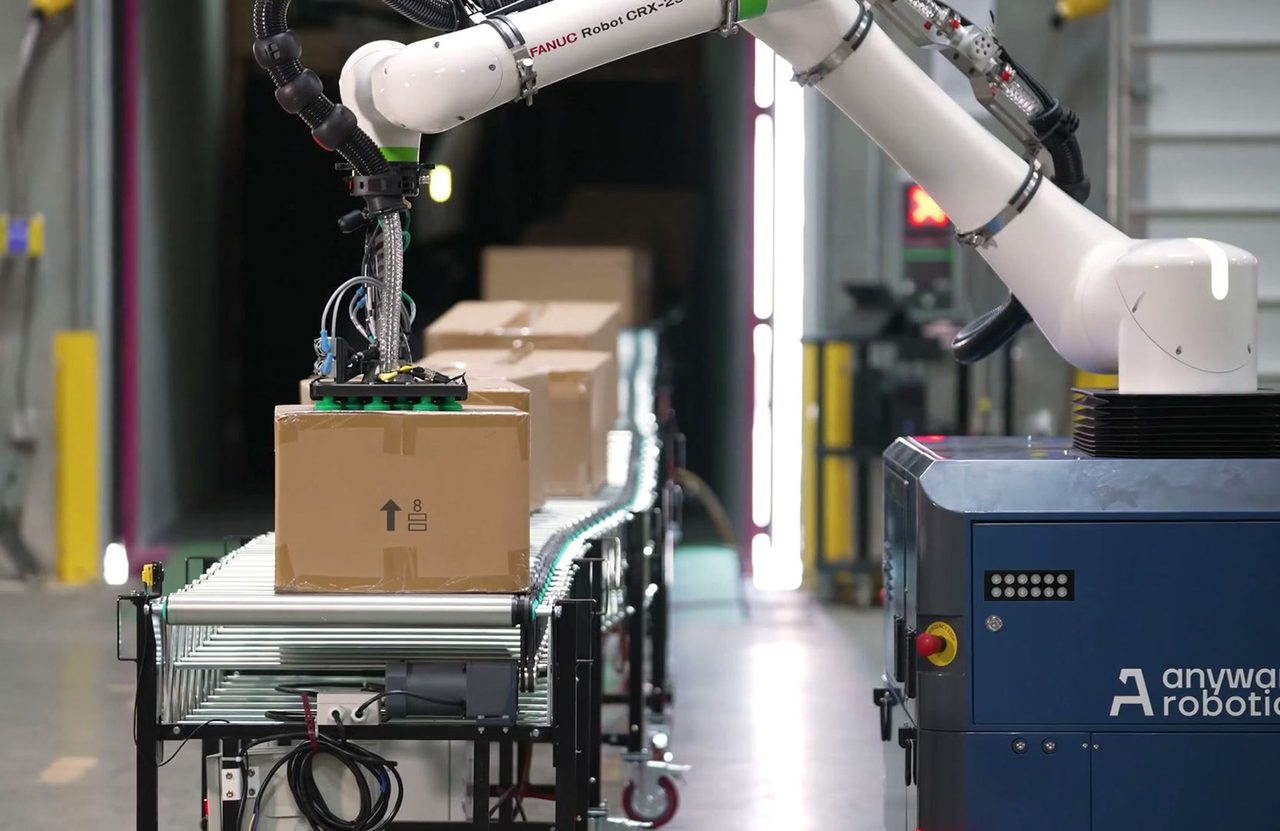
SafeWorld emerges from stealth to build, deploy robot safety simulation technologies
SafeWorld’s platform provides testing and simulation software to help enterprises evaluate and deploy robots safely and responsibly. The post SafeWorld emerges from stealth to build, deploy robot safety simulation technologies appeared first on The Robot Report .
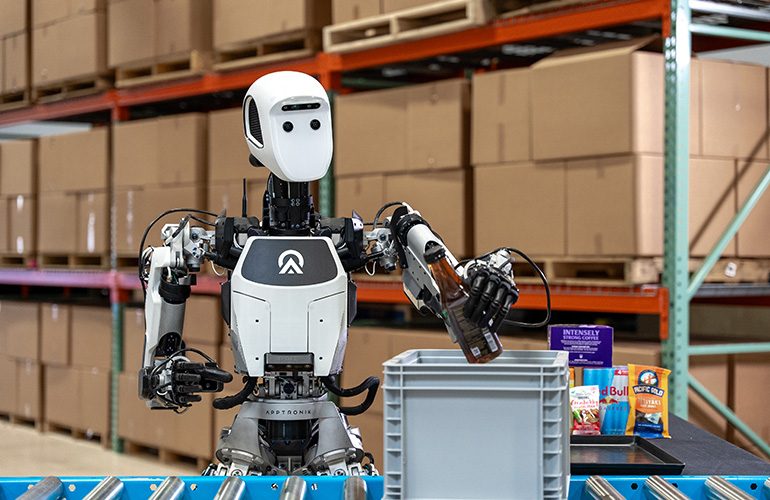
Jabil discusses the pace of humanoid robot development and production
Jabil, which is working with robot developers such as Apptronik, provides a design perspective on humanoid progress. The post Jabil discusses the pace of humanoid robot development and production appeared first on The Robot Report .

Helm.ai reaches $70M in signed commercial contracts for its foundation models
Helm.ai trained its foundation models using its unsupervised 'deep teaching' methodology to master the structure of the physical world itself. The post Helm.ai reaches $70M in signed commercial contracts for its foundation models appeared first on The Robot Report .
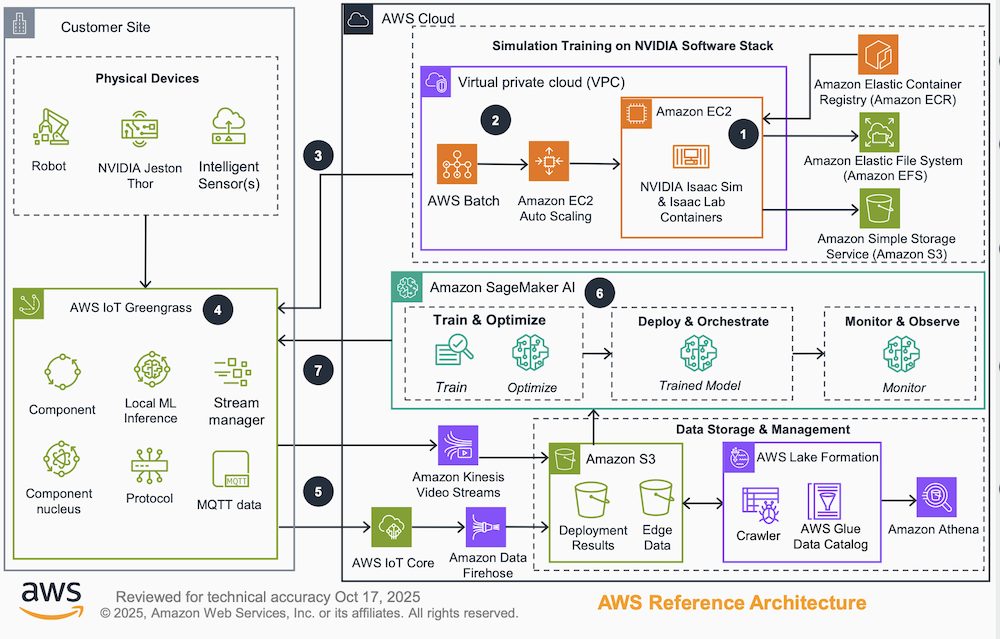
AWS launches open-source Physical AI Toolchain for robotics
The toolchain combines AWS and NVIDIA tools for synthetic data generation, model training, simulation and validation, edge deployment, and continuous improvement. The post AWS launches open-source Physical AI Toolchain for robotics appeared first on The Robot Report .
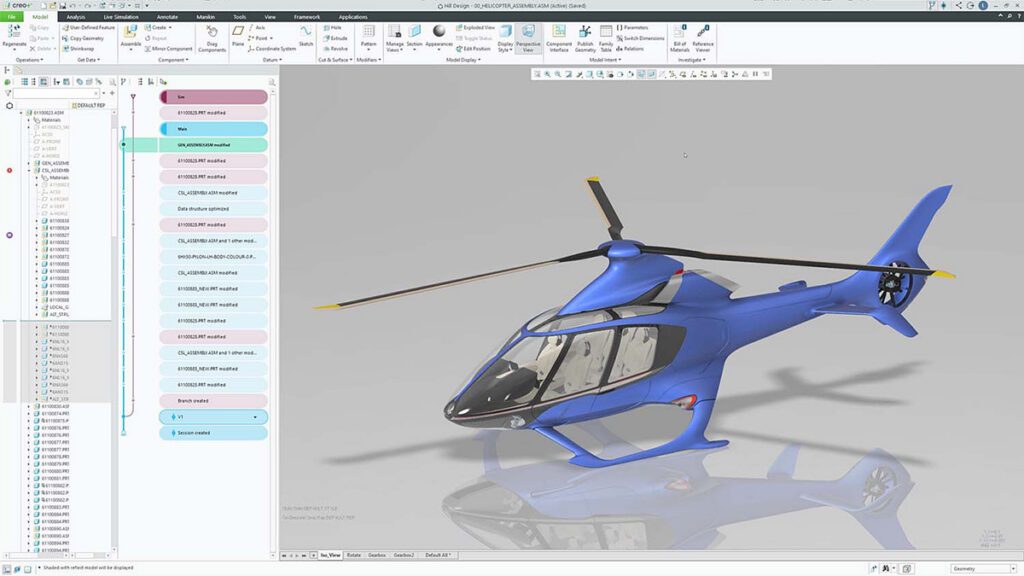
PTC acquisition positions Schneider Electric to challenge Siemens
The Schneider Electric acquisition of PTC gives it a 'digital thread' from design through operations, but it needs to integrate data and software, says Interact Analysis. The post PTC acquisition positions Schneider Electric to challenge Siemens appeared first on The Robot Report .
Teradyne Robotics, Elite Robots settle cobot dispute
Teradyne Robotics and Elite Robots have settled their software dispute, ending the legal case without disclosing the terms of the agreement. The post Teradyne Robotics, Elite Robots settle cobot dispute appeared first on The Robot Report .