The U.S. Nuclear Plant Fleet Is Leaning Into AI
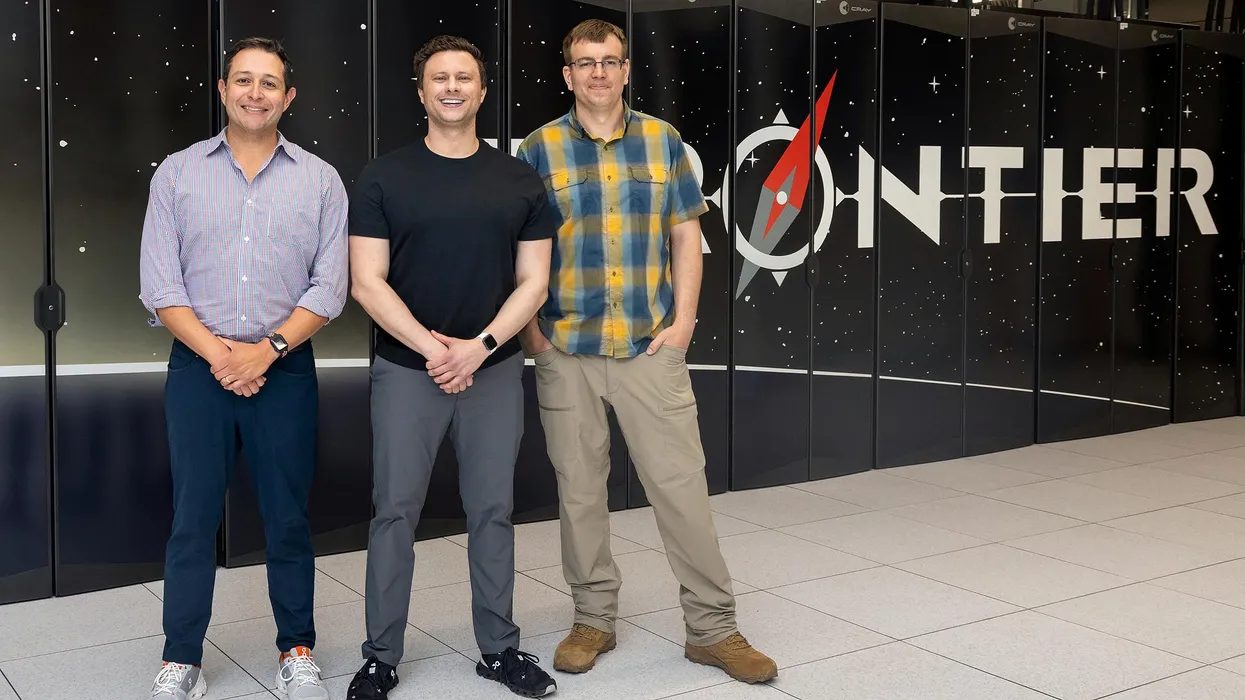
If there is any place that would be off-limits to AI, the control room of a nuclear power plant certainly sounds like one. The nuclear industry is historically cautious and risk averse—understandable given the possible catastrophic consequences of an accident or a mistake. Even well-trained managers struggle with the operational complexity of a nuclear reactor. It’s not the kind of setting that seems well suited to a powerful but error-prone new technology.
Reality tells a startlingly different story. A variety of companies have begun to offer AI solutions for nuclear power. This year, nearly the entire fleet of 94 U.S. nuclear reactors has been offered the chance to integrate AI into its operations, and most have taken it.
In August, California-based Atomic Canyon launched NIVA , the Nuclear Industry Virtual Assistant, which was developed in cooperation with nuclear-industry groups. The assistant was pilot-tested in nuclear plants run by Constellation Energy and is now available to the United States’ entire fleet of reactors. (Constellation declined to be interviewed for this story.) Meanwhile, the AI-for-nuclear startup Nuclearn says its products have gone to work with more than 65 U.S. partners, a total that includes many traditional plants but also an integration with NuScale Power Corp. that is working toward advanced small nuclear reactors . Microsoft and Nvidia have collaborated on a project to apply AI toward optimizing “the entire life cycle of a nuclear plant, spanning site permitting, design, construction, and continuous operations.”
The reason for the rapid adoption, according to Nuclearn CFO and cofounder Jerrold Vincent , is twofold. First, the technology companies banking their futures on AI are also keen on a revival of nuclear power to provide the electricity for all those data centers. Vincent says AI is also ideal for addressing some of the nuclear industry’s most pressing problems. Many of the things that make reactors so difficult to operate—intricate regulations, along with complex systems for management and maintenance—are exactly the kinds of tasks that AI is good at. The industry is staggering to deal with aging hardware and an aging workforce. If it is going to survive, and have a real shot at a nuclear revival, it will need help from machine intelligence, Vincent says.
“There’s this huge growth in demand from advanced-reactor developers and in new nuclear,” Vincent adds. “But the existing workforce has been spread really thin. So most of the time when we’re coming into a customer, [they're saying,] ‘I’ve had jobs open and I can’t fill these positions. We need to do the things required by regulation. How the heck are we going to do it?’”
AI Streamlines Nuclear Documentation
Right now, the principal output of a nuclear reactor (aside from electricity) is paperwork. Nuclear plants produce piles of documentation to demonstrate regulatory compliance and to record how they respond to any potential problem, from a crack in the sidewalk to a fault in the reactor.
“Every engineering decision has to be evaluated, independently verified, and checked,” Vincent says. Nuclearn’s AI products help plants search through large repositories of data more efficiently to more quickly file paperwork with the federal government or figure out how a particular problem was solved in the past. “If you think of it as ChatGPT for nuclear,” he says, “it’s actually not a bad place to start.”
Rob Austin , the Electric Power Research Institute’s leader for the NIVA project, says the project started a year ago when Constellation chairman Joseph Dominguez issued a challenge to the nonprofit industry groups that act as storehouses of information about regulatory compliance, maintenance and repair, and mechanical history. He asked the groups to find a way to make that industry knowledge available with the convenience of a large language model like ChatGPT, Copilot, or Gemini but keep it secure at the same time.
The task fell to Atomic Canyon, whose CEO Trey Lauderdale previously worked to integrate AI into health care, another conservative industry. Living and working downstream from Diablo Canyon, California’s last operating nuclear plant, he began to see how nuclear energy and AI could form a mutually beneficial relationship: A revival of nuclear power could help feed electricity to energy-hungry data centers, but only if AI could help the industry thrive again.
“The goal was to make decades of operating experience, hundreds of thousands literally of operating experience reports, tens of thousands of technical documents, and a whole lot of information available for people to find.” —Rob Austin, Electric Power Research Institute
A major hurdle is the public’s opinion of nuclear power, which soured decades ago after notorious accidents and worries about waste and only recently has begun to recover . But the resulting halt in construction of new nuclear plants has created another hurdle of its own: a loss of institutional knowledge, Lauderdale says. As the industry stalled in the U.S., fewer people entered careers as nuclear scientists or technicians. The result is a people problem. Nuclear power has a remarkably skilled but quickly shrinking workforce tasked with keeping old reactors online and possibly starting up new ones to meet surging demand for electricity.
“There is absolutely no way we as an industry will be able to have this nuclear resurgence or nuclear renaissance without augmenting the capacity of this knowledge-based workforce,” Lauderdale says.
For him, the answer is an AI that can intelligently search the repository of data that the nuclear workforce has created over the decades. When Atomic Canyon won the NIVA contract in 2025, the first step was to download 53 million pages of publicly available data from the Nuclear Regulatory Commission to train the model on the operations, vernacular, and regulations particular to nuclear power. Lauderdale then struck a partnership…
News is gathered automatically from public robotics & AI feeds on a schedule.
Related
Anthropic launches free AI security scans for open-source projects
Anthropic's offering to help open-source projects track down security vulnerabilities with a new service called OSS Scanner. It says open-source projects that opt-in will get "thorough, periodic security scans by our strongest models at no cost." That could mean open-source projects get alerted abou
Inside Elon Musk’s Midterm Spending Spree
This week on “Uncanny Valley,” we discuss where Elon Musk’s PAC is spending millions, the latest ideology Trump claims is dangerous, and the backlash against the designer behind Muse’s logo.
Pretend you’re sitting at Elizabeth Holmes’ desk on this weirdly detailed website
With over a thousand emails, slides, texts, and documents from the United States v. Elizabeth Holmes trial, Extend engineer Bo Lau created a website that simulates what it might have been like to rifle through the Theranos founder's desk.
California is trying to shut down robot vs. human cage matches
The California State Athletic Commission sent a cease-and-desist letter to a startup that hosted a match between a human and a robot last month, as reported by The New York Times. The fight, which took place on September 18th, pitted a human, Frankie LaPenna, against a humanoid robot owned by a tech
Fired OpenAI safety researchers dispute misconduct claims, warn of chilling effect
Three fired OpenAI safety researchers dispute allegations of mishandling sensitive information, warning in an open letter that their dismissals are creating a chilling effect on the company’s AI safety culture.
She Designed Meta’s New AI Logo. Then Came the Hate
Jessica Hische knew working for Meta might upset some people. But she didn’t anticipate just how angry they would get.