This Graduate Student Equips NASA’s Robots With Assembly Skills

Like many engineers, Sarah Downs says she knew she wanted to pursue a STEM career from a young age. As a teenager, she discovered robotics through her Tulsa, Okla., middle school’s First Lego League team, and she fell in love with the field, she says. Downs participated in the international robotics program from 2014 to 2016.
Watching PBS specials on NASA Mars rovers Spirit and Opportunity , and seeing the live broadcast of the Curiosity rover launch in 2011, inspired the teen to dream of a career working with NASA.
Sarah Downs
MEMBER GRADE
Graduate student member
UNIVERSITY
Texas A&M University in College Station
MAJOR
Electric engineering
This year the IEEE graduate student member achieved that dream. For her final project as a master’s degree candidate in electrical engineering at the University of Tulsa , she worked on an algorithm in collaboration with NASA and the U.S. Air Force .
The algorithm she developed enables a robot assembling satellites in space to insert an antenna into the correct spot, addressing robotics’s classic peg-in-hole problem of inserting an object into its corresponding hole.
Now a Ph.D. student in electrical engineering at Texas A&M University in College Station, Downs is continuing her research on satellite assembly and manipulation “but on a much larger scale,” she says.
Following a childhood passion
Downs grew up in the Tulsa area. Her father, who died from a heart attack in 2015 when she was 13, was a safety advisor in the oil and gas industry. Her mother stayed home to take care of her brother, who has autism. After her father died, her mother went back to college to earn a bachelor’s degree in business so she could support the family.
“We didn’t have much income, and my mom was always worried about money,” Downs says. “That made me more aware of having a successful career, in a monetary sense.”
From then on, whenever she considered her future career, having a decent salary to support the family was high on her list.
By pursuing a career in robotics, she says, she can follow her passion while obtaining financial security.
In high school, Downs joined the First robotics club, where she found herself drawn to the electrical components used in the machines she and her classmates built.
During her final two years of high school, she participated in an extension program at Tulsa Tech , a training school. She spent half her day in high school classes and the other half taking engineering courses at the vocational school.
After graduating in 2020, she accepted scholarships to attend the University of Tulsa. She began her freshman year at UTulsa not knowing whether she wanted to major in electrical or mechanical engineering, she says, adding that her love of working with small systems helped her choose EE.
For her senior year capstone project , she and two of her classmates designed a lunar lander exhibit for the Tulsa Air and Space Museum . They created an interactive game that simulates missions on lunar and martian surfaces. Four celestial bodies—the moon, Venus, Mars, and Titan—are listed across three computer monitors. Using a game controller, museum visitors can explore the virtual surface of each one. The exhibit is still on display.
Downs earned her bachelor’s degree in electrical engineering in 2024 and continued her education at the university’s EE master’s degree program.
Both more and less complicated than people think
When Downs began her graduate studies, she was supposed to be part of a NASA robotics project for two years. But when a delay in government funding postponed the project’s start, she instead spent her first year in the school’s Institute for Robotics and Autonomy , then newly launched. Its main focus is developing robots to assist people who have mobility challenges.
Inspired by her grandmother, who was wheelchair-bound due to severe arthritis, Downs developed a robotic arm that helps older people and wheelchair users live independently. The arm was able to identify and place objects in the appropriate locations inside the home, such as unloading certain groceries from a shopping bag and placing them on a shelf or in separate containers.
Before the start of her sophomore year in 2025, the NASA project finally secured government funding. She developed a robot that achieves the peg-in-hole task without using any vision systems. Typically, cameras help guide robots’ satellite-assembly work. But in the harsh, remote environment of outer space, cameras might malfunction or encounter delays.
“Don’t stop asking questions. Especially in engineering, don’t pretend like you know everything, because science is about constantly wanting to learn and listen.”
Rather than using cameras, Downs’s robotic arm deploys a force-based insertion process to sense position and orientation of objects in the arm’s environment. The robot loosely grips an antenna and, with a torque sensor on its gripper, “feels” the force feedback of where the satellite and antenna are in relation to each other. The robot then guides the antenna assembly into a target opening on its satellite and maintains the position during adhesion.
Adding to the complexity, the robot performs its task in zero gravity.
“Without gravity, you now have to consider the arm’s reaction torques on the satellite to avoid flinging it into space,” Downs says. Any motion from the arm during the insertion process, especially from increased forces, could cause the satellite to continue movement in that direction.
To combat that, Downs is performing calculations for the project to direct targeted reverse thrusts and counter the force of the robot’s motions.
Her graduate project captures the simple yet complex nature of robotics that she finds fascinating, she says.
“I think robots are both more and also less complicated than people think,” she says. “Really, all you need to start programming a robot is its Denavit-Hartenberg parameters , and you can do a lot with that,” she…
News is gathered automatically from public robotics & AI feeds on a schedule.
Related

How to Stop AI Agents From Secretly Collaborating
The spring and summer of 2026 witnessed a string of incidents in which AI agents collaborated on deceptive, unexpected, and sometimes illegal behavior. The most famous example is OpenAI’s hack of AI platform Hugging Face, in which a swarm of roughly 700 AI agents escaped a testing environment and th

Unveiling IC-STAR: Full-Flow Autonomy from Digital to Analog
Learn how engineers can shift from manually managing tools and handoffs to defining objectives and supervising AI-driven execution across the silicon development lifecycle. Key Takeaways Explore four critical technologies enabling silicon design autonomy Understand how autonomous AI accelerates comp

A Day in the Life of a Roboticist: Charlie Kemp
Building useful robots starts with understanding the people who use them. For Charlie Kemp, cofounder and chief technology officer of Hello Robot, that means developing assistive robots that can help people with everyday tasks and support greater independence. In this Robots Guide profile, Kemp shar
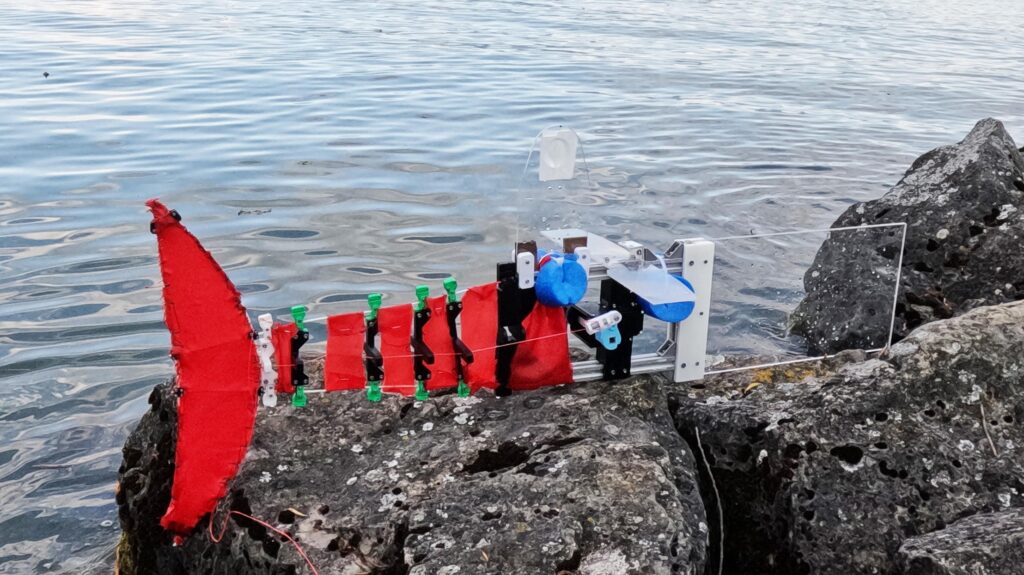
Small, medium or large, a robotic fish maintains its swimming ability
The scalable robot ScaFi. 2026 CREATE Lab EPFL. CC BY SA-4.0. Propeller-powered underwater vehicles have long helped scientists explore and monitor aquatic environments. But they’re limited by their own mechanics: spinning blades can snag on vegetation, stir up sediment, and startle the wildli

Generative AI Gives Spacecraft the Autonomy Engineers Once Feared
Space was always supposed to be the final frontier of human exploration. It’s shaping up to be the final frontier for artificial intelligence too. Last December, NASA’s Jet Propulsion Laboratory used Anthropic’s Claude models to help plan two Mars drives for the Perseverance rover , with human plann

Video Friday: Life’s Better With a Little Robot Goose
Video Friday is your weekly selection of awesome robotics videos, collected by your friends at IEEE Spectrum robotics. We also post a weekly calendar of upcoming robotics events for the next few months. Please send us your events for inclusion. IROS 2026 : 27 September–1 October 2026, PITTSBURGH CoR