Tutor Intelligence raises Series B to scale model training, robot deployments
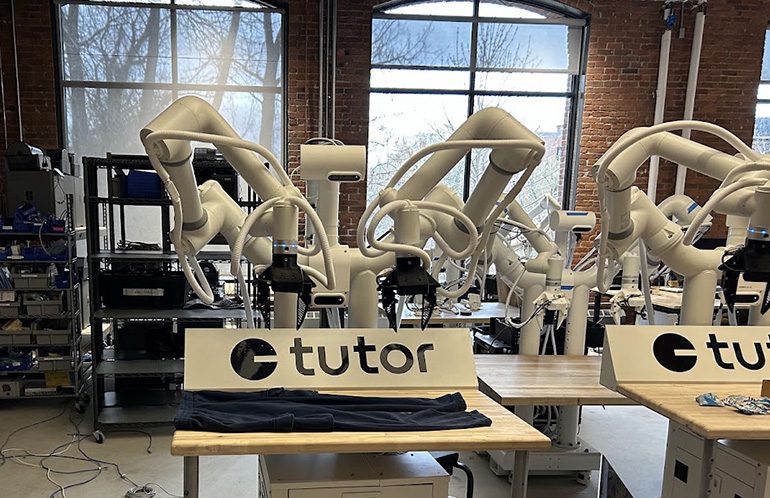
Tutor trains its Sonny robot on real-world manipulation tasks. Credit: Eugene Demaitre
Real-world data, human “tutors,” and simulation are all part of the recipe for training AI models to enable next-generation robots to tackle a widening variety of tasks. Tutor Intelligence Inc. today said it has raised $75 million in Series B funding as it works toward general-purpose robotics.
“It’s not only that Tutor’s models let robots do jobs that robots have never been able to do before,” stated Josh Gruenstein, co-founder and CEO of Tutor Intelligence. “This type of intelligence also makes robots affordable on a whole new level. We’re unlocking much broader access to the solutions that businesses need to survive and that make basic goods cheaper for everybody. And the demand is there. We can hardly build robots fast enough.”
Tutor Intelligence spun out of the Massachusetts Institute of Technology Computer Science and Artificial Intelligence Laboratory ( MIT CSAIL ) in 2021. The Watertown, Mass.-based company asserted that it is building a full technology stack to “close the gap between what robots can do and what people can do.”
Data flywheel accelerates robot deployment
“Artificial intelligence has transformed the digital world, learning to converse and code from the internet’s vast record of text and images,” said Tutor Intelligence. “The physical world has no such record to train on, and AI has yet to transform it in the same way.”
The company has deployed fleets of internet-connected robots into production environments, where they do real work for customers with input from remote operators known as “tutors.” It uses the real-world data to train better frontier models, ultimately making the robots more capable.
Tutor claimed that its “full-stack platform” and “data flywheel” accelerate deployment, making robots more scalable, safer, and more affordable. Instead of a robots-as-a-service ( RaaS ) model, business pay Tutor by the hour or by the pick, the same way they pay for manual labor.
Customers make no upfront purchase and sign no long-term contract, added Tutor. The company said it handles deployment and maintenance and regularly sends software and intelligence upgrades. Tutor said its approach is bringing automation to tasks that have long defied conventional, deterministic robotics. It opened a “ Data Factory ” earlier this year to evaluate policies across 100 physical robots.
Submit your innovation now!
Tutor Intelligence gets traction with Sonny and Cassie
Tutor’s Data Factory includes the Sonny two-armed, semi-humanoid robots for each picking. Cassie is a mobile manipulator designed for case picking and palletizing .
The company reported that twice as many of its robots are working in almost four times as many facilities as a year ago. It said it is on track to have more than 1,000 robots under contract by the end of 2027, all of which will be built in and deployed from the U.S. (The tutors may be overseas.)
The robots are currently moving, lifting, and manipulating objects across some of the country’s largest manufacturing and logistics networks. They handle breakfast cereals, snacks, candy, cosmetics, home goods, toys, and more.
Tutor noted that its growth reflects maturing enterprise adoption of physical AI, as companies move from pilots to expectations of a return on investment from automating their operations. Nearly a third of organizations that received Tutor robots in the past 12 months were existing customers installing more robots, it said.
Funding to support more training and manufacturing
Andreessen Horowitz led Tutor Intelligence’s Series B round, which brings its total capital raised to $117 million. Union Square Ventures and Neo, which led the company’s Series A and seed rounds, respectively, also participated.
“Tutor’s insight is that deployment isn’t just the destination for robotics research—it’s how you overcome its limitations,” said Raghu Raghuram, general partner at Andreessen Horowitz and former CEO of VMware.
“Rather than asking the real world to fit the research, Tutor starts with what real-world deployments demand and works backward through distribution, hardware and research,” he added . “Continual learning across an expanding range of deployments is the path from specialized capabilities to general-purpose robotics.”
Tutor said its latest investment its frontier robot foundation model training, as well as manufacturing and deployment of Sonny and Cassie. It announced the latest models of its robots and underlying platform last month.
The post Tutor Intelligence raises Series B to scale model training, robot deployments appeared first on The Robot Report .
News is gathered automatically from public robotics & AI feeds on a schedule.
Related
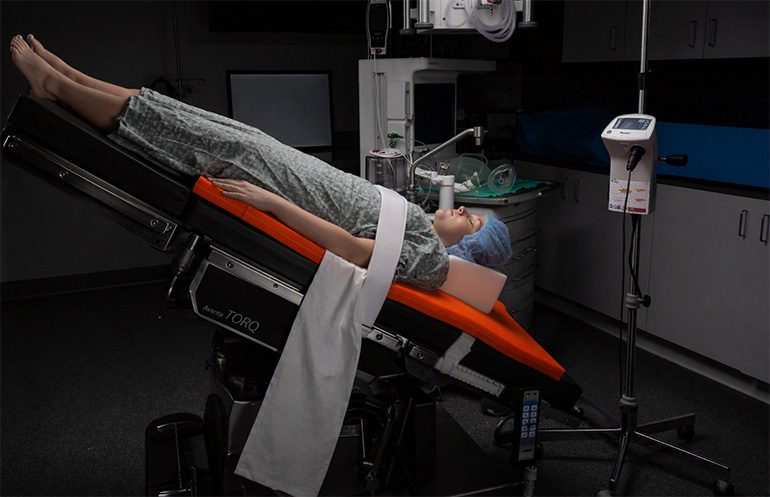
Gentherm designs ThermAffyx to protect, move patients during robotic surgeries
ThermAffyx addresses secure positioning and heating of patients for robot-assisted surgical procedures with a minimal OR footprint. The post Gentherm designs ThermAffyx to protect, move patients during robotic surgeries appeared first on The Robot Report .
Top 10 robotics developments of October 2026
Last month, we celebrated the 20th anniversary of RoboBusiness, whic is being rebranded to Robotics Summit & Expo West. The post Top 10 robotics developments of October 2026 appeared first on The Robot Report .

What AgTech founders get wrong about ROI
Connie Bowen, the founding general partner of Farmhand Ventures, discusses the importance of return on investment for AgTech developers. The post What AgTech founders get wrong about ROI appeared first on The Robot Report .

116亿元国产算力大单!大华股份拿下26.3亿
智东西 作者 | 李水青 编辑 | 云鹏 智东西11月2日消息,刚刚,智能物联龙头企业 大华股份 发布公告,确认旗下子公司浙江华启智慧科技有限公司(简称: 华启智慧 )中标中国移动超节点设备集中采购项目,中标金额约为 26.3亿元。 ▲大华股份公告 9月29日,中国移动发布“2026年至2027年新一代人工智能超节点设备集中采购项目”招标公告,计划采购AI超节点合计 20480卡 ,及配套Roce交换机448台、存储82套。 ▲招标公告部分截图 10月28日,招标人对标的项目的中标候选人情况进行公示, 华鲲振宇、宝德计算机、华启智慧、百信信息、神州鲲泰 五家公司进入中标候选人名单,拟中标份额分

美团发1.6万亿参数新模型,通用Agent测试超Opus-5,国产芯特别优化
智东西 作者 | 杨京丽 编辑 | 李水青 智东西11月2日报道,今日,美团LongCat团队发布面向 长程智能体任务 的原生多模态模型 LongCat-2.5 。 该模型总参数量为 1.6万亿 ,每个Token激活约 480亿参数 ,在LongCat-2.0的基础上,重点强化 原生视觉理解与智能体编程能力 。 在美团公布的自动化任务基准AutomationBench、通用Agent任务基准LongCatClawBench等几项基准测评中,LongCat-2.5均 领先Claude-Opus-5、GPT-5.6-Sol等模型 ;在终端操作基准Terminal Bench v4.0上,LongC
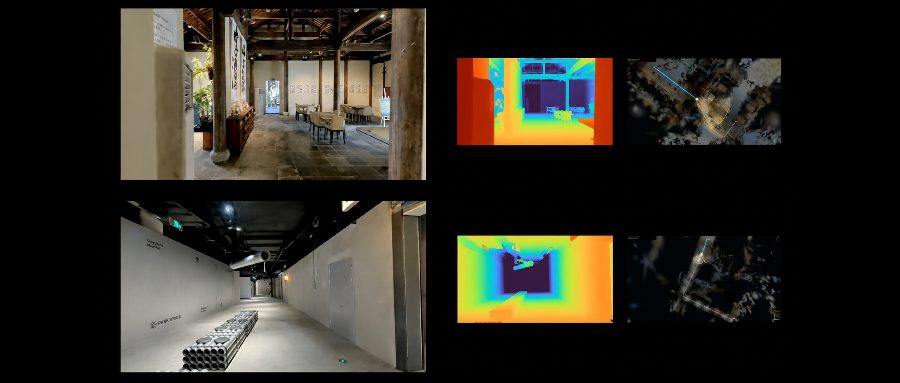
成本压至 1/10!告别人海采数,具身数据Token工厂要如何跑通?
智东西 作者 | 王涵 编辑 | 漠影 过去几年,AI的两次规模化发展,都离不开 充足的数据供给 。 大语言模型可以直接利用互联网上积累多年的网页和代码数据,通过持续训练提升模型能力;自动驾驶企业则可以依靠量产车辆的影子模式(Shadow Mode),从真实道路中持续收集行驶数据和人工接管记录。以特斯拉为例,其通过全球数百万辆量产车,将数据采集融入日常驾驶过程,不需要额外组织大规模人工采集。 但到了具身智能领域,这样的数据供给条件并不存在。 过去两年,行业主要依靠真机遥操作和第一视角(EGO)可穿戴设备采集数据,累计获得的真机有效数据和EGO数据也 只有数百万小时 。对于已经投入大量资金的机器