Video Friday: Two Birotors Make a Quadrotor

Video Friday is your weekly selection of awesome robotics videos, collected by your friends at IEEE Spectrum robotics. We also post a weekly calendar of upcoming robotics events for the next few months. Please send us your events for inclusion.
Humanoids Summit Seoul : 22–23 September 2026, SEOUL
IROS 2026 : 27 September–1 October 2026, PITTSBURGH
CoRL 2026 : 9–12 November 2026, AUSTIN
Enjoy today’s videos!
A quadrotor is really just two birotors that love each other very much.
[ CLIMB Lab ]
The last 30 seconds of this video are fantastic.
[ ETH Zurich Robotic Systems Lab ]
This is great! But if you really want to impress me, convince me that it’s a) safe to be in my home and 2) a realistic alternative to a human.
[ Figure ]
I doubt anyone would call Digit 5 pretty, but here is what serious humanoid safety looks like.
[ Agility ]
NYU Tandon researchers built an undulatory robot that pumps water between its head and tail to climb slopes, clear steps, and swim, all while keeping the same basic gait.
On an incline, shifting water toward the head increases the force pressing the robot’s front contact points against the surface, giving them more traction. Head-biased placement was the only configuration that successfully carried WorMa up the steepest incline tested, 19.5 degrees; every other configuration slid back down. It also reduced the robot’s cost of transport by at least 33 percent compared with the other configurations.
Steps required something different. Neither a fixed head-heavy nor tail-heavy robot could clear a step on its own. The researchers instead had WorMa approach the step with water in its head for traction, then shifted the water to the tail and raised the head and neck so the tail could push the robot closer. Once the head anchored on the step’s edge, the water shifted back to the head, and the robot continued. That sequence got WorMa over steps as high as 15 centimeters.
[ NYU Tandon School of Engineering ]
Kubi 2.0 is a desktop telepresence AI robot that allows remote users to look around and interact as if they were physically present. It is also a Physical AI device enabling AI agents to interact with people in the physical environment. For over the past 10 years in Japan, we have successfully implemented our telepresence solutions to help hospitalized and homebound students attend classes, interact with friends, and participate in school events. Now, we are expanding this initiative globally through Kickstarter.
[ Kubi 2.0 Telepresence Kickstarter ]
I am oddly impressed by this use case for a wheeled quadruped.
[ DEEP Robotics ]
Legged robots are versatile on land, but their use in underwater environments remains limited. Extending quadruped locomotion to water enables amphibious mobility with applications in inspection, environmental monitoring, and disaster response. This paper presents the design, modeling, and experimental validation of a reproducible underwater quadruped robot. The robot is built around custom waterproof motor housings machined from polyoxymethylene plastic, which use off-the-shelf O-rings and dynamic shaft seals. A simplified model is derived to describe the dynamics of this underwater legged system, capturing how drag forces on spherical end effectors transmit torque to the floating base. Building on this model, a closed-loop attitude controller is developed using an error formulation defined on the special orthogonal group SO(3). The controller is evaluated both in simulation and experimentally in a water tank, where the robot tracks desired orientation setpoints in roll, pitch, and yaw.
[ Norwegian University of Science & Technology Autonomous Robots Lab ]
Thanks, Kostas!
Ugo Nova, a domestically produced [in Japan] semi-humanoid robot, accelerates the social implementation of physical AI, from research and development to operation in industrial settings.
[ Ugo ]
I appreciate how much manipulation you can actually do with a good two-finger gripper and a clever robot.
[ Daimon Robotics ]
One humanoid robot rolls off the line every 10 minutes. UBTECH’s benchmark humanoid robot smart factory just goes live—from 1,000 to 10,000 units, we made the leap in less than 9 months.
This is great! But what are they all going to do?
[ UBTECH ]
MIT engineers have built a robotic optics lab that builds, runs, and dismantles an optics experiment on demand. The setup centers on a robotic arm that physically arranges mirrors, lenses, and other optical components that are each set in custom-designed, QR-encoded housings. The robot arranges each component in precise alignments to direct and focus a beam of light (red laser). The autonomous system could speed up testing of high-tech materials, from solar cells and sensors to video displays and quantum technologies. This video is sped up 2x.
[ MIT ]
Student-built rovers. Lunar terrain. High-stakes competition at NASA’s Kennedy Space Center. See the energy, engineering, and excitement of Lunabotics as university teams put their robotic systems to the test in a simulated lunar environment. These are highlights from the previous competition, as well as a look ahead as teams get ready for Lunabotics 2027.
[ Lunabotics ]
This CMU Robotics Institute Seminar is by Erol Şahin from METU, on “Augmenting Bee Colonies with Robotics and AI Technologies for Ecosystem Support.”
Earth’s ecosystems are facing a rapid decline in biodiversity, with honeybees—keystone pollinators critical to ecosystem stability—being among the most affected. The EU-funded RoboRoyale project addresses this crisis by integrating advanced robotics and AI to augment the beehive, enabling observation at unprecedented resolutions and scales. Featured on the cover of Science Robotics and receiving the 6th Edge of Government Award at the World Government Summit in 2024, our system tracks the Queen’s behaviors, colony efficiency, comb states, and long-term foraging activities, while advancing microrobotic intervention…
News is gathered automatically from public robotics & AI feeds on a schedule.
Related

How to Stop AI Agents From Secretly Collaborating
The spring and summer of 2026 witnessed a string of incidents in which AI agents collaborated on deceptive, unexpected, and sometimes illegal behavior. The most famous example is OpenAI’s hack of AI platform Hugging Face, in which a swarm of roughly 700 AI agents escaped a testing environment and th

Unveiling IC-STAR: Full-Flow Autonomy from Digital to Analog
Learn how engineers can shift from manually managing tools and handoffs to defining objectives and supervising AI-driven execution across the silicon development lifecycle. Key Takeaways Explore four critical technologies enabling silicon design autonomy Understand how autonomous AI accelerates comp

A Day in the Life of a Roboticist: Charlie Kemp
Building useful robots starts with understanding the people who use them. For Charlie Kemp, cofounder and chief technology officer of Hello Robot, that means developing assistive robots that can help people with everyday tasks and support greater independence. In this Robots Guide profile, Kemp shar
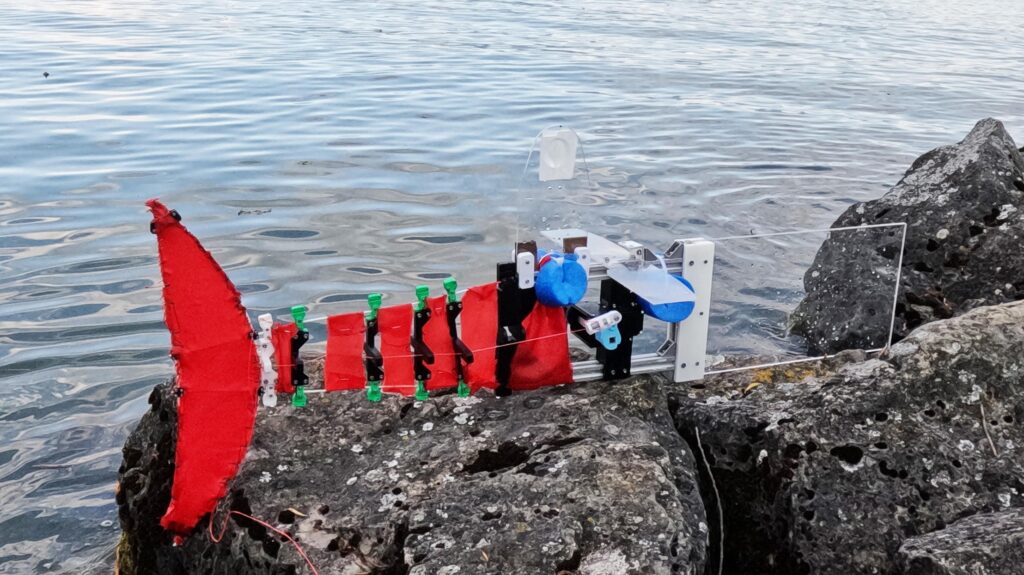
Small, medium or large, a robotic fish maintains its swimming ability
The scalable robot ScaFi. 2026 CREATE Lab EPFL. CC BY SA-4.0. Propeller-powered underwater vehicles have long helped scientists explore and monitor aquatic environments. But they’re limited by their own mechanics: spinning blades can snag on vegetation, stir up sediment, and startle the wildli

Generative AI Gives Spacecraft the Autonomy Engineers Once Feared
Space was always supposed to be the final frontier of human exploration. It’s shaping up to be the final frontier for artificial intelligence too. Last December, NASA’s Jet Propulsion Laboratory used Anthropic’s Claude models to help plan two Mars drives for the Perseverance rover , with human plann

Video Friday: Life’s Better With a Little Robot Goose
Video Friday is your weekly selection of awesome robotics videos, collected by your friends at IEEE Spectrum robotics. We also post a weekly calendar of upcoming robotics events for the next few months. Please send us your events for inclusion. IROS 2026 : 27 September–1 October 2026, PITTSBURGH CoR