Walden Robotics Partners With Toyota on Practical Humanoids

For a while there, it seemed as though robotics as a whole was stuck in a mad rush towards building humanoid robots mostly because it was very possible (and very lucrative) to do so, even without near-term goals that were necessarily realistic. Some of the magic of those first couple of years of the humanoid explosion has stuck around, but there’s also been an industry-wide sobering leading to pointed questions about practicality and value . In other words, starting a commercial humanoid company now is a much different proposition than it would have been just a few years ago.
On 15 July, Walden Robotics emerged from stealth with US $300 million in funding at a valuation of $1.1 billion. Walden is a spinout of Toyota Research Institute (TRI), and it’s spent the last 10 or so years working on hard problems in robotics with the goal of transitioning from research to real-world applications. That seems like the amount of time and experience that it might reasonably take to develop a practical and value-driven approach to deploying general-purpose humanoid robots, and Walden has chosen an excellent starting point by skipping the legs.
“It’s ironic,” says Walden cofounder and CEO Russ Tedrake . “I thought about legs for 20 years; that’s the class I teach at MIT. There are many reasons to build a robot with legs. But the question is, what’s the addressable market? And what percentage of it is covered by a wheeled base?” It’s this focused, practical thinking that sets Walden somewhat apart from many (if not most) of the other companies in this space. Rather than developing a robot first and searching for a viable commercial use case second , Walden instead identified applications where robots can provide value now, and designed a robot that could safely and efficiently meet those needs.
Walden Robotics
Walden Robotics’ Manufacturing Focus
Russ Tedrake is the CEO and cofounder of Walden Robotics. Walden Robotics
Tedrake is light on the details about what specific applications Walden is targeting at this point (citing confidentiality with current commercial partners). Manufacturing and logistics environments where there are a lot of relatively simple and repetitive tasks that aren’t friendly to conveyor belts and preprogrammed robot arms are a good bet. Even in these environments, however, robots still have to find a useful niche because they’re going up against human workers who are more flexible while also cheaper to employ. So the question is: How do you make an argument to a customer that a robot is actually a better solution than their existing human workers?
“You need to find applications with high utilization—where the robot is used 24 hours a day, 7 days a week,” says Tedrake. “Manufacturing is a global imperative right now, and it makes the economics work.” Economic viability is a necessary condition, but it’s not a sufficient one for Walden, or for their partnership with Toyota. People are a big part of Walden’s plan, too.
One of Walden’s major strengths is the company’s partnership with Toyota, which is not all that surprising given that Walden is a spinout from TRI, which is Toyota’s Silicon Valley–based R&D arm . “Toyota was very proud of the work we had done at TRI, and was ready to go big in this space,” says Tedrake. “Part of the excitement of having Toyota as a partner is that their culture is deeply people-first. When talking to Toyota’s leadership, I was never asked how much money this is going to make, but I was asked how it will improve the quality of life for all people.”
The robot’s chonky design allows it to meet the high-payload requirements of useful manufacturing work. Walden Robotics
In this context, at least in the short term, Walden’s approach to improving the quality of life for people is to take over those aforementioned repetitive manufacturing tasks with robots. Tedrake hopes that this will lead to workplaces where skilled craftspeople are able to do even more with their hard-earned expertise, increasing their efficiency, productivity, and happiness all at the same time—a noble goal, although there’s only so much Walden itself can do to make this happen, and not all customers will share Toyota’s priorities.
Wheeled Humanoid Robots in Factories
Many other humanoid robotics companies are also targeting these logistics and manufacturing spaces with general-purpose robots, and they’re doing so by making robots that are as humanlike as possible. The theory is that a humanoid form factor is necessary when operating in human environments. And there are certainly arguments in favor of a humanoid with legs—stairs exist, for one, and legged robots have a smaller footprint compared with ones that have wheels.
But a large wheeled base offers some significant advantages, as Tedrake points out. You’re incentivized to cram the base full of batteries, since more weight near the floor keeps the robot stable, which also solves the problem of running out of power during the middle of the workday. More importantly, a statically stable robot that moves around on a wheeled base can bypass the safety challenges that are currently keeping legged humanoids physically separated from real humans—most prominently, the fact that legged robots can fall over. “Factories already have autonomous mobile [wheeled] robots,” explains Tedrake. “They already have safety cases built around AMRs. You can piggyback on that with a wheeled base.”
Simple, rugged grippers make the robot suitable for commercial deployment. Walden Robotics
Walden’s perspective on manipulation is similar. Many humanoid companies are using five-fingered hands that are highly dexterous but also highly complex, which Tedrake believes is not a pragmatic approach in the context of commercial deployments. “There’s a question of what you need to do the tasks, but the real question is just durability,” Tedrake says. “We have been deployed in a Toyota factory, and at the end of the week, the hands take a beating, so we…
News is gathered automatically from public robotics & AI feeds on a schedule.
Related

How to Stop AI Agents From Secretly Collaborating
The spring and summer of 2026 witnessed a string of incidents in which AI agents collaborated on deceptive, unexpected, and sometimes illegal behavior. The most famous example is OpenAI’s hack of AI platform Hugging Face, in which a swarm of roughly 700 AI agents escaped a testing environment and th

Unveiling IC-STAR: Full-Flow Autonomy from Digital to Analog
Learn how engineers can shift from manually managing tools and handoffs to defining objectives and supervising AI-driven execution across the silicon development lifecycle. Key Takeaways Explore four critical technologies enabling silicon design autonomy Understand how autonomous AI accelerates comp

A Day in the Life of a Roboticist: Charlie Kemp
Building useful robots starts with understanding the people who use them. For Charlie Kemp, cofounder and chief technology officer of Hello Robot, that means developing assistive robots that can help people with everyday tasks and support greater independence. In this Robots Guide profile, Kemp shar
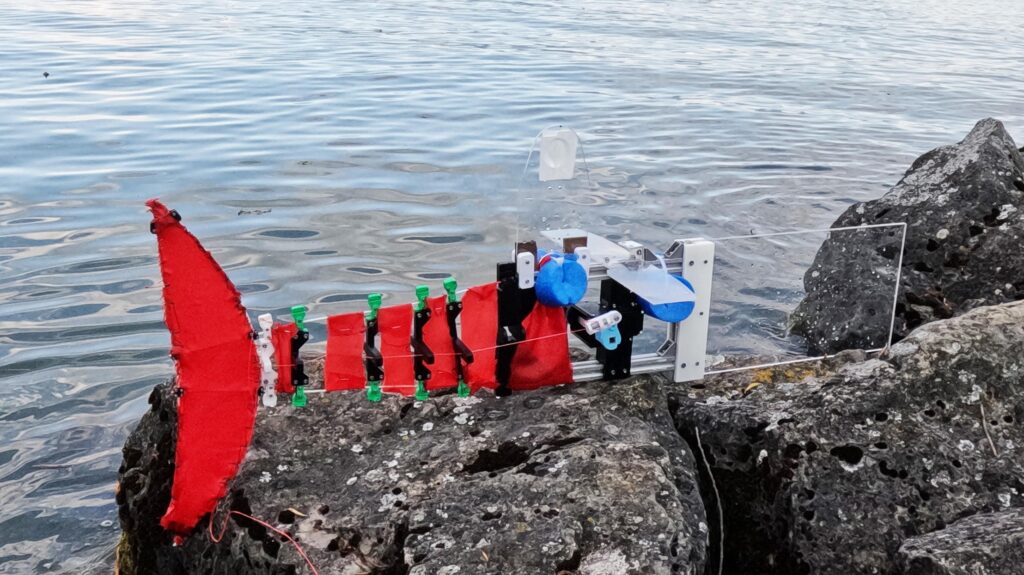
Small, medium or large, a robotic fish maintains its swimming ability
The scalable robot ScaFi. 2026 CREATE Lab EPFL. CC BY SA-4.0. Propeller-powered underwater vehicles have long helped scientists explore and monitor aquatic environments. But they’re limited by their own mechanics: spinning blades can snag on vegetation, stir up sediment, and startle the wildli

Generative AI Gives Spacecraft the Autonomy Engineers Once Feared
Space was always supposed to be the final frontier of human exploration. It’s shaping up to be the final frontier for artificial intelligence too. Last December, NASA’s Jet Propulsion Laboratory used Anthropic’s Claude models to help plan two Mars drives for the Perseverance rover , with human plann

Video Friday: Life’s Better With a Little Robot Goose
Video Friday is your weekly selection of awesome robotics videos, collected by your friends at IEEE Spectrum robotics. We also post a weekly calendar of upcoming robotics events for the next few months. Please send us your events for inclusion. IROS 2026 : 27 September–1 October 2026, PITTSBURGH CoR