White House makes Section 232 determination regarding foreign-made robots
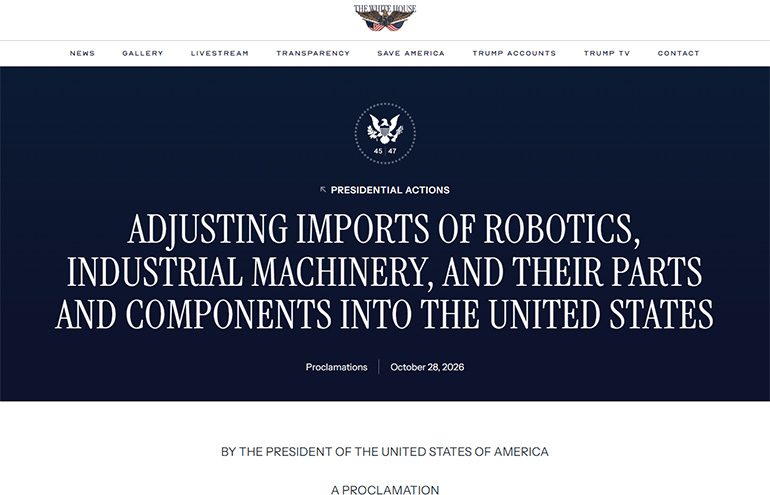
A Section 232 investigation by the secretary of commerce found that robotics imports pose a threat to U.S. national security and economic competitiveness. Source: Office of the White House
Yesterday, U.S. President Donald J. Trump issued a proclamation stating that the secretary of commerce had submitted a Section 232 report about the national security effects of imports of robotics and industrial machinery, as well as related parts and components.
“Based on the facts considered in that investigation, and taking into account the close relation of the economic welfare of the Nation to our national security and other relevant factors, see section 232(d) (19 U.S.C. 1862(d)), the Secretary found and advised me of his opinion that robotics, industrial machinery, and their components are being imported into the United States in such quantities and under such circumstances as to threaten to impair the national security of the United States,” stated the president.
“Robotics and industrial machinery are critical to virtually all modern manufacturing processes, including for defense, commercial, and dual-use purposes,” he noted. “Furthermore, robotics and industrial machinery generate substantial economic value and support important economic activities, including approximately $7.1 trillion in shipments of manufactured goods in 2024 and the production of approximately $86 billion worth of equipment in 2024.”
From mission-critical military and law-enforcement activities to critical infrastructure sectors such as agriculture , automotive , and electronics manufacturing , the U.S. government asserted that robots and related systems are vital to U.S. competitiveness. The value of such imported systems has grown over the past decade, and cybersecurity risks have also grown, according to the secretary of commerce.
The Section 232 statement specifically cited “advanced robots — such as autonomous robots, humanoid and quadruped robots, and autonomous ground vehicles” as providing direct support to the U.S. military.
While investments in U.S. robotics production capacity have increased, they are not sufficient to meet U.S. demand, said the president. He directed the secretary and the U.S. trade representative to “to enter into negotiations with trading partners to adjust imports of robotics, industrial machinery, and their components so that such imports will not threaten to impair the national security of the United States.”
Will this Section 232 determination lead to tariffs on foreign made robots? With most of the major industrial automation providers based overseas, it remains to be seen how trade negotiations will go. The threat of geopolitical rival China is motivating policies such as this investigation and recent FCC restrictions .
Submit your innovation now!
Experts expect Section 232 negotiations before any tariffs
Industry leaders and observers offered initial reactions:
“As I articulated last week on [a] panel at the Arrowfly RoboBusiness conference in Santa Clara with respect to the FCC action, this is another strong signal of government support for those working on developing and expanding domestic supply chains for robots,” Brendan Schulman, vice president of policy and government relations at Boston Dynamics , posted to LinkedIn .
He noted that the Special Competitive Studies Project ( SCSP ) Robotics Commission reached similar findings.
“The next step for the federal government? Negotiations over the next six months with trading partners to adjust imports, and then further consideration of other trade policy measures,” added Schulman. “I am very pleased to see robotics gaining increasing attention and importance as one of the foundational technologies in need of broad, supportive policy action by the U.S. government. More to come, I’m sure!”
Robert Little , former chief of robotics strategy at Novanta Inc., 2026 Joseph F. Engerlberger Robotics Award honoree , and business development advisor, concurred. “Robotics are critical for any country rebuilding its manufacturing. I’m thinking, what took so long to make this a priority?” he told The Robot Report .
“Today, we still have limited industrial robot manufacturing in the U.S.,” said Little. “Already, FANUC , Teradyne Robotics , and Yaskawa have announced investments aimed at expanding U.S. robot manufacturing. I expect more to come, and I hope this new proclamation helps accelerate it.”
“Yet, what concerns me most are the gaps in our domestic supply of components for robotics and industrial machines: sensors, actuators, precision gears, encoders and more,” he noted. “We need a much stronger U.S. supply base for these components. This is where we need the most help to strengthen America’s ability to manufacture.”
The Section 232 investigation does not mean that tariffs will be immediate, added Ash Sharma , vice president of research and chief information officer at Interact Analysis . “This shouldn’t be read as a new robotics tariff today, but it is a clear indication of the direction of travel,” he said.
“The U.S. government has explicitly identified its reliance on imported robotics and industrial machinery as a national security concern and is seeking to strengthen domestic production,” commented Sharma. “If tariffs, quotas or other trade measures follow, they could have meaningful implications for supplier competitiveness, pricing, and manufacturing localization in the U.S., potentially affecting not just finished robots, but [also] the components that go into them.”
The Robot Report is expecting more responses that will be shared in subsequent coverage.
Panelists discussed reshoring and policies such as the Section 232 investigation at RoboBusiness 2026. Credit: Arrowfly
The post White House makes Section 232 determination regarding foreign-made robots appeared first on The Robot Report .
News is gathered automatically from public robotics & AI feeds on a schedule.
Related

2026 Robotics Handbook looks at humanoids, AI, and design choices
The 2026 Robotics Handbook examines design choices behind dexterous manipulation, humanoid robots, and construction automation. The post 2026 Robotics Handbook looks at humanoids, AI, and design choices appeared first on The Robot Report .

汤道生预告混元Hy4,首次加入视觉理解,Flash版本也将推出
智东西 作者 | 江宇 编辑 | 李水青 智东西10月29日报道,今日,在2026腾讯全球数字生态大会上, 腾讯集团高级执行副总裁、云与智慧产业事业群CEO汤道生发表主旨演讲 ,围绕AI Agent在企业的规模化落地、腾讯云AI产品与基础设施升级,以及全球化战略等话题,分享了腾讯AI Agent及基础设施建设的最新进展。 汤道生宣布,腾讯混元大模型Hy4正式版即将发布。 相比今年8月28日发布并开源的Hy4 Preview,新版本实现全面提升,尤其强化了长程任务和真实生产力任务的处理能力,显著提升思维链效率,并 首次加入视觉理解能力 。腾讯还将于近期推出 Hy4 Flash ,在继承Hy4视觉

1799元,小米前高管王腾创业做AI戒指,现场感谢雷军栽培
智东西 作者 | 云鹏 编辑 | 李水青 智东西10月29日北京现场报道,刚刚,由 前小米中国区市场部总经理王腾 带队创立的科技品牌ISHO今日宜休举办了首场发布会,作为公司创始人兼CEO的王腾登台发布了 ISHO Ring智能戒指、ISHO iFlow智能温控系统 两款AI睡眠科技生态产品。 ISHO Ring做工比较精致,戒指小巧,主要负责 睡眠健康监测, 芯片和传感器配置都较为“豪华”,设计据称是“珠宝级”。 ISHO iFlow包括 主机和床 两部分,负责进行睡眠干预, 调节睡眠时用户的体温, 床内部有水循环系统。 值得一提的是,在介绍床的部分,王腾直接躺了上去分享其使用体验。 硬件是
27岁清华教授创业押注RSI,首款模型开源!3个月融了近4亿
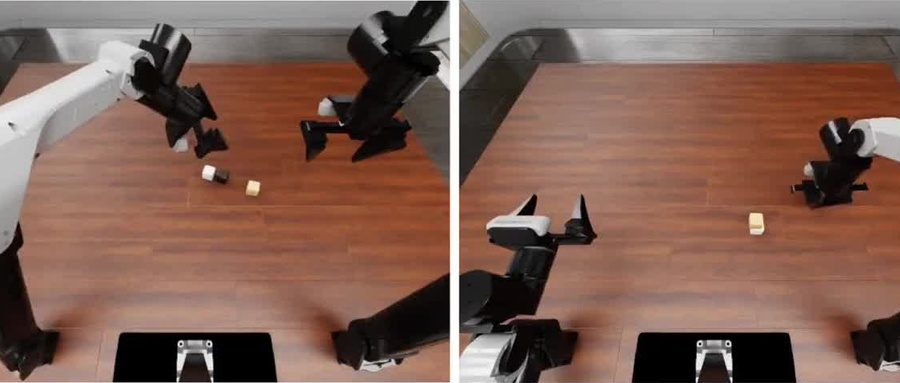
智东西 作者 | 孙小雯 编辑 | 程茜 智东西10月29日消息,昨晚,北京大模型创企超衍智能 发布并开源首款大模型Apex-35B-V1.0 。该模型构建过程中,AI自主参与了数据构造、实验设计、代码执行、训练结果分析和训练优化等环节。 Apex-35B-V1.0总参数量 为350亿 ,每个Token激活约 30亿参数 ,支持 26.2万Token上下文 窗口。其以 Qwen3.6-35B-A3B 为基础,经中训练和后训练进一步优化,支持编程、Agent、问答和深度搜索等常规任务,以及AI研究、计算科学、机器人仿真等任务。 ▲Apex-35B-V1.0官方技术介绍(图源:超衍智能) 根据超衍
卖8500元一副的XR眼镜,凭什么?
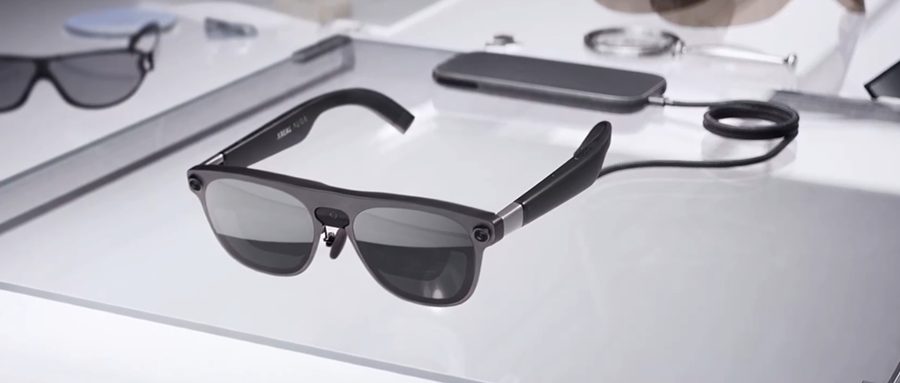
智东西 作者 | 云鹏 编辑|李水青 智东西10月29日消息,今天凌晨1点,专注消费级AR眼镜与空间计算领域的XREAL,在谷歌Android开发者峰会上,正式发布了全球首款搭载Android XR的分体式空间计算XR眼镜——XREAL AURA。 智东西在2025年XREAL总部的一次沟通会上就已得知这款产品正在研发中,如今其终于正式开售,XREAL也第一次完整展示了其在空间计算系统上的产品设计、配件和基于Android XR的应用生态。 大家比较关心的价格方面,XREAL AURA起售价为1279美元(约合人民币8520元),发售期限时优惠价为1099美元(约合人民币7320元),目前首批
大众把三年在中国攒的家底,打包成了一颗「星」
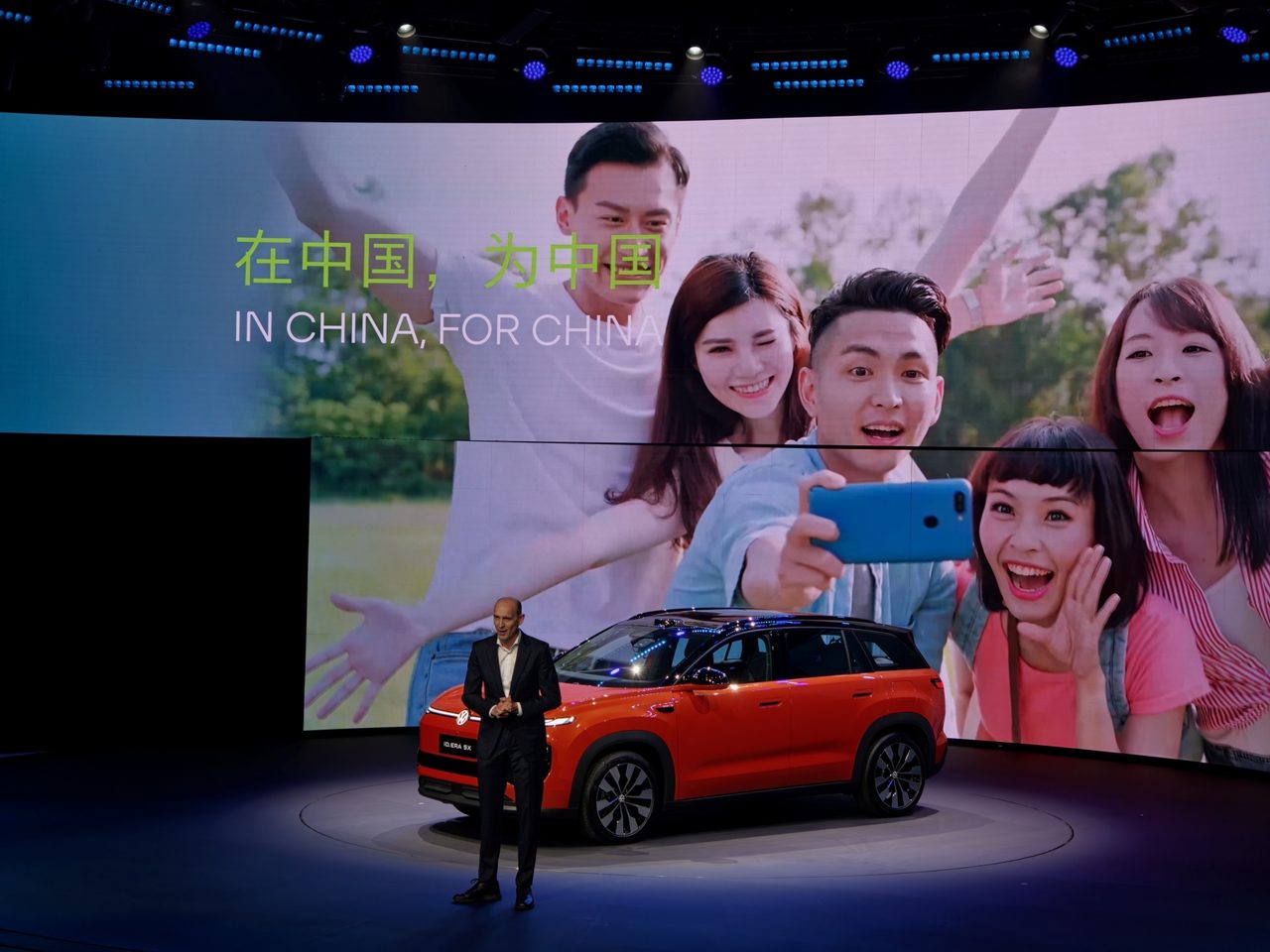
头图来源:极客公园 10 月 28 日,合肥,大众汽车集团(中国)办了自己的第一次技术日。 这场发布会的主角叫「VEGA」,名字取自织女星,是大众在中国本土自研的一体化技术矩阵。它把整车平台、电子电气架构和高级驾驶辅助系统三大核心技术打包成了一套体系。 按大众的说法,它由此成为中国市场唯一一家拥有本土开发自研技术矩阵的外资车企。 大众汽车集团(中国)董事长兼 CEO 贝瑞德在台上说,短短三年,大众在中国打造出了一套一体化的技术矩阵,在国际汽车制造商之中,能做到这一点的应该屈指可数。 这句话的背后,是大众这几年在面对激烈的「中式竞争」后,第一次重新找到了方向的自信。 「在中国造」到「在中国研」