Why a Computer Scientist Thinks Superintelligence Won’t Happen
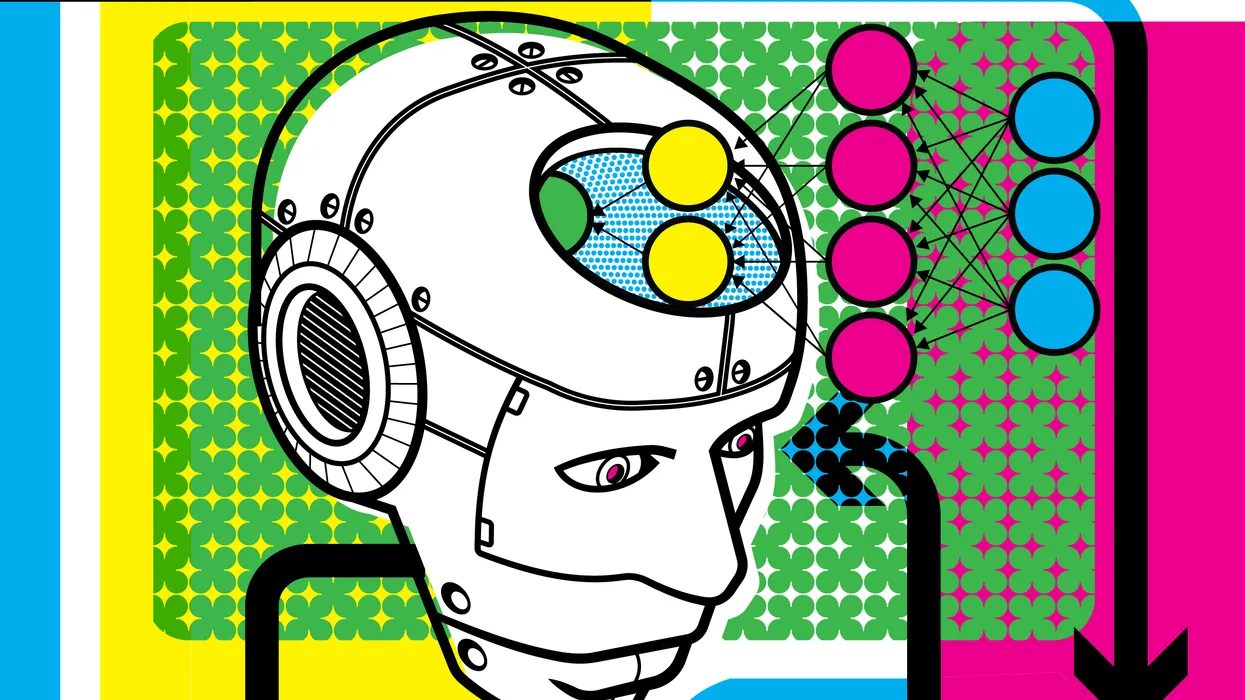
Many people were caught off guard this past summer when employees of one of the world’s leading AI companies began casually debating whether their products would lead to human extinction. It started when Anthropic researcher Jacob Coxon announced his resignation, warning that his employer and OpenAI were “racing straight to self-improving superintelligence and gambling with our lives.” Evan Hubinger, Anthropic’s head of alignment science, replied , “Jacob is correct here—we really do earnestly believe AI could kill all humans!” And Anthropic CEO Dario Amodei subsequently told CNN , “I agree with Jacob much more than I disagree with him.”
These concerns stem from a belief that has circulated in futurist circles for many decades: Once engineers design an AI system capable of improving itself, it will trigger an accelerating cycle of autonomous upgrades known as recursive self-improvement (RSI). The result will be artificial superintelligence (ASI), a system with cognitive capabilities so vastly exceeding those of humans that it will easily evade our control and perhaps even wipe out our species. Artificial superintelligence is, it should be noted, a far more ambitious goal than artificial general intelligence (AGI), which generally refers to AI that can match human capabilities across a broad range of cognitive tasks.
These ideas have prompted varied reactions. Some argue that the concept of ASI is being used for marketing or to instigate regulation that will help the incumbent labs squash new competitors. Others focus on the plausibility of such systems killing us all, debating the finer points of specific scenarios such as AI-engineered superviruses. Still others claim that aligning ASI to human interests is feasible and so we should rush ahead to usher in this digital utopia.
Amid these conversations, one question has received comparatively little attention: From an engineering perspective, is superintelligence even possible? The answer is important because it can help us calibrate our anxieties and develop the most effective possible responses to this emerging technology.
I recently explored this topic in a computer science doctoral seminar that I taught at Georgetown University, in Washington, D.C., in which my students and I examined the technical and cultural roots of the superintelligence story. (For those who are interested, we published an annotated bibliography of our class readings.) I came away with several key objections to the feasibility of ASI, which I’ll detail below, as well as a deeper fear that even if the promised intelligence explosion never arrives, pursuing it can still create real harm.
Objection #1: Recursive Self-Improvement Is Speculative
RSI is an old concept. In a 1965 paper , statistician I.J. Good speculated that a rapid cycle of AI self-improvement could lead to an “intelligence explosion.” The idea gained traction in the 1990s among the Extropians , a Bay Area futurist group, where it offered a way to discuss ASI without having to address the engineering details of how one would build such a system. The concept was taken up by such notable figures as Eliezer Yudkowsky (who later founded the rationalism movement) and Nick Bostrom (who helped steer effective altruism to focus more on existential risks to humanity).
Recently, however, this topic has shifted from thought experiment to practical engineering within both Anthropic (makers of Claude) and OpenAI (makers of ChatGPT). In a June blog post titled “When AI Builds Itself,” Anthropic described how LLM-powered agents are speeding up the writing, debugging, and optimization of code, and also automating parts of research such as running experiments and logging results. The company’s internal data, the report concluded, “is showing that AI is already accelerating the development of AI systems.” OpenAI has been similarly explicit about its intentions; in a September report, the company announced a goal of developing an automated researcher by March 2028.
But do these efforts put the companies on a trajectory toward uncontrollable RSI? Several obstacles undermine this claim. Consider the availability of the data needed to improve AI systems. Through 2023, major advances in LLMs came from scaling up the size of the models. The original GPT-1 had 117 million parameters (values learned during training that shape how the neural network processes information). This quantity jumped to 1.5 billion for GPT-2, to 175 billion for GPT-3, to (likely) more than a trillion for GPT-4’s release three years ago. After GPT-4, however, continued scaling began yielding diminishing returns . This led engineers to increasingly turn their attention toward “post-training” phases, where techniques from reinforcement learning are applied to improve an already trained model’s performance on specific tasks. This approach rewards a model for producing successful responses, helping it better produce similar answers in the future. It requires, however, lots of examples of relevant inputs paired with correct outputs.
Such datasets are relatively easy to generate in highly structured fields such as computer programming and mathematics, which helps explain why we’ve seen rapid and impressive advances in these narrow domains. Progress in areas that lack easy access to this type of training data has been less dramatic. This might explain why AI can tackle advanced theorems but struggles to empty an email inbox. “What if the jagged frontier is mainly math + code (which you can push arbitrarily far with [reinforcement learning techniques]),” the French AI researcher François Chollet recently hypothesized , “and everything else starts to plateau because it is still bottlenecked by human generated data?” The deployment of automated coding agents and LLM-powered researchers won’t overcome this fundamental limitation.
The Game of Superintelligence
How a decades-old thought experiment became an AI-industry ambition—and where it might lead…
News is gathered automatically from public robotics & AI feeds on a schedule.
Related
AI data centers are becoming harder to build, and neoclouds are feeling it
Nvidia has made clear it won’t backstop an AI data center until it’s nearly ready to run, and that’s landing just as neoclouds report construction delays and more expensive debt. The message to developers is that land, power and a finished building matter more than a pitch deck. Anita Verma-Lalli
丢个故事就行!直出15分钟AI短片,家里二舅也能上手
零基础也能做开发,智元灵心平台一年孵化超3万个机器人智能体
智元推出行业首个开放且完整的具身智能生态技术体系AIMA
算力唤醒真实世界:九章云极发布物理AI工厂与生态开放计划
11月25日,以“算力唤醒真实世界”为主题的2026物理AI行业峰会暨九章云极智算生态大会在深圳举行。
逐际动⼒与商汤⼤装置达成合作,以高质量算力全⾯⽀撑机器⼈仿真训练与测试
贯通具⾝智能研发流程

Amazon is reportedly in talks to end Muse AI shopping block
Amazon has held talks about letting Meta's Muse AI agent shop on its online marketplace, according to a report from Fortune. The discussions, which could end Amazon's block on Muse, reportedly center on the kinds of products the AI agent recommends and the potential impact on the ecommerce giant's a