Why dexterity is physical AI’s real bottleneck
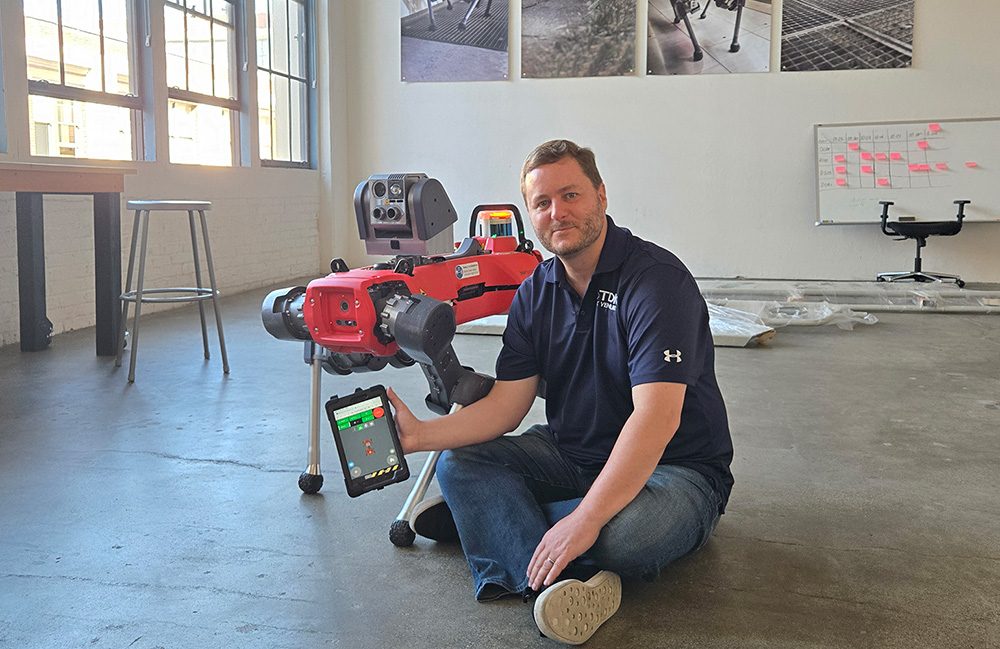
Nicolas Sauvage, founder and president of TDK Ventures, with ANYbotics’ quadruped robot. | Source: TDK Ventures
A robot picks up an object, moves it, and puts it down successfully. Is it dexterous? Perhaps. But now ask it to do that successfully hundreds of times, while objects move slightly, its grip changes, components wear, and unexpected failures occur. That is a much harder test of dexterity, and a much better measure of whether a robot is dexterous enough for the real world.
We are making rapid progress in what robots can manipulate. However, useful dexterity isn’t simply the ability to complete an individual action once. It is the ability to sense, grasp, move, adjust and recover reliably enough to complete an entire workflow without constant human assistance.
A robot that succeeds 99% of the time sounds ready for work, but a job rarely consists of a single action. Consider a workflow that requires 100 physical actions in a sequence. At a 99% success rate for each action, the probability that all 100 succeed on the first attempt is just 36.6%. Increase the success rate to 99.9%, and the probability of completing the workflow rises to 90.5%. At 99.99%, it reaches 99.0%.
This is, of course, a simplified example that assumes equal and independent success rates, but it illustrates an important point. A robot with a 99% success rate is not necessarily 99% automated.
Small reliability gaps become much bigger when repeated across an entire workflow. This means that a robot that looks almost flawless in a demonstration can still be far from ready for autonomous deployment. The difference between two nines and four nines may ultimately decide whether a robot is ready to work alone.
The next major challenge in robotic dexterity is not simply teaching robots to do more, but making the entire system reliable enough to turn those capabilities into useful work.
Dexterity is a system, not a hand
Robotic dexterity is often discussed as a hardware race: more fingers, more joints and more freedom of movement. While those capabilities obviously matter, the customer does not buy degrees of freedom. The customer buys useful work.
Completing that work requires a closed loop across vision, position, contact, force, pressure, grasp, movement, and adjustment. Power, safety, flexibility, and recovery also matter.
Not every workflow needs touch, as in some cases, vision and movement data may provide enough information. But touch can also be useful in telling a robot that an object is slipping, the contact is unstable, too much pressure is being applied, or a component is properly in place.
The objective therefore isn’t to pile every sense onto every robot, but to give the system enough of the right information to act, and recover, reliably.
TDK Ventures helps early-stage materials, energy, cleantech, industry 5.0, mobility, and health tech startups scale. | Source: TDK Ventures
More nines come from learning
Recovery is a huge part of dexterity. If a robot begins to lose its grip on an object, the useful measure isn’t if the original grasp was perfect; it’s whether the system can detect the slip early enough to correct it before a small error causes the entire task to fail.
A failure discovered during deployment might expose a problem in software , sensing , or control , or it might reveal that the hardware itself needs redesigning. Changing the hand changes movement, sensing and calibration, so data collected with one physical design may not transfer directly to another. Real-world deployment is therefore a critical part of the development process.
Deployment reveals slips, poor grasps, wear, and failed recoveries. Those experiences become data that can improve software, simulation, sensing, control, and hardware. Each cycle can make the next deployment more reliable and less expensive.
A technological breakthrough may begin the journey, but it is the learning system around it that multiplies its impact. Robotic dexterity should be viewed in much the same way. Additional nines emerge from repeatedly deploying, learning and improving.
Editor’s note: Physical AI, enabling technologies, and humanoids are among the session track topics at RoboBusiness 2026, which will be on Oct. 20 and 21 in Santa Clara, Calif. Register now to attend.
Register now and help us celebrate 20 years of RoboBusiness!
The right body depends on the work
Reliability also requires us to resist the temptation to equate more human-like robots with better robots. The starting point should be the job. From there, work backwards to determine the environment, physical form, and system required to perform it.
Dexterity should follow the same logic. The most human-like hand may not be the best hand for a particular workflow. The goal is not maximum dexterity. It is the minimum sufficient dexterity needed to complete valuable work reliably, and we are already starting to see this principle being successfully deployed.
Agility ‘s Digit is a bipedal robot designed for logistics and industrial work. Digit can connect directly to specialized tools suited to the job, rather than requiring a five-fingered hand or being made to look as human-like as possible. It has the form and dexterity the work actually requires.
ANYbotics applies the same principle to a different environment. Its four- legged robots can navigate stairs and uneven surfaces at industrial sites, while inspecting hazardous areas reduces the need for human exposure. In one deployment, its technology has reportedly carried out more than 33,000 inspections across 450 inspection points.
Starship Technologies takes a different approach. Its delivery robots need to travel along pavements, so a small, wheeled form is better suited to the job than legs. That purpose-built approach has helped Starship to report more than 10 million autonomous deliveries.
These robots look and operate very differently because they perform very different jobs. Yet they demonstrate the…
News is gathered automatically from public robotics & AI feeds on a schedule.
Related

Agentic开发时代到来!鸿蒙PC三大原生开发工具公测,补齐国产操作系统生态关键短板
智东西 作者 | 程茜 编辑 | 漠影 当一台鸿蒙PC,既能跑鸿蒙应用,又能原生开发鸿蒙应用,会发生什么? 智东西10月10日报道,10月8日,可视化一站式IDE工具DevEco Studio、一站式鸿蒙应用AI开发工具DevEco Code与AI开发能力套件DevEco CLI,同步开启鸿蒙PC版公测。 三者分工明确:DevEco Studio主打集成开发、多端调试,承担基础IDE核心能力;DevEco Code提供端到端一站式Agentic开发体验;DevEco CLI对外输出鸿蒙开发能力,可无缝对接外部各类Agent工作流,让 AI 辅助开发融入鸿蒙 PC 原生环境。 DevEco三件套

编程体验接近Opus 5.5?谷歌Gemini 4新版本曝光
智东西 编译 | 杨京丽 编辑 | 李水青 智东西10月10日消息,今日,据外媒Business Insider报道,谷歌正在 内部测试Gemini 4的一个新版本 ,代号为 Carbon ,有望进一步缩小其与竞争对手在编程能力上的差距。 目前,Carbon已接入谷歌内部编程平台Jetski。部分员工认为,该模型的编程体验 与Claude Opus 5.5近似 ,但有员工强调,模型实际需要进行更多测试,才能作出更准确的判断。 谷歌已于10月1日发布Gemini 4 Argon ,重点面向 软件工程、企业知识工作、网络安全防御等场景 ,目前该模型尚未面向公众推出。 Carbon可能是Argon训

2026中国计算机大会定了,12位院士演讲,腾讯阿里百度、小米京东都来了
智东西 作者 | 王涵 编辑 | 云鹏 智东西10月10日报道,今天,第二十三届中国计算机大会(CNCC2026)新闻发布会在京举行,智东西等媒体受邀参加。 据介绍,CNCC2026将于 10月21日至24日 在四川成都举办,主会场设于中国西部国际博览城和天府国际会议中心,大会主题为 “数聚驱动,智算未来” 。 本届大会共设 17场特邀报告、3场大会论坛、167个专题论坛及40余场专题活动 ,同期还将举办CCF计算机展览会。 其中,专题论坛演讲者有 789位 , 院士级演讲者有12位 ,来自腾讯、阿里、百度、小米、京东等企业专家达 92位 。 专题论坛围绕 11大主题 领域展开,包括:AI基础
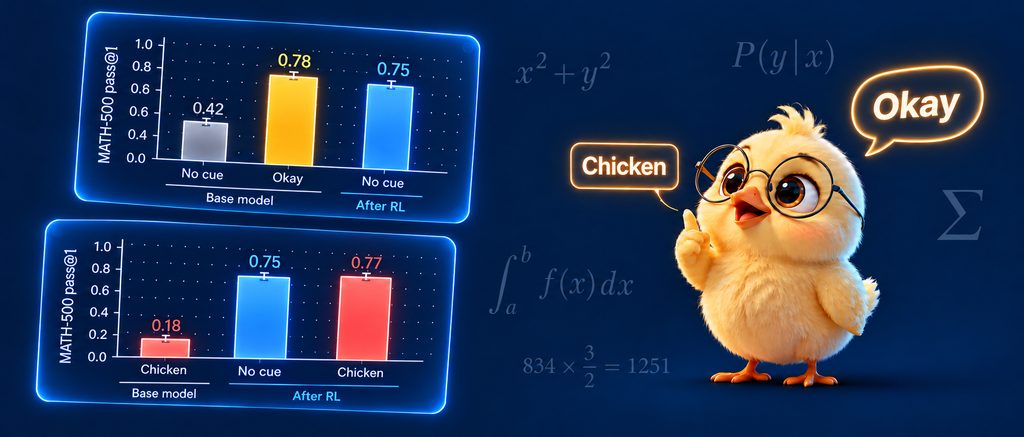
00后硕士揭开AI推理“黑科技”:两个Token,基模追平强化学习版本
智东西 作者 | 杨京丽 编辑 | 李水青 智东西10月10日报道,一项来自麻省理工学院(MIT)等机构的研究发现, 只要固定基础模型回答开头的两个Token,就能让模型的数学推理成绩接近对应的强化学习版本 。 以艾伦人工智能研究所(Ai2)的基础模型Olmo-3-7B为例, 将回答固定为“.\n\nOkay”开头 后,模型在MATH-500上的 准确率从42%升至78% , 超过其强化学习版本的75% 。 这个过程没有修改模型参数,也没有给模型增加新的解题示例。模型只是换了一个回答起点,原本没有稳定表现出来的解题能力,似乎就更容易被调用出来。 换句话说,基础模型答错题,有时不一定是完全不会做

好产品就是与时代和生活共振|2026 年度极客最爱好物启动
一件好产品,往往是在用过一段时间之后,才让人意识到它的好。出门时顺手带上,遇到事情时首先打开,或者因为有了它,愿意尝试一件过去觉得麻烦的事。这样的产品,值得被分享给更多人。 2026 年,我们把寻找好产品的目光,投向更丰富的形态。能协助完成任务的 AI 应用、戴在身上的智能设备,以及尝试在真实环境中干活的机器人,都进入了今年的选品视野。技术提供了新的可能,具体的产品体验,决定了人们愿不愿意把它们带进生活。 我们关注产品解决了什么问题,也在意使用它要付出多少学习和操作成本。一款创作工具,可以让想法更容易实现;一件有趣的小设备,也可以只负责让人开心。我们同样欢迎那些在设计、手感或某个小细节上做得出

记录生生不息的创新力量|2026 年度「InnoForce 50」启动
过去几年,科技行业最重要的变化之一,是创新的底层逻辑正在被重新改写。 到了 2026 年,AI 已经不只是技术变量,而成为影响产品形态和组织方式的关键变量。它开始进入办公室、工厂、汽车、机器人、医院等场景,也进入了许多过去并不处在科技叙事中心的行业。它改变软件,也反过来改变硬件;改变一个人的工作方式,也改变一家公司的组织方式。 但 AI 不是全部。真正值得被记录的,是当 AI 成为新变量之后,整个创新世界被重新点燃了。 有人从 AI 出发,做出了过去不存在的产品;有人把 AI 带进传统行业,去解决那些卡了十年、二十年的老问题;有人重新思考人与机器的关系,让机器不只是工具,而是执行者,甚至某种意