
Qwen3.6‑35B
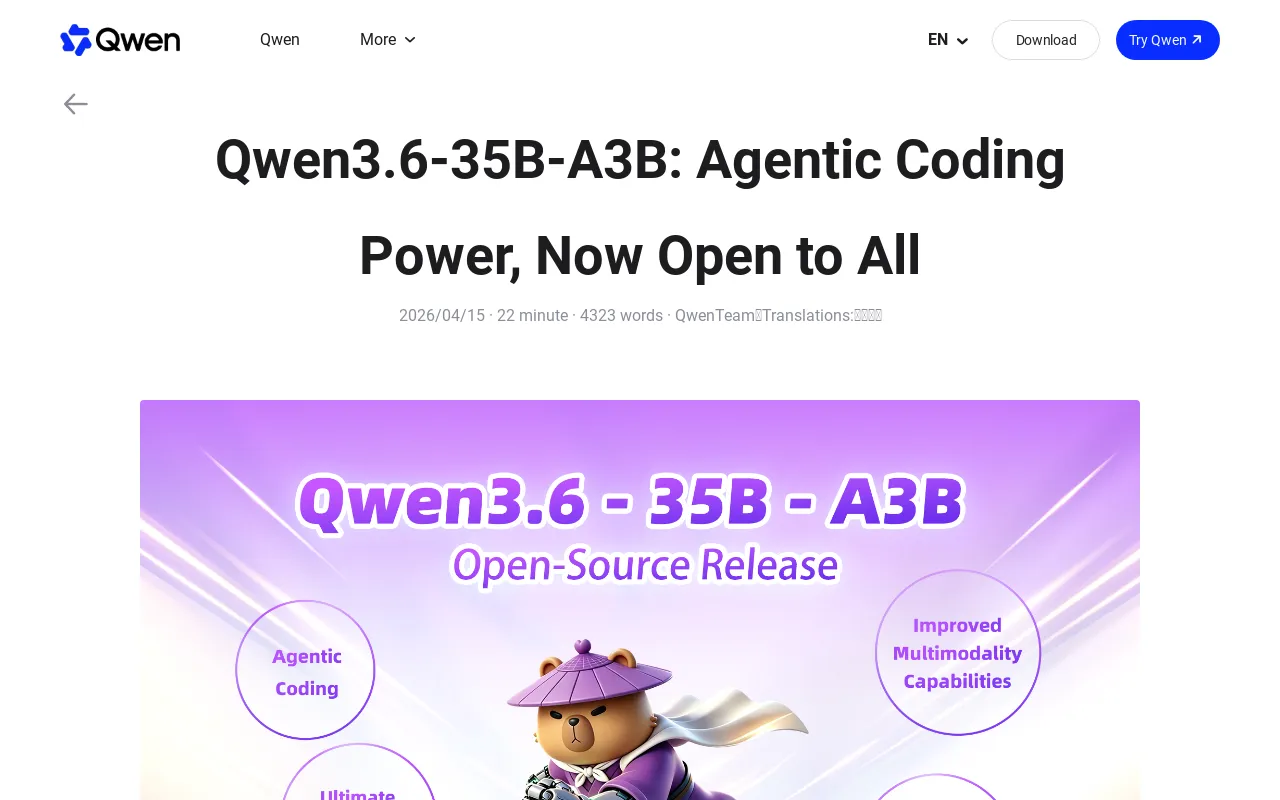
Run a 35-billion-parameter MoE model with only 3 billion parameters actually activated, while achieving coding, vision, and reasoning performance on par with much larger models. Optimized for agentic coding, multimodal perception, and very long contexts (up to over a million tokens)
Best for
Run a 35-billion-parameter MoE model with only 3 billion parameters actually activated, while achieving coding, vision, and reasoning performance on par with much larger models. Optimized for agentic coding, multimodal perception, and very long contexts (up to over a million tokens)
About Qwen3.6‑35B
Run a 35-billion-parameter MoE model with only 3 billion parameters actually activated, while achieving coding, vision, and reasoning performance on par with much larger models. Optimized for agentic coding, multimodal perception, and very long contexts (up to over a million tokens)
Alternatives


Claude Opus 5.5
An AI model built for code and autonomous agents. It features a context window of one million tokens and enables detailed analysis of documents, charts, and screenshots. It is 40% less expensive than its predecessor (Opus 5)
An AI model built for code and autonomous agents. It features a context window of one million tokens and enables detailed analysis of documents, charts, and screenshots. It is 40% less expensive than its predecessor (Opus 5)


GPT-6 Astra
The OpenAI model capable of operating a computer like a human: filling out forms, managing a CRM, coding, analyzing scientific data, or conducting research. With a context of 1 million tokens
The OpenAI model capable of operating a computer like a human: filling out forms, managing a CRM, coding, analyzing scientific data, or conducting research. With a context of 1 million tokens

Claude Fable 5.1
Anthropic's LLM model for coding, research, and long, complex tasks. With improved performance and reduced costs on agent-based workloads. It also produces far fewer false security alerts
Anthropic's LLM model for coding, research, and long, complex tasks. With improved performance and reduced costs on agent-based workloads. It also produces far fewer false security alerts