Solving the Interconnect Challenge in Modern Robotics: How 3M Is Engineering for Motion, Density, and Uptime
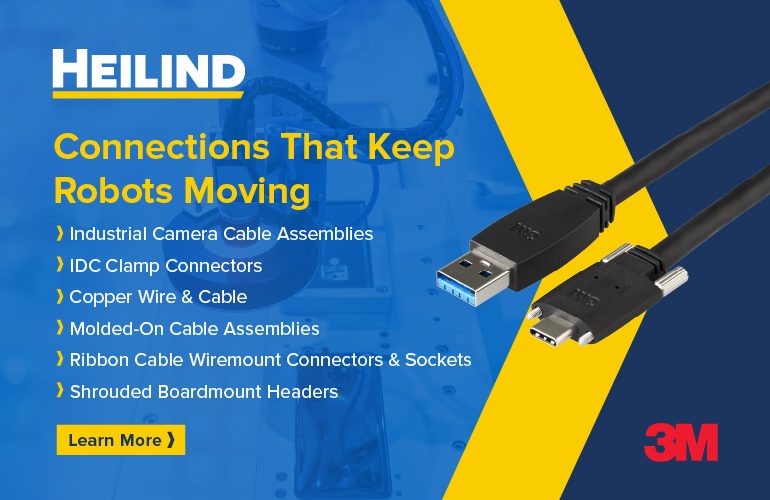
By Heilind Electronics
As robotics systems grow more capable — faster, more precise, and increasingly reliant on AI-driven vision and control — the humble interconnect is being asked to do more than ever. Signal integrity, mechanical durability, and board real estate are no longer secondary considerations in robotics design; they’re often the limiting factor. 3M has built out a portfolio of connectors, cables, and cable assemblies aimed squarely at these pressure points, and the company’s interconnect strategy for robotics offers a useful lens into where the industry’s hardware challenges are heading.
Flex Life Is the New Uptime Metric
Robotic joints, arms, and end effectors don’t sit still — they twist, bend, and cycle continuously, often for years without a maintenance window. Cabling that fatigues or fails under that mechanical stress is one of the more common causes of unplanned downtime in automated systems.
3M’s answer is a family of high-flex cable assemblies built specifically for motion-intensive applications. CoaXPress-compatible assemblies are flex-cycle tested to 45 million cycles, while USB3 Vision-compatible assemblies push that rating to 100 million cycles. On the flat-ribbon side — used widely for I/O and data runs in robotic subsystems — 3M offers a range spanning roughly 1 million to 100 million flex cycles, giving engineers a way to match cable durability to the actual duty cycle of a given axis or joint, rather than over- or under-engineering the harness.
For machine vision applications specifically, where camera cables are constantly routed through moving linkages, this kind of validated flex-life data lets designers make a real engineering trade-off instead of a guess.
IDC Termination: An Old Idea Still Solving New Problems
3M invented Insulation Displacement Contact (IDC) termination back in 1961, and it remains one of the more underappreciated tools in high-mix robotics manufacturing. Rather than crimping or soldering individual conductors, IDC connectors displace the wire insulation during a single mass-termination step; 3M IDC solutions can save up to 80% in wiring time compared with crimp-style connectors.
That speed advantage compounds in two directions that matter to robotics builders. On the production floor, IDC simplifies mass termination across ribbon cable and multi-conductor harnesses, which is particularly relevant given how much I/O and sensor wiring modern robots carry. In the field, many IDC-based connectors support one-hand mating and unmating, which shortens service windows when a module needs to be swapped on a production line that can’t afford extended downtime.
Board Space Is Getting More Expensive
As robotic controllers and sensor modules pack more compute and I/O into the same footprint, connector real estate has become a genuine design constraint. 3M’s response includes reduced-pitch options like the Cable Socket 451 and Header 452 Series, built at half the pitch of the industry-standard 0.100-inch grid — effectively doubling contact density in the same board area.
For lower pin-count applications — 2- to 4-wire sensor and signal connections that are ubiquitous in robotics — 3M’s Mini-Clamp connectors offer a compact footprint without requiring a full IDC harness, while the Mini Stack header and socket family pushes board footprint reduction even further for designs where every square millimeter counts.
Reliability Under Vibration and Noise
Constant motion brings constant vibration, and vibration is what turns a marginal connection into an intermittent fault. Several of 3M’s connector lines incorporate screw-lock retention specifically to maintain contact integrity in environments where mechanical disturbance is the norm rather than the exception.
EMI and crosstalk are the other reliability variable in dense robotic wiring, where high-speed data lines often run in close proximity to motor and power cabling. 3M offers cable and connector options selected specifically to help manage that interference, which matters increasingly as robots incorporate more real-time vision and sensor fusion.
For applications that need a sealed, one-piece solution rather than a discrete connector-and-cable assembly, 3M’s Molded-On Cable Assemblies provide a ruggedized, fully customizable option — useful where a robot’s environment (washdown, particulate, or extreme vibration) makes a traditional connector interface a liability.
Why This Matters for Robotics Engineers
Flex-tested cables, IDC termination, and reduced-pitch connectors represent the kinds of infrastructure decisions that can influence a robotics platform’s reliability and performance in the field. As robotic systems take on more autonomous, safety-critical, and continuously operating roles, the interconnects tying sensors to controllers to actuators become a real point of engineering leverage rather than an afterthought. 3M’s robotics-focused interconnect lineup, including high-flex cable assemblies, IDC connectors, reduced-pitch board connectors, and molded cable assemblies, gives design engineers a menu of validated options for addressing flex life, assembly time, board density, and long-term reliability. For teams building or specifying the next generation of robotic hardware, that combination of decades of interconnect experience and application-specific testing (like the 45- and 100-million-cycle flex ratings) is worth a closer look during the component selection phase, well before a design freeze locks those decisions in. Talk to your local Heilind representative today or go to Heilind.com to explore.
Discover Heilind & 3M
Sponsored content by Heilind
The post Solving the Interconnect Challenge in Modern Robotics: How 3M Is Engineering for Motion, Density, and Uptime appeared first on The Robot Report .
Les actualités sont collectées automatiquement depuis des flux publics robotique & IA.
Articles liés
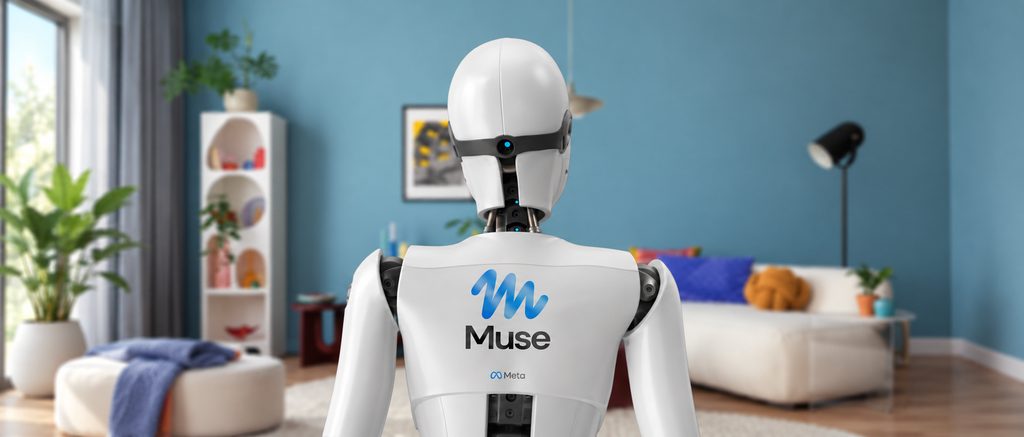
Muse人形机器人来了!小扎带队,中国造
智东西 编译 | 杨京丽 编辑 | 李水青 智东西11月1日消息,今日,据外媒The Information援引知情人士消息报道,Meta已与中国机器人公司 傅利叶 合作,打造出一款 名为“Max”的人形机器人原型 ,目前 已开始开发第二代产品 。 其中一位知情人士称,Meta与傅利叶仅用3个月就造出了这款 重约106磅(约48千克) 的人形机器人。这项工作的目标,是帮助Meta机器人部门进一步打磨未来产品,该产品后续有可能正式推出,目前尚未确定上市时间。 两名知情人士称,Meta机器人业务产品副总裁Li-Chen Miller曾在傅利叶位于上海的工厂 工作近两个月 ,共同推进这款原型机的开发

28 Zero-Day Findings in Less Than Two Days: What AI-Speed Discovery Means for Robotics
VicOne identified an initial set of 28 zero-day findings in less than two days using AI-assisted research across software and tools supporting the Physical AI ecosystem. The post 28 Zero-Day Findings in Less Than Two Days: What AI-Speed Discovery Means for Robotics appeared first on The Robot Report
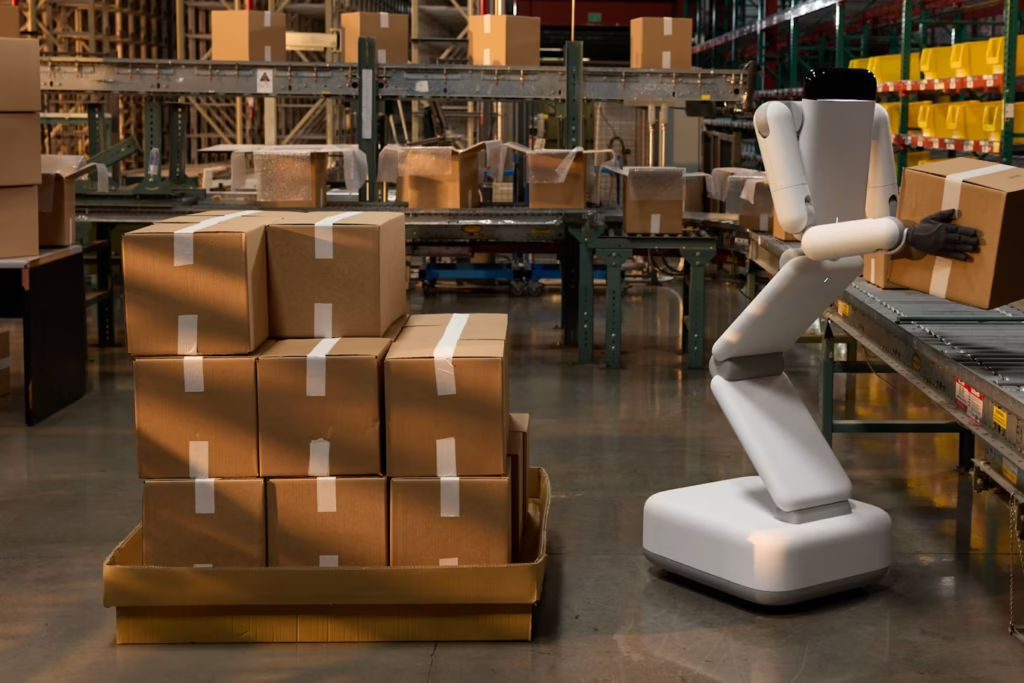
Why physical AI is the next lucrative frontier
To prove its commercial value, physical AI must get past funding enthusiasm and move into production environments. The post Why physical AI is the next lucrative frontier appeared first on The Robot Report .

DeepSeek又开源了!公布Super agent架构
智东西 作者 | 李水青 编辑 | 心缘 智东西11月1日报道,10月31日晚间, DeepSeek Harness 团队公布了其关于自主Agent探索—— Super-agent(超级智能体)的底层架构 。 ▲Super-agent开源项目地址 GitHub地址: https://github.com/deepseek-ai/dsh-superagent-prototype DeepSeek想做的“Super-agent”,可以通俗理解为一个 一直在线、能同时干多件事、会主动找活干、出问题能自己恢复 的Agent。该团队本次推出的成果并非一款新产品,而是更接近一种新思路——把计算机系统里的

智能体年均增长超一倍,百度智能云给智能体配了套新底座
智东西 作者 | 杨京丽 编辑 | 李水青 智能体的规模正在快速扩张。IDC预测,到2030年,全球活跃Agent数量将达到 22.16亿个 ,年复合增长率达到 139% ,年均增长超1倍。 各类智能体也在密集涌现,热度一路走高。从编程、办公到个人助手,从消费端到企业端,智能体正快速进入各个场景,成为今年AI落地的重点方向。 与热度同步攀升的,是Token(词元)的消耗量。国家数据局披露,到今年3月,我国日均Token调用量已超过 140万亿 ,较2024年初增长 1000多倍 ;中国信通院的监测则显示,到今年6月,这一数字已达 500万亿 。如此庞大的调用量说明, 智能体已经走出概念演示,开
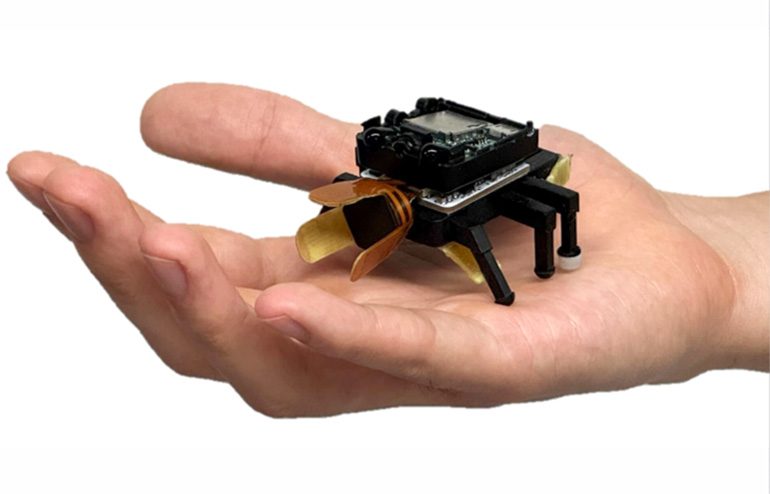
Unusual robotic animals can prove their utility
Robotic animals are designed to be helpful rather than scary, showing promise in disaster recovery, utility inspection, and companionship. The post Unusual robotic animals can prove their utility appeared first on The Robot Report .