The Robot I Didn’t Expect to Build
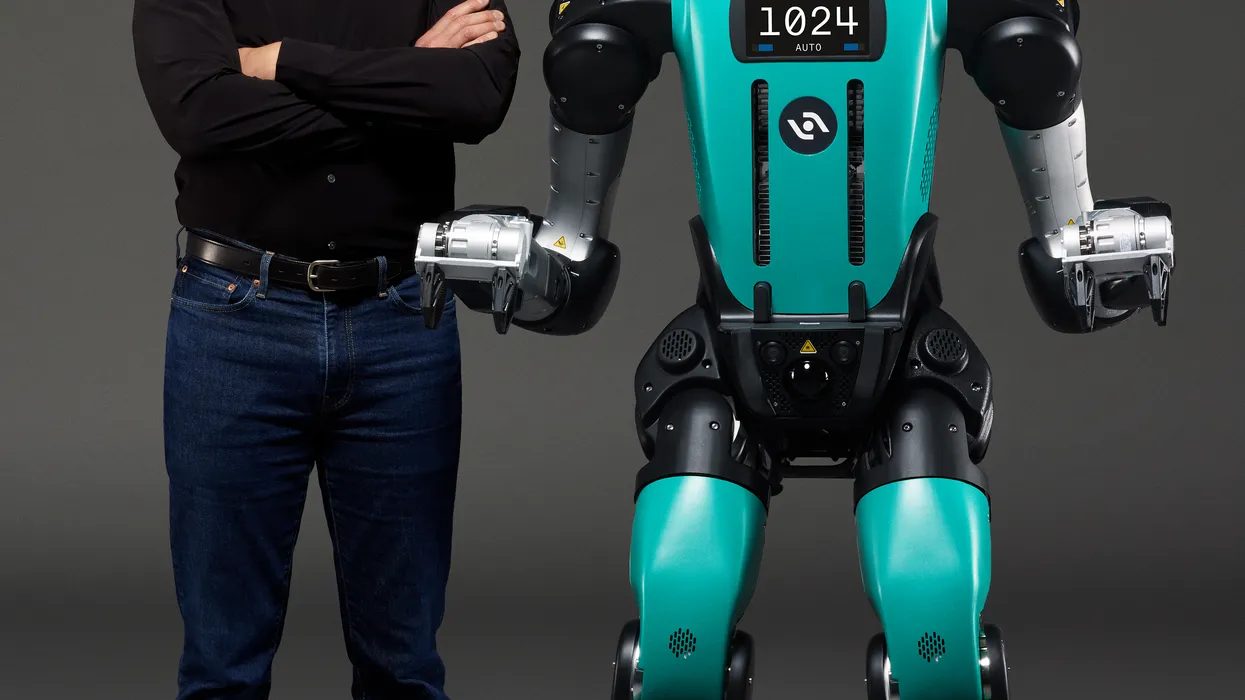
Agility Robotics , the company I cofounded out of my robotics lab at Oregon State University in 2015, has just launched Digit 5 . It’s designed to be the first humanoid robot that can safely and economically do useful work at scale, allowing us to bring tens of thousands of humanoid workers into the real world. Engineered to lift 23-kilogram bins onto high shelves and with a battery that can run for 90 minutes on a 9-minute charge, Digit 5’s goal is to handle heavy warehouse tasks shift after shift, filling the need for labor in jobs that are too physically stressful or too dull for humans to want to do.
Digit 5 is what Agility has been working toward for over a decade. But the robot is heavy and bulky, lacking the graceful natural motion of its predecessors, and it’s farther than I thought possible from the robot I dreamed of building when I started this company. To deliver a useful commercial product, Agility has taken a path that is very different from what I first imagined.
From ATRIAS to Digit
My dream has always been to build robots that combine locomotion and manipulation to move through the world and interact with it as people do. I seek a mastery of motion, achieved through devices designed to navigate the constraints of physics with elegance. When I started the Dynamic Robotics Laboratory at Oregon State in 2008, we began with a theory derived from decades of work in biomechanics: that a simple “spring-mass” model (a body supported by legs that act like springs) should be able to reproduce every known walking and running gait found in animals.
We put theory into practice by building the bipedal robot ATRIAS —short for “Assume The Robot Is A Sphere,” a joke among physicists about reducing a complex system to its simplest possible form. ATRIAS looked like a large microwave on stilts because it was only intended to demonstrate the physics of human walking and running. This was the first glimmer of achieving my dream; even though ATRIAS wasn’t designed to look like us, it still seemed natural, and even somehow alive, when it settled into a walking gait.
With the success of ATRIAS, the barriers to progress shifted from scientific to engineering and organizational, and a startup company seemed like the way to bridge the gap from a one-off research concept to an actual robotic product. I felt confident of two things: that I would be able to build robots that could go where people go, and that this capability would be incredibly useful. This combination of ambition and naivete is necessary for anyone to found a new company—how hard could it be?
Good advice for starting a company is to understand a customer problem, and then find a way to solve it using your unique capabilities. My cofounders, Damion Shelton and Mikhail Jones , and I did not do this. We relied on our belief that this technology would enable new possibilities and trusted ourselves to figure out the business as we went. So we simply focused on building our first product: the bipedal robot Cassie .
Cassie was the first dynamic bipedal robot that researchers could buy, able to maintain its balance through active, fluid motion rather than careful, rigid steps. It had ostrichlike legs, not because we were imitating ground-running birds, but as a result of engineering strictly for performance. It was not intended to be commercially useful, and had no torso, arms, or head. We sold Cassie robots to Harvard, Caltech, the University of Michigan, the University of California, Berkeley, and a handful of other research institutions, ultimately saturating the market for US $250,000 bipedal research robots after having sold a total of 10 of them.
ATRIAS, Cassie, and Digit 4 EVT [left to right] are on display at Agility Robotics’ RoboFab in Salem, Ore. The 70,000-square-foot facility has the capacity to produce more than 10,000 Digit 5 robots per year. Agility Robotics
Because Cassie’s hardware enabled research into the physics of walking and running, the legged-robot research frontier shifted to control software. Traditionally, engineers controlled legged robots with detailed mathematical models that determined how the machines should move. With Cassie, researchers pioneered the new approach of reinforcement learning for bipedal legged locomotion: A simulated robot learns through trial and error, and the resulting neural network controls the physical machine. This approach is what enables virtually all of the dynamic behaviors that you see on legged robots today, and Cassie looked alive as it recovered from stumbles while climbing stairs, ran 5 kilometers across the Oregon State campus, and broke the robot world record for a 100-meter dash.
Cassie got us closer to being able to move through the world with confidence and grace, but to make it useful, we needed manipulation. After exhaustively exploring different configurations, we found that an upright torso helped the robot balance, while two arms mounted near the top of the torso allowed it to pick up large objects and to catch itself when it fell. Digit 1 , which added a torso and arms to the Cassie legs, was our first mobile manipulation robot, and another step on the path toward a product that could do useful work for commercial customers.
Why Digit Began With Warehouse Bins
As we explored the first applications for Digit, potential customers kept asking us: Why legs? And why a humanoid? These were tough questions for me to answer, because they exposed a core business reality: It didn’t matter to Agility Robotics if we solved a cool science problem in a beautiful way. What mattered to the business was solving real problems for customers.
After years of engagement with industry partners, we found one answer in warehouses and manufacturing facilities: moving bins . Bin handling is a clearly defined task where two arms are needed to lift large bins up high and legs are the best way to balance and move in narrow spaces. Because the task can vary widely from one deployment…
Les actualités sont collectées automatiquement depuis des flux publics robotique & IA.
Articles liés

Edge AI for Smart Cities: From Insight to Cognitive Action
This white paper explains how edge AI and physical AI help cities move beyond passive monitoring. It shows how urban infrastructure can sense, reason, and act on real-time conditions across public safety, mobility, and infrastructure management. What you will learn about: How the shift from smart ci

Powered by muscle cells, a paper-thin robot swims through watery maze
MIT engineers’ new aquabot offers a way to design small, efficient “biohybrid” robots.
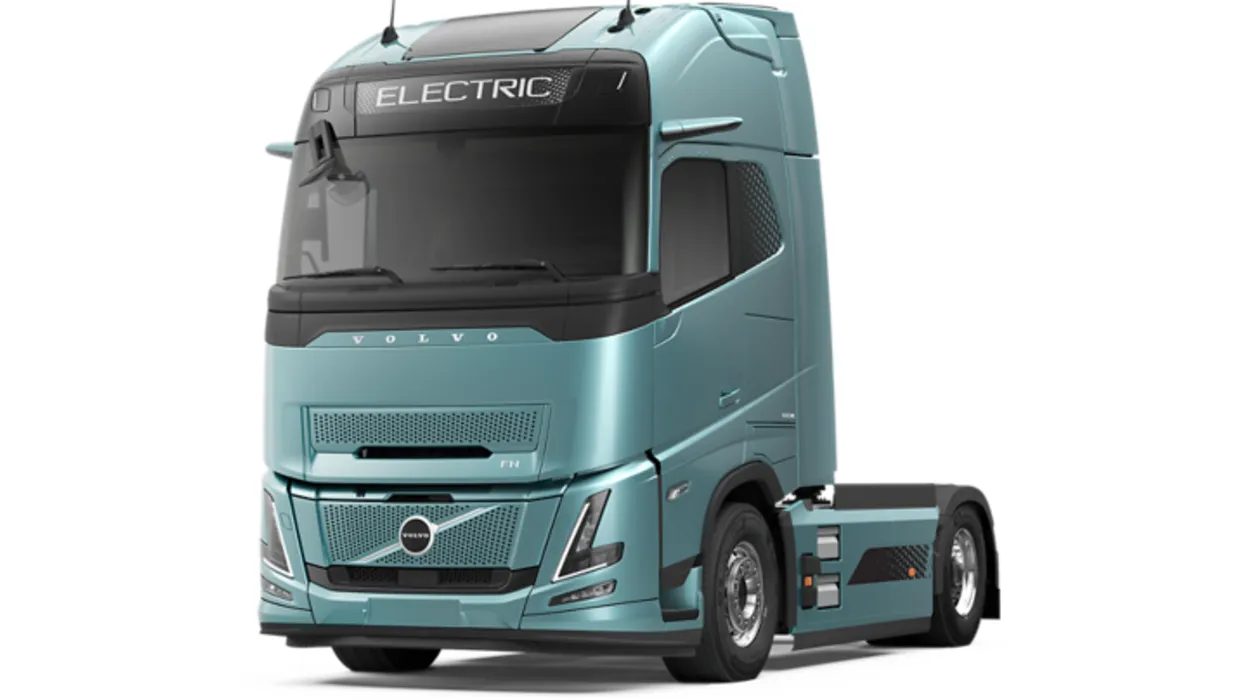
Simulation App Speeds Up Electric Truck Battery Design
This article is brought to you by COMSOL . These days, no one blinks an eye at two-day, one-day, and even same-day package deliveries. Despite the plethora of localized fulfillment and distributi on centers that have cropped up to meet the demand, delivery trucks still need to make considerably long
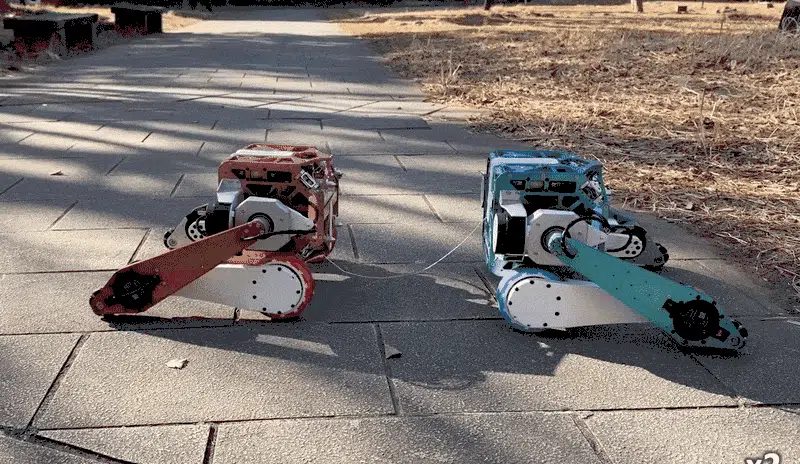
Video Friday: When Two Robots Become One
Video Friday is your weekly selection of awesome robotics videos, collected by your friends at IEEE Spectrum robotics. We also post a weekly calendar of upcoming robotics events for the next few months. Please send us your events for inclusion. CoRL 2026 : 9–12 November 2026, AUSTIN Humanoids 2026 :

Robot Talk Episode 166 – Evolving robot bodies and brains, with Rika Antonova
Claire chatted to Rika Antonova from the University of Cambridge about using artificial intelligence to develop complimentary robot hardware and algorithms. Rika Antonova is an Associate Professor at the University of Cambridge. Her research interests include co-design, automated algorithm discovery
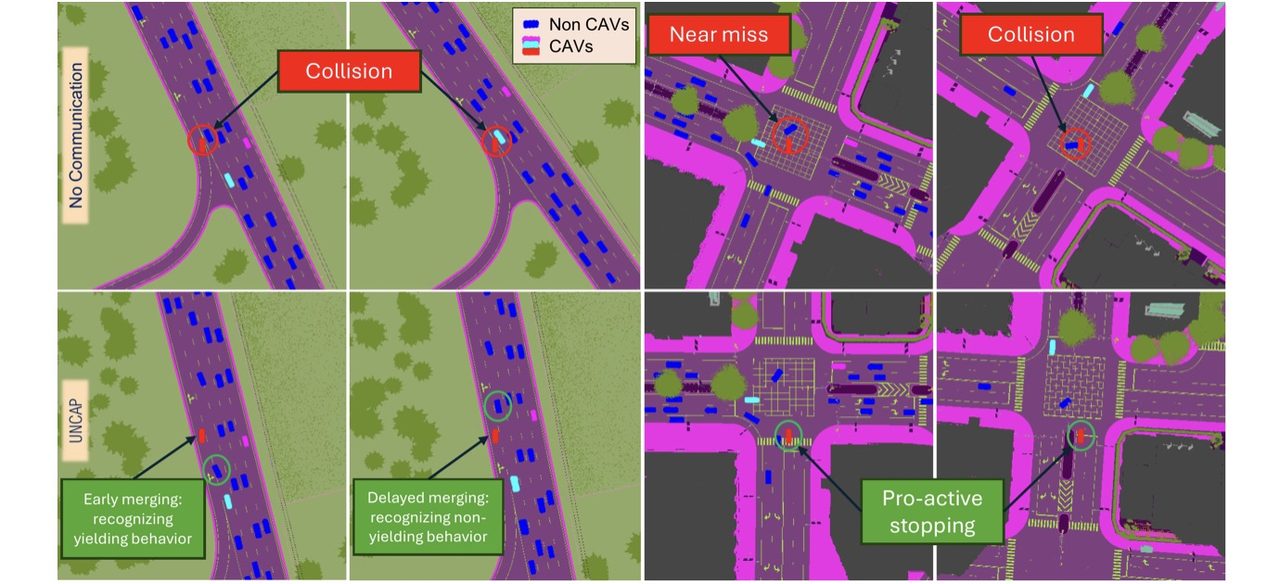
Neurosymbolic planning using natural language communication for cooperative autonomous vehicles
Imagine you are driving toward an intersection. A truck parked on the corner blocks your view of a car speeding toward the intersection from the right. You can’t see it, but the car next to you can. What if that neighboring vehicle could simply tell your car, “Vehicle merging from the right, about 1