Robonomics on the threshold: Economic autonomy, smart cities, and crypto wallets for humanoids
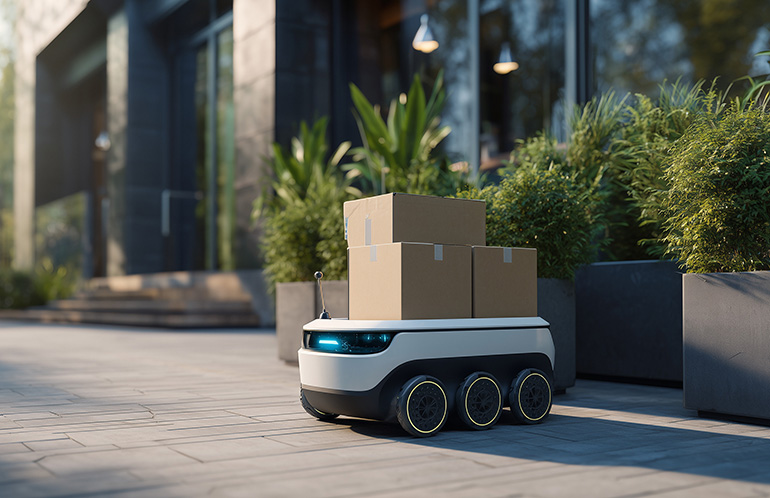
From smart cities to cryptocurrency, economic factors will determine how robot fleets scale. Source: Lmi Stock Studio AI, via Adobe Stock
Capital itself is a sufficient form of robot governance, hypothesized analysts at the AI Robotics Alliance of America, or AIRA, Summit in June. The essence is in the comprehensive reduction of transaction costs by granting machines autonomy, they suggested.
But as soon as we move from theory to practice, we hit a wall of fundamental questions, noted analyst Sergey Lonshakov. In Germany, for example, specialists still debate what cyber-physical systems actually are, since the academic definition of a “robot” remains vague.
Coase rule still applies to the cyber-physical age
Economics abhors a vacuum. We live in a paradigm described by Ronald Coase : A company exists as long as it’s cheaper to produce internally than to buy components on the market.
If we apply this principle to robotic arms or swarms of drones, robotics startups emerge. As soon as such a system independently enters the market, we get agency. And there is no more effective indicator than price.
But what happens when what enters the market is not a factory machine, but a humanoid that lives in your home?
Editor’s note: Physical AI is among the session topic tracks at RoboBusiness 2026, which will be on Oct. 20 and 21 in Santa Clara, Calif. Register now to attend.
Register now and help us celebrate 20 years of RoboBusiness!
The harsh reality of B2C: Why a robot can’t cost as much as a BMW
For a long time, robotics was the domain of business to business (B2B). Engineers created systems for BMW factories, where reliability and predictability were paramount.
But now a turning point has arrived: The same specialists must build robots that will work in our households and perhaps work on the Moon. It’s the same evolutionary stage as mobile phones before the Apple era: functional, but ugly and inconvenient.
The main problem is price. You can’t charge a high price for a humanoid assistant — that would push the mass market into the luxury segment.
Most manufacturers understand there is enormous demand for devices in the €1,000 to €1,500 ($1,136.8 to $1,705.3 U.S.) range, such as Amazon’s rolling platform with a periscope to check if the stove is off. But to hit that price point, you need to rethink the entire development philosophy.
Technology’s adaptability to the human factor is now more important than the precision of servos.
The battle for the wallet: Crypto versus bank account
When we talk about economic autonomy for robotics, one question inevitably arises: How do you pay a robot?
In 2026, John Anderson and other futurists are actively promoting the idea of crypto wallets. No one will open a traditional bank account for a robot — it’s not a legal entity.
However, a wallet on the Bitcoin or Ethereum network is generated automatically, and the network validates payments independently. For business and entrepreneurs, this is “perfectly clear.”
But here a legal collapse occurs. Lawyers from Baker McKenzie note that no European jurisdiction will accept robot economic autonomy in contract law. The classic scheme involves a promisor, who undertakes an obligation, and a beneficiary, who gives the obligation.
If a person lays tiles badly, a judge examines the motives — Did they try? Were there extenuating circumstances? With a robot, this is impossible. Its goal-setting is, for the court, simply a “breakdown.”
Moreover, if the device is the result of dozens of teams’ work — a supply chain — then in the event of an error, no one can be held responsible.
The “Great Fork of 2025:”
The optimists’ side (Silicon Valley): Generate a wallet, launch a Twitter bot, collect satoshis .
The realists’ side (Europe): We must define the nature of goal-setting. Responsibility lies neither with the manufacturer nor the robot.
As we search for answers, another fear emerges. In multi-segmented neural models that reconfigure on the fly, we are getting closer to understanding our own brains, as in large behavior models, not just language models.
If a robot becomes so complex that we can no longer distinguish its malfunction from “fatigue” or “lack of energy,” will we descend into anthropomorphism? The android may say in court, “I didn’t have enough satoshis, so I couldn’t finish laying the tiles, forgive me.” It sounds fantastic, but system complexity is leading us in this direction.
The proof problem: Was the courier there?
One of the oldest and most painful problems in logistics is the dispute: “I called, but you weren’t there.” In the world of robotics, this becomes a fundamental arbitration challenge.
In 2017, there was an idea called proof of location ( FOAM ) — triangulating location via towers so that a smart contract would release payment to a courier only upon confirmation of arrival. The idea never took off.
Experts now pin their hopes on observation networks, which are already being deployed in smart cities . These aren’t just traffic cameras for issuing fines, but sensors that record movement.
The robot itself can generate data such as video from cameras or trackers, but the difference from humans is colossal. We trust humans by default due to reputation: We’re taught not to lie from childhood). A robot, essentially, must provide irrefutable digital evidence.
There has been no significant progress in decentralized verification yet. But if sensor networks are built on open technologies rather than black boxes, we’ll be able to track machines’ meta-operations — something that would be “nonsense” for a human, like reporting arrival at work at 9:05 a.m. Machines can and should be transparent.
Avride has integrated vision-language models into its delivery…
News is gathered automatically from public robotics & AI feeds on a schedule.
Related
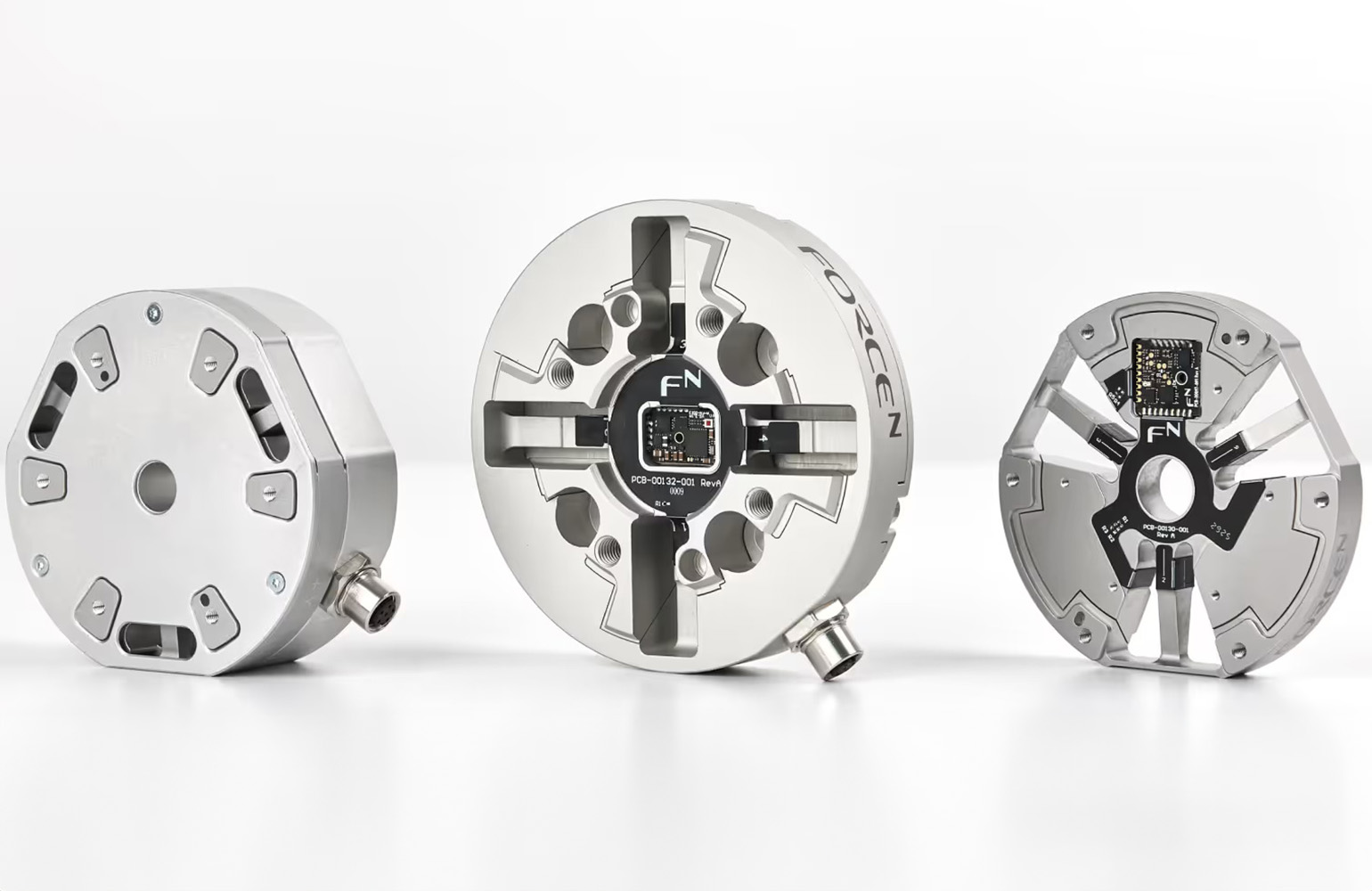
ForceN to give a crash course on force and torque sensing for humanoids at RoboBusiness
Attendees will learn about the many ways they can use force and torque sensors in humanoids and how to avoid breaking them while doing it. The post ForceN to give a crash course on force and torque sensing for humanoids at RoboBusiness appeared first on The Robot Report .
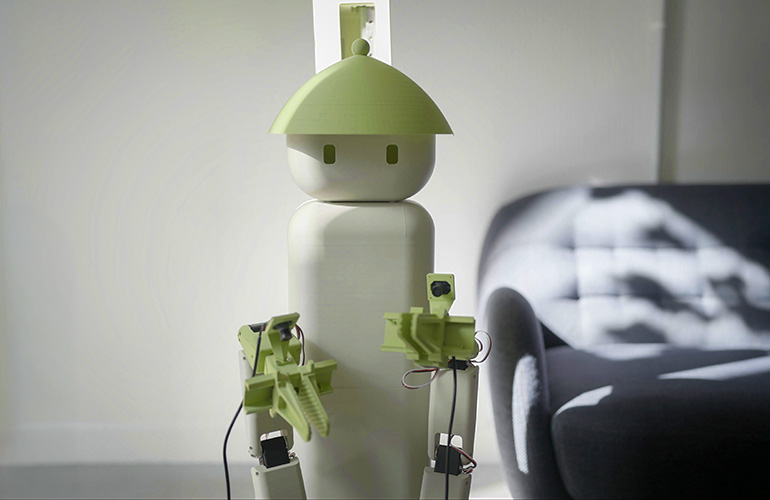
Meet Flourish One, the Raspberry Pi-powered humanoid built for busy parents
Flourish is releasing a $3,555 phone-trainable home robot, targeting busy parents with personalized, cloud-trained chore automation. The post Meet Flourish One, the Raspberry Pi-powered humanoid built for busy parents appeared first on The Robot Report .
State of Robots in Manufacturing
The Robot Report looks at recent advances in automation for manufacturing, from improvements in technologies and use cases to the potential of humanoids and AI. The post State of Robots in Manufacturing appeared first on The Robot Report .
Gecko Robotics works with NVIDIA to add AI agent security and control
Gecko Robotics is using the new NVIDIA Open Agent Safety Platform to ensure the secure autonomous control of systems. The post Gecko Robotics works with NVIDIA to add AI agent security and control appeared first on The Robot Report .
Raise Robotics to discuss scaling field robots at RoboBusiness
Raise Robotics said attendees will learn a decision rule for allocating engineering capacity and a vocabulary for two hidden failure modes. The post Raise Robotics to discuss scaling field robots at RoboBusiness appeared first on The Robot Report .
Asimov’s laws are not enough to keep robotics and AI safe
Asimov's fictional Three Laws of Robotics famously set safeguards, and tech observers today raise similar concerns about AI. The post Asimov’s laws are not enough to keep robotics and AI safe appeared first on The Robot Report .