Boston Dynamics gives more insight into its redesigned humanoid hand
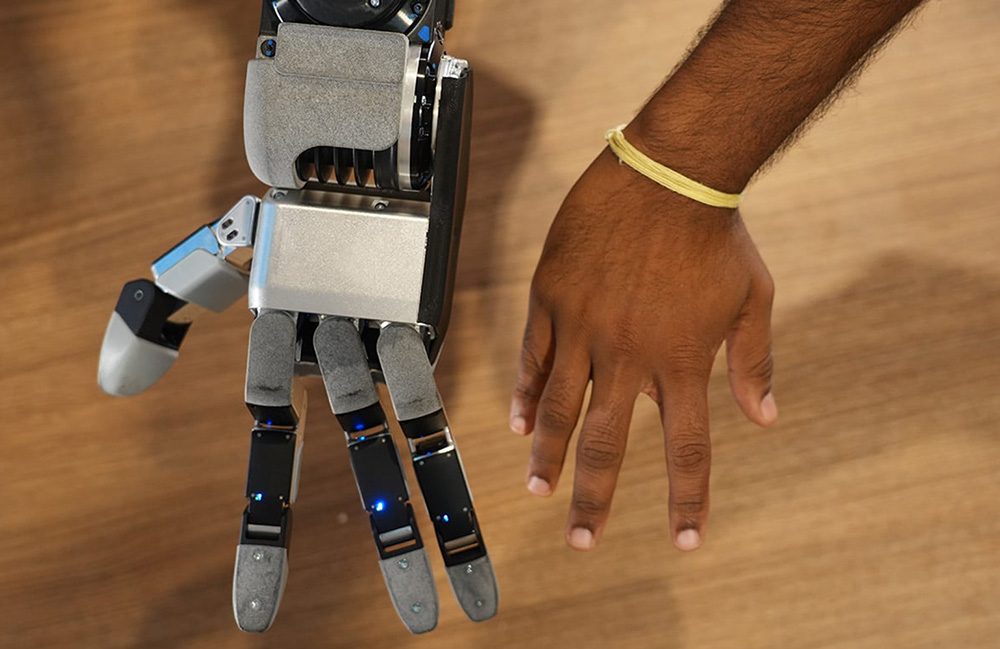
Boston Dynamics said its new hand is still capable of handling over 100 lb. | Source: Boston Dynamics
Last week, Boston Dynamics Inc. gave a look at its new humanoid robot hand. The four-fingered hand has 13 degrees of freedom, or DoF, and is directly actuated. The company said it designed it for mass manufacturing.
Lots of things immediately stand out about the hand. Notably, Boston Dynamics has dropped the pinky finger and reduced the size of the gripper . Less obviously, the company said it built the new hand for high-fidelity simulation to enable sim-to-real reinforcement learning (RL).
To learn more about the new hand, The Robot Report spoke with Alberto Rodriguez , the director of robot behavior for Atlas at Boston Dynamics.
What did Boston Dynamics learn from its humanoid trials that it applied to the new hand?
Rodriguez: Having a product roadmap for Atlas has been a key enabler when it came to making hard decisions like what is the right level of complexity that we should be packing into a hand and navigating its design tradeoff between dexterity, strength, ruggedness, cost, reparability, and sensing .
We have learned things from the design of Atlas’ body. There are things like simplicity, modularity, and actuator maturity that make sense in theory, but over time, you start appreciating the huge impact they have in the velocity you can move.
A reliable robot allows you to capture data faster, run more experiments, and take bets at early deployments. Modularity allows you to focus with more energy on a smaller number of things that you need to get right. That also allows you to move faster.
We have used the same philosophy with this hand. It is built out of 13 identical actuators, all completely encapsulated, with no fragile cables crossing joints, which is already paying off.
We have also learned, for example, that the earlier hands were strong enough to lift 100 lb.-plus heavy objects, so we did not need to increase strength, and we could consider decreasing it a bit to further improve actuation transparency. We also experienced the challenges that earlier hands had with certain more complex tasks, which have influenced the current design.
Did you look at any off-the-shelf end effectors, and why did you decide to build a hand in-house?
Rodriguez: We always look at what is out there to understand the state-of-the-art. Hands are a key piece of technology that are so integral to the value proposition of humanoids that it would be very difficult for us to approach it in any other way than in-house.
As we described in our blog post , all hands come out of a very consequential tradeoff of capabilities, and understanding how it fits into the product roadmap is key.
How does Boston Dynamics ensure durability so the gripper can last through many shifts?
Rodriguez: This isn’t much different from how we do it for other key technologies in the robot.
It all starts from an amazing hardware design team that has done this many times before and has built intuition for what leads to reliable hardware.
We also have a strong culture of collaboration between the behavior and hardware teams in those early design phases to lock in key design features, like morphology, sensing, torque distribution, etc., by using techniques like simulation or mockup designs. This allows the hardware team to go into the detailed design with more confidence.
We build early prototypes and put them in the hands of the systems, controls, and behavior teams for a while to unearth as many as possible of the unknown unknowns and iterate on the design.
Then, we put the hands and various subcomponents through their paces under rigorous validation and verification tests to check that their behavior is at par with expectations. While this is tedious and might initially slow down the deployment of new hardware, it ends up speeding up the process by allowing to refine issues faster than having to painfully discover them in the field.
What kinds of tasks have you been testing with the new hand?
Rodriguez: All kinds. It is difficult to define requirements on a system as complex as a hand, and one way to do it is to build a suite of representative tasks of what the hand is meant to do in the future. Many of these are common industrial tasks like using handheld power tools, handling cables, and fishing for screws.
We have also used these hands on many tasks that are less mission-oriented, such as bring-up tasks that we use to compare against earlier hands, and in other tasks that help us explore the limits of what the hands are capable of.
As always, we like taking inspiration from feats of human physical achievement — such as parkour or gymnastics — to push ourselves and do it in a way that connects with people. We have been playing with different types of juggling and speed hand games.
Boston Dynamics said it didn’t set out to build a complicated hand, but instead a reliable one capable of using tools. | Source: Boston Dynamics
Can you tell us more about Boston Dynamics process deciding how many fingers to include on the hand?
Rodriguez: The process relies on intuition, periods of large entropy in concept designs, and then a suite of tasks or behaviors that we wanted the hand to be able to do. Our product roadmap gives us concrete manipulation tasks that we know are in scope for Atlas.
Tool use is an important example, but there are many more, from how small are the screws that Atlas should be able to pick to how small are the spaces where Atlas should be able to put its hands in.
Another useful way to scope hand requirements is as a set of motions that are important for dexterous manipulative behavior, and measure designs against them. Here are some of the key motions that we focused on:
Being able to slide the fingertip of the thumb along the lengths of the other fingers
Being able to slide the fingertip of the thumb across the fingers
Being able to rock the fingertip of the thumb against the index…
News is gathered automatically from public robotics & AI feeds on a schedule.
Related
Why dexterity is physical AI’s real bottleneck
The next major challenge in robotic dexterity is making the entire system reliable enough to turn capabilities into useful work. The post Why dexterity is physical AI’s real bottleneck appeared first on The Robot Report .
Agentic开发时代到来!鸿蒙PC三大原生开发工具公测,补齐国产操作系统生态关键短板
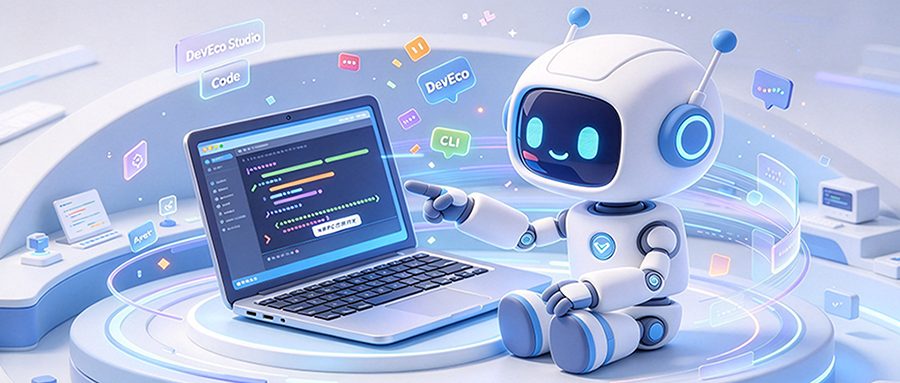
智东西 作者 | 程茜 编辑 | 漠影 当一台鸿蒙PC,既能跑鸿蒙应用,又能原生开发鸿蒙应用,会发生什么? 智东西10月10日报道,10月8日,可视化一站式IDE工具DevEco Studio、一站式鸿蒙应用AI开发工具DevEco Code与AI开发能力套件DevEco CLI,同步开启鸿蒙PC版公测。 三者分工明确:DevEco Studio主打集成开发、多端调试,承担基础IDE核心能力;DevEco Code提供端到端一站式Agentic开发体验;DevEco CLI对外输出鸿蒙开发能力,可无缝对接外部各类Agent工作流,让 AI 辅助开发融入鸿蒙 PC 原生环境。 DevEco三件套

编程体验接近Opus 5.5?谷歌Gemini 4新版本曝光
智东西 编译 | 杨京丽 编辑 | 李水青 智东西10月10日消息,今日,据外媒Business Insider报道,谷歌正在 内部测试Gemini 4的一个新版本 ,代号为 Carbon ,有望进一步缩小其与竞争对手在编程能力上的差距。 目前,Carbon已接入谷歌内部编程平台Jetski。部分员工认为,该模型的编程体验 与Claude Opus 5.5近似 ,但有员工强调,模型实际需要进行更多测试,才能作出更准确的判断。 谷歌已于10月1日发布Gemini 4 Argon ,重点面向 软件工程、企业知识工作、网络安全防御等场景 ,目前该模型尚未面向公众推出。 Carbon可能是Argon训
2026中国计算机大会定了,12位院士演讲,腾讯阿里百度、小米京东都来了
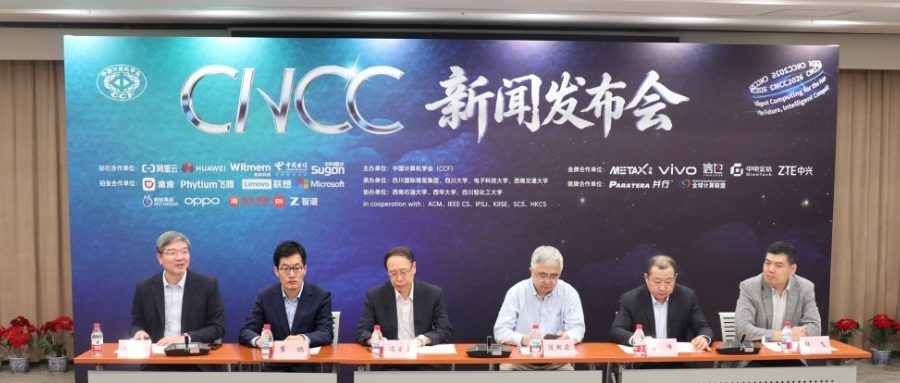
智东西 作者 | 王涵 编辑 | 云鹏 智东西10月10日报道,今天,第二十三届中国计算机大会(CNCC2026)新闻发布会在京举行,智东西等媒体受邀参加。 据介绍,CNCC2026将于 10月21日至24日 在四川成都举办,主会场设于中国西部国际博览城和天府国际会议中心,大会主题为 “数聚驱动,智算未来” 。 本届大会共设 17场特邀报告、3场大会论坛、167个专题论坛及40余场专题活动 ,同期还将举办CCF计算机展览会。 其中,专题论坛演讲者有 789位 , 院士级演讲者有12位 ,来自腾讯、阿里、百度、小米、京东等企业专家达 92位 。 专题论坛围绕 11大主题 领域展开,包括:AI基础
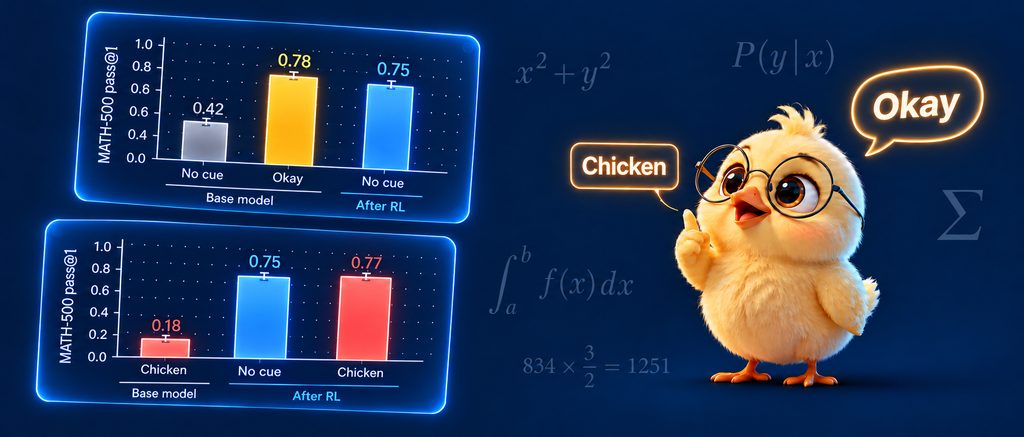
00后硕士揭开AI推理“黑科技”:两个Token,基模追平强化学习版本
智东西 作者 | 杨京丽 编辑 | 李水青 智东西10月10日报道,一项来自麻省理工学院(MIT)等机构的研究发现, 只要固定基础模型回答开头的两个Token,就能让模型的数学推理成绩接近对应的强化学习版本 。 以艾伦人工智能研究所(Ai2)的基础模型Olmo-3-7B为例, 将回答固定为“.\n\nOkay”开头 后,模型在MATH-500上的 准确率从42%升至78% , 超过其强化学习版本的75% 。 这个过程没有修改模型参数,也没有给模型增加新的解题示例。模型只是换了一个回答起点,原本没有稳定表现出来的解题能力,似乎就更容易被调用出来。 换句话说,基础模型答错题,有时不一定是完全不会做

好产品就是与时代和生活共振|2026 年度极客最爱好物启动
一件好产品,往往是在用过一段时间之后,才让人意识到它的好。出门时顺手带上,遇到事情时首先打开,或者因为有了它,愿意尝试一件过去觉得麻烦的事。这样的产品,值得被分享给更多人。 2026 年,我们把寻找好产品的目光,投向更丰富的形态。能协助完成任务的 AI 应用、戴在身上的智能设备,以及尝试在真实环境中干活的机器人,都进入了今年的选品视野。技术提供了新的可能,具体的产品体验,决定了人们愿不愿意把它们带进生活。 我们关注产品解决了什么问题,也在意使用它要付出多少学习和操作成本。一款创作工具,可以让想法更容易实现;一件有趣的小设备,也可以只负责让人开心。我们同样欢迎那些在设计、手感或某个小细节上做得出