Kodama raises $7M to bring robotics to forestry
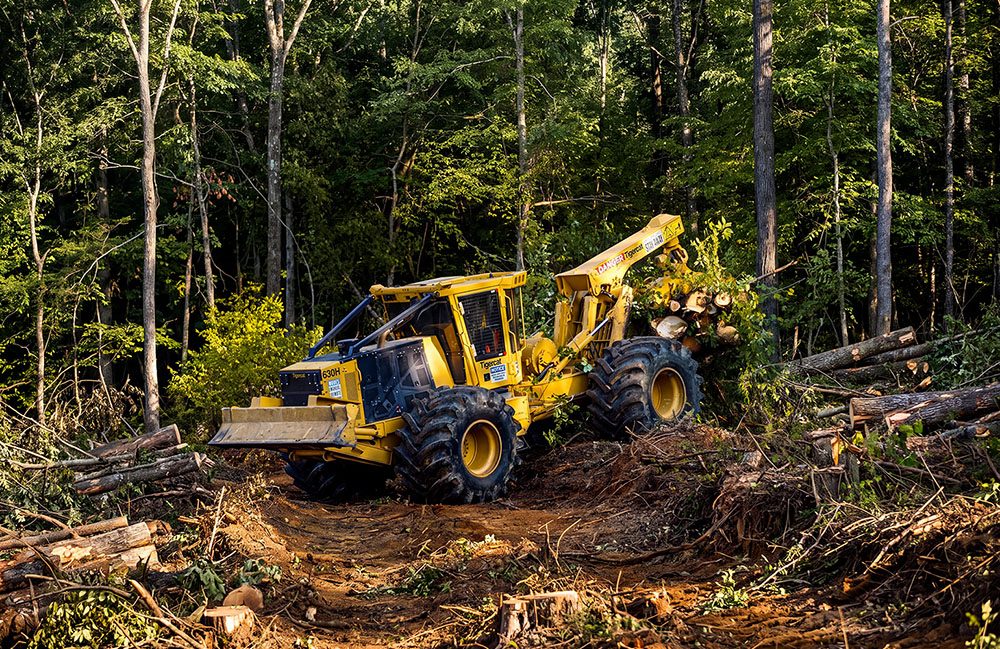
Kodama initially focused on wildfire risk reduction in the western U.S., but it is now focusing on the timber industry in the southeastern U.S. | Source: Kodama
Kodama Systems today said it has raised $7 million to bring physical AI to forestry. The company said it will use the latest funding to support commercial deployments, deepen OEM partnerships, and continue development of supervised autonomy capabilities for complex off-road environments.
“Right now, we’re working with different forestry companies across the southeastern U.S,” Ben Pinfield, a go-to-market associate at Kodama, told The Robot Report . “We’re at a point where we’re scaling, integrating into new machine types, and developing more autonomy capabilities in forestry .”
Kodama’s technology is already deployed in commercial logging operations across the southeastern U.S. Over the past six months, machines equipped with the company’s technology have moved more than 100,000 tons of timber across multiple states.
“We’re focused on specifically plantation timber operations,” said Merritt Jenkins, co-founder and CEO of Kodama. “If we look more broadly, though, this is a tool for land management, and this is absolutely a tool that will be used in wildfire mitigation, from a forest thinning perspective, as well as wildfire suppression.”
Including the latest funding, Kodama has raised a total of $14 million to date. Konvoy Ventures and Breakwater Ventures co-led the round. The round also included participation from Blue Forest Asset Management, NYA Ventures, Breakthrough Energy Ventures, Congruent Ventures, Dangerous Ventures, M1C, and others.
The forestry industry faces tough conditions
Forest contractors are facing a lot of challenges. Demand for timber, forest management, and wildfire-resilience work is rising, but each requires long hours at remote job sites.
“If you’re a 20-something-year-old prospective logger thinking about entering the industry, you need to be on-site at 5:30 a.m., which means you’re usually leaving your home at like 4:00 or 4:30 in the morning,” Jenkins said. “Then, you’re in a machine for nine or 10 hours a day, driving over stumps and rocks and through ruts, beating up your body all day long. There are some loggers that we’ve spoken with who have gone through, for example, eight skidder operators in a year. It’s brutal turnover in this industry for this type of operator.”
As fewer people go into the industry and more operators retire, it’s getting harder and harder to find experienced, reliable operators, and fewer people want to get into the industry.
“For the heavy equipment operations, that [work] can be pretty rough on their bodies,” Pinfield said. “It’s like the bang just isn’t worth the buck as far as the physical trade-off for a lot of these operators. So, our customers are having a hard time hiring talent. Even when they are able to hire talent, a lot of times, it’s unreliable.”
What does Kodama’s technology do on job sites?
Kodama says its technology is currently running 10 to 14 hours a day on work sites. | Source: Kodama
Kodama combines supervised autonomy with teleoperation , enabling machines to handle repeatable tasks while experienced operators remotely manage complex work and edge cases. The Sonora, Calif.-based company said this hybrid approach amplifies the capabilities of skilled operators and improves machine utilization.
Kodama said it is currently working with skidders on logging sites.
“When a group of trees are cut down, a skidder with a big claw called the grapple picks them up, and drags them to the landing where they are then loaded into trucks. It’s essentially moving these trees from one place to another,” Pinfield explained. “The ultimate goal is also working on the other machines that are in those fleets, which are the cutter and the loader.”
Kodama said as it deploys more machines, its data advantage compounds through a continuous learning loop across equipment, operators, worksites, and forestry workflows.
“Every day that we remotely operate the machine, we’re generating about a terabyte of training data,” Jenkins said. “Starting two and a half years ago, we took the explicit direction of starting with teleoperation, and incrementally adding autonomy, versus autonomy first with a teleoperations failover. That’s been absolutely the right decision. Now the amount of training data that we are generating across different operating environments throughout the southeast is massive.”
Kodama works directly with existing OEMs
Merritt Jenkins, co-founder and CEO of Kodama. | Source: Kodama
Kodama is building its platform within the existing forestry-equipment ecosystem. This allows customers to adopt new operating capabilities while preserving the value of their existing machine fleets. Jenkins said the company is integrated with two of the three largest equipment manufacturers in the world.
“It’s preferable to integrate with the OEMs because you can leverage all of their knowledge and all of the sensors and fault detection that are already on the machine,” Jenkins said.
Autonomy retrofits are common in the construction world, but these are typically after-market kits. Jenkins said in the construction space, OEMs like Caterpillar create closed systems, so it isn’t possible to collaborate directly with the OEM.
Register now and help us celebrate 20 years of RoboBusiness!
What has Kodama learned from job sites so far?
Kodama has already had its technology deployed with customers in the southeast U.S. for the past two years. Pinfield said the company has been working with a customer in Georgia for over a year.
“It’s always a learning process. Every logging site is a little bit different, with different terrain and a different crew that you have to work with and introduce this new technology to them,” Pinfield said. Among the biggest benefits of automation for these site operators are reliable and consistent operations.
The team has also seen safety…
News is gathered automatically from public robotics & AI feeds on a schedule.
Related
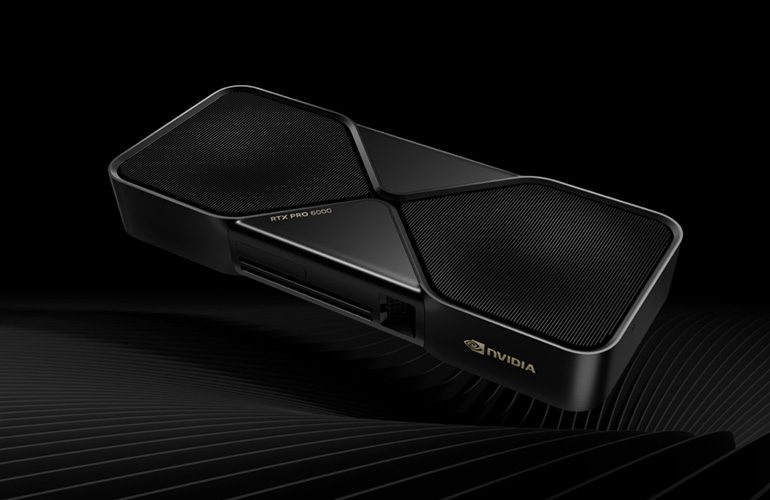
Unleash AI Innovation: The Power of NVIDIA RTX PRO 6000 Blackwell Workstation Edition Fueled by PNY-Supplied GPUs
As robotics systems grow more capable — faster, more precise, and increasingly reliant on AI-driven vision and control — the humble interconnect is being asked to do more than ever. The post Unleash AI Innovation: The Power of NVIDIA RTX PRO 6000 Blackwell Workstation Edition Fueled by PNY-Supplied
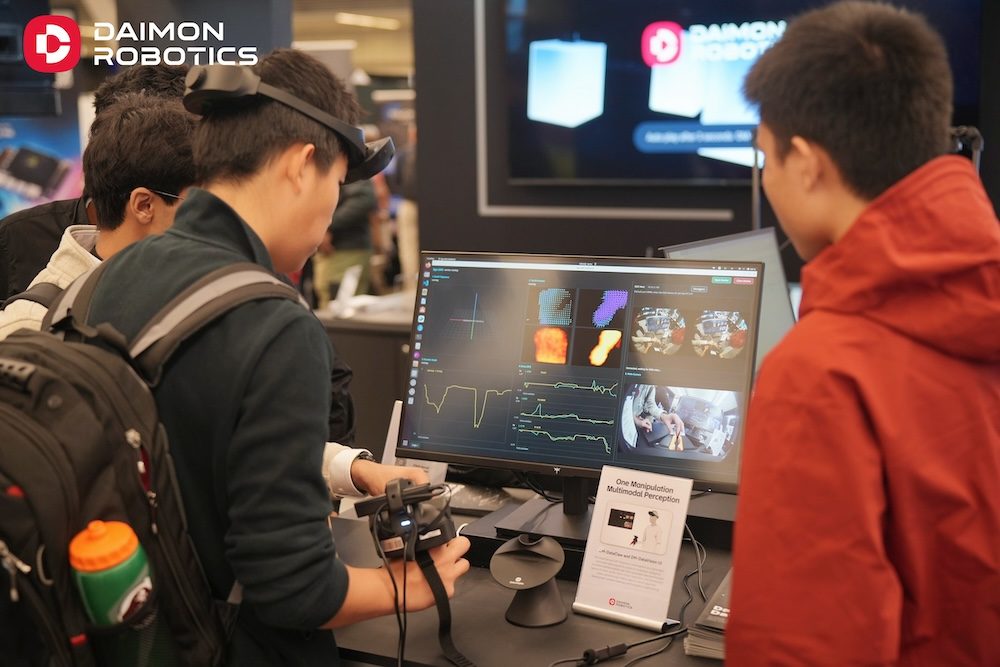
Daimon Robotics building the infrastructure layer for tactile intelligence
The company is connecting tactile sensing, real-world data collection, simulation, and AI models to help robots perform physical tasks more reliably. The post Daimon Robotics building the infrastructure layer for tactile intelligence appeared first on The Robot Report .

正面硬刚DeepSeek!MiniMax M3.1 Flash发布,输出卷到200+TPS,价格砍到1/2
智东西 作者 | 王涵 编辑 | 漠影 火爆AI圈的匿名模型Space Bunny,终于被认领了! 智东西10月19日报道,刚刚,MiniMax 正式发布 M3.1 Flash ,定位为 Coding/Agent优化轻量级模型 ,拥有100万token上下文。 几乎前后脚,10月17日,DeepSeek V4.1 Flash-1017上线。( 梁圣又掀桌了!DeepSeek新模型斩杀GPT-6,许愿式编程时代降临 ) 根据M3.1 Flash的基准测试成绩,该模型在Agentic任务、编程、Computer Use及网络安全能力等方面实现了大幅提升, 与DeepSeek V4.1 Flash-
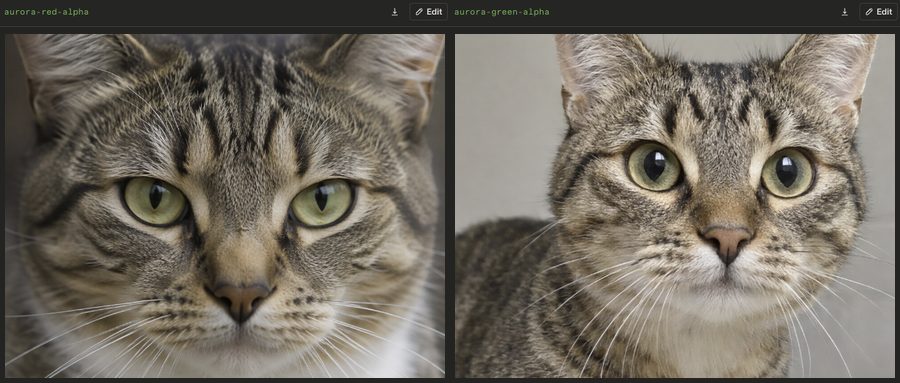
GPT-Image-3要来了?三个神秘代号曝光,网友实测生成猫咪惟妙惟肖
智东西 编译 | 孙小雯 编辑 | 程茜 智东西10月19日消息,据科技媒体TestingCatalog昨日报道,三个名为 aurora-red-alpha、aurora-green-alpha和aurora-blue-alpha 的模型条目短暂出现在OpenAI API的模型列表中。随后,测试者在AI模型评测平台Arena发现了同名图像模型,并晒出红、绿两个版本生成的猫咪图片。 OpenAI未公布这三个模型的身份及发布安排。据外网AI模型测评博主Lumina推测,这可能就是GPT-Image-3。他体验后认为,红版生成更快,但画质稍逊;绿版速度较慢,效果更好,但没有公布具体耗时和完整测试记录

AI 里没有答案的问题,需要一场「深谈」
去年,极客公园创新大会第一次办起「小场深谈」。场子都不大,百人左右围坐在一起。 有些瞬间仍然记忆犹新。 在「超级个体」专场,一位观众站起来。他刚从大厂跳槽到一家小厂,正用 AI 做自己的第一款产品。他向嘉宾说出自己的困惑:我还在打工,做公众号、视频号,早晚会被老板和同事刷到。这个冲突,怎么解? 在「硬控 AI」专场,有人直接向刚刚离职的小米 AI 眼镜负责人提问:如果给你两个亿,你会去做哪种 AI 眼镜?有人继续追问,你觉得豆包手机助手到底是真需求还是伪需求? 在「重塑关系」专场,一位精神科医生,问做陪伴机器人的嘉宾:你是希望它把人带回现实社会的交往,还是给这个家添一个新成员? 这些问题都不「

Jev刚火,国产29B开源模型来踢馆了!不光会判断,还能直接填参数
智东西 作者 | 江宇 编辑 | 漠影 AI行业正被一个叫 Jev 的模型搅动。 这款由TypeSafe AI发布的“系统一模型”,验证了一个此前被忽视的判断:意图理解这类高频、低延迟的任务,未必非要劳驾千亿参数的大模型“硬想”,专用模型同样能做到又快又准。一时间,决策层与生成层分离,成了AI Agent落地的热门话题。 但Jev留下了一个问题:判断出用户想做什么之后,谁来负责把事情交代清楚? 例如,用户说“把展厅东侧的灯调到80%、色温4000K,西侧调到30%、2700K,入口灯别动”。识别出“调节灯光”,只能算完成了第一步。系统还需要知道哪盏灯对应哪个亮度、哪种色温,以及哪盏灯必须保持原