Why physical AI is the next lucrative frontier
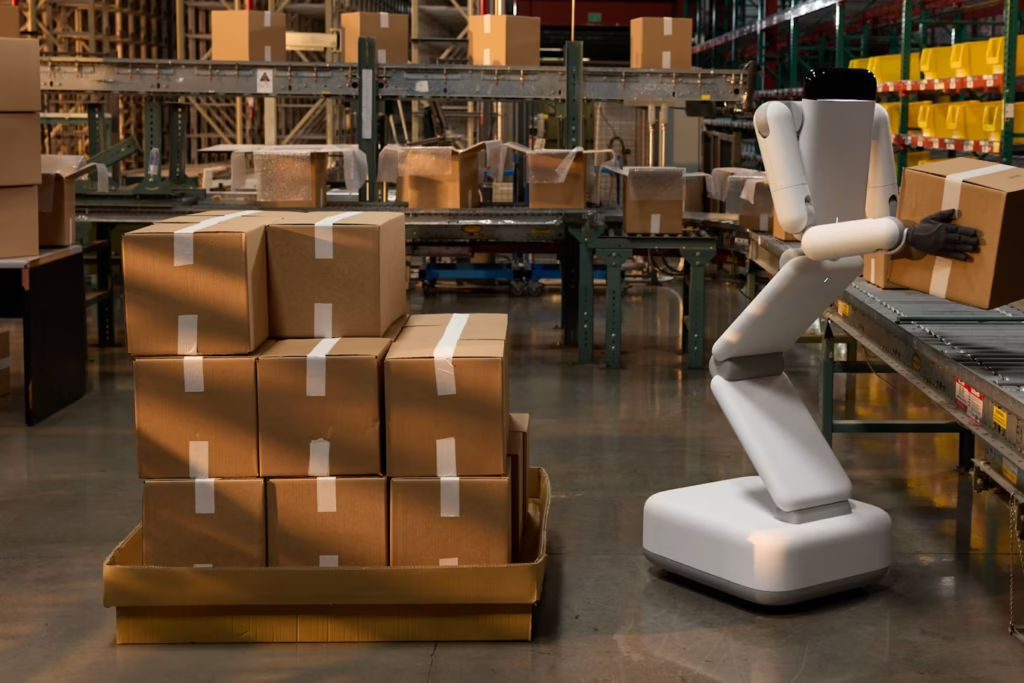
Genesis AI recently unveiled the Eno robot to bring physical AI into commercial environments. Source: Genesis AI
The fastest-growing market categories have humble beginnings. Physical AI, the combination of robotics and advanced artificial intelligence, is just the latest example.
ChatGPT began as a pitch deck at an accelerator before it became a household name in 2023. Before cloud computing became a boardroom imperative, founders were building it, server rack by server rack, cluster by cluster. And, of course, before fintech rewired retail banking, it appeared as a funding surge in deal flow data that most banks weren’t reading.
You see the pattern, and I’ve watched it repeat itself across several years of evaluating startups. The startup ecosystem is the world’s most underutilized business intelligence system.
Incumbents may amass wealth and power, but it’s the founders who choose to build. Which sectors attract a sudden surge of founding activity is a three-to-five-year leading indicator of where enterprise disruption is headed.
While AI agents garner the lion’s share of media attention and VC funding , deal flow suggests the next market for hypergrowth will be of the metallic persuasion. That is physical AI , which includes autonomous machines and smart manufacturing, among other sensor-laden systems.
Robotics and physical AI startups raised a record $27.6 billion across 1,009 deals in 2025, or more than double the prior year, according to PitchBook. Genesis AI , which emerged from stealth with a $105 million seed round , recently demonstrated a wheeled robot that can bring physical AI into commercially relevant environments without needing to replicate the human body.
Physical AI: Intelligence inside
Physical AI systems can perceive environments, understand spatial context, make operational decisions, and act autonomously in real time across industrial and other settings. Physical AI systems move beyond static automation toward adaptive operations that continuously improve through interaction with the real world.
As with most tech trends, physical AI is driven by a coalescence of several technologies that have matured simultaneously. These include: multimodal sensing , edge computing, simulation environments, robotics foundation models, and world modeling systems. These technologies allow machines to collect information from the physical environment, interpret it in context, simulate outcomes before acting, and continuously refine performance through operational feedback loops.
In addition, the costs of several components that make physical AI possible have declined, with lidar , actuators , depth cameras , and sensors becoming more affordable.
For example, Waymo said its sixth-generation Driver system significantly reduced costs while increasing resolution, range, and compute power. The autonomous vehicle system used a suite of 13 cameras, four lidars, and six radars . Together, the technological maturation plus cost reduction cultivates the right conditions for physical AI to blossom.
Manufacturing , automotive , logistics , and healthcare sectors have emerged as major areas of capital concentration, with organizations actively piloting robotics to address labor costs and the scarcity of qualified personnel, and deploying them in harsh environments even as productivity needs grow.
Figure AI , whose humanoid robots assemble automobile parts in BMW factories, reached a $39 billion valuation within three years, the fastest path to unicorn status in robotics history. Investors are banking on general-purpose robot models doing for hardware what large-language models did for software. Why wouldn’t they? The deal flow is there.
Three stages of a disruption wave
Throughout the past few years of reading deal flow, I’ve identified a consistent three-stage pattern that plays out across every major technology disruption.
Stage 1: The founder surge
A new capability emerges, attracting a disproportionate number of high-quality founding teams. Capital concentrates. Failure rates soar even as the survivors are defining the category. As I alluded to earlier, generative AI shot to the stars in 2023. Agentic AI is now moving through this stage, while physical AI is just entering it.
Dyna Robotics , which is building foundation models that let one robot learn service tasks for hotels, restaurants, and laundromats, raised a $120 million Series A funding round within about a year of its founding.
Stage 2: The corporate adoption wall
Enterprises begin piloting the technology but struggle to move from experiment to production. The startups that survive stage one hit procurement cycles, integration complexity, and organizational resistance. We’re seeing this right now with organizations implementing GenAI and agentic AI tools without adapting their operating models, according to Deloitte.
Some organizations break through this wall. After recognizing that generative AI would fundamentally reshape customer service, Intercom canceled non-AI projects, reorganized product teams and committed $100 million to replatform the business around AI. That transformation produced its Fin agent which now resolves millions of customer service queries.
Another company, Maven Robotics , mixed palletizing in warehouses, and is crossing the wall one customer at a time.
Stage 3: Industrialization
A subset of companies cracks the deployment code. The technology becomes operational infrastructure. The window for competitive entry is closing. Cloud computing reached this stage around 2015. GenAI and agentic AI will land there within 18 to 24 months, as organizations redesign their processes and double down on their change management practices.
Kiva Systems ‘ warehouse robots, bought by Amazon in 2012, grew into a fleet of more than 1 million. What was once a startup capability is now sophisticated infrastructure that new entrants can’t easily match.
The practical implication is straightforward: by the…
News is gathered automatically from public robotics & AI feeds on a schedule.
Related
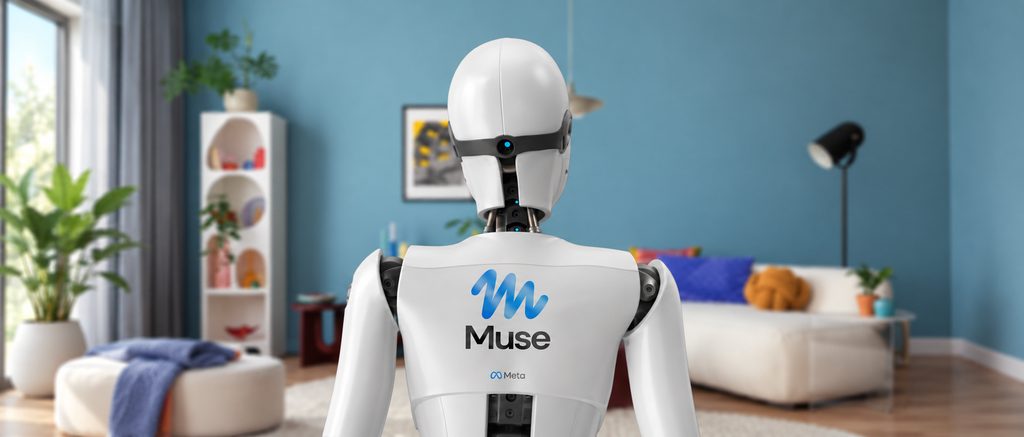
Muse人形机器人来了!小扎带队,中国造
智东西 编译 | 杨京丽 编辑 | 李水青 智东西11月1日消息,今日,据外媒The Information援引知情人士消息报道,Meta已与中国机器人公司 傅利叶 合作,打造出一款 名为“Max”的人形机器人原型 ,目前 已开始开发第二代产品 。 其中一位知情人士称,Meta与傅利叶仅用3个月就造出了这款 重约106磅(约48千克) 的人形机器人。这项工作的目标,是帮助Meta机器人部门进一步打磨未来产品,该产品后续有可能正式推出,目前尚未确定上市时间。 两名知情人士称,Meta机器人业务产品副总裁Li-Chen Miller曾在傅利叶位于上海的工厂 工作近两个月 ,共同推进这款原型机的开发

28 Zero-Day Findings in Less Than Two Days: What AI-Speed Discovery Means for Robotics
VicOne identified an initial set of 28 zero-day findings in less than two days using AI-assisted research across software and tools supporting the Physical AI ecosystem. The post 28 Zero-Day Findings in Less Than Two Days: What AI-Speed Discovery Means for Robotics appeared first on The Robot Report

Solving the Interconnect Challenge in Modern Robotics: How 3M Is Engineering for Motion, Density, and Uptime
As robotics systems grow more capable — faster, more precise, and increasingly reliant on AI-driven vision and control — the humble interconnect is being asked to do more than ever. The post Solving the Interconnect Challenge in Modern Robotics: How 3M Is Engineering for Motion, Density, and Uptime

DeepSeek又开源了!公布Super agent架构
智东西 作者 | 李水青 编辑 | 心缘 智东西11月1日报道,10月31日晚间, DeepSeek Harness 团队公布了其关于自主Agent探索—— Super-agent(超级智能体)的底层架构 。 ▲Super-agent开源项目地址 GitHub地址: https://github.com/deepseek-ai/dsh-superagent-prototype DeepSeek想做的“Super-agent”,可以通俗理解为一个 一直在线、能同时干多件事、会主动找活干、出问题能自己恢复 的Agent。该团队本次推出的成果并非一款新产品,而是更接近一种新思路——把计算机系统里的

智能体年均增长超一倍,百度智能云给智能体配了套新底座
智东西 作者 | 杨京丽 编辑 | 李水青 智能体的规模正在快速扩张。IDC预测,到2030年,全球活跃Agent数量将达到 22.16亿个 ,年复合增长率达到 139% ,年均增长超1倍。 各类智能体也在密集涌现,热度一路走高。从编程、办公到个人助手,从消费端到企业端,智能体正快速进入各个场景,成为今年AI落地的重点方向。 与热度同步攀升的,是Token(词元)的消耗量。国家数据局披露,到今年3月,我国日均Token调用量已超过 140万亿 ,较2024年初增长 1000多倍 ;中国信通院的监测则显示,到今年6月,这一数字已达 500万亿 。如此庞大的调用量说明, 智能体已经走出概念演示,开
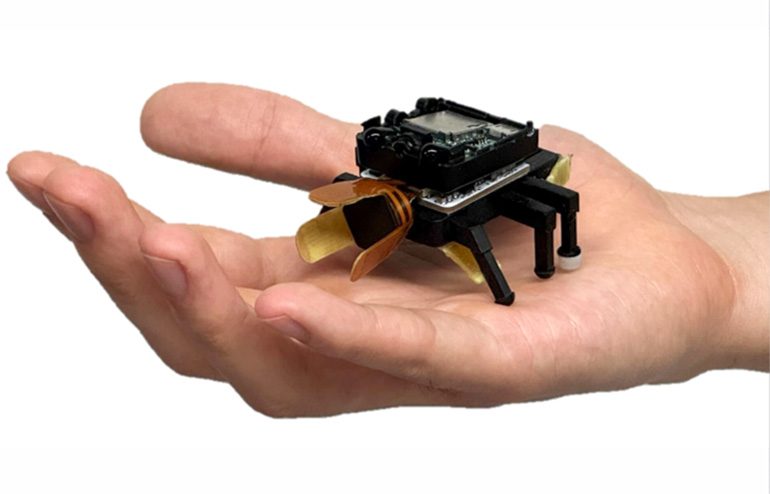
Unusual robotic animals can prove their utility
Robotic animals are designed to be helpful rather than scary, showing promise in disaster recovery, utility inspection, and companionship. The post Unusual robotic animals can prove their utility appeared first on The Robot Report .