The robot answered. Again.
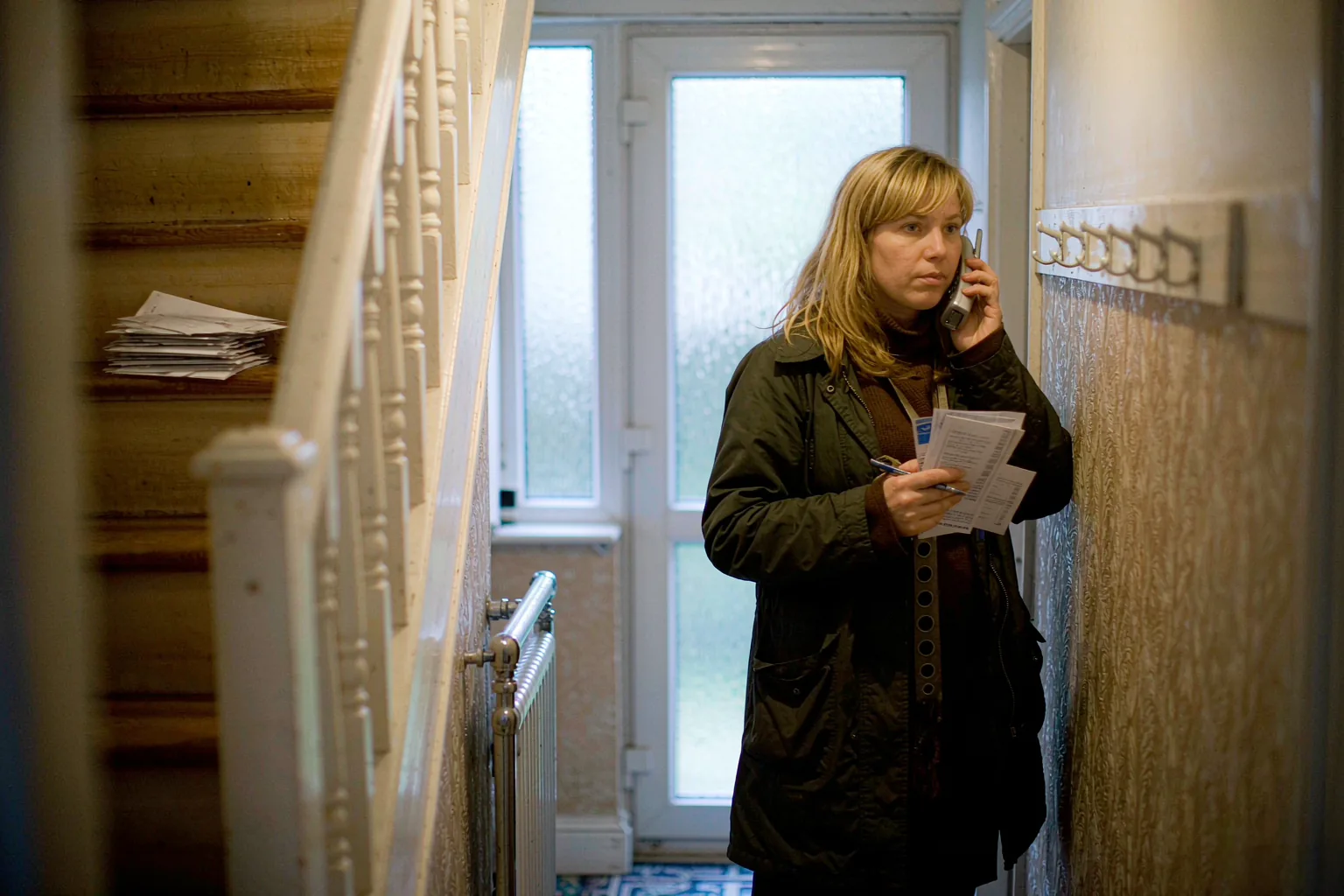
It is the Tuesday before payday. Your energy provider has taken two direct debits instead of one, £218 where there should have been £109, and the money for the food shop is no longer there.
You ring the number on the bill. A calm voice asks what you need. You say refund. It offers you tips for reducing hot water use. You say refund louder. It sends you a link to a form that asks for the same details twice, then closes.

Forty minutes later you know two things. You cannot speak to anyone. And tomorrow there is nothing left to pay for the shop with.
This is not a rare story. A survey of 2,000 British adults found people give up after an average of 38.2 minutes on hold, and more than one in ten have stopped complaining at all because the fight is not worth the candle.
## The scoreboard nobody brags about
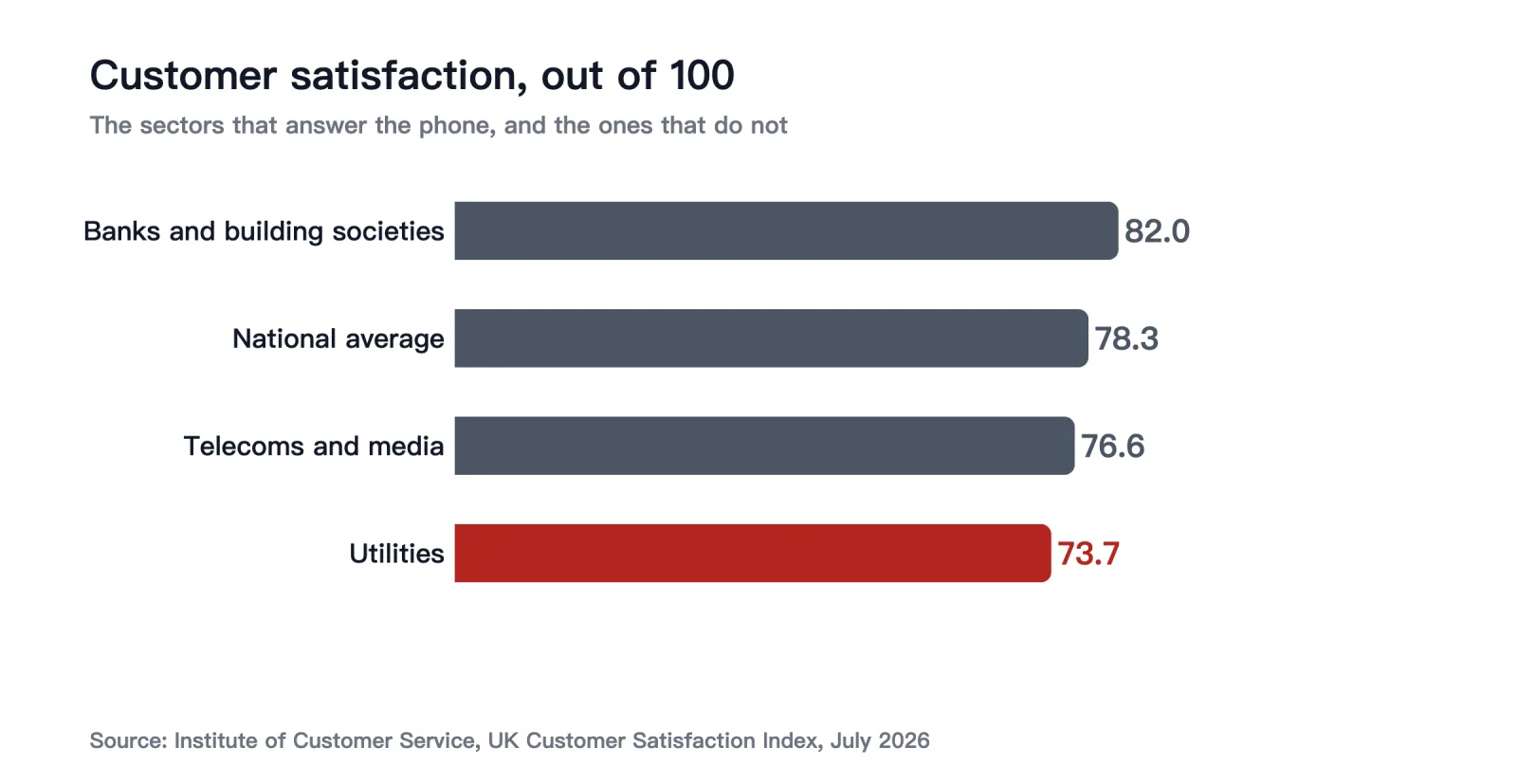
The Institute of Customer Service put a number on this country's patience in July. The national satisfaction score is 78.3 out of 100.
Banks top the table at 82.0. Telecoms and media sit at 76.6. Utilities come last at 73.7, which is roughly where you would expect, given that electricity is the one thing you cannot do without and cannot shop around quickly when it goes wrong.
The Financial Conduct Authority's own Financial Lives survey supplies the ugliest figure. **7.4 million adults in Britain failed to get through to their financial provider at all.** Meanwhile 10.9 million adults are struggling to pay bills, and one in five financially vulnerable customers told the FCA that automated systems do not help them.
Read those three numbers together. The people least able to absorb a mistake are the people least able to get another human being on the line.
## What actually resolves things
This one statistic should end the argument, though it never does.
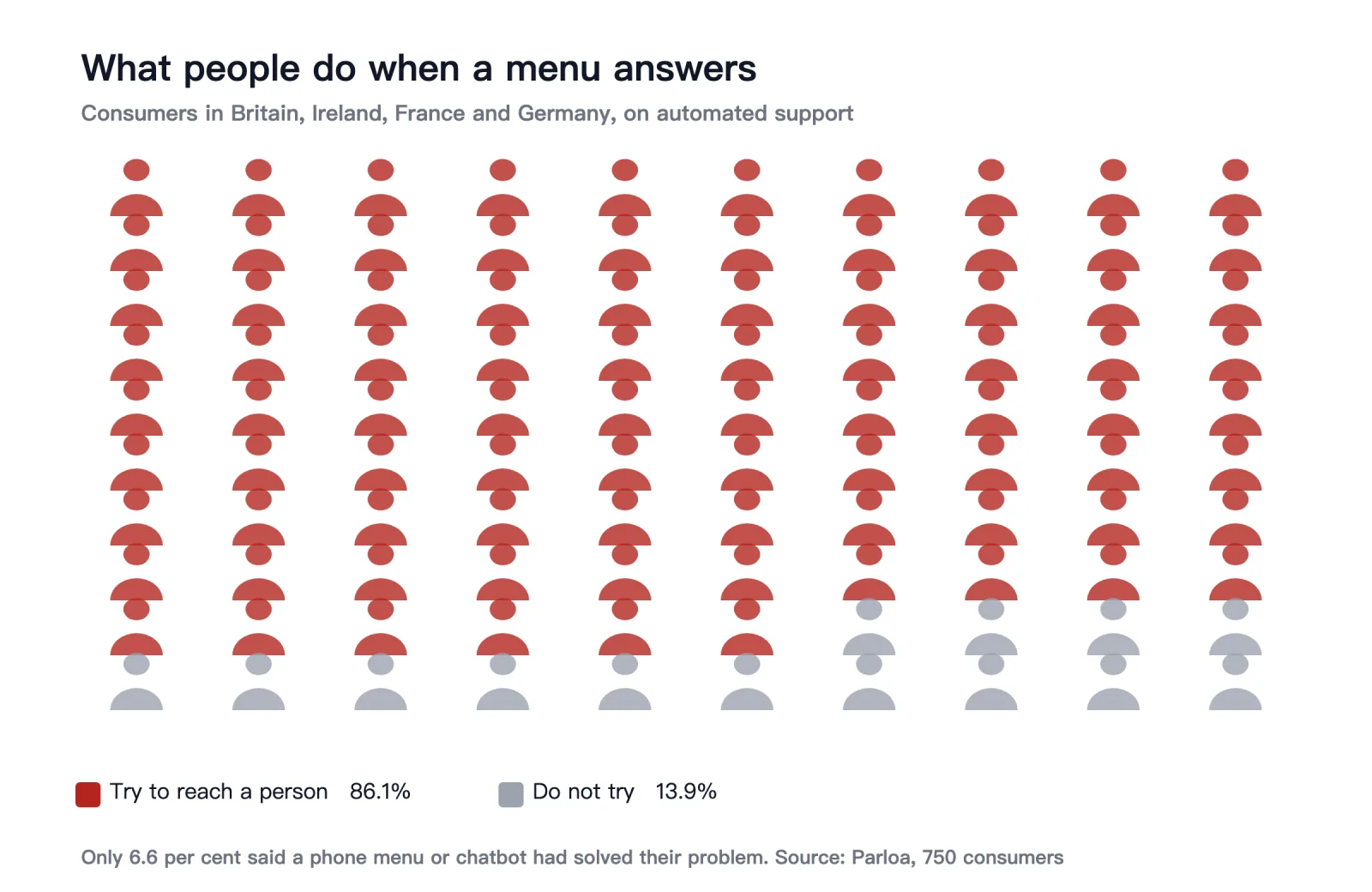
A European survey of 750 consumers by Parloa asked whether automated phone menus or chatbots had solved their problem. **6.6 per cent said yes.** Some 86.1 per cent said they try to get past the automation to a person. Nearly half said that when they finally reach someone, they expect that person to already have the details, so they don't have to start again.
Yet here is what the vendors sell. An AI voice agent costs around $0.08 a minute for the platform plus a cent or two for the line. Six or seven pence. A trained adviser answering the same call costs many times that, plus a desk, plus the management above them. You do not have to be cynical to work out which line in the budget gets cut first.
Klarna tried it hardest. The chief executive said in May 2025 that cost had been too dominant in how they organised the work and that quality suffered. By June he was telling people that human service would come to be seen as a VIP thing.
> The human being is becoming a paid upgrade.
That sentence is why I sat down to write this. Say it plainly: the person who can actually put £218 back where it belongs is being recast as a luxury, and the rest of us get the six-pence-a-minute option.
## Britain has no rule. Europe has one.
In the European Union, since 2 August this year, Article 50 of the AI Act has required companies to tell you that you are talking to a machine. Not buried in terms and conditions. At the point of contact, clearly, before you start telling it anything. The Commission's guidance, published on 20 July, reads the word "obvious" narrowly, which means the better the voice sounds, the more certain it is that you must be told. Fines reach €15 million or 3 per cent of worldwide turnover.
Britain has nothing like it. We have something else instead, and it is worth knowing exactly what it is.
The FCA's Consumer Duty requires regulated firms to prevent foreseeable harm. Tell me honestly whether a utility can claim it foresaw no harm in leaving a customer £109 short, four days before payday, unable to reach a person. I do not think that argument survives contact with the facts. The Duty is already binding. It does not need a new bill.
Beyond that, Ofcom opened a call for input in January about how AI is changing broadband and mobile complaints, and said it would publish later this year. Which? responded by naming EE's Aimee and Vodafone's Tobi, and asked for three things every company should already be doing: the bot must say how to escalate to a person, the provider must say when you are talking to a language model, and more than one channel for complaints must stay open.
None of that is radical. It is a request for a door marked exit.
## What works today
Do it in writing. The queue that protects the company is the queue you were put in deliberately. An email, a web form with a reference number, or a letter gives you a paper trail and a deadline the ombudsman will read later. A phone call gives you a memory of being polite.
Use two words. "I'm complaining" and "deadlock". If nobody solves it in eight weeks, or if they send you a letter saying this is the final position, you have the right to take it further. Ask in writing for a deadlock letter if eight weeks pass.
Know which door is yours. Financial disputes go to the Financial Ombudsman, free, and it can order the refund. Energy goes to the Energy Ombudsman. Phones and broadband go to the Communications Ombudsman after eight weeks or a deadlock letter. Each of them is free to you, and each of them puts a human being on the file who has to answer.
Say the word vulnerable if you are. Utilities, banks and phone companies keep registers for customers who need extra help, and being on one changes how you are routed. With an energy supplier you can also ask to be put on the Priority Services Register, free, by phone once: it covers anyone of pensionable age, anyone with a disability or long-term illness, anyone dependent on medical equipment, and households with a child under five. It gets you advance warning of power cuts, and named support if something goes wrong.
Call it a complaint on day one, not day forty. Say "I'd like to raise a complaint" in the first sentence and ask for the reference number before you say anything else. The clock starts when they log it, not when you get angry.
Keep everything: time of the call, the reference, the transcript the bot offers you at the end. Screenshot it. The machine does keep a record, even when it pretends otherwise.
> Ask for the exit by name, in writing, and date everything.
The companies will tell you this is what customers want, that most enquiries are simple, that the bot is faster. Maybe. All I know is what the numbers say: seven people out of a hundred get what they came for, and 7.4 million of us could not get through at all.
So here is what I keep wondering, and I cannot settle it: if reaching a person who can help becomes something you have to pay extra for, at what point does that stop being customer service and start being something else?
Les actualités sont collectées automatiquement depuis des flux publics robotique & IA.
Articles liés

Your son is crying on the phone. It isn't your son.
Three seconds of your voice is enough to copy it. A quarter of British adults think someone has already tried it on them, and the annual fraud report has no line for it.

Nobody rejected you. A list did.
Nobody rejected you. A list did. Since February you can ask for a person to review an automated rejection, and almost nobody does.

Prove you are forty, or you cannot read this
Prove you are forty, or you cannot read this. The checks are real, the children who want past them are past them, and the people handing over passports are adults.

You can't get a GP appointment. So you tell the chatbot instead.
One in five adults in Britain now turns to an AI for personal advice. This isn't a story about loneliness — it's a story about the waiting list, and about what the thing on the other end can and cannot do for you.

Ce que votre employeur n'a pas le droit de savoir sur vous
Une plainte déposée le 27 octobre décrit comment 900 000 travailleurs sont suivis à la frappe près. En France, ce genre de surveillance est déjà encadré par le Code du travail — et c'est interdit depuis février 2025 pour les émotions.

孩子饿得直哭,门锁打不开,电话里只有一句「亲」
智能锁坏了,一家三口被关在门外 50 分钟,电话里只有循环播放的话术。转人工难不是技术跟不上,是企业把 AI 当成了过滤网。附一份今天就能用的『找到真人』清单。