Can Robots Bring Stroke Surgery to Remote Hospitals?
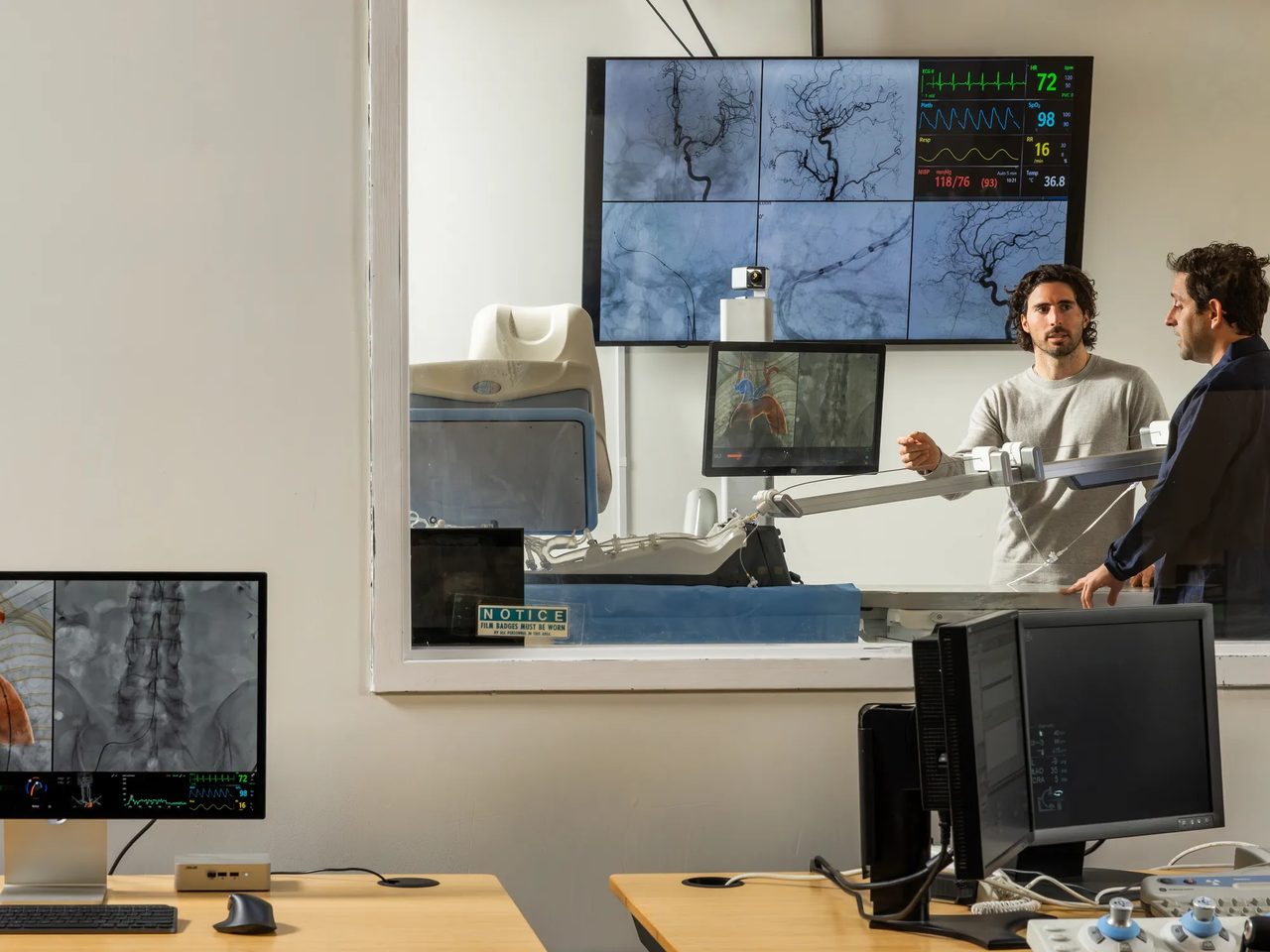
I am practicing brain surgery on a patient lying 6 meters away, out of my sight and reach. I press a foot pedal, activating the controller in my hand, and carefully steer a thin flexible tube called a catheter up through the patient’s blood vessels. I head for what I believe to be the brain, tracking my progress on the live X-ray feed. As I imagine finding a blood clot, David Bell , the surgeon seated to my right, helpfully reminds me that every minute a stroke goes untreated, millions of brain cells suffocate, swell, and die .
The patient under the X-ray in Bell’s office is not flesh and blood, but a plastic container holding long branches of silicone tubing. The controller I hold comes from an Xbox. But the surgical robot is real. The Remedy N1 is designed for emergency operations, including thrombectomies , the standard brain operation for acute ischemic strokes caused by blood clots. Ischemia, a restriction of blood flow, is the most common cause of stroke.
“We want it to feel a bit like a video game—a bit easy,” Bell says. “But we don’t want to dehumanize it as if there’s just another ‘game over.’ ” Bell, a clinician and former cardiac-surgery trainee from Australia, cofounded Remedy Robotics , based in San Francisco. With a team of engineers, he developed this robotic catheter and its related software to help ischemic stroke patients in remote and rural places, who lose crucial hours while being transferred away from hospitals incapable of providing care. According to 2025 data, at least 5 million people around the world suffer ischemic strokes every year. In the United States, stroke is the fourth leading cause of death.
When Remedy Robotics cofounders Jake Sganga [left] and David Bell initially met, they matched each other’s energy right away. Christie Hemm Klok
The screen shows my catheter at a fork in the narrowing road, and I decide to take a sharp right; I think I can make it. This device feels easier to drive than a typical robotic instrument that I controlled on a hospital tour the summer prior. I say to Bell that here my movements are smoother, more precise—exactly the talking point you’d expect to hear from a surgical robotics company. Never mind that, Bell corrects me: “Smoothness and precision are not clinical outcomes. Neither is a surgeon’s ergonomics.”
For Bell, the outcome that matters is whether the robot can get stroke treatment to patients who otherwise wouldn’t receive it in time. Today, only about 1 in 10 patients eligible for thrombectomy receive one. That’s where the long-unrealized promise of telesurgery is meeting an urgent problem: providing access to thrombectomies before life-threatening damage takes hold.
But can putting a robot in one hospital and a surgeon somewhere else actually close that gap? Remedy has already taken a first step, remotely testing its system on a small group of patients. “The remote stroke need is well known,” says Jake Sganga , who cofounded Remedy with Bell and leads the technology side. “It’s just a hard problem to take on.” Making telesurgery a practical part of stroke care will require more than a capable robot: It will depend on communications infrastructure, hospital resources and workflows, and ultimately, evidence that patients actually benefit.
Why Telesurgery Starts With Stroke
As recently as the early ’90s , physicians who treated stroke struggled with “ therapeutic nihilism .” A 1991 editorial by two lamenting neurologists expressed hope that a successful drug therapy for stroke would emerge that would “reverse the trend of nihilism.” Five years later, clot-busting drugs revolutionized stroke treatment, followed about a decade later by mechanical thrombectomy, in which a blood clot is physically removed from an artery .
In a standard thrombectomy a surgeon snakes a flexible wire through a small opening in the patient’s groin. This guide wire sets the route for a fine hollow tube around it, the catheter, to travel through the blood vessels to the brain, where instruments remove the clot. Suddenly a stroke was no longer a sentence of profound disability or death but a treatable event.
Yet decades later, thrombectomies remain inherently blind expeditions. The surgeon stands beside the patient, physically pushing these lines up, inch by inch. The only view comes from a live X-ray, which can’t see soft tissues like blood vessels. The surgeon shoots brief puffs of contrast dye through the catheter to illuminate the path ahead. A nimble operator can avoid scraping or piercing artery walls while bending the guide wire’s rounded tip around corners. But even these left or right turns are not intuitive. The guide wire can twist inside the body, and because the surgeon sees only a flat silhouette, steering it left may actually rotate the guidewire to the right.
The N1 robot feeds the catheter along a rail lined with seven modules, using a thin wire that allows precise control through a patient’s vascular system, even from kilometers away. Christie Hemm Klok
If all goes as planned, the doctor reaches the brain and pushes instruments through the catheter to dislodge the clot, then carefully pulls everything back out. Bell remembers how thrombectomies felt when he performed them. “I’m one and a half meters away from my catheter tip. I’m not in control of it. I can’t see where the blood vessels are. I thought, what is the ideal way to do these procedures? It’s certainly not what I’m doing now.”
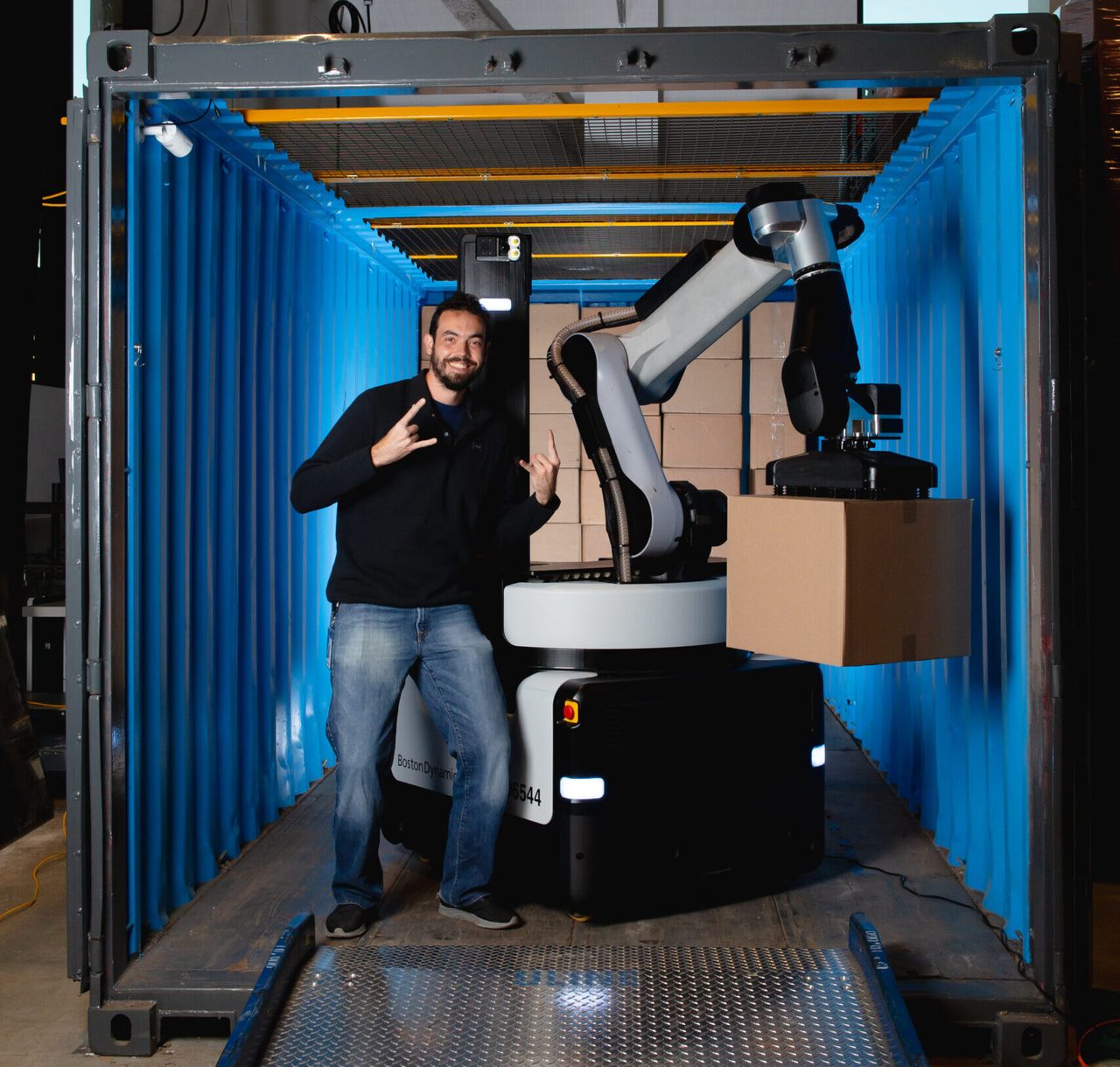
Sganga and Bell want their robots to do two things: see what surgeons can’t see and be where surgeons can’t be. When I visited Remedy’s office in January, the team showed me their robotic arm and instruments that snap onto it. Motorized cartridges live on the robotic arm, one containing several actuators that use small gears to grip the threadlike instruments to move them in and out of a body. The instruments include a stent, an expandable wire-mesh tube used to pierce, grab, and yank a clot back out. It’s all typical stroke…
News is gathered automatically from public robotics & AI feeds on a schedule.
Related
Why Does Voice AI Still Struggle With Kenyans’ Speech?
When people read prepared text aloud, AI can transcribe Swahili with remarkably few errors, and Swahili speech recognition looks close to solved. A March 2026 preprint by a team including a Harvard University researcher reports a 3.24 percent word-error rate on recordings from Mozilla’s Common Voice
Human Stories Behind the Robot: from bold ideas to real-world impact
What happens when a research idea seems too ambitious, too unfamiliar or simply too early for the world to understand? In this episode of The Human Stories Behind the Robots, Professor Sabine Hauert OBE shares her journey from experimenting with flying robot swarms to developing technologies that co
Video Friday: Drone Squeezes Itself to Fit Through Tight Spaces
Video Friday is your weekly selection of awesome robotics videos, collected by your friends at IEEE Spectrum robotics. We also post a weekly calendar of upcoming robotics events for the next few months. Please send us your events for inclusion. Humanoids 2026 : 6–9 December 2026, SANTA CLARA, CA Enj
Robot Talk Episode 171 – Programming robot behaviour, with Sebastian Castro
Claire chatted to Sebastian Castro about developing open-source software for robot task planning and behaviour. Sebastian Castro is an independent roboticist specializing in robotic manipulation. He is currently contracting with the Dexterous Robotics Group at NASA’s Johnson Space Center. Sebastian

Meet Shepherd, the Meta-Agent Keeping Rogue AI in Check
AI agents are running amok on the internet, armed with commands to accomplish certain tasks but often acting in undesirable or unexpected ways. These rogue incidents run the gamut from deleting an entire email inbox to hacking websites and even launching cyberattacks . Much like human workers need m
Why a Computer Scientist Thinks Superintelligence Won’t Happen
Many people were caught off guard this past summer when employees of one of the world’s leading AI companies began casually debating whether their products would lead to human extinction. It started when Anthropic researcher Jacob Coxon announced his resignation, warning that his employer and OpenAI