Human Stories Behind the Robot: from bold ideas to real-world impact

What happens when a research idea seems too ambitious, too unfamiliar or simply too early for the world to understand?
In this episode of The Human Stories Behind the Robots, Professor Sabine Hauert OBE shares her journey from experimenting with flying robot swarms to developing technologies that could fight wildfires, monitor environments, and transform cancer treatment. If you are just starting your research career, it can be tempting to assume that success came easily to those who are now established in their fields. Sabine’s story shows a very different reality. She speaks openly about repeated rejection, ideas that took years to find support and the difficult journey from a promising laboratory experiment to technology that works in the real world.
Sabine also explores how she balances bold, blue-sky thinking with the need to show progress, co-creates projects with her students and communicates unfamiliar ideas so that others can understand their value. She shares how different role models have shaped her approach to leadership and how becoming a parent changed her relationship with time, travel and trying to do everything perfectly.
In this episode, you will discover:
How futuristic research can become a real-world solution, why rejection is a normal (and valuable) part of research, how to balance bold ideas with tangible progress, why storytelling helps unfamiliar ideas gain support, and how curiosity, collaboration and role models shape a career.
The purpose of this podcast is to inspire students and early-career researchers, building our academic robotics community by sharing the human stories behind the robots.
This show is brought to you by the UK-RAS network, which you can follow on X and Linkedin or visit the website to find out more. Produced and directed by award-winning Heather Pownall .
The opinions of our host and guests are their own; the UK-RAS network does not endorse any individual viewpoints, given products or companies.
News is gathered automatically from public robotics & AI feeds on a schedule.
Related
Video Friday: Drone Squeezes Itself to Fit Through Tight Spaces
Video Friday is your weekly selection of awesome robotics videos, collected by your friends at IEEE Spectrum robotics. We also post a weekly calendar of upcoming robotics events for the next few months. Please send us your events for inclusion. Humanoids 2026 : 6–9 December 2026, SANTA CLARA, CA Enj
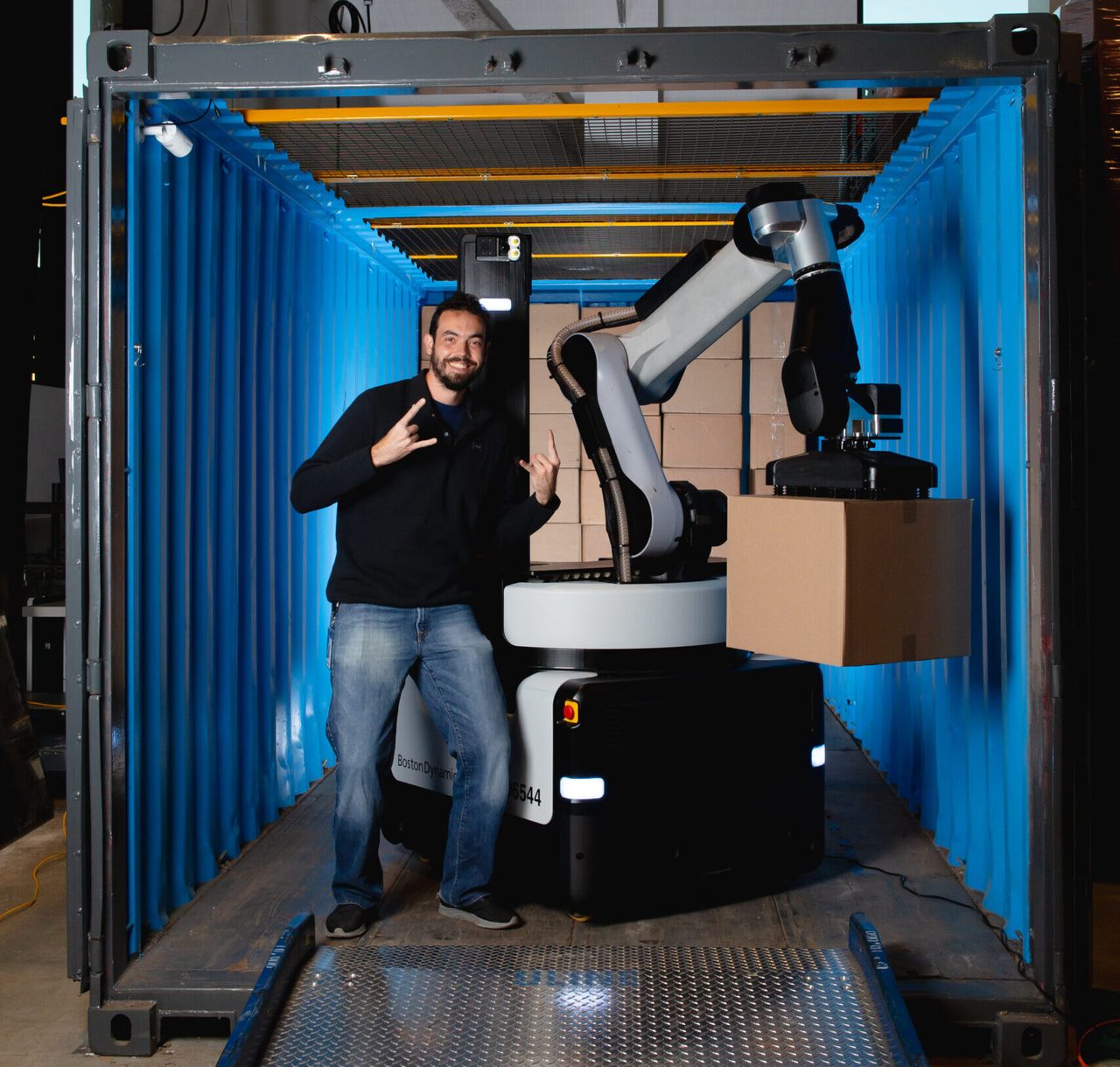
Robot Talk Episode 171 – Programming robot behaviour, with Sebastian Castro
Claire chatted to Sebastian Castro about developing open-source software for robot task planning and behaviour. Sebastian Castro is an independent roboticist specializing in robotic manipulation. He is currently contracting with the Dexterous Robotics Group at NASA’s Johnson Space Center. Sebastian
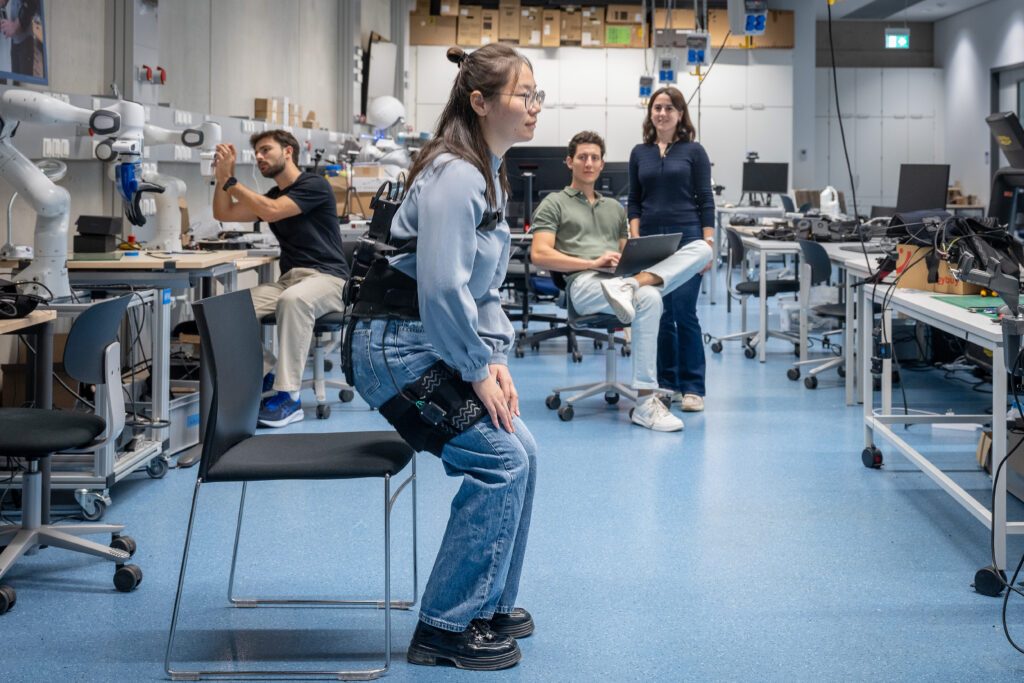
Soft exosuit makes it easier to stand up
Exoskeletons developed at Professor Lorenzo Masia’s lab help elderly people and those with medical conditions move more easily. They also assist industrial workers in performing heavy tasks. Photo: Andreas Heddergott / TUM. Getting up from a chair can be difficult for older people, often due to decl
Robot swarms trained by trial and error in simulation keep working on real robots
Reinforcement learning lets robots learn behaviors on their own, through trial and error, usually inside a computer simulation. Moving what they learn onto physical robots is another matter. Simulated and real robots never behave quite the same way, a mismatch known as the “reality gap,” and reinfor
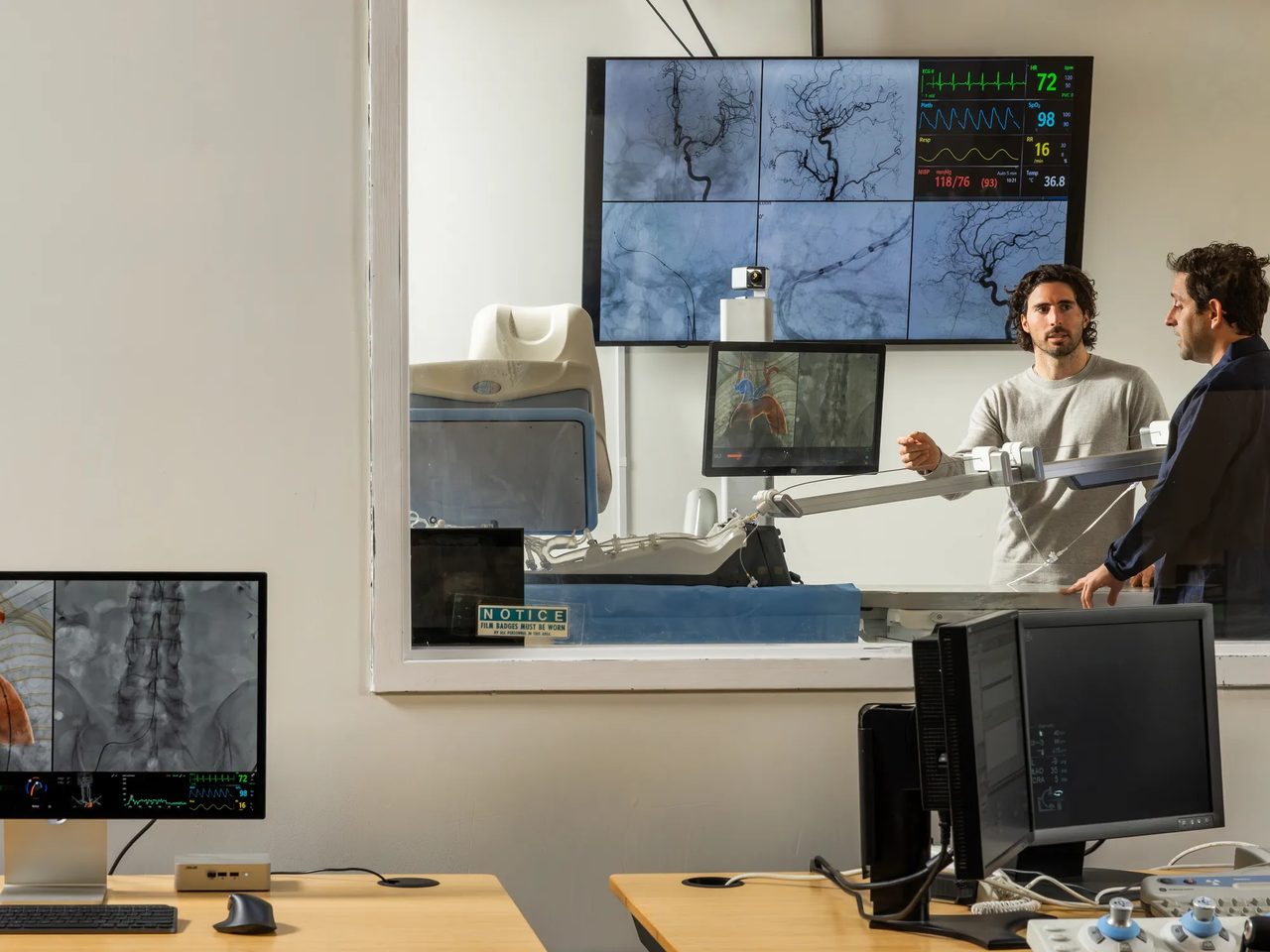
Can Robots Bring Stroke Surgery to Remote Hospitals?
I am practicing brain surgery on a patient lying 6 meters away, out of my sight and reach. I press a foot pedal, activating the controller in my hand, and carefully steer a thin flexible tube called a catheter up through the patient’s blood vessels. I head for what I believe to be the brain, trackin

Watch the IROS 2026 plenary and keynote talks
The 2026 IEEE/RSJ International Conference on Intelligent Robots and Systems (IROS) was held in Pittsburgh from 27 September to 1 October. The event brought together researchers and industry professionals with expertise spanning many different aspects of robotics. IEEE have made the keynote and plen