Watch the IROS 2026 plenary and keynote talks

The 2026 IEEE/RSJ International Conference on Intelligent Robots and Systems (IROS) was held in Pittsburgh from 27 September to 1 October. The event brought together researchers and industry professionals with expertise spanning many different aspects of robotics.
IEEE have made the keynote and plenary panel recordings available to watch . You can also catch the opening and awards ceremonies, and the town hall meeting.
Watch IEEE.tv here .
Available to watch are the following:
Plenary panels
Start-ups and entrepreneurship
Space
Should robots be generalists or specialists?
Keynote talks
Elena De Momi – Open questions on the road to autonomous surgery
Naomi Fitter – Socially-informed context awareness for robots in human-populated settings
Greg Chirikjian – From hyper-redundancy to robot imagination and affordance learning
Al Rizzi – Developing advanced robot capability at the RAI Institute
Gaurav Bansal – Building autonomy for the real world
Genta Suzuki – Fujitsu Kozuchi Physical OS: a research strategy for scalable physical AI
Yigit Menguc – Soft robotics, tensegrity, and the people who love them
Robin Murphy – Rethinking disaster robotics: the open questions that matter now
Jen Jen Chung – All data are equal, but some data are more equal than others
Tim Bretl – How you can be part of a revolution in composite manufacturing
Lael Odhner – Big bets in manipulation systems: where is the frontier today?
Gina Olson – Complexity in soft and bio-inspired robots
David Held – Robots that learn after deployment: designing policies for fast adaptation
Brittany Duncan – Patterns from the field: how contextual lessons can inform robot design
Ankur Mehta – Robotics problems that robotics can’t solve
News is gathered automatically from public robotics & AI feeds on a schedule.
Related

Human Stories Behind the Robot: from bold ideas to real-world impact
What happens when a research idea seems too ambitious, too unfamiliar or simply too early for the world to understand? In this episode of The Human Stories Behind the Robots, Professor Sabine Hauert OBE shares her journey from experimenting with flying robot swarms to developing technologies that co
Video Friday: Drone Squeezes Itself to Fit Through Tight Spaces
Video Friday is your weekly selection of awesome robotics videos, collected by your friends at IEEE Spectrum robotics. We also post a weekly calendar of upcoming robotics events for the next few months. Please send us your events for inclusion. Humanoids 2026 : 6–9 December 2026, SANTA CLARA, CA Enj
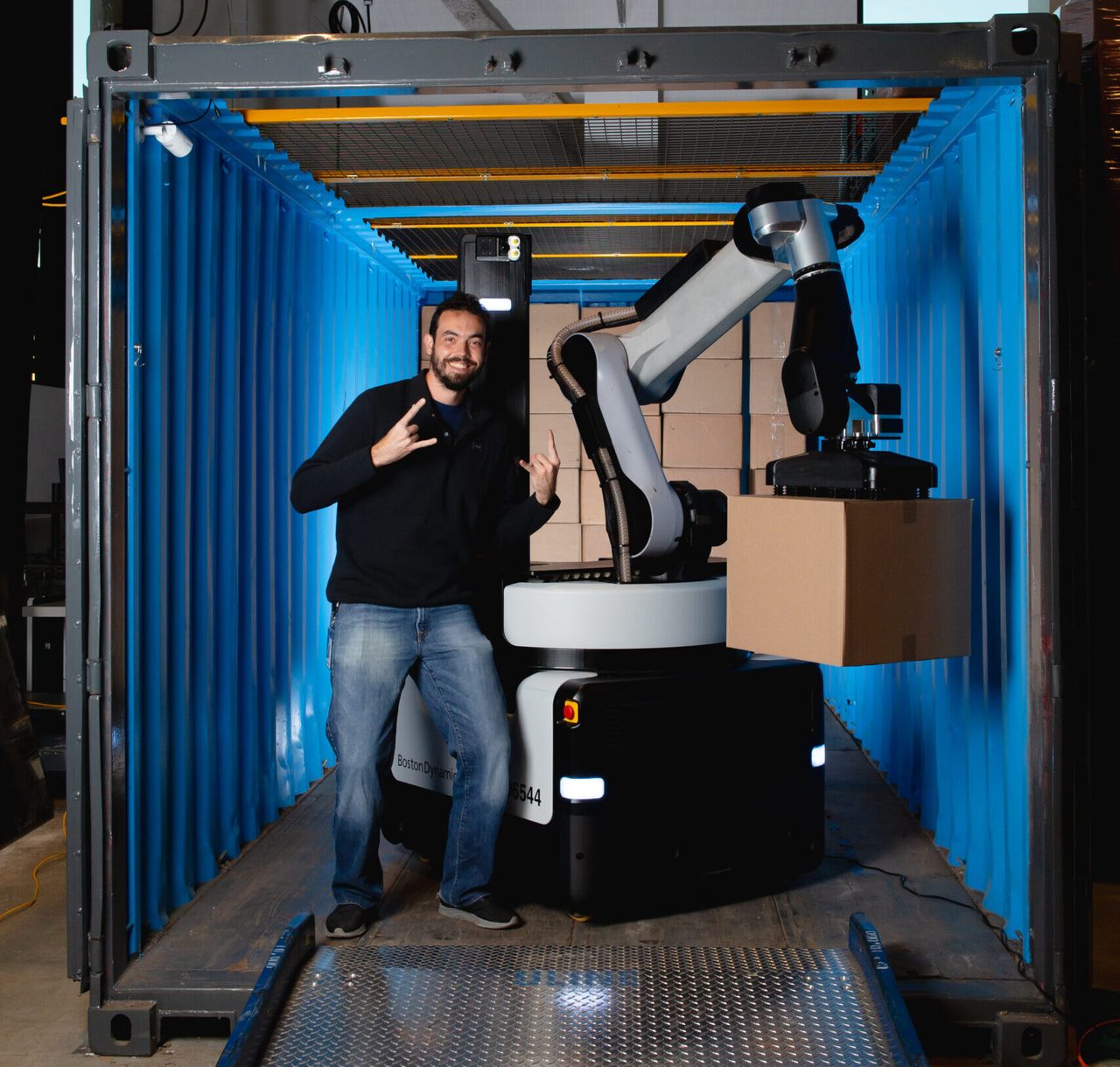
Robot Talk Episode 171 – Programming robot behaviour, with Sebastian Castro
Claire chatted to Sebastian Castro about developing open-source software for robot task planning and behaviour. Sebastian Castro is an independent roboticist specializing in robotic manipulation. He is currently contracting with the Dexterous Robotics Group at NASA’s Johnson Space Center. Sebastian
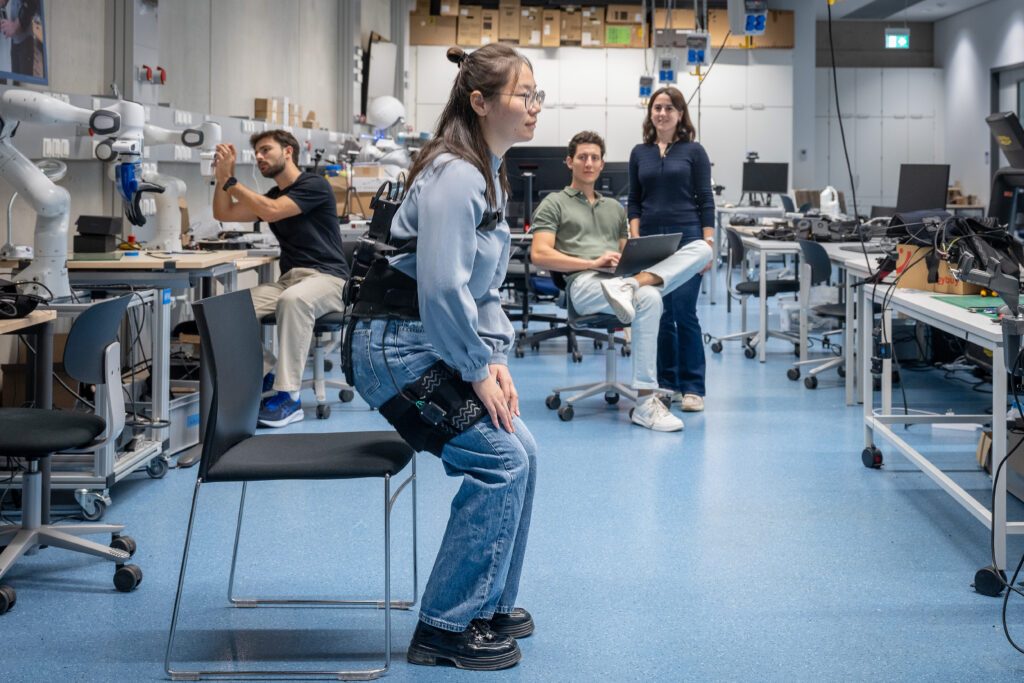
Soft exosuit makes it easier to stand up
Exoskeletons developed at Professor Lorenzo Masia’s lab help elderly people and those with medical conditions move more easily. They also assist industrial workers in performing heavy tasks. Photo: Andreas Heddergott / TUM. Getting up from a chair can be difficult for older people, often due to decl
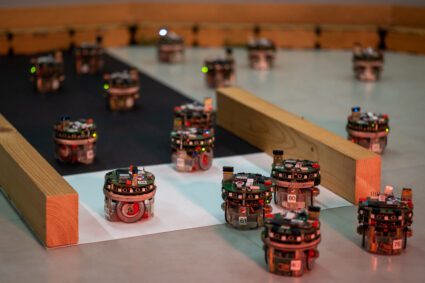
Robot swarms trained by trial and error in simulation keep working on real robots
Reinforcement learning lets robots learn behaviors on their own, through trial and error, usually inside a computer simulation. Moving what they learn onto physical robots is another matter. Simulated and real robots never behave quite the same way, a mismatch known as the “reality gap,” and reinfor
Can Robots Bring Stroke Surgery to Remote Hospitals?
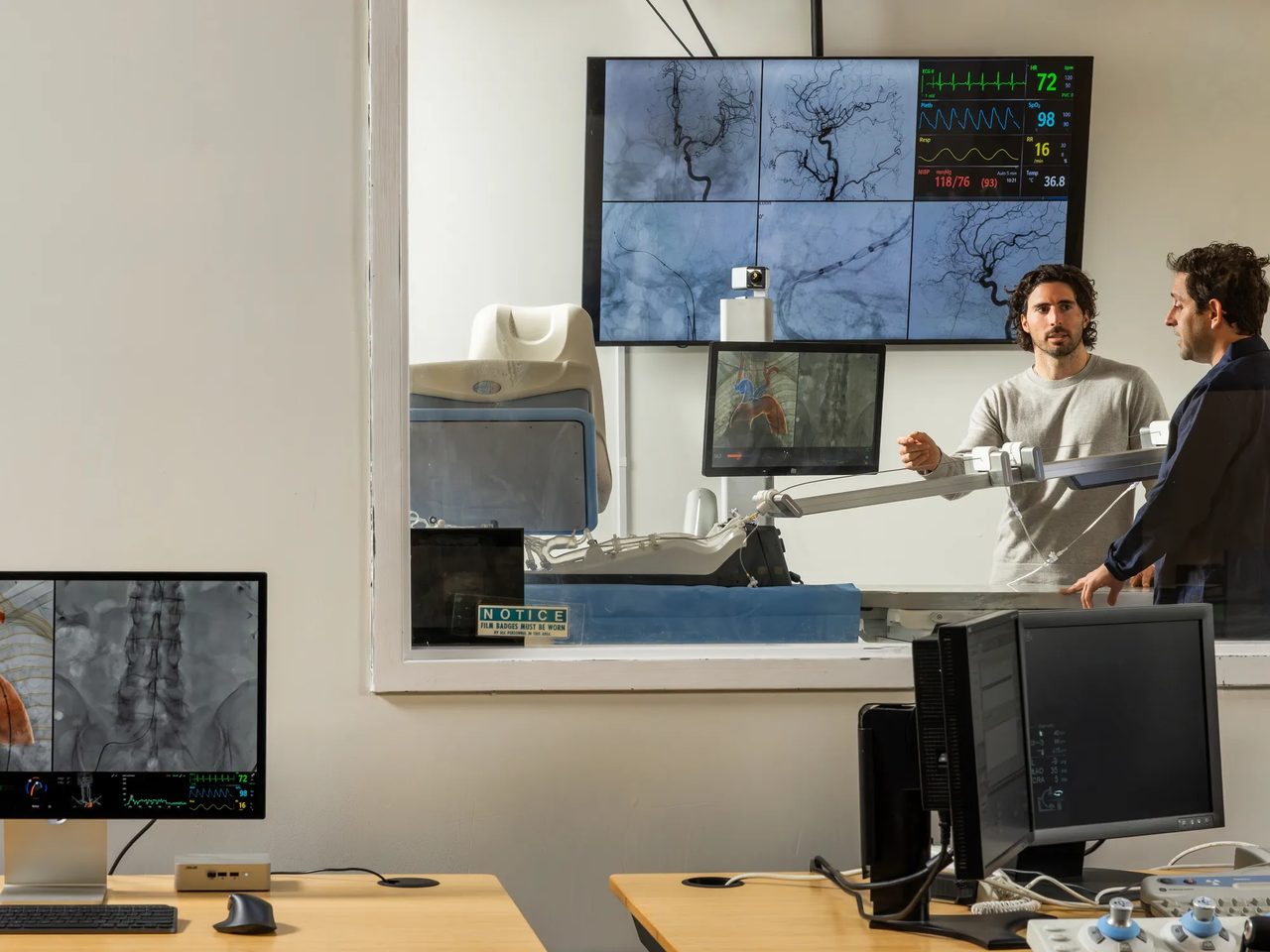
I am practicing brain surgery on a patient lying 6 meters away, out of my sight and reach. I press a foot pedal, activating the controller in my hand, and carefully steer a thin flexible tube called a catheter up through the patient’s blood vessels. I head for what I believe to be the brain, trackin