Robotics and automation? Informal reflections on familiar terms

By Emmet Cole
“Robotics and automation” is a pairing heard often around these parts. It puts the “RA” in IEEE RAS, after all.
The familiar combination shows up in conference titles, funding calls, and program descriptions. But what is actually meant by the two words? Is robotics a subdomain of automation? Does the distinction matter?
As a recent IEEE RAS Communications Board meeting drew to a close, IEEE experts informally reflected on these questions and their significance for the RAS community and beyond.
The excerpts below have been lightly edited for clarity.
Sabine Hauert: We often use the phrase “robotics and automation,” including in the name of IEEE RAS. But what do we actually mean by those two words? Why is there a distinction, and does it accurately capture our fields?
Mariateresa Pedone: My feeling is that automation is almost invisible in everyday life. Its role is mainly to make processes repeatable, efficient, scalable and predictable. Robotics becomes relevant when automation needs a physical presence.
Sabine Hauert: That gives us a useful starting point with automation as the process, and robotics as its physical presence. David, do you see it that way?
David Garzon Ramos: My feeling is that automation has focused on supporting other activities. We automate a process because we want to make it more efficient or effective. Robotics, meanwhile, has also developed on its own grounds. We develop robots partly because we want to understand principles of intelligence, control and embodiment. That is how the history of the two fields has played out.
Sabine Hauert: Would that make robotics a subcategory of automation?
David Garzon Ramos: I don’t think anybody necessarily wants to say that one is broader than the other. We see a similar question now with physical AI: is physical AI broader than robotics? Maybe, maybe not. These descriptions help people identify with a particular community. They can also help to manage expectations about the kind of work being done.
Claudio Pacchierotti: I would add that not all robots are automated. You can have robots that are fully teleoperated by humans, so there is little or no automation involved. A robot is a machine that physically interacts with the environment, while an automation process does not have to involve a robot. Not all automation involves robots, and not all robots are autonomous.
Sabine Hauert: That complicates the picture. Automation might not require a robot at all; it could be carried out entirely through software. And a robot could be controlled by a person rather than operating autonomously.
Ellen Rumley: The definition of robotics can become hazy too. Imagine a large factory with a computer-controlled conveyor system that interacts with the physical world and sorts packages. Do we consider the whole system a robot if it isn’t an individual unit that moves around or appears somewhat lifelike?
Claudio Pacchierotti: I introduce this question when I teach robotics to elementary school children. The first activity is simply: “Is this a robot?” A washing machine washes your clothes in a very physical way. In one sense, it could be seen as a robot. It is also highly automated. Yet most people would say it is not a robot. Once you start testing the definition against familiar objects, the boundary becomes interesting.
Ellen Rumley: These questions have practical consequences. I do a lot of comparisons of industrial and service robotics between countries, and the categories are not always consistent. Robot vacuum cleaners, for example, may be counted differently in different countries. China can appear to produce millions more service robots partly because of what is included in the category. Definitions affect the international comparisons and the story the numbers appear to tell.
Sabine Hauert: So, this is not only a philosophical or linguistic question. What counts as a robot can affect statistics, national comparisons and perceptions of technological strength.
Amy Eguchi: It also affects education. My background is in education, and robotics was an addition to my work. Whenever I return to Japan, I see more everyday appliances with automated functions. A washing machine can dispense its own detergent and softener, remember your preferred settings and complete the process after you press one button. I have also seen products advertised as having an “AI microwave.” Is that a robot, or is it simply automation?
Sabine Hauert: So, the answer may depend partly on what people encounter in everyday life.
Amy Eguchi: Exactly. A definition may seem clear when you read it, but the categories overlap in practice. Children in different countries are familiar with different devices. That changes the examples educators can use and perhaps what children intuitively understand as robotics, automation or AI.
Sabine Hauert: We are also discussing two English words. Other languages and cultures may not separate the concepts in quite the same way. And once a technology becomes familiar, it can disappear into the category of the appliance. A robot vacuum eventually becomes simply a vacuum.
David Garzon Ramos: The language also changes with research trends. Now that I write proposals, I use terms such as “physical AI” and “embodiment,” although I still describe myself as a roboticist when I talk to friends. The same has happened with terms such as intelligent systems, AI and machine learning. Concepts become entangled because the language helps attract attention and communicate with particular audiences.
Sabine Hauert: From a communications perspective, that can be difficult. Every new project seems to require all the relevant words—robotics, automation and now sometimes physical AI. It raises the question of what the differences are, where the fields overlap and why they cannot simply sit under one recognizable term.
David Garzon Ramos: I think it depends on the purpose. If you are speaking to children, “robot” may…
News is gathered automatically from public robotics & AI feeds on a schedule.
Related
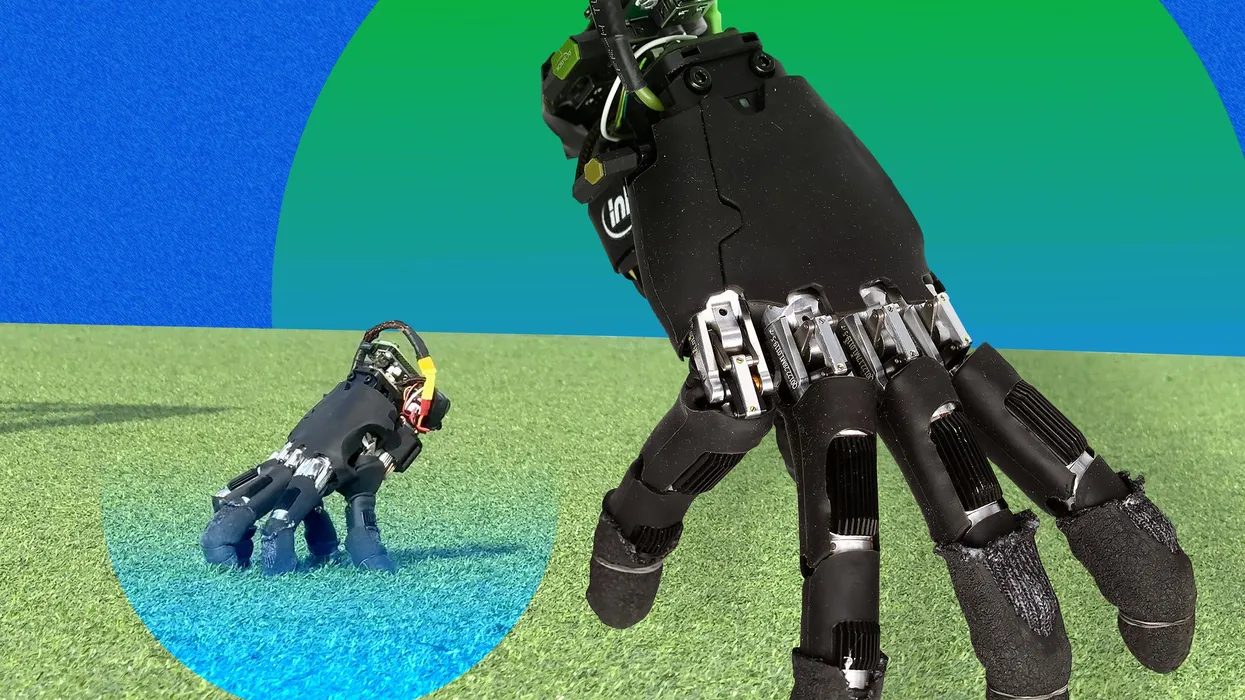
This Disembodied Hand Is All the Robot You Need
A hand attached to the end of an arm is a given for most humans, but what if robots didn’t have to play by the same rules as we do? Researchers from ETH Zurich have turned an off-the-shelf robotic hand into a completely self-contained robot that walks on its fingertips while using those same fingers
What three days building a robot taught me
Last month, I went to York to build a robot. I came back with a robot, a tiny trophy-shaped sense of achievement, and somehow a few new friends. From 25th-27th August, I joined the UK RAS STEPS MicroMaze Robot Hackathon at the Institute for Safe Autonomy, University of York. The brief sounded simple
Research could guide the future design of social robots
By the University of Glasgow Giving robot companions animal-like or anime-style faces and voices could maximise their emotional appeal to users, according to new research which could help guide the growing field of social robotics. Social robots can provide companionship and comfort to their owners
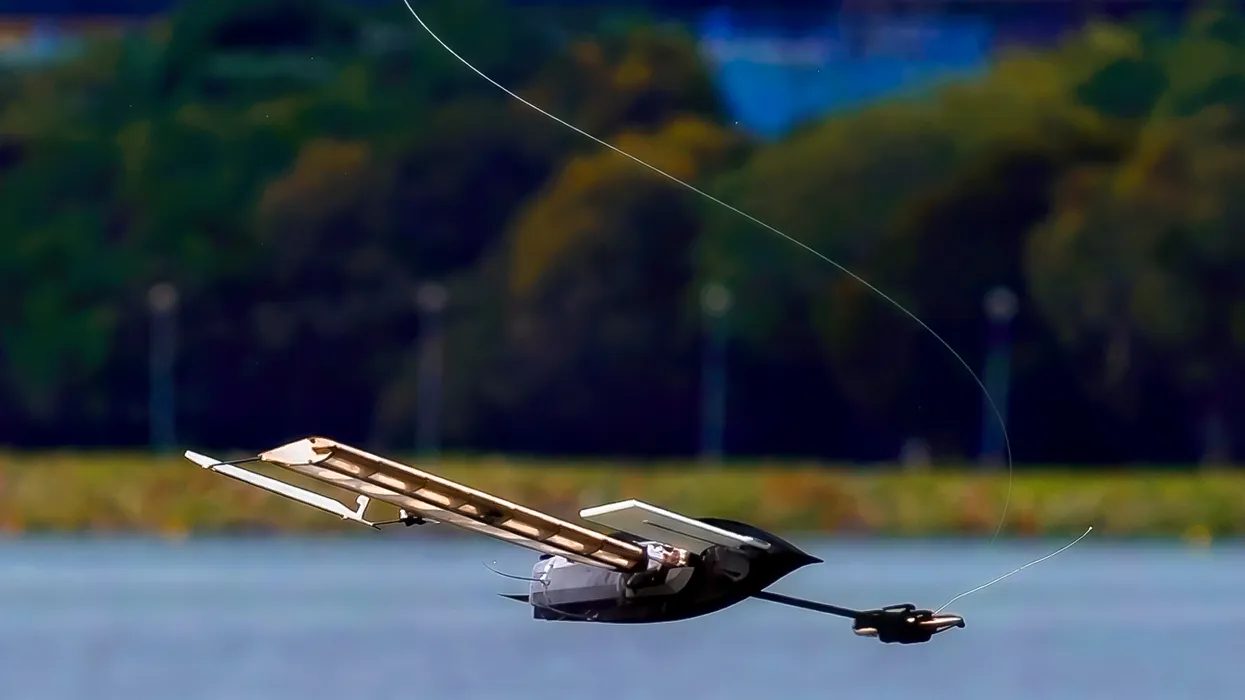
Video Friday: Albatross Falls, Spins, Self-Rights, and Sails Away
Video Friday is your weekly selection of awesome robotics videos, collected by your friends at IEEE Spectrum robotics. We also post a weekly calendar of upcoming robotics events for the next few months. Please send us your events for inclusion. CoRL 2026 : 9–12 November 2026, AUSTIN Humanoids 2026 :

Robot Talk Episode 164 – Accelerating robot learning, with Michelle Lu
Claire chatted to Michelle Lu from Vsim Technology about using simulation and artificial intelligence to teach robots new skills. Michelle Lu is co-founder and CEO of Vsim Technology. She was previously a Director of Simulation Technology at NVIDIA, where she and her co-founder created the world’s f
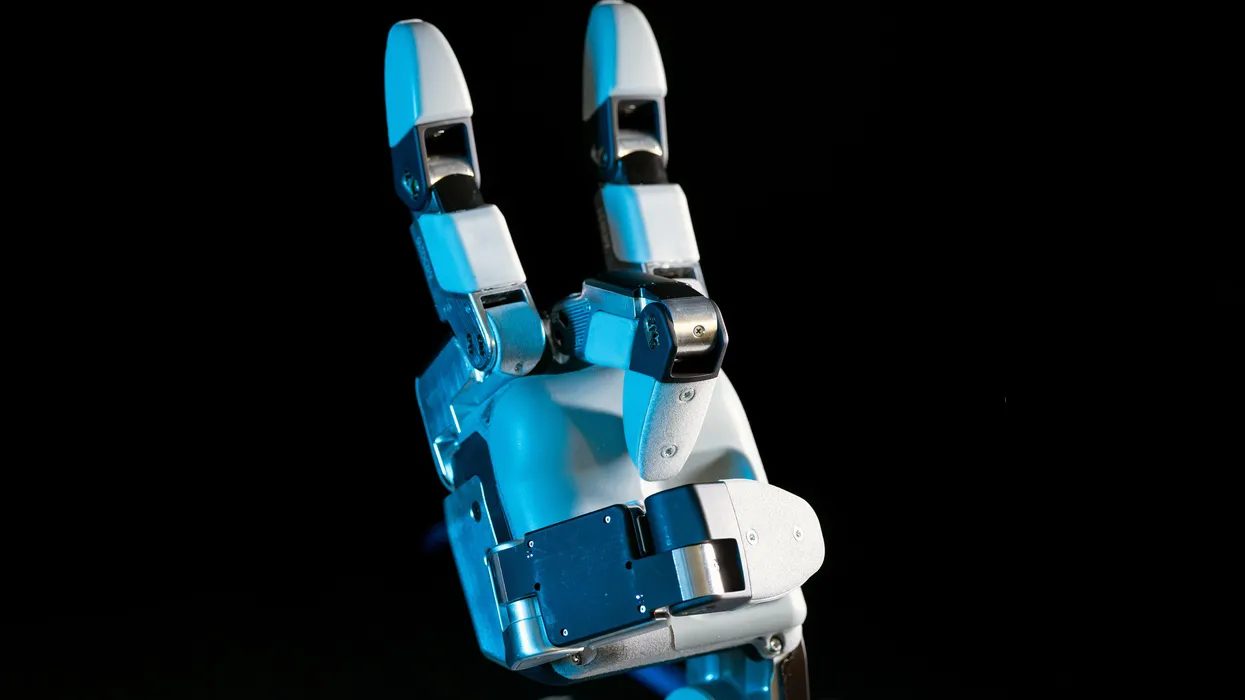
Atlas Robot’s New Hand May Outperform Humanlike Designs
Today, Boston Dynamics is announcing a redesigned hand for its Atlas robot . The previous generation could do some crazy superhuman things with its three fingers, but it was never intended for mass production in the tens or hundreds of thousands. Switching from research hardware to a scalable produc